

“What Is Process Safety Management?” is a question that surfaces frequently among HSE leaders who face major accident hazards in oil and gas, petrochemicals, power generation, and other high-risk sectors across the UAE. Behind that question lies a practical concern: how to build and maintain a disciplined system that prevents catastrophic events like explosions, toxic releases, and large fires while enabling safe, reliable production. Rather than a single procedure or a once-off study, process safety is an integrated management system that spans design through decommissioning, linking engineering, operations, and governance so barriers remain effective even as facilities change and age.
In this article, we lay out the principles, frameworks, and practices that define process safety management (PSM) for industrial plants operating under UAE regulations and international standards. We connect the theory to how work actually gets done in refineries, gas plants, offshore platforms, storage terminals, chemical units, pipelines, power and desalination facilities, and large logistics terminals. The aim is to give HSE managers, plant managers, and compliance officers a clear, practical picture they can apply to their own context—whether the immediate need is compliance assurance, risk reduction, or operational stability.
In the UAE context, process safety cannot be separated from local requirements such as OSHAD (Abu Dhabi Occupational Safety and Health System Framework), Dubai Municipality codes, Civil Defence approvals, MOHRE obligations, and operator-specific frameworks like ADNOC’s HSE requirements. At the same time, organizations typically align with recognized international references: CCPS Risk-Based Process Safety, OSHA 29 CFR 1910.119 (as a benchmark even if not directly mandated), IEC 61511 for Safety Instrumented Systems, API Recommended Practices (such as API RP 14C and API RP 754), and ISO management systems (ISO 45001 and ISO 14001). Each of these influences what “good” looks like when designing, operating, maintaining, and continuously improving high-hazard facilities.
Who Does This Affect?

Although it is easy to imagine process safety as solely the domain of technical safety specialists, experience shows it is a whole-organization discipline. Clarity on who owns what is essential because the system’s strength depends on how effectively roles mesh at boundaries—permit to work intersecting with maintenance isolation, project engineering intersecting with operations readiness, and contractor activities intersecting with site controls. Stakeholders typically include:
- Executive leadership and board-level risk committees responsible for major accident hazard oversight and resource allocation.
- Plant managers, operations superintendents, and control room supervisors accountable for day-to-day barrier performance and operating discipline.
- HSE managers and process safety engineers responsible for frameworks, assurance, and specialist analyses (HAZOP, HAZID, LOPA, QRA, Bowtie).
- Project teams (engineering, procurement, construction) managing design change, management of change (MoC), pre-startup safety reviews (PSSR), and commissioning risk.
- Maintenance, reliability, and inspection teams controlling asset integrity through RBI, RCM, CMMS, SIS proof testing, and pressure systems compliance.
- Instrumentation and automation teams stewarding IEC 61511 lifecycle obligations and alarm management.
- Contractors and vendors whose activities must integrate into the site’s controls for hot work, confined space entry, lifting operations, and startup/ shutdowns.
- Emergency response and security teams coordinating with Civil Defence, mutual aid, and on-site incident command structures.
Depending on the facility, specialized stakeholders may also include marine operations (for offshore and terminals), pipeline controllers, laboratory teams (for sampling and quality control), and power dispatch centers. Importantly, local regulatory authorities—OSHAD, Dubai Municipality, Civil Defence, and sectoral regulators—have oversight that shapes the design and operation of these systems, including approvals for hazardous area classifications, fire protection systems, and high-risk activities.
Why Does This Question Matter?
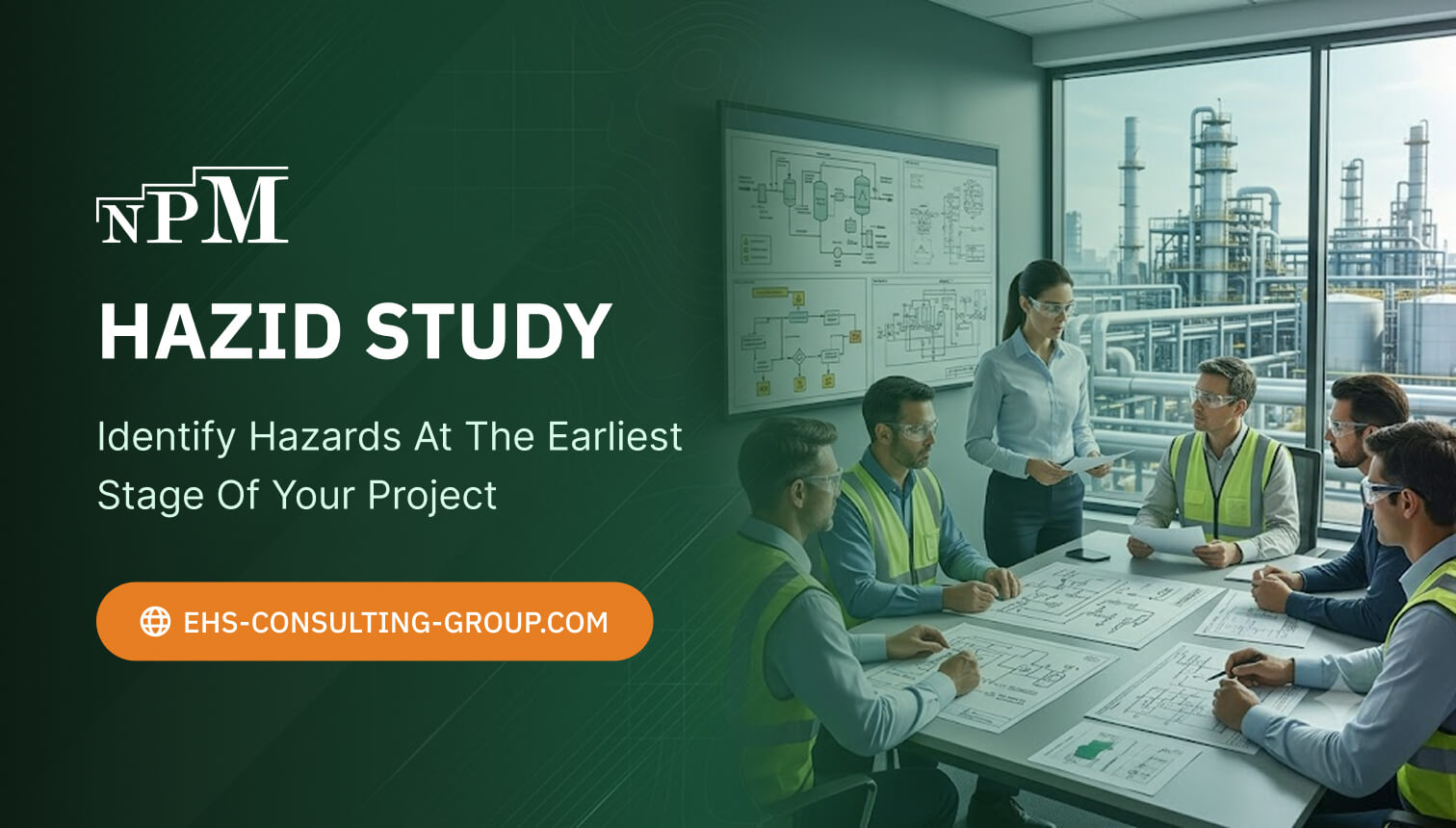
Understanding what PSM truly entails matters because it aligns people, processes, and technology to control low-frequency, high-consequence events. Without a structured approach, organizations can inadvertently normalize deviation: bypassed interlocks that become “standard,” corrosion anomalies that wait for shutdown windows, undocumented line-up changes considered “temporary,” or alarm rates that quietly rise until operators are overloaded. Any one of these might not cause a major event—until a confluence of failures defeats multiple barriers at once.
The stakes are significant. Major incidents jeopardize life, the environment, assets, and the license to operate. They can compromise Civil Defence approvals, halt production pending investigations, and reset stakeholder confidence—from regulators and insurers to nearby communities. Financial exposure is not limited to damage and downtime; it spans legal, reputational, and long-term market impacts. Moreover, stringent operator requirements (e.g., ADNOC HSE) and global customer expectations increasingly require demonstrable process safety maturity, including performance indicators (API RP 754), leadership engagement, and verifiable competency across critical roles. In short, getting PSM right is not an academic exercise; it is a strategic requirement for sustained, compliant operations.
Key Points to Understand

To move from concept to capability, it helps to view process safety as an integrated set of elements arranged across the asset lifecycle. While organizations may choose a particular framework (e.g., CCPS’s Risk-Based Process Safety pillars), several core elements are nearly universal:
- Process safety information (PSI): Accurate, controlled documentation such as P&IDs, cause-and-effect matrices, relief system design, hazardous area classification, and chemical hazard data.
- Hazard identification and risk assessment: HAZID and HAZOP for early design and operating scenarios; Layers of Protection Analysis (LOPA) to quantify protection layers; Quantitative Risk Assessment (QRA) to estimate societal and individual risk; Bowtie analysis to visualize causes, consequences, and barriers.
- Operating procedures and safe work controls: Procedures for normal, abnormal, and emergency operations; permit-to-work; isolation and lock-out/tag-out; line break; and hot work in classified zones.
- Asset integrity and reliability: Inspection, testing, and maintenance strategies (e.g., RBI/RCM) for vessels, piping, rotating equipment, safety critical equipment (SCEs), and instrumentation; SIS lifecycle management to IEC 61511.
- Management of change (MoC): Controlled evaluation and authorization of technical, organizational, and documentation changes, including temporary changes, with traceability.
- Training and competency: Role-based assurance for operations, maintenance, emergency response, and technical safety roles, with attention to contractor competence.
- Incident learning and audits: Tiered investigations, root cause analysis, and verification that corrective actions close risks; internal audits and independent assurance.
- Emergency preparedness: Coordination with Civil Defence, drills, and verification that fire and gas detection, passive fire protection, and emergency response plans are integrated and current.
The table below summarizes how these elements typically align with UAE practice and lifecycle phases.
| Element | Purpose | UAE Practice/Regulatory Touchpoints | Lifecycle Phase |
|---|---|---|---|
| Process Safety Information (PSI) | Authoritative basis for safe operation and change control | OSHAD documentation control; Civil Defence for fire/life safety data; ADNOC design standards | Design, Operate, Maintain |
| HAZID/HAZOP/LOPA | Identify hazards and define protection layers and SIL targets | Operator technical safety requirements; alignment with IEC 61511 and API practices | Design, Modify |
| QRA/Bowtie | Quantify risk and visualize barrier health | Risk acceptance per local authorities; ALARP demonstrations; operating company criteria | Design, Operate |
| Operating Discipline | Standardize normal/abnormal operations and permits | Dubai Municipality codes; OSHAD procedures; Civil Defence hot work and emergency conditions | Operate |
| Asset Integrity | Maintain SCEs and pressure systems fit for service | Inspection regimes; statutory testing; insurance surveys | Operate, Maintain |
| Management of Change (MoC) | Control technical/organizational changes | Traceability expected by regulators and insurers; operator audits | Modify, Operate |
| SIS Lifecycle | Assure safety instrumented systems meet SIL targets | IEC 61511 conformance; proof-test intervals; functional safety audits | Design, Operate, Maintain |
| Emergency Preparedness | Plan and drill credible scenarios; coordinate response | Civil Defence approval; mutual aid protocols; on-site command | Operate |
Leadership and culture bind these elements together. If leaders emphasize output over barrier health, individuals will rationalize shortcuts; if leaders ask routinely about overdue SCE inspection or alarm flooding, the organization will prioritize those controls. Many organizations formalize this through a process safety governance standard, with explicit ownership for each element, performance indicators (API RP 754 Tiers 1–4), and a chartered committee that reports to executive risk governance. For additional context on corporate governance themes in risk oversight, see CABINET NPM.
How Does This Work in Practice?

Translating principles into daily reality means connecting technical analyses to frontline tasks in a way that people can execute reliably. A robust application typically unfolds across several interlocking routines:
- Start with trustworthy data. P&IDs, equipment lists, SIF/logic narratives, relief device sizing, hazardous area classifications, and materials data must be accurate and controlled. Incomplete PSI is a frequent root cause of poor decisions in MoC and operations.
- Anchor operating discipline in credible limits. Safe operating envelopes (pressure, temperature, flow, composition) should map to control room displays, alarm set points, and automatic trips, with clear actions for excursions and alarm rationalization to prevent flooding.
- Manage integrity of barriers. From flame detectors to deluge valves, rupture disks to ESD logic, each safety critical element needs a defined performance standard, test plan, and backlog monitoring. SIS proof tests must trace to the hazard analysis that justified the SIL.
- Control change deliberately. MoC should govern not only hardware changes but also software modifications, contractor substitutions, and “temporary” arrangements, all with a PSSR before energizing changed systems.
- Keep learning loops alive. Track leading and lagging indicators, from SCE test deferrals and open MoCs to Tier 1/2 process safety events. Investigate and share learning across units and shifts in a timely way.
- Integrate emergency readiness. Risk studies should drive credible scenarios for drills; response plans should consider loss of power, impaired firewater, toxic dispersion, and access routes—coordinated with Civil Defence.
There are practical enablers that help. Many facilities link their CMMS to SCE test plans and risk-based inspection strategies to surface overdue tasks. Others integrate MoC with document control so updated P&IDs and instrument databases are released alongside approved changes. Operations training often employs scenario-based exercises using high-risk deviations identified in HAZOP and Bowties. At project gates, PSSR checklists remind teams that documentation and tag databases must be complete before handover—not just to satisfy audits, but to allow safe, reliable operation on day one.
Benefits and Practical Use Cases
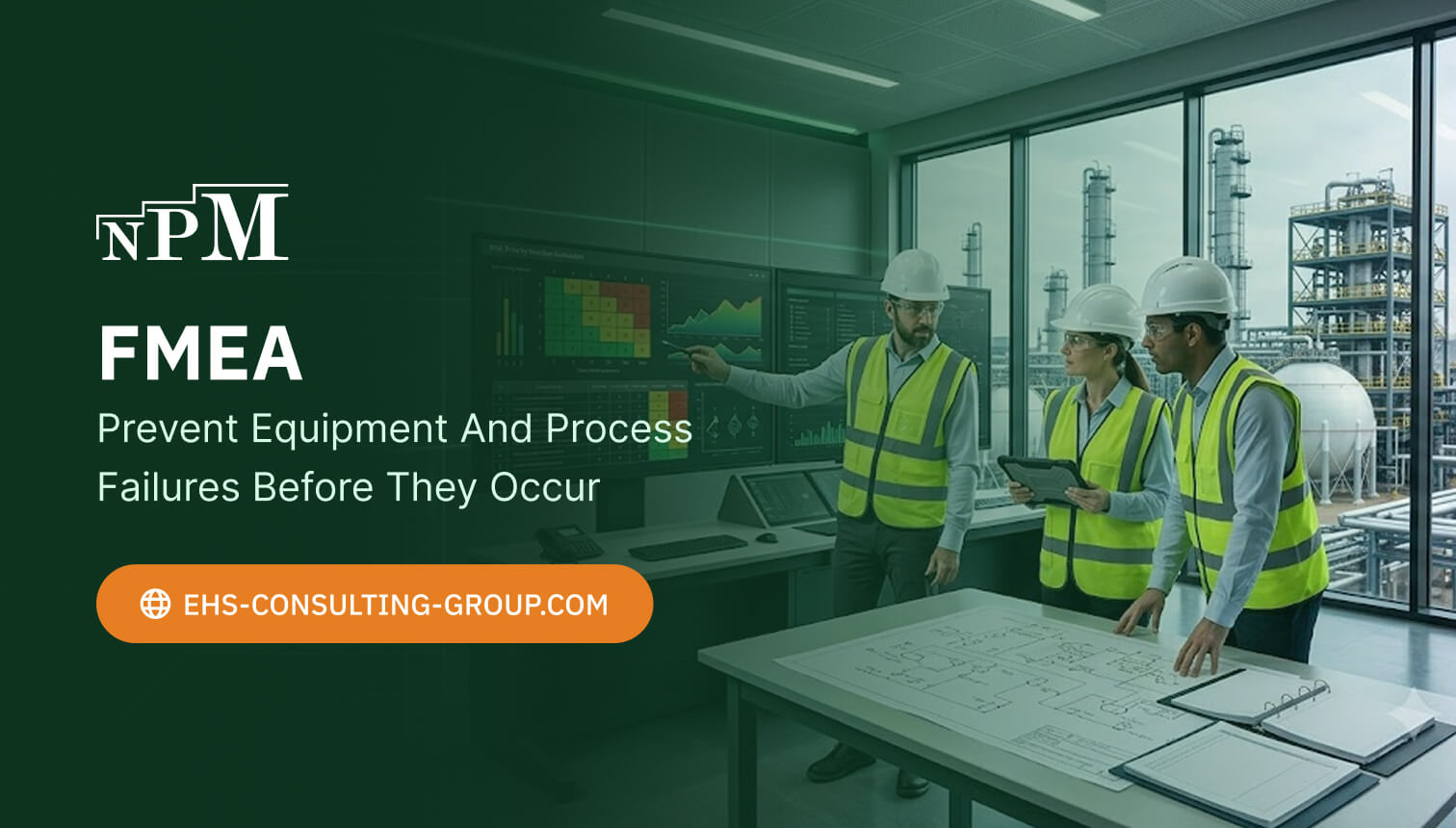
Organizations invest in process safety not only to comply, but also because it improves business performance. The benefits are tangible when the system is implemented with discipline and measured routinely:
- Risk reduction that is visible in Tier 1/2 performance, near-miss quality, and barrier health metrics (e.g., SCE test compliance, overdue MoCs, proof-test coverage).
- Operational stability due to fewer unplanned shutdowns, better alarm management, and more reliable safety instrumented functions.
- Regulatory confidence and smoother approvals where clear risk assessments, emergency plans, and inspection records demonstrate control of major hazards.
- Lower lifecycle cost via targeted inspection and maintenance (RBI/RCM), preventing both under-maintenance and over-maintenance.
- Improved insurance dialogue where quantitative risk results, impairment management, and incident learning support risk-financing decisions.
Concrete use cases include: commissioning a new gas processing train with a tightly managed MoC/PSSR sequence; normalizing alarm rates in a refinery crude distillation unit to reduce operator overload; verifying that a storage terminal’s overfill prevention layers meet API 2350 principles; aligning a power and desalination plant’s SIS proof-test intervals with LOPA outcomes; or integrating drone-based inspection findings into RBI for a tank farm. In each case, the mechanics of PSM—information control, barrier integrity, change management, and learning—are what make the difference between a temporary fix and a durable solution.
Best Practices and Points of Caution

Good process safety performance does not rely on a single breakthrough; it is the compounding effect of many sound practices sustained over time. Several best practices show outsized value in UAE industrial settings:
- Define safety critical elements with performance standards. Be explicit about function, reliability targets, inspection/test methods, and defect/impairment response. Track impairments daily.
- Link MoC to risk and documentation. Do not approve changes until hazards, procedures, drawings, and training needs are synchronized. Treat temporary changes with the same rigor as permanent ones.
- Use Bowties to visualize barrier effectiveness. Align inspection, proof testing, and operator checks with the barriers that matter most for top events such as overpressure, loss of containment, and fire.
- Align SIS lifecycle activities with hazard analysis. The justification for SIL must remain live, informing set points, bypass rules, and proof-test coverage—closed-loop to IEC 61511 expectations.
- Measure what matters. Supplement lagging indicators with leading ones such as overdue SCE tests, alarm floods, open high-risk MoCs, overdue PSSR actions, and critical procedure deviations.
- Practice realistic emergency scenarios. Include impaired conditions (e.g., firewater pump down, ESD system in bypass) and coordination with Civil Defence to validate assumptions.
Common pitfalls are equally instructive:
- Relying on procedures without verifying they reflect actual operating reality and that operators have been trained and assessed on abnormal situations.
- Letting documentation drift from the physical plant—especially after small changes and contractor activities—undermining MoC, proof testing, and emergency planning.
- Assuming third-party maintenance implies risk control. Contractor management must ensure competence, supervision, and integration with site permits and isolations.
- Treating audits as paper checks rather than opportunities to test barrier performance in the field (valve strokes, detector coverage, tag verification).
- Measuring too many indicators with little ownership, instead of a concise set that drives action at the right level of the organization.
Finally, remember that culture is built transaction by transaction. When a supervisor pauses a job to correct a permit discrepancy and the plant manager supports that decision, the signal is clear. When overdue proof tests are escalated and resources are reassigned to clear the backlog, the system learns. That is how leadership converts process safety from a document set into a living discipline.
Frequently Asked Questions About Process Safety Management

How is process safety different from occupational safety?

Occupational safety focuses on preventing injuries from routine tasks (slips, trips, falls, ergonomics), while process safety targets catastrophic events arising from process conditions—high pressure, flammable or toxic inventories, exothermic reactions, and complex automation. Both are essential, but process safety relies more on engineering controls, operating discipline, and lifecycle integrity to prevent low-frequency, high-consequence events.
Which standards are most relevant for UAE facilities?
Organizations often align to CCPS Risk-Based Process Safety and use OSHA 1910.119 as a benchmark for structure. IEC 61511 is central for Safety Instrumented Systems. API recommended practices (such as API RP 14C and API RP 754) inform offshore safety and performance indicators. ISO 45001 and ISO 14001 help embed process safety within broader management systems. Local authorities—OSHAD, Dubai Municipality, and Civil Defence—set requirements that integrate with these references.
Is PSM only about the safety instrumented system (SIS)?
No. The SIS is a vital layer, but PSM encompasses the full stack of protections: inherently safer design, relief systems, basic process control, operator response, mechanical integrity, fire and gas detection, active and passive fire protection, emergency response, and more. A resilient system needs multiple independent layers verified for function and reliability.
Do small changes still require Management of Change (MoC)?
Yes. Many incidents begin with small, undocumented changes—instrument range adjustments, valve orientation swaps, temporary jumpers, or procedural shortcuts. MoC scales with risk, but even seemingly minor changes require evaluation for unintended effects on process conditions, alarms, interlocks, and emergency response.
What process safety indicators should leadership track?
A balanced set typically includes lagging indicators like API RP 754 Tier 1/2 events and leading indicators such as SCE test compliance, overdue MoCs, proof-test coverage for SIFs, alarm flood rates, and closure of high-priority audit findings. The selection should be tailored to major hazards and barrier dependencies at each facility.
How does emergency response fit into PSM?
Emergency response is a critical part of the barrier model. Scenarios derived from hazard analyses should shape drills, team roles, mutual aid agreements, and resource placement (e.g., foam, monitors, breathing apparatus). Coordination with Civil Defence and clear site command structures ensure that if primary barriers fail, consequences are limited effectively.
What role do contractors play in process safety?
Contractors are often involved in maintenance, turnarounds, and projects where risk is heightened. Contractor management must address competence, supervision, permit-to-work integration, isolations, and adherence to site controls. Clear onboarding and verification against critical procedures help maintain barrier integrity during high-activity periods.
Is a QRA mandatory for all facilities?
Requirements vary by authority, operator, and hazard profile. Many high-hazard sites perform QRA to quantify individual and societal risk and to support land-use planning, emergency response, and ALARP demonstrations. Even where not explicitly mandated, QRA can be an effective tool for prioritizing investments in barriers.
Bringing It All Together
The core of process safety management is coherence: ensuring that what is designed, documented, operated, maintained, and changed remains aligned with the hazards present and the barriers credited. Earlier, we outlined the essential elements—PSI, hazard analysis, operating discipline, asset integrity, MoC, training and competency, incident learning, and emergency preparedness—and showed how they connect across a facility’s lifecycle. We also discussed how indicators translate management intent into action by making barrier health visible, and how common pitfalls—documentation drift, procedural gaps, and unmanaged “small” changes—erode defenses if left unchecked.
For leaders and practitioners in the UAE, the objective is not merely to have the right documents, but to make the system live: proof tests executed and analyzed, alarm rationalization maintained, temporary changes treated seriously, and emergency drills reflective of credible scenarios agreed with Civil Defence. If you began this article asking, “What Is Process Safety Management?”, the practical answer is a disciplined, continuously verified way of working that allows complex plants to run safely and reliably, day after day, despite uncertainty and change.
To go further on this topic, NPM’s broader Process Safety Management Services UAE page covers this in more depth.
Our References
NPM’s references illustrate how the principles described in this article translate into tangible outcomes in complex, real-world environments. Across refineries, gas plants, offshore platforms, petrochemical units, power and desalination facilities, storage terminals, and large logistics sites, our teams have helped embed process safety as a living system: ensuring process safety information remains authoritative, barrier health is actively measured, and management of change is handled with rigor from concept through commissioning and operation. These references span a range of regulatory contexts and client objectives, from aligning with IEC 61511 for Safety Instrumented Systems to integrating API RP 754 performance indicators into leadership dashboards, to conducting Bowtie-based barrier reviews that inform targeted maintenance and training programs.
In many cases, the references show how process safety work navigates real constraints—tight shutdown windows, brownfield modifications, simultaneous operations, contractor interfaces—and still maintains the integrity of safety critical elements. They also reflect multi-disciplinary coordination: operations, maintenance, engineering, and HSE collaborating to resolve discrepancies between design intent and plant reality, with emergency response coordination woven through drills and exercises. For stakeholders who want to see evidence of sustained results, the references provide concrete examples of reduced Tier 1/2 events, improved audit outcomes, and stronger regulator and insurer confidence driven by clear risk assessment, reliable proof testing, and disciplined change control. Reviewing these case examples can help benchmark your own facility’s maturity and identify practical steps to close gaps in documentation, procedures, asset integrity, or incident learning. NPM’s portfolio demonstrates that when process safety is treated as a management system—not a checklist—sites achieve safer, more stable operations.
For more information about our references, visit Our References.
Speak With NPM
If you would like to discuss how these concepts apply to your facility’s hazards, systems, and regulatory obligations, our team is available to share perspectives. Whether your focus is aligning with IEC 61511, strengthening MoC discipline, or clarifying barrier performance standards, we are happy to talk through practical next steps. For any further questions or to speak with our team, Contact Us.