

Classes Of Fire Explained is more than a chart on a wall; it is a practical framework that HSE leaders and emergency response teams rely on to prevent small incidents from escalating into major losses. When a fire starts in an industrial environment — from a pump seal leak at a refinery to a lithium-ion battery pack overheating in a logistics warehouse — the correct identification of the fuel class determines whether the chosen extinguisher will knock the fire down or make it dramatically worse. For UAE operators navigating Civil Defence approvals, OSHAD requirements, ADNOC HSE Codes of Practice, and ISO 45001:2018 management systems, understanding how fire classes map to suppression methods is an everyday competency that underpins preparedness, asset protection, and life safety.
Who Does This Affect?
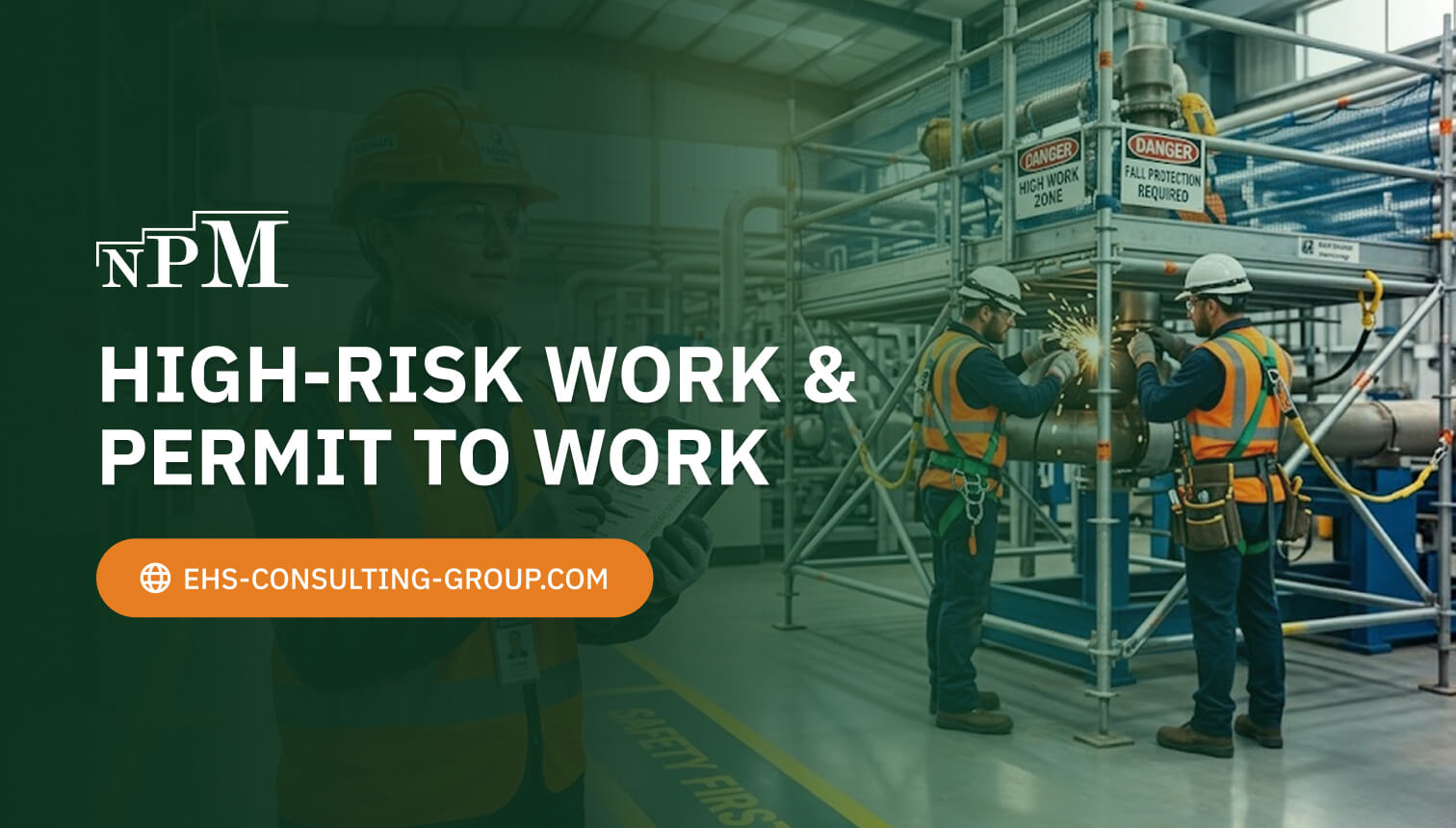
Although the language of fire classes is familiar to most employees, the responsibility for applying it consistently under pressure extends across functions. Within high-risk industries in the UAE — oil and gas upstream facilities, petrochemical complexes, bulk storage terminals, power generation plants, heavy manufacturing lines, and major construction sites — the implications touch decision-makers and front-line staff alike. Several roles in particular need a working, shared mental model of combustibles, ignition sources, and the extinguishing agents matched to them:
- HSE managers and compliance officers who align facility safeguards with Civil Defence codes, OSHAD SF elements, and corporate standards.
- Plant managers, production supervisors, and maintenance engineers who design, operate, and modify equipment where combustible loading and ignition controls change over time.
- Emergency response team (ERT) leaders, control room operators, and security personnel who coordinate first response and evacuation.
- Permit-to-Work coordinators, hot work supervisors, and contractors executing tasks near flammable or combustible materials.
- Procurement and warehouse teams responsible for selecting, inspecting, and positioning extinguishers and suppression media.
- Quality and operations excellence functions integrating risk studies (HAZOP, HAZID, Bowtie, LOPA) into practical fire protection strategies and training plans.
When these groups share the same language and classification logic, decisions about extinguisher selection, foam stock, clean agent use, and firefighting tactics become faster and safer. Misalignment, by contrast, is revealed in the first ninety seconds of an incident.
Why This Topic Matters

The stakes of misclassifying a fire are immediate and unforgiving. Applying water to a hydrocarbon spill can spread burning liquid; using CO2 on a deep-seated Class A fire may cool without penetrating, only for the fire to reflash; attacking magnesium chips with a standard ABC powder may generate violent reactions. On the other hand, a correctly chosen agent breaks the fire tetrahedron — removing heat, isolating oxygen, or interrupting the chemical chain reaction — and buys precious minutes before fixed systems activate or Civil Defence arrives.
Beyond the physics, compliance drivers are clear. UAE Civil Defence requires appropriate fire protection across occupancies and processes, with reference to NFPA standards for extinguishers (NFPA 10), foams (NFPA 11), carbon dioxide systems (NFPA 12), water-based systems (NFPA 13), water mist (NFPA 750), clean agents (NFPA 2001), and hazardous materials (NFPA 400). ADNOC operations and many industrial tenants embed these references in specifications and HSE Cases. OSHAD SF in Abu Dhabi expects risk-based control selection supported by competence development and documented procedures. For organizations certified to ISO 45001 and ISO 14001, the correct classification and control of fire hazards is also a thread running through hazard identification, emergency preparedness, and operational control.
At a business continuity level, knowing your fire classes ties directly into loss prevention and insurance defensibility. Underwriters reviewing a refinery’s tank farm will ask about foam type and stock levels for polar and non-polar solvents; a manufacturer’s insurers will ask about ABC vs. BC coverage near energized equipment; a logistics operator’s coverage terms may hinge on how lithium-ion storage risks are mitigated. In each case, facility teams who can articulate hazard classes and matching agents demonstrate mastery, not mere compliance.
Key Points to Understand

Before translating classification into tactics, it helps to align on the underlying concepts. Fire behavior depends on fuel type, heat, oxygen availability, and the chemistry of combustion. The familiar “fire triangle” (fuel, heat, oxygen) expands to a “fire tetrahedron” when we include the self-sustaining chemical chain reaction. Extinguishing agents act by cooling (e.g., water), smothering (e.g., foam, CO2, inert gases), separating fuel from oxygen (e.g., foam blanket), or chemically inhibiting the reaction (e.g., halocarbon clean agents, dry chemical powders). The class of fire tells you which mechanism is most likely to work.
Common Fire Classes in Industrial Contexts
Standards differ slightly between regions, but most UAE facilities reference NFPA classifications:
- Class A: Ordinary combustibles (paper, wood, textiles, many plastics). Primary mechanism: cooling with water; also water mist for sensitive areas.
- Class B: Flammable and combustible liquids and gases (gasoline, diesel, solvents, LPG, LNG vapors). Primary mechanism: smothering/blanketing (foam), vapor suppression; dry chemicals for knockdown.
- Class C: Fires involving energized electrical equipment. “C” indicates the equipment is live; once de-energized, the fuel reverts to its base class (often A or B). Suitable: non-conductive agents (CO2, clean agents, dry chemical), water mist rated for electrical use at appropriate distances.
- Class D: Combustible metals (magnesium, titanium, sodium, potassium, zirconium, lithium in metallic form). Requires specialized dry powders formulated for the specific metal; water and most standard agents are hazardous here.
- Class K (or F in some regions): Cooking oils and fats, often in commercial kitchens and catering operations. Wet chemical agents (potassium acetate-based) cool and saponify, creating a soap-like barrier.
In some documentation, you may encounter European “Class F” where NFPA would use “Class K.” The concept is the same: high-temperature cooking media requiring wet chemical suppression and cooling without splashing.
Extinguisher Ratings and What They Mean
Portable extinguishers carry a combination of letters and numbers. The letter indicates the class; the number quantifies relative effectiveness (e.g., 2A:10B:C). In this example, “2A” relates to the equivalent of 2.5 gallons of water on Class A materials; “10B” indicates effectiveness on a set surface area of a flammable liquid fire; “C” indicates it’s non-conductive for energized equipment. For plant layouts, these ratings inform travel distances and coverage based on NFPA 10 and local authority guidance.
Agent Selection: What Works and What to Avoid
While facilities often maintain a mix of ABC dry chemical, CO2, foam, wet chemical, and sometimes water mist units, the “go-to” choice depends on the scenario. The table below summarizes practical pairings and critical cautions that frequently surface during incident investigations and audits.
| Fire Class | Typical Fuels (UAE Industries) | Common Locations/Equipment | Primary Agents | Agents to Avoid | Notes |
|---|---|---|---|---|---|
| A | Wood pallets, cable insulation, packaging, rubber belts | Warehouses, offices within plants, cable trays | Water, water mist, foam (if risk of spread minimal) | CO2 alone for deep-seated fires | Water cools and penetrates; mist limits collateral damage |
| B | Crude oil, gasoline, diesel, solvents (toluene, MEK), LPG | Pump skids, tank farms, loading racks, process units | Foam (AFFF/AR-AFFF as appropriate), dry chemical (BC/ABC) | Water jets (risk of spread), water without proper application | Use alcohol-resistant foam on polar solvents; control ignition sources |
| C | Energized switchgear, MCCs, panels, drives, servers | Substations, control rooms, motor rooms, IT racks | CO2, clean agent (e.g., HFC-227ea, FK-5-1-12), dry chemical, water mist rated for electrical | Water spray/foam on energized components | De-energize as soon as safe; after power-off treat as A or B |
| D | Magnesium/titanium machining chips, sodium, potassium | Machine shops, additive manufacturing, metal workshops | Specialized Class D powders (e.g., NaCl-based, copper powder) | Water, foam, CO2, standard ABC powders (may react) | Smothering and heat absorption without reaction are key |
| K/F | Cooking oils/fats in commercial kitchens | Industrial canteens, offshore galleys, camp kitchens | Wet chemical (potassium acetate), fire blankets for small pans | Water, CO2 (risk of splashing, re-ignition) | Cool thoroughly to prevent reflash; manage ventilation |
Aligning this logic in written procedures and training helps remove ambiguity at the point of use. For organizations that centralize HSE policies, permits, and emergency plans in a single governance platform, tools like CABINET NPM can serve as a structured repository for controlled documents and approvals — ensuring that updates to classifications, agent specifications, and layout drawings are visible to all relevant stakeholders.
How This Works in Practice

Turning classification knowledge into operational readiness is about context. Consider a rotating equipment area in a petrochemical plant: lube oil reservoirs, hot surfaces, and potential mist releases mean Class B risk is always present. A small leak ignited at a pump seal is a classic B fire; the right tactic is foam application to knock down flames and suppress vapors, with a dry chemical extinguisher for immediate flame interruption if foam isn’t immediately at hand. The wrong tactic — a narrow water jet — can spread burning liquid across the floor and under equipment, forcing a wider shutdown.
Electrical rooms highlight another nuance. When energized switchgear arcs, the safest first response is with a non-conductive agent. CO2 can be effective but displaces oxygen and can be hazardous in confined spaces; clean agents can suppress quickly without residue, but require trained application and consideration of room integrity. As soon as it’s safe to isolate power, the underlying combustibles often revert to Class A, at which point water mist or even standard water application (with control) becomes preferable for thorough cooling.
In machine shops where magnesium or titanium are machined, housekeeping is preventive firefighting. Fine chips accumulate and raise the probability of a Class D event under frictional heating or a stray spark. Specialized Class D powders must be positioned close to the risk, clearly labeled for the specific metal type, and staff trained not to “test” other extinguishers on a smoldering pile — a mistake that can generate severe flare-ups.
Commercial kitchens in industrial canteens and offshore vessels add the high-temperature cooking hazard. Wet chemical units neutralize oil surface reactions; however, ventilation management (turning off make-up air and extraction if flames risk propagation through ducts) and thorough cooling time are critical to prevent reflash. Staff should be trained never to move a pan or apply water to oil — a visceral hazard that every responder must internalize.
Finally, energy storage and e-mobility introduce battery risks that do not fit neatly into traditional classes. Lithium-ion cells undergoing thermal runaway behave differently from “metallic lithium” Class D scenarios. Large quantities of water for cooling and containment are the prevailing strategy, with water mist for certain enclosures. Pre-incident plans should define isolation distances, ventilation strategies, and extended monitoring, recognizing that extinguishment may be prolonged, and off-gassing can challenge responders.
Benefits and Practical Use Cases

Embedding correct fire class logic into daily operations yields concrete, measurable advantages across UAE industrial sites. The benefits extend from incident performance to compliance assurance and cost control.
- Faster, safer first response: Teams that “see” the fuel class make quicker agent selections, cutting heat release rates earlier and reducing likelihood of escalation to fixed system discharge or external response.
- Better equipment protection: Using water mist or clean agents on sensitive energized equipment avoids collateral damage associated with dry chemical residue, while still securing life safety.
- Regulatory defensibility: Demonstrable alignment with NFPA 10 for extinguisher types, sizes, and placement — and with UAE Civil Defence approvals — reduces friction during inspections and permit renewals.
- Optimized inventory: Classification-based procurement avoids over-reliance on one agent. For example, ensuring AR-AFFF availability for polar solvents in tank farms, and dedicated Class D powders where machine shops justify them.
- Integration with risk studies: HAZOP nodes that identify hydrocarbon releases feed a Bowtie barrier model in which portable extinguishers and foam lines are explicit “controls”; LOPA can credit them as independent protection layers when justified and maintained.
- Training that sticks: Tailoring drills around realistic class-based scenarios — a small diesel pool, an energized VFD enclosure, or a fryer flare-up — builds the decision-making muscle memory that generalized sessions often miss.
Across these use cases, the payoff is consistency: one classification vocabulary, one set of aligned tactics, and one documented method for matching extinguishers and suppression agents to the fuels actually present in your facility envelope.
Best Practices and Points of Caution

Because the right choice under pressure depends on preparation, the following practices help organizations maintain readiness and avoid common pitfalls. They are principles NPM sees reinforced across audits, drills, and investigations, and they align with NFPA guidance and local authority expectations.
- Survey and map hazards by area: Document dominant fuel classes in each zone (e.g., solvent transfer rooms, diesel day tanks, battery charging bays). Display simple area maps showing extinguisher locations and agent types.
- Specify agents to the fuel, not by habit: In flammable liquid areas, prioritize foam and BC/ABC units with adequate “B” ratings; in electrical rooms, provide non-conductive agents and water mist where appropriate.
- Mind foam compatibility: Use alcohol-resistant foams for polar solvents (e.g., ethanol, MEK). Validate concentrate age, storage, and annual testing; ensure eductors, proportioners, and foam makers match the concentrate type and design flow.
- Place Class D media at the point of risk: Keep dedicated powders for the specific metal close to machining centers; train staff to apply gently to avoid scattering and to allow smothering and heat absorption.
- Control ventilation and isolation: In kitchens and process areas, shutting off fuel and air supplies (gas valves, fans) can be as important as agent application.
- Prevent re-ignition: After initial knockdown, continue cooling (especially for Class A and K scenarios) and monitor for hot spots using thermal imaging if available.
- Respect CO2 and clean agent safety: Evaluate asphyxiation hazards for CO2 in confined spaces; ensure discharge alarms and egress procedures are clear.
- Maintain competence records: Link training to roles (permit issuers, hot work supervisors, ERT, security). Refresh after layout changes or when new fuels/agents are introduced.
- Align with travel distance and placement standards: Use NFPA 10 and local authority guidance for maximum travel distances by hazard class; audit for obstructions and visibility.
- Document in your management system: Keep classification logic, equipment specs, and area hazard maps under document control, with periodic review triggers tied to MOC (Management of Change).
Points of caution are equally important. For instance, ABC powder is versatile but corrosive to some electronics and difficult to clean; its use in control rooms may protect life safety but extend downtime. Water on flammable liquid spills can spread contamination unless applied as a gentle fog or in combination with foam. Lithium-ion battery fires require patience and copious cooling water; premature declarations of “out” risk re-ignition. And for energized electrical equipment, confirm de-energization before shifting tactics — many incidents have re-flashed when power unexpectedly returned.
Frequently Asked Questions About Classes of Fire
Is an “electrical fire” its own class?
Not exactly. “Class C” indicates that electrical equipment is energized, which affects the agent you can safely apply. Once power is isolated, the remaining fuel is typically Class A (insulation, plastics) or Class B (oils), and tactics should shift accordingly. The “C” is a state, not a separate type of fuel.
What is the difference between ABC and BC dry chemical extinguishers?
ABC powders (often monoammonium phosphate) can handle Classes A, B, and C, and they have some cooling and coating action on Class A materials. BC powders (typically sodium bicarbonate) target B and C classes, focusing on interrupting the chemical chain reaction in flammable liquid/gas fires. ABC is more versatile, but BC may be preferred in certain applications due to residue characteristics and effectiveness on B fires.
Can water mist be used near energized equipment?
Yes, if the water mist extinguisher is rated for use on energized equipment and applied at the specified safety distance. The fine droplets increase surface area for heat absorption while reducing conductivity compared to a solid stream. Always check the unit’s rating and follow manufacturer instructions and site procedures.
How do I know which foam to use for my solvents?
Match foam to the solvent’s polarity. Non-polar hydrocarbons (gasoline, diesel) are compatible with standard AFFF, while polar solvents (alcohols, ketones) require alcohol-resistant (AR-AFFF) foams to prevent the agent from being broken down. Check material safety data and your inventory; many tank farms standardize on AR-AFFF to cover both classes.
Are lithium-ion battery fires considered Class D?
No. Although lithium metal is a Class D fuel, most commercial batteries use lithium compounds that behave differently. Thermal runaway in lithium-ion cells is best handled with copious water for cooling and containment, water mist in certain applications, and extended monitoring to prevent re-ignition. Specialized agents exist for certain scenarios, but traditional Class D powders are generally ineffective for battery packs.
How often should we review our fire class mapping and extinguisher placement?
Review whenever there is a Management of Change event that alters fuels, processes, layouts, or equipment — and at least annually during fire safety audits. Commissioning new lines, modifying storage (e.g., adding ethanol), introducing CNC machining of magnesium, or relocating MCCs are all triggers for revalidating classes and agent coverage.
What extinguisher rating should we prioritize in flammable liquid areas?
Look for higher “B” ratings (e.g., 40B or above) for areas with significant spill fire potential, along with foam units positioned for rapid access. Ratings interact with travel distance, spill size assumptions, and the presence of fixed systems; use NFPA 10 guidance and local authority requirements to model coverage.
Does CO2 leave residue, and is it safe to use in confined spaces?
CO2 leaves no residue, which is advantageous for sensitive equipment. However, it displaces oxygen, creating an asphyxiation hazard in enclosed areas. Ensure discharge alarms, time delays where fixed systems are used, and evacuation procedures are in place. Portable CO2 application requires awareness of ventilation and atmospheric conditions.
Conclusion
Understanding fire classes is a foundation for credible emergency preparedness. By identifying fuels precisely, matching agents to mechanisms, and translating that logic into area maps, procurement specs, and drills, organizations create the conditions for fast, correct action when seconds matter. Earlier sections showed how this plays out — from foam choice at a pump skid and non-conductive agents in electrical rooms, to specialized powders in machine shops and wet chemical in kitchens — and why alignment with NFPA guidance and local authority approvals is essential. When this vocabulary becomes second nature across operations, maintenance, and ERT teams, it does more than pass audits; it prevents escalation, protects assets, and saves lives.
To go further on this topic, NPM’s broader Fire Fighting Training UAE page covers this in more depth.
Explore NPM’s References
NPM’s references reflect a track record built across complex, high-hazard environments worldwide. For more than a decade, our teams have supported operators, EPCs, and asset owners as they mature their emergency preparedness and integrate fire classification logic into the fabric of operations. Our portfolio spans refineries and petrochemical complexes commissioning new units with mixed hydrocarbon service; offshore platforms and FPSOs validating the interplay of portable equipment with fixed deluge and foam systems; power stations aligning extinguisher coverage with electrical rooms and turbine enclosures; manufacturing plants introducing combustible metal machining and revising Class D media placement; and logistics hubs adapting to lithium-ion storage growth while maintaining compliance with authority requirements. Each engagement reinforces the same principle you’ve read throughout this article: when classification is accurate and widely shared, the right agent is chosen quickly, the right isolation is performed early, and incident consequences shrink.
In our project narratives, you’ll find examples of how risk studies like HAZOP and Bowtie were translated into practical extinguisher layouts, how foam stock management was improved to anticipate polar and non-polar needs, how wet chemical coverage in large catering operations was right-sized, and how water mist and clean agents were selected to protect energized equipment without extending downtime. You will also see how NPM integrates applicable standards — from NFPA 10, 11, 12, 13, 750, and 2001 to ISO 45001 and environmental controls — into cohesive management system elements, audits, and training roadmaps. These references are not just about “what was installed” or “what was taught,” but how the decisions were anchored in a clear understanding of fuels and extinguishing mechanisms. That is exactly the logic that turns a color-coded label into a genuine control barrier.
For more information about our references, visit Our References.
Speak With NPM
If you would like to discuss how fire classification applies to your facility layout, extinguishing agent inventory, or emergency drills, our team is happy to share perspectives and examples. A brief conversation can help you validate current assumptions or identify targeted improvements that raise confidence before the next drill or audit. We welcome technical questions from operations, HSE, and maintenance alike.
For any further questions or to speak with our team, Contact Us.