

Banksman Responsibilities are at the heart of safe lifting, slinging, and vehicle maneuvering operations in heavy industry. In high-risk environments across the UAE—refineries, petrochemical complexes, construction sites, logistics yards, and power plants—the banksman is the on-ground coordinator who keeps people, equipment, and product moving safely. While the role can look deceptively simple from a distance—hand signals, radios, and visual checks—the reality is a disciplined set of duties grounded in risk assessment, standard operating procedures, and regulatory expectations. Understanding the full scope of this role helps HSE leaders and line management improve safety performance, reduce incident potential, and maintain compliance with corporate and local requirements.
Because the banksman sits at the operational control point where plans meet reality, this role becomes a practical extension of a facility’s lifting plan, traffic management plan, and permit-to-work (PTW) system. Whether guiding an overhead crane through a congested maintenance bay, marshaling a reversing tipper truck near pedestrian walkways, or coordinating a tandem lift around live process equipment, the banksman’s responsibilities serve as a real-time barrier against contact, dropped objects, and loss-of-containment scenarios. When framed correctly, these responsibilities build a culture of clear communication and disciplined execution—principles central to ISO 45001-style management systems and the expectations of ADNOC group guidelines, OSHAD references, and Dubai Municipality codes.
Who Does This Affect?
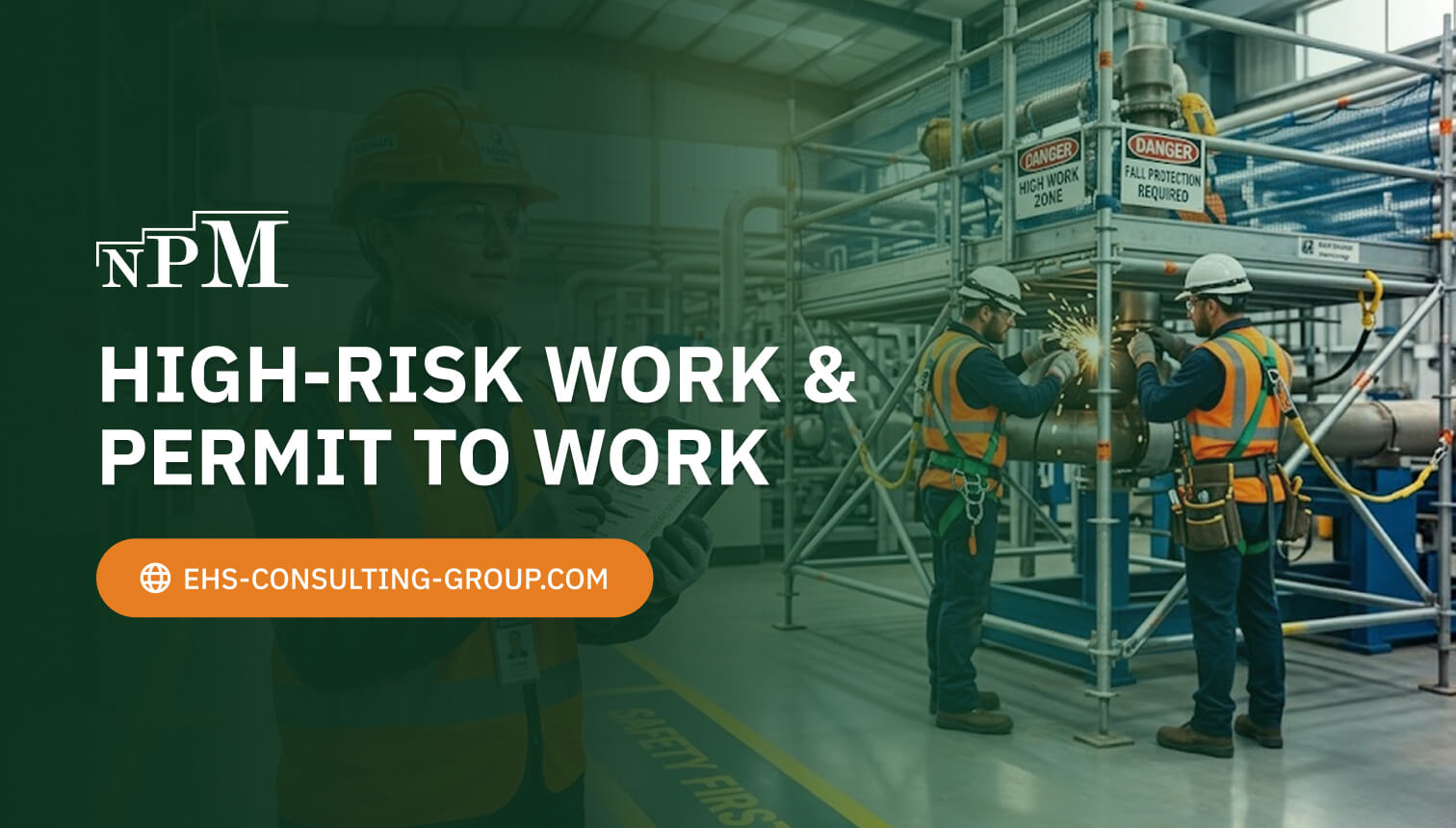
The scope of this topic extends far beyond the individual banksman. While the banksman is the visible “conductor” of the activity, the effectiveness of the role depends on how operations, maintenance, HSE, and contractors integrate leadership, planning, and supervision. Understanding how it all connects helps teams allocate accountability and resource the function correctly.
Typically involved stakeholders include:
- HSE Managers, lifting supervisors, rigging teams, and crane operators within oil and gas, petrochemicals, and heavy manufacturing.
- Construction project managers and site engineers overseeing structural steel erection, formwork, precast panel installation, façade works, and tower crane operations.
- Logistics coordinators, warehouse supervisors, and yard foremen managing forklifts, reach stackers, container handling, and heavy goods vehicle (HGV) movements.
- Maintenance planners and shutdown/turnaround managers coordinating complex lifts in live plants with SIMOPS considerations.
- Port, terminal, and free-zone operators where traffic segregation, quay crane proximity, and pedestrian interfaces require strict marshalling.
For HSE and operations leaders, the banksman role is a frontline control that must be aligned with your lifting plans, toolbox talks, and hazard registers. For supervisors and foremen, it is the practical channel for last-minute risk assessment, communication of changes, and stop-work authority. For contractors, it is a role that must be integrated into competency matrices and subcontractor agreements, with expectations clearly defined and monitored.
Why This Matters

In a high-energy environment, motion is risk: moving loads, swinging booms, reversing vehicles, and congested routes all represent potential for harm. A banked maneuver gone wrong can lead to severe injuries, fatality risks, equipment damage, or product loss. Moreover, incidents around lifting and vehicle movements often have outsized consequences: shutdowns, production deferment, regulatory scrutiny, and reputational damage. In the UAE context, oversight from MOHRE, Civil Defence, and municipal authorities is increasingly focused on demonstrable control of lifting and traffic hazards, while ADNOC and major operators require rigorous adherence to lifting standards and contractor competency.
From a risk management standpoint, a well-defined banksman function bolsters several layers of protection. Upstream, documented lifting studies, HAZID/HAZOP-style reviews for brownfield changes, and line-of-fire risk assessments set the technical boundaries. At the point of work, the banksman translates those boundaries into real-time instructions: confirming exclusion zones, monitoring pinch points, enforcing tag line use, and halting activity when conditions deviate. Downstream, good banksman practice produces accurate event logs, near-miss data, and lessons learned—inputs that strengthen management of change (MOC) and continuous improvement under ISO 45001 or corporate HSE frameworks.
Operationally, there is also a performance case. Clear marshalling reduces delays, rework, and damage. It supports predictable task duration during shutdowns and reduces crane idle time. It also prevents secondary impacts—like scaffold repairs after impacts or line flushing after accidental contact with pipework—which can ripple through schedules and budgets.
Key Points to Understand

Translating expectations into consistent practice requires a clear, shared understanding of the banksman’s core functions. While specific site procedures vary, several universal components define the role in industrial settings.
Core Duties Across Lifting and Vehicle Movements
The banksman’s role typically spans these duty areas, coordinated with supervisors and operators:
- Pre-task coordination: Verify the lift or maneuver plan, route, ground conditions, overhead obstructions, and weather or environmental constraints such as wind or poor visibility.
- Communication management: Agree primary communication method (visual signals vs. radio), backup method, call-and-response protocol, and explicit stop signals.
- Exclusion and segregation: Establish barriers, spotters as needed, banksman placement, pedestrian control, and tag line positions.
- Load path control: Keep the load away from personnel and sensitive equipment; manage swing; confirm no one is under the load; monitor hook height and slew angles as appropriate.
- Vehicle marshaling: Control reversing movements, blind spots, trailer swing, docking alignments, and proximity to edges or pits; ensure drivers operate only on the banksman’s signals.
- Dynamic risk assessment: Pause and reassess when conditions change—unexpected vehicle entry, a new obstruction, deteriorating weather, or crane/vehicle anomalies.
- Stop-work authority: Halt operations immediately when safety cannot be assured, and escalate to supervision.
Distinguishing Lifting vs. Vehicle Marshalling
Although the function is similar—directing movement—the hazard profiles differ. Lifting activities involve gravity loads with potential for dropped objects, snagging, or boom interference. Vehicle movements emphasize reversing risks, line-of-sight gaps, and pedestrian interfaces. Banksmen should be trained and authorized for the specific context in which they operate, with competency matrices distinguishing crane lifts, forklift guidance, reach stackers, HGV reversing, and overhead crane coordination.
Signals, Radios, and Noise Management
Standardized hand signals (per BS 7121-series or recognized site procedures) must be understood identically by all parties. Radios should use dedicated channels with disciplined protocol: identify, instruct, confirm, execute. In high-noise areas—compressors, jet fans, or pile driving—double confirmation and visual checks are vital. Where line-of-sight is interrupted, consider additional spotters or technology aids (camera systems, proximity alarms) while ensuring accountability remains clear.
Competency and Authorization
Competency expectations generally include formal evaluation, mentoring/observation, and periodic refreshers. Banksmen must be demonstrably familiar with lift plans, traffic layouts, and company procedures. Their authorization should be recorded and verified at the work front—especially in multi-contractor environments where confusion over who is the designated banksman can occur.
Regulatory and Standards Context
In the UAE, practice is typically informed by corporate standards aligned with ISO 45001, ADNOC’s lifting and HSE guidance, OSHAD codes of practice, and Dubai Municipality safety codes. Internationally recognized documents—such as the BS 7121-series for crane operations, ASME B30 standards, and principles akin to the UK’s LOLER framework—are often adopted or adapted in corporate procedures. While exact citations vary by operator, the thrust is consistent: competent planning, clear authority lines, reliable communication, and active hazard control.
Role Interfaces and Boundaries
Good outcomes depend on where the banksman role begins and ends relative to other positions. A practical way to clarify is to map responsibilities, typical tasks, and performance indicators:
| Responsibility Area | Typical Tasks for Banksman | Related KPIs/Checks |
|---|---|---|
| Pre-task planning interface | Review route, obstructions, and lift/traffic plan with supervisor and operator | Pre-task briefing completed; deviations documented |
| Communication control | Establish hand/radio signals; confirm call-and-response protocol | No missed calls; clear stop signal recognized |
| Exclusion zone setup | Position barriers, designate no-go areas, assign spotters if needed | No personnel inside zone; barriers intact |
| Movement guidance | Guide crane/vehicle movement; keep load clear; manage line-of-fire | Zero line-of-fire intrusions; zero impacts |
| Dynamic reassessment | Pause work on condition change; escalate to supervisor | Number of controlled pauses vs. unplanned stops |
| Documentation feedback | Record near misses, lessons learned; report plan gaps | Close-out of corrective actions; trend improvement |
This kind of map creates alignment between the banksman, lifting supervisor, rigger, crane operator, and area authority, making it easier to measure performance and coach for improvement.
How This Works in Practice

With the foundational responsibilities clear, the next step is practical application in typical industrial scenarios. Real-world complexity—tight spaces, schedule pressure, multi-lingual crews, weather variability—can strain even the best plans. Banksmen who anticipate these pressures and enforce disciplined communication minimize risk and maintain productivity.
Consider a brownfield refinery lift. A small mobile crane must thread a pump skid through pipe racks while the adjacent unit remains live. The banksman walks the route ahead of the lift, checking for temporary scaffolds, moved toolboxes, or new hoses across the path. During the lift, the banksman stations at the critical pinch point, ensuring the load stays within the planned corridor, with tag line handlers positioned to prevent swing. A brief wind gust appears; the banksman calls a stop, waits for stability, and re-states the next move to the team before resuming. The task proceeds without contact or delay because decisions were proactive and communication crisp.
Now switch to a construction tower crane on a high-rise. The banksman at the receiving level ensures the landing zone is clear, confirms slings will not snag, and prevents any person from standing under the load’s path. Visibility is occasionally lost behind a core wall, so a secondary spotter relays the banksman’s signals by radio using pre-agreed phrases. The sequencing is choreographed in the pre-task brief; on the day, the banksman enforces it steadily, resisting ad-hoc changes from well-meaning workers.
In a logistics yard, an HGV reverses to a loading dock. The banksman checks the dock’s edge protection, confirms chocks are ready, and instructs the driver to proceed only on the banksman’s signals. Pedestrians are diverted behind a barrier line, and the banksman stands in a safe refuge area visible to the driver’s mirrors. A forklift passes behind; the banksman halts the truck until the path is clear. What looks like “just reversing” is actually a string of deliberate decisions that, taken together, remove the chance for a low-speed but high-consequence crush injury.
Finally, consider a power plant maintenance bay with an overhead crane. Visibility can be deceptive underneath a gantry. The banksman keeps technicians clear of the hook and ensures tool carts are not left in the swing path. Small detail, big value: the banksman periodically reconfirms direction with the crane operator using a short, unambiguous voice command protocol developed in the pre-task brief. These micro-habits address the most common error sources: assumption, distraction, and noise.
Benefits and Practical Use Cases

When organizations clarify and strengthen the banksman function, they typically see measurable improvements across safety and operations. A few common benefits and where they are most visible:
- Incident reduction at critical interfaces: fewer line-of-fire exposures, impacts with structures, and dropped-object events in refineries and petrochemical plants.
- Improved turnaround performance: predictable crane cycles and faster lifts in shutdowns due to crisp marshalling and fewer stoppages for unplanned obstructions.
- Stronger contractor alignment: consistent signals, route discipline, and stop-work authority across mixed teams on construction mega-projects.
- Enhanced yard logistics: reduced damage to loading docks, doors, and racking from HGV and forklift movements.
- Better data for learning: more accurate near-miss reporting at the point-of-work, enabling trend analysis and targeted coaching.
- Regulatory confidence: when OSHAD, Dubai Municipality, or site auditors review lifting and traffic controls, a disciplined banksman model demonstrates the organization’s control over high-risk activities.
These benefits are amplified when tied into management system elements: documented competencies, standardized checklists, corrective action tracking, and lesson-sharing. A dedicated repository for procedures, risk assessments, and signal charts can help maintain version control and crew access. For teams seeking structured document organization options, see CABINET NPM for an example of how a centralized system can support consistency at the work front.
Best Practices and Points of Caution

Instituting a strong banksman function is as much about culture and discipline as it is about forms and checklists. The following practices are repeatedly associated with high reliability in heavy industry environments:
- Define one controller: At any moment, only one person should be giving movement instructions. If additional spotters assist, they coordinate through the designated banksman.
- Use standardized signals: Align with recognized standards and ensure all crane operators and drivers confirm understanding during the pre-task brief.
- Establish clear zones: Physical barriers, cones, and signage prevent drift. Where barriers are impractical, active spotters and verbal warnings are essential.
- Perform dynamic risk checks: Treat every change—wind shifts, route obstructions, traffic congestion—as a prompt to stop and reassess. Small pauses prevent large incidents.
- Pre-brief and debrief: Short toolbox talks that confirm route, signals, roles, and no-go areas set the team up for success. A quick debrief captures lessons while fresh.
- Apply human factors: Consider sun glare, fatigue, heat stress, hydration, and language barriers common in Gulf sites. Rotate roles and use visual aids.
- Coordinate SIMOPS: Verify hot work, confined space, or energized systems are compatible with lifting or vehicle maneuvers. Time-separate where needed.
- Hold the line on stop signals: Normalize halting for uncertainty. “Stop” must be immediate and respected without debate.
- Check ground and structural limits: Verify outrigger pads, suspended slabs, trench covers, and edge protections meet the plan assumptions before any move.
- Document and store the essentials: Keep lift plans, signal charts, checklists, and lessons learned in a stable, accessible repository with version control so crews never rely on outdated procedures.
Caution areas often trace back to communication drift: overlapping instructions, unverified radio calls, or unplanned shortcuts under schedule pressure. Another frequent pitfall is role confusion when multiple contractors operate side-by-side; documenting who is the appointed banksman—and ensuring all parties acknowledge that appointment—prevents contradictory commands. Lastly, beware of normalization of deviance: a thousand “easy” lifts or reverses can lull teams into complacency. Treat each movement as if it were the first of the day: fresh eyes, fresh checks.
Frequently Asked Questions About Banksman Responsibilities
Is a banksman the same as a rigger or a lifting supervisor?
No. The banksman directs movement and ensures safe coordination during the lift or maneuver. A rigger prepares and attaches the load using slings and hardware, while a lifting supervisor oversees planning and execution at a higher level, ensuring compliance with procedures and competence of the crew. In some small teams one person may hold multiple competencies, but responsibilities should still be distinct and clear.
What qualifications should a banksman hold in industrial settings?
Requirements vary by company and operator, but a banksman should have documented training and demonstrated competence in the specific context (crane lifts, forklift marshalling, HGV reversing, overhead cranes). Many organizations align competence with internal standards influenced by ISO 45001 and applicable corporate lifting procedures, often requiring periodic reassessment and supervisor sign-off.
What is the most common communication error during marshalling?
Ambiguity. Mixed signals, overlapping instructions from multiple people, or radio calls that are not confirmed can lead to unsafe movements. A disciplined call-and-response protocol and a clear “one controller” rule sharply reduce this risk.
Does the banksman have authority to stop the job?
Yes. The banksman must stop operations immediately if safe control cannot be maintained or conditions change unexpectedly. Good practice is to escalate to the lifting supervisor or area authority and only resume when controls are re-confirmed.
How should banksmen manage poor visibility or high noise levels?
Use additional spotters, pre-agreed radio scripts, and, where appropriate, visual aids like lighted wands. Place the banksman in a safe, visible location with agreed secondary positions if line-of-sight is interrupted. Avoid ad-hoc improvisation; plan for these conditions in the pre-task brief.
What documents should be available to the banksman at the work front?
At minimum: the lift plan or traffic management plan, relevant permits, signal charts, and the pre-task briefing record or checklist. Some sites also keep a simple job sheet to note deviations, pauses, and lessons learned for inclusion in shift handovers and incident prevention reviews.
How do UAE regulatory expectations influence the banksman role?
Corporate procedures typically integrate requirements aligned with OSHAD codes of practice, Dubai Municipality safety codes, ADNOC standards, and Civil Defence expectations. These frameworks emphasize competency, documented planning, and demonstrable control of high-risk activities, all of which elevate the importance and clarity of the banksman’s duties.
What technology can support banksmen without undermining their authority?
Camera systems, proximity alarms, and wearable alerts can enhance awareness, especially for vehicle reversing and blind lifts. The key is to treat technology as an aid, not a substitute for the banksman’s instructions. Accountability for movement decisions remains with the human controller.
Conclusion
Clear, disciplined Banksman Responsibilities translate high-level lifting and traffic plans into safe, repeatable movement at the point of work. By establishing unambiguous communication, enforcing exclusion zones, and practicing dynamic risk assessment, the banksman acts as a living barrier against line-of-fire and dropped-object hazards while sustaining productivity. In facilities where SIMOPS, contractor interfaces, and schedule pressure are the norm, this role becomes a keystone of operational safety—linking the expectations of ISO 45001-aligned management systems, corporate lifting standards, and UAE regulatory oversight with what actually happens on the ground. Investing time to define the role, authorize competent personnel, and embed lessons learned will pay dividends in fewer incidents, smoother execution, and stronger audit outcomes. To go further on this topic, NPM’s broader approach also considers human factors, heat stress, language clarity, and technology assists—always with the principle that one controller directs movement and everyone knows that person’s signals.
To go further on this topic, NPM’s broader Banksman Training UAE page covers this in more depth.
Explore NPM’s References
NPM’s track record supporting safe lifting and traffic management spans complex industrial environments worldwide. Over years of practice, our teams have worked alongside operators, EPCs, and contractors to strengthen the frontline controls that matter most: clear banksman roles, unambiguous signals, and robust interfaces between planning and execution. In refineries, we have supported brownfield modifications where cranes thread loads through live units, integrating banksman practices with SIMOPS controls and permit-to-work processes. On construction mega-projects, our specialists have helped standardize marshalling protocols across multiple contractors and tower crane operations, improving communication discipline while reducing line-of-fire exposures. In logistics and warehousing, our experience includes optimizing vehicle flows, segregating pedestrians, and setting practical banksman positions and radio protocols that withstand real site conditions. In power generation and heavy manufacturing, we have collaborated to streamline overhead crane coordination, embed dynamic risk checks into daily routines, and align documentation with ISO 45001 management systems. Beyond implementation, NPM emphasizes learning loops: capturing near-misses, transforming them into improvements, and closing the gap between procedures and practice. The result is a body of references that shows how consistent banksman responsibilities—properly defined, trained, and coached—deliver measurable improvements in safety and schedule reliability without adding bureaucracy. If you want to understand the depth and variety of work NPM has executed, our references highlight both scale and detail: from single critical lifts to multi-year programs that reduce incidents and strengthen audit readiness.
For more information about our references, visit Our References.
Speak With NPM
If you have questions about how to define or strengthen the banksman role in your facility, we’re happy to share perspectives grounded in frontline experience. Whether your context is lifting, vehicle marshalling, or both, a short conversation can help clarify where to focus. For any further questions or to speak with our team, Contact Us.