
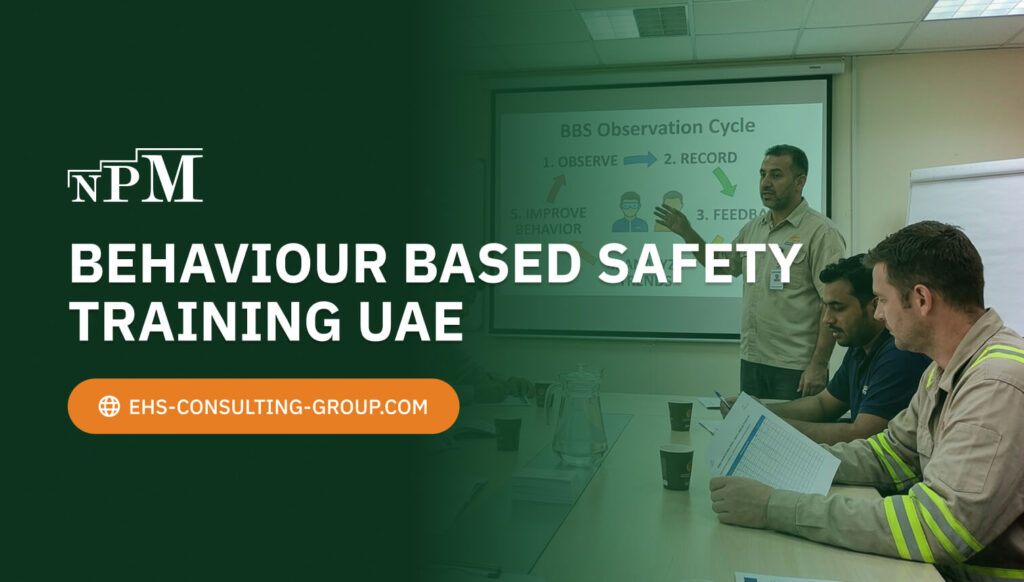
Safety Observation Checklists are one of the most practical ways to turn everyday worksite interactions into actionable safety intelligence across high-risk operations. When designed well and used consistently, they help teams in oil and gas, petrochemicals, construction, manufacturing, logistics, and power generation capture what is really happening at the job front, verify that critical controls are in place, and shape safer behaviors without slowing production. In the UAE’s regulatory context—where OSHAD requirements, MOHRE obligations, Civil Defence expectations, Dubai Municipality permits, and ADNOC HSE standards all intersect—the humble checklist can become the backbone of proactive risk management and an essential link between procedures, people, and process safety.
Who Does This Affect?

Because observation-driven safety spans both behavioral and technical controls, it touches nearly every function in an industrial organization. The immediate users are typically supervisors, HSE officers, permit-to-work authorities, and frontline leaders conducting field interactions during routine tasks, non-routine jobs, and shutdown/turnaround activities. But the implications extend further: plant managers and operations managers use observation trends to prioritize improvements; maintenance leads and planners reference findings to refine job plans; training coordinators use the observations to target skill gaps; and contractor management teams draw on the data to assess workforce readiness during mobilization.
Across facility types, the stakeholders vary but the need remains consistent. On offshore platforms and onshore drilling sites, rig managers, toolpushers, and lifting supervisors rely on targeted checklists to spot gaps before critical lifts or well interventions. In refineries and petrochemical complexes—where instrumentation, LOPA-derived safeguards, and SCEs (Safety Critical Elements) must function flawlessly—operations and I&E supervisors need observation prompts that verify bypasses, overrides, and alarm management rules are respected. Construction superintendents and safety inspectors look for working-at-height controls, scaffolding integrity, lifting plans, and excavation safety. In logistics hubs and ports, yard managers, drivers, and rigger signalers focus on traffic segregation, reversing controls, and load restraint. Power and desalination plants use observations to check lockout/tagout (LOTO), confined space controls, steam isolation, and turbine maintenance practices.
The point is not that one department “owns” this tool. Rather, effective observation checklists are an enterprise resource: they make sense of what people see in the field, so leaders at all levels can act on it. This breadth of involvement sets the stage for why structured observation truly matters.
Why Structured Observations Matter

Much of today’s risk profile stems not from a lack of procedures but from the practical challenges of consistent execution under pressure. Time constraints, competing priorities, and production demands can erode the gap between “work as imagined” and “work as done.” Field observations—guided by well-crafted prompts—shine a light on that gap. They make it possible to detect weak signals early, verify lifelines such as energy isolations or dropped-object prevention are intact, and elevate issues before they mature into incidents.
From a governance perspective, observation data supports the leading-indicator side of performance evaluation under ISO 45001 and complements OSHAD’s system framework requirements to proactively monitor risk controls. It also aligns with ADNOC’s HSE codes and lifesaving rules, where line-of-fire, working at height, and energy isolation remain persistent risk themes. In high-hazard environments, it is not enough to report outcomes; leaders need visibility on the health of critical controls and behavioral adherence to barrier management. Observation trends show whether campaigns on heat stress, lifting safety, or confined space entry are changing the field reality, not just the training logs.
Beyond compliance and assurance, the purpose is learning. Good checklists coach observers to ask the right open-ended questions, encourage conversation, and discover practical obstacles. They promote a culture where workers can highlight constraints without fear, thereby improving procedures and engineering solutions over time. In this sense, observation is not policing; it is co-creating safer work through real-time feedback and iterative improvement.
Key Points to Understand

To function as a reliable cornerstone of prevention, an observation checklist must frame the right prompts at the right time. Several design principles consistently separate effective tools from tick-and-flick forms:
- Risk-based focus: Emphasize high-energy hazards and safeguards that prevent serious injuries and major accidents (e.g., LOTO, dropped-object controls, confined space protections, critical lifting).
- Context-specific prompts: Tailor content to the task, site, or campaign—general forms rarely surface the most important details for a specific job.
- Balance of behaviors and controls: Capture both what people are doing (positioning, communication, PPE use) and whether engineered/administrative controls are present and effective (barriers, permits, gas testing, isolation).
- Crisp, observable language: Use clear, binary cues where possible (e.g., “Tag present and legible on isolation point” vs “Isolation OK”).
- Space for dialogue and evidence: Include optional free-text and photo fields to explain context, good practices observed, and constraints.
- Action routing: Provide a simple way to flag immediate issues and assign short-cycle corrections, while escalating systemic issues through the management system.
- Data structure: Use consistent categories (people/plant/process, critical control themes, lifesaving rules) so trends can be analyzed meaningfully.
A practical template for many UAE industrial sites typically includes:
- Pre-task readiness checks (permits, JSA/TRA, toolbox talk quality, roles and responsibilities confirmed).
- Critical control verification (energy isolation, fall protection, gas testing, lifting plan controls, machine guarding).
- Work execution behaviors (line-of-fire awareness, pinch points, body positioning, communication, hand signals).
- Work environment cues (housekeeping, access/egress, weather/heat stress, lighting, noise).
- Process safety elements where applicable (bypasses, alarm limits, containment, ignition source control).
- Closeout and learning (feedback captured, positive recognition, suggestions for improvement).
For teams seeking supplementary reading or template inspiration, the curated materials available through CABINET NPM can be a useful reference point to spark design ideas and structure content libraries that align with your organization’s risk profile.
The checklist’s value ultimately depends on use. Observers need basic coaching on quality interactions, psychological safety, and escalation criteria. Likewise, data must be reviewed routinely—weekly for local actions, monthly for trend analysis, and quarterly to adjust campaign focus—so the field keeps seeing that their input drives change.
Sector-Specific Focus Areas at a Glance
| Sector/Activity | Typical High-Risk Tasks | Observation Focus | Key Control Verification | Trigger for Stop-Work |
|---|---|---|---|---|
| Onshore Drilling | Critical lifts, well servicing, pressure testing | Line-of-fire, hand placement, crane/rigger comms | Lifting plan execution, taglines, exclusion zones | Unauthorized under-the-load presence |
| Refinery Operations | LOTO, vessel entry, hot work near hydrocarbons | Gas testing intervals, permit alignment, earthing/bonding | Isolation tags/locks, bypass registers, fire watch readiness | Flammable atmospheres or invalidated tests |
| Construction (High-Rise) | Scaffolding, work at height, tower crane lifts | Harness clip-in, platform integrity, tool tethering | Scaffold tags, edge protection, load charts followed | Unprotected edges or unsafe access |
| Logistics/Warehousing | Forklift operations, vehicle-pedestrian interface | Speed control, horn use at blind spots, spotter line-of-sight | Segregation barriers, reversing alarms, seat belts | Pedestrians within vehicle zones |
| Power Generation | Turbine maintenance, confined spaces, high-energy isolations | Permit quality, zero-energy confirmation, atmospheric testing | LOTO verification, rescue plans, communication protocols | Incomplete isolation or invalid rescue readiness |
| Chemical Storage Terminal | Transfer operations, tank entry, static electricity control | Bonding/earthing, anti-static PPE, drain paths | Gas-free certificates, venting, ignition source control | Detected flammable vapors near hot work |
How This Works in Practice

Translating design into daily use begins with preparation. Supervisors and HSE practitioners plan observations around risk: new contractors on site, high-risk jobs starting, shift handovers, and any activity flagged by recent incidents or near-misses. The objective is to be present where energy is highest—hazards with the potential for serious harm—rather than only where it is convenient to watch.
In the field, the checklist supports an interaction, not an interrogation. Observers introduce themselves, briefly explain their intent, and ask open questions. “How are you verifying zero energy on this valve?” can spark a richer discussion than a binary tick box. They maintain a coaching tone, highlight what is going well, and jointly identify constraints. If a red-line issue appears—say, a worker is exposed to a fall without proper attachment—the observer stops the job, stabilizes the scene, and helps the team re-establish controls before resuming.
Consistency is achieved through routine and calibration. Teams can agree a weekly sample plan that covers different shifts, contractors, and tasks. Periodic “observer huddles” help align judgments so that one person’s “good” is not another’s “marginal.” Where bilingual teams are common, checklists and coaching tips should be available in Arabic and English, with visual cues to aid comprehension. This attention to human factors fosters fairness and strengthens psychological safety.
Data quality matters as much as quantity. Observers record a small number of meaningful notes and photos rather than dozens of superficial checks. They label entries consistently (task type, location, contractor, control theme), enabling analytics to reveal patterns. Near-term findings (housekeeping, PPE issues) get closed quickly by the local team; systemic themes (permit quality, planning gaps) are escalated through the management system for root-cause work. This “two-speed” closure—fast for simple fixes, disciplined for deeper causes—keeps momentum while addressing foundational issues.
Practical examples illustrate the point. On a scaffold inspection, an observer notices compliant tags and mid-rails in place, but tool tethering is inconsistent. They recognize and reinforce the positives, then collaborate with the crew and scaffold supervisor to set a station for tethers at the access ladder, turning a small weakness into a site-wide improvement. In a refinery startup, an operator mentions a temporary alarm suppression. The observer’s prompt about bypass registers leads to a quick check: the suppression was authorized but not time-bound. The team revalidates the bypass and updates the log—preventing a drift from temporary to normalized deviation.
Benefits and Practical Use Cases

When observation checklists are used as described above—risk-based, specific, and conversational—the benefits are tangible for operations and leadership alike:
- Sharper leading indicators: Organizations move beyond counts of completed observations toward insights on barrier health, behavior themes, and weak signals.
- Verification of critical controls: Outcomes improve because teams focus on the handful of safeguards that prevent serious harm.
- Faster learning cycles: Field issues surface early; low-effort fixes are implemented quickly; systemic gaps are routed for deeper analysis.
- Contractor alignment: Checklists provide a common language for expectations during mobilization, shutdowns, and high-risk phases.
- Compliance assurance: Evidence supports ISO 45001 clause 9.1 (monitoring and measurement) and demonstrates diligence to OSHAD, MOHRE, and site regulators.
- Integration with process safety: Observations validate closure of HAZOP actions, maintenance of SCEs, and adherence to LOPA assumptions during operations.
Common use cases across UAE industrial environments include:
- Turnaround campaigns where multiple contractors conduct simultaneous high-risk tasks and control interactions are complex.
- New-build construction phases with rapidly changing conditions and frequent lifts, temporary works, and energizations.
- Seasonal heat-stress periods when hydration, work-rest cycles, and acclimatization need active reinforcement.
- Logistics safety drives focused on traffic segregation, pedestrian interfaces, and reversing controls in busy yards.
- Special hazard campaigns—H2S, dropped objects, confined space entry—requiring targeted prompts and quick wins.
- Post-incident learning sprints to check the adoption of revised controls and address latent conditions.
For many organizations, observation checklists are also the practical anchor of a broader behavior-based safety approach. By centering on meaningful interactions and real controls, they avoid the pitfalls of “counting conversations” and instead contribute to genuine risk reduction.
Best Practices and Points of Caution

Experience shows that a few disciplined habits maintain quality and prevent drift into box-ticking. Consider these practices to keep observations credible and useful:
- Co-design with the workforce: Involve supervisors and technicians in drafting prompts; test on real tasks; refine language for clarity and relevance.
- Keep it short and sharp: Prioritize the top 10–15 prompts for a given task; excessive length dilutes attention and undermines quality.
- Focus on serious-harm exposure: Weight prompts toward lifesaving rules and SIF (serious injury and fatality) precursors; make escalation criteria explicit.
- Make it bilingual and visual: Use plain Arabic/English, icons, and photos; check literacy and comprehension in mixed-experience crews.
- Train observers on interactions: Emphasize open questions, appreciative feedback, and fair judgment; calibrate through peer reviews.
- Avoid punitive use: Separate learning-oriented observations from formal disciplinary processes to protect psychological safety.
- Build data discipline: Standardize categories, maintain data quality checks, and schedule routine trend reviews with action owners.
- Integrate with PTW and MOC: Link findings to permit-to-work validations and management of change processes when they expose systemic gaps.
- Audit the checklist, not just the work: Review prompts quarterly; retire those that no longer add value; add new ones aligned to evolving risks.
- Demonstrate responsiveness: Publicize what changed because of observation input—workers will invest attention where they see results.
Also watch for common pitfalls: using generic corporate forms everywhere; tracking only counts instead of signal quality; over-weighting PPE checks at the expense of energy control and process hazards; or allowing temporary bypasses and deviations to become normalized. A quality assurance rhythm—weekly sampling review, monthly theme analysis, quarterly redesign—keeps the tool aligned with field reality and regulatory expectations.
Frequently Asked Questions About Safety Observation Checklists
How long should an observation checklist be?
Long enough to cover the few controls that prevent serious harm, and no longer. For most high-risk tasks, 10–15 focused prompts are sufficient. If multiple hazards coexist (e.g., hot work inside a confined space during a shutdown), use separate task-specific sections rather than one sprawling list.
What’s the difference between an observation and an audit?
Audits verify system conformance against documented requirements and are typically periodic. Observations are frequent, in-the-moment interactions that examine how work is actually performed and whether critical safeguards and behaviors are present. Both are important, but observations provide leading insight and coaching opportunities at the job front.
Should observations be anonymous?
Observers should be identifiable to promote accountability and follow-up, but reporting should avoid naming individuals unless essential for immediate correction. Focus on the task, context, and controls rather than on personal attribution. Protect psychological safety to encourage honest dialogue.
How do we ensure observation quality across different observers?
Provide short calibration sessions using photos or videos to align judgments, define examples of “meets” and “does not meet,” and conduct occasional paired observations. Keep language specific and binary where possible, and review sample entries weekly to reinforce consistent standards.
What leading indicators should we track from observations?
Go beyond counts. Track the percentage of observations that verify each critical control as effective, time to close immediate actions, recurrence of themes, and distribution of observations across shifts and contractors. Where relevant, monitor SIF precursor rates associated with line-of-fire, energy isolation, and working at height.
How do we balance paper and digital tools?
Digital tools enable photo evidence, trending, and faster routing, but paper may be practical for remote or transient tasks. If you use both, standardize categories, prompts, and data entry conventions. Periodically digitize paper findings so they feed the same analytics.
How do observation checklists fit with ISO 45001 and OSHAD?
They support monitoring and measurement (ISO 45001 clause 9.1), worker participation (5.4, 7.4), and documented information (7.5). For OSHAD-aligned systems, observations provide evidence of proactive control verification and continual improvement, complementing formal inspections and audits.
How often should we revise our checklists?
Quarterly is a good cadence for most sites, with immediate updates if incident learnings or management-of-change reviews identify new risks or controls. Retire prompts that no longer add value and elevate new ones aligned to emerging hazards or recurring gaps.
Can checklists support process safety as well as personal safety?
Yes. Include prompts that verify integrity of safety critical equipment, alarm management discipline, bypass authorization, and containment protections. Align these with HAZOP and LOPA assumptions to ensure front-line practices match the risk basis.
Conclusion
Used thoughtfully, observation checklists transform safety from a periodic audit exercise into a daily practice that protects people and processes. By centering on serious-harm controls, shaping constructive conversations, and feeding disciplined analytics, teams in refineries, construction sites, terminals, power plants, and logistics operations gain the clarity to act before incidents occur. The methods outlined here—risk-based prompts, observer calibration, two-speed closure, and periodic redesign—create a living tool that adapts with your operations and aligns with ISO 45001, OSHAD, and ADNOC HSE expectations.
To go further on this topic, NPM’s broader Behaviour Based Safety Training UAE page covers this in more depth.
Our References
NPM’s body of work demonstrates how practical tools like observation checklists can elevate safety performance across complex, high-hazard operations. Our references span upstream platforms and onshore drilling campaigns, integrated refinery and petrochemical complexes, EPC construction megaprojects with challenging lifting and temporary works, logistics and port operations with intense vehicle-pedestrian interfaces, and power generation assets where isolation and confined space controls are paramount. In these settings, we have supported organizations in translating standards—ISO 45001, OSHAD frameworks, ADNOC HSE codes, and recognized good practice—into field-ready prompts that detect weak signals and verify critical safeguards. The value is not in templates alone; it is in the way prompts are tied to each facility’s specific SIF exposures, management systems, and contractor ecosystem.
Across our worldwide portfolio, leaders sought more than checklists; they needed a way to build trust in field interactions, move beyond counting observations, and consolidate data into meaningful leading indicators. NPM’s references illustrate how observation programs can be embedded into permit-to-work, turnaround readiness, contractor onboarding, and barrier health monitoring. They also show how organizations use observation insights to refine training plans, streamline maintenance job packs, and close the loop on incident learnings. The through-line is consistent: when the workforce sees that observations lead to timely fixes and visible improvements, participation rises and risk goes down. If you are considering how to evolve your own approach—whether for a focused campaign on dropped objects or an enterprise-wide behavioral safety refresh—our past projects provide concrete, transferable lessons that you can adapt to your context.
For more information about our references, visit Our References.
Speak with NPM
If you would like to discuss how observation checklists could align with your site’s risks, systems, and workforce, we are happy to share practical perspectives. Whether you are starting from scratch or refining a mature program, a short conversation can help surface options that fit your operations. For any further questions or to speak with our team, Contact Us.