

Anchor Points Explained is more than a glossary entry—it is a practical foundation for preventing falls from height across high-risk industrial operations. In refineries, tank farms, construction megaprojects, logistics hubs, and power generation plants, the integrity, location, and correct use of fall protection anchors determine whether a near miss remains a lesson learned or becomes a lost-time incident or worse. This article takes a technical, operations-focused look at anchor devices: what they are, how they are classified, how they should be selected and inspected, and how they fit into a defensible, standards-aligned approach to managing work at height within an integrated HSE management system.
Although the term is simple, the subject spans structural engineering, product standards, human factors, and the realities of maintenance and shutdown work. When we say “anchor,” we are talking about the component that transfers fall arrest or restraint loads safely into a verified structure—roof slab, structural steel, a lifeline system, or a certified deadweight device. Getting that transfer path right is a technical task with consequences for people, plant uptime, regulatory compliance, and corporate risk. Understanding the nuances is essential for duty holders under ISO 45001 frameworks, ADNOC and Civil Defence expectations, and Emirate-level authorities such as OSHAD and Dubai Municipality.
This piece remains informational and non-promotional by design. It aims to clarify the engineering and management considerations surrounding anchors so HSE leaders and operations teams can make sound, defensible decisions before permits are signed and tools go aloft.
Who Does This Affect?
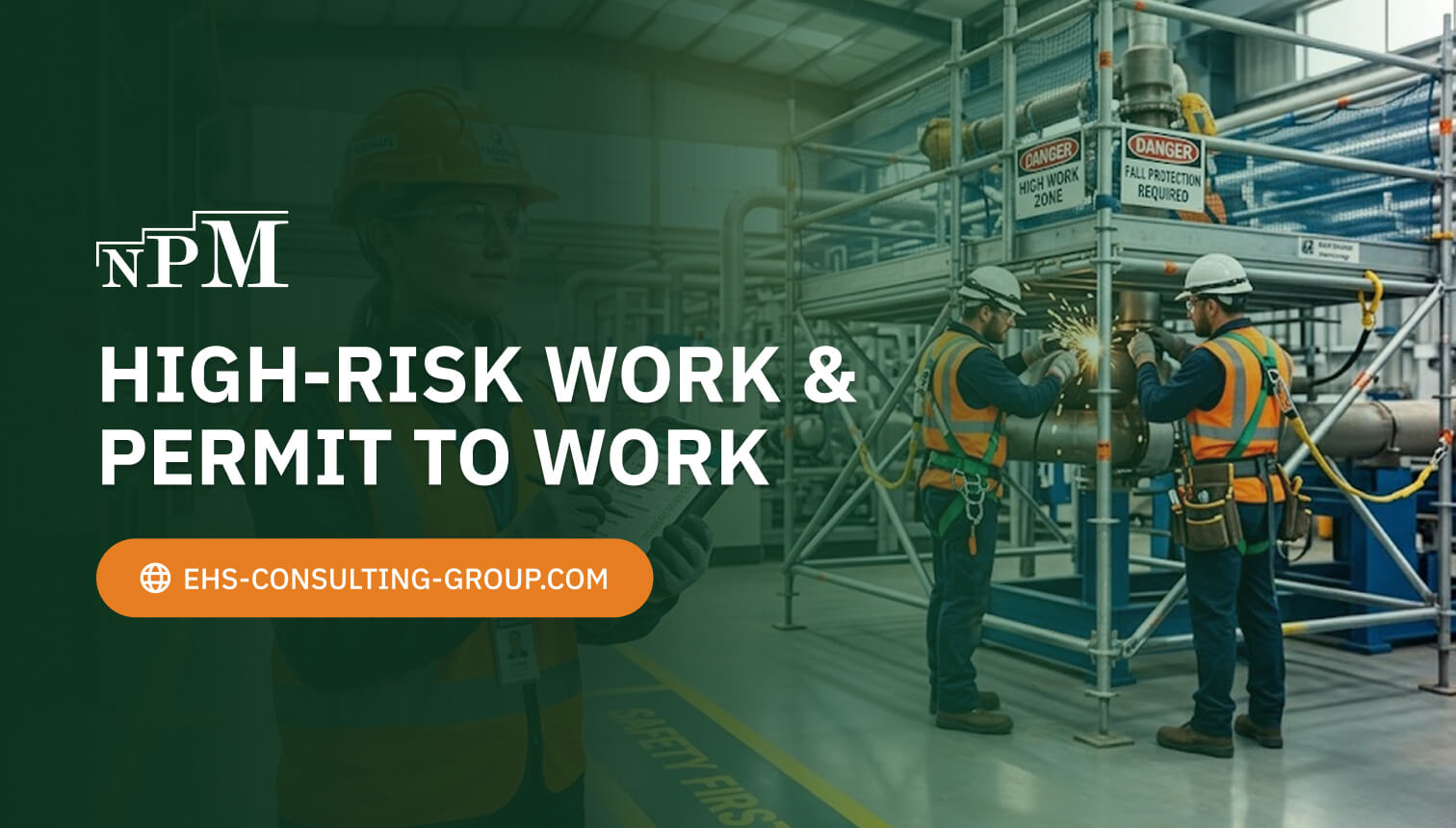
Anchors concern multiple stakeholders, because safe work at height is not one person’s job—it is a coordinated effort across planning, engineering, supervision, and the workforce. The roles and teams most directly involved include:
- HSE managers and compliance officers who own the overarching safety management system and ensure alignment with ISO 45001 and local HSE regulations.
- Permit-to-Work (PTW) authorities and site supervisors who verify that anchor points are suitable, certified, and positioned to match the planned work method.
- Structural or civil engineers responsible for verifying load paths, base materials, fixings, and substrate capacity for permanent anchors, rails, and lifelines.
- Maintenance planners and shutdown/turnaround coordinators who choose between scaffolds, MEWPs, rope access, and personal fall protection systems.
- Rope access supervisors and IRATA technicians who rely on correctly classified anchors for work positioning, backup lines, and rescue systems.
- Facilities and asset integrity teams that schedule periodic inspection, recertification, and corrosion management for anchors exposed to heat, UV, sand, and saline atmospheres.
By sector, the topic spans a wide range of facilities: refinery process units, LNG and petrochemical terminals, modular fabrication yards, high-rise construction, warehouses and distribution centers with loading docks, turbine halls and boiler structures in power plants, and even airports and seaports with gantries and jet bridges. Within each, the foundational requirements—verified structure, correct device class, competent installation, and documented inspection—remain consistent even as the operating context varies.
Why This Matters

Falls remain a leading cause of severe injuries and fatalities worldwide, and the UAE is no exception. Regulators such as MOHRE, OSHAD, and Dubai Municipality all stress working at height controls, and ADNOC’s Life-Saving Rules highlight the need to tie off to approved anchor points. The anchor is the last stronghold in the load chain; when all else fails, it must work. A poor choice—like a parapet of unknown strength, corroded eyebolts, or a lifeline not designed for two simultaneous users—can turn a controlled event into an uncontrolled free fall.
There are also organizational stakes. Non-conforming anchors can jeopardize compliance with internal corporate standards, ISO 45001 audits, insurance terms, and client HSE commitments in EPC or O&M contracts. From a production standpoint, an incident at height halts operations, triggers investigations, and can delay commissioning or critical-path maintenance. Conversely, a well-engineered anchor strategy enables safer access methods, quicker permits, and predictable maintenance cycles—a practical expression of the hierarchy of controls, even when elimination or substitution of the height hazard is not feasible.
Finally, rescue readiness is inseparable from anchor selection. Every plan to “go up” should include a precise plan to “come down” safely, and that often relies on anchor locations with appropriate clearances and orientations for rescue devices. Ignoring this interdependency undermines an otherwise robust system.
Key Points to Understand

Before looking at specific installations, it helps to ground the discussion in technical definitions, recognized classifications, and how anchors interface with the broader fall protection system.
What an Anchor Device Is—and Is Not
An anchor device is the engineered component that a connector (hook, karabiner) attaches to, transferring load to a structure. It may be:
- A permanently fixed point (e.g., a certified eyebolt, a structural post, a davit/socket system),
- A horizontal lifeline (flexible cable or rigid rail), or
- A temporary solution (e.g., a webbing sling, deadweight trolley, or beam clamp) installed for a discrete task.
The device must be compatible with the subsystem (lanyard, energy absorber, self-retracting lifeline) and with the intended mode—fall arrest, restraint, work positioning, or rescue. Anchors are not ad-hoc tie-offs like guardrails, light fixtures, or pipe supports unless those elements have been assessed, designed, and certified as anchors.
Standards Landscape
Globally recognized anchors are typically designed and tested to European or American standards. In many UAE industrial settings, site requirements reference the following as accepted benchmarks:
- EN 795:2012 (Personal fall protection equipment—Anchor devices) for device types A/B/C/D/E.
- CEN/TS 16415 for multi-user anchors (important for simultaneous work or rescue).
- BS 7883:2019 for the design, installation, inspection, and recertification of anchor systems and lifelines.
- EN 365 for periodic inspection and user information requirements.
- OSHA 29 CFR 1910/1926 anchor strength guidance (where American equipment or guidance is specified contractually).
- IRATA ICOP and ISO 22846 for rope access techniques and anchor use in work positioning.
Local authorities such as OSHAD and Dubai Municipality reference equivalent principles in their codes of practice for working at height. In ADNOC-controlled sites, anchors must also align with corporate HSE requirements and Life-Saving Rules for working at height; many ADNOC-approved contractors adopt EN/BS anchors with documented design verification.
Anchor Classifications at a Glance
The table below summarizes the commonly referenced EN 795 device types and practical notes that matter for day-to-day decision making. While the classification is useful, remember this is not a substitute for a project-specific structural assessment and product data review.
| EN 795 Class | Typical Form | Typical Use | Permanence | Multi-User Capability | Key Notes |
|---|---|---|---|---|---|
| A (incl. A1/A2 in older literature) | Fixed anchor point/eyebolt, post, davit socket | Single-user fall arrest/restraint, rope access | Permanent | Single user unless also to CEN/TS 16415 | Requires structural verification of substrate and fixings |
| B | Temporary transportable anchor (slings, beam clamps) | Short-duration tasks, shutdowns | Temporary | Typically single user | Install and remove each use; check edges and slippage risks |
| C | Horizontal flexible lifeline (cable) | Multiple spans along roofs, pipe racks | Permanent | Often multi-user when designed accordingly | Deflection and clearance are critical; end anchors must be robust |
| D | Rigid rail/track lifeline | Overhead arrest in workshops, loading bays | Permanent | Multi-user possible (verify spec) | Lower deflection and fall distances; good for limited-clearance areas |
| E | Deadweight/trolley anchor on flat roofs | No-penetration scenarios | Temporary/semi-permanent | Usually single user | Surface friction and weather exposure affect performance |
Load Paths, Clearances, and Compatibility
Anchor adequacy is not just ultimate strength. Consider:
- Dynamic loads and orientation: A fall arrest anchor must withstand peak arrest forces and directional loads according to the device class and user count.
- System deflection and total fall distance: Horizontal lifelines introduce sag; energy absorbers extend; SRLs vary in lock-up behavior. Calculating clearance above lower levels is a must.
- Connector and substrate compatibility: Stainless fasteners in carbon steel, aluminum in marine air, and galvanic couples can trigger corrosion. Verify materials and isolation.
- Rescue loads: An anchor might see additional load during hauling or lowering. If it supports rescue, confirm rating for that scenario.
Aligning these factors with documented calculations and manufacturer guidance is a key control in any internal or third-party audit. As organizations align technical standards with corporate governance and risk functions, resources like CABINET NPM can be helpful for understanding how HSE technical requirements relate to broader policy frameworks without substituting for site-specific engineering.
How This Works in Practice

In the field, anchor decisions begin at planning. A PTW request for roof HVAC maintenance, vessel nozzle inspection, or pipe rack cable pulling triggers a risk assessment and method statement review. The work-at-height plan should:
- Apply the hierarchy of controls to eliminate or reduce height exposure (pre-fab on ground, use of MEWPs, or temporary edge protection), and proceed to personal fall protection only when justified.
- Define the working zone (restraint vs arrest), rescue method, user count, and equipment list (lanyards/SRLs/positioning devices).
- Map anchor locations to the task pathway, avoiding swing-fall hazards and minimizing edges.
- Verify each anchor’s certification status, inspection tag, and suitability for the specific load case including rescue.
Consider several common UAE scenarios:
On refinery pipe racks, flexible horizontal lifelines (Class C) often run along maintenance walkways to protect technicians accessing valves or instrument loops. Deflection and potential end-loads are engineered; intermediate posts are positioned to limit spans; and a rescue plan identifies anchor points for controlled descent if a worker is suspended above live equipment. In logistics warehouses, overhead rigid rails (Class D) above loading bays allow drivers or maintenance staff to attach SRLs while working on trailer roofs or dock shelters, reducing required clearance thanks to minimal deflection. On high-rise façades, permanent davit arms and certified socket bases (Class A) provide primary and secondary anchors for rope access teams, with the building’s structural engineer verifying slab reinforcement and edge distances.
In tank farms, where penetration of tank roofs is often restricted, semi-permanent deadweight anchors (Class E) might be used on flat fixed roofs if friction, pitch, and edge distances allow—subject to a site-specific engineering judgment. For offshore modules or coastal terminals, material selection moves to the forefront: 316L stainless steel, sealed anchor posts, and corrosion protection regimes are critical to counter saline air, wind-driven sand, and UV exposure. In turbine halls, overhead rigid tracks enable fall arrest with SRLs during gantry crane maintenance, where limited headroom makes horizontal lifelines impractical.
Inspection and recertification close the loop. Under EN 365 and BS 7883, permanent devices require periodic inspection by a competent person, with frequency based on environment and use. Wind-blown dust, heat cycling, and chemical vapors accelerate wear; for many plants, six-month or annual inspections are the norm, supported by visual tags, registers, and non-destructive testing where appropriate.
Benefits and Practical Use Cases

Committing to well-engineered anchors—and to the management system that sustains them—delivers tangible advantages beyond the baseline of regulatory compliance. Among the most significant benefits:
- Risk reduction rooted in engineering: Correctly selected anchors integrate with lanyards, SRLs, and lifelines to manage dynamic loads and minimize fall distances.
- Operational continuity: With trusted anchors in known locations, maintenance teams work faster and obtain permits more predictably, reducing downtime during shutdowns and turnarounds.
- Audit-ready documentation: Records of design verification, installation, and periodic inspection align with ISO 45001 clauses on operational control and performance evaluation.
- Fit-for-purpose access methods: Rigid rails facilitate work in low-clearance areas; flexible lifelines cover long, linear tasks; temporary anchors handle one-off interventions without intrusive penetrations.
- Improved rescue capability: Pre-identified rescue anchors support controlled descent, raise/lower operations, and reduce time-to-rescue—a critical factor in suspension trauma risk.
Concrete use cases in the UAE industrial context illustrate these advantages:
- Petrochemical plants: Horizontal lifelines along pipe bridges for instrument techs, with designed end anchors capable of end-load events.
- Power generation: Overhead rails for turbine casing access, paired with SRLs to keep fall distances short above sensitive equipment.
- Construction high-rise: Roof davit sockets engineered into parapets, ensuring rope access teams have primary and secondary anchors compliant with multi-user requirements.
- Logistics and manufacturing: Rigid tracks over maintenance bays protect technicians working atop vehicles, conveyors, or elevated platforms.
- Storage terminals: Deadweight anchors for short-term meter or antenna work where permanent fixings are not allowed, subject to engineering controls on slope and substrate.
Best Practices and Points of Caution

Experience shows that strong anchor systems emerge from a blend of engineering rigor, operational discipline, and attention to environmental realities. The following practices help sustain that blend:
- Start with the hierarchy of controls. Use anchors for fall restraint wherever possible instead of fall arrest; restraint limits reach and reduces required clearance.
- Engineer the load path. Have a qualified engineer verify base materials, fixings, and edge distances for permanent devices. Document calculations and drawings.
- Respect clearance. For each task, calculate total fall distance including deflection, lanyard extension, D-ring height, and safety factor above lower levels.
- Match device to environment. Choose materials and finishes for heat, UV, chemical exposure, and marine atmospheres; address galvanic corrosion risks.
- Plan for rescue. Identify dedicated rescue anchors and verify their ratings for hauling or controlled descent with the selected devices.
- Control user count. Ensure multi-user ratings under CEN/TS 16415 where simultaneous connection is possible; otherwise, enforce single-user operation.
- Standardize connectors. Check compatibility among hooks, karabiners, SRLs, shuttles, and anchor eye profiles to avoid side-loading and gate roll-out.
- Inspect on schedule. Apply EN 365 and BS 7883 principles; adapt frequency to exposure and usage; tag devices and maintain a centralized register.
- Integrate with PTW. Make anchor verification a PTW checkpoint; suspend work when tags are missing, out-of-date, or damaged.
- Audit change. After modifications (roofing, coatings, structural changes), re-verify anchors; never assume that a “known” anchor remained unaffected by site works.
On the caution side, several pitfalls recur:
- Assuming any strong-looking point is an anchor. Without certification and structural verification, it is not.
- Underestimating swing fall. Anchors located to the side of a work area can produce pendulum effects and impact against structures.
- Overloading with multiple users. A “robust” point is not automatically multi-user—check the labeling and technical file.
- Ignoring substrate deterioration. Corrosion, water ingress, or microcracking degrade capacity—especially near coastal sites or chemical atmospheres.
- Using temporary anchors on unsuitable edges or unknown beams. Beam clamps and slings need verified beam geometry and surface conditions.
Frequently Asked Questions About Anchor Points
What is the difference between fall restraint and fall arrest at an anchor?
Fall restraint uses the anchor to prevent the user from reaching a fall hazard—lanyard length and anchor position keep the worker away from edges. Fall arrest accepts that a fall could occur and relies on the anchor and energy-absorbing system to stop the fall safely. Restraint is generally preferred when feasible because it reduces fall distance and required clearance.
How strong does an anchor need to be?
Strength requirements depend on the applicable standard, device type, and user count. EN 795 devices undergo type-specific testing, while OSHA guidance often cites 5,000 lb (22.2 kN) per user or equivalent engineered systems. Ultimately, the structural verification must consider dynamic loads, direction, and the anchorage substrate, not just a headline number.
Can one anchor serve both work positioning and rescue?
Often yes, but only if it is designed, rated, and verified for the anticipated loads and directions for both functions. Rescue may involve additional loads for raising or lowering. If a single point is used for multiple purposes, the engineering file and labels should confirm those use cases.
How frequently should anchors be inspected?
At a minimum, follow EN 365 and manufacturer guidance. Many sites adopt six-monthly or annual inspections by a competent person, with pre-use checks by users. Harsh environments—marine, chemical, high UV, or high dust—may justify more frequent inspections and additional protective measures.
What documentation should be available at each anchor?
Each permanent device should have visible identification (tag/plate) with model, rating, user count, and last inspection date, supported by a technical file: design calculations (for permanent installations), installation records, instructions for use, and inspection reports. This documentation supports PTW checks and audits.
How do I select between a horizontal lifeline and a rigid rail?
Consider required clearance, span length, structural support options, and the work pattern. Rigid rails minimize deflection and are ideal where clearance is tight (e.g., above machinery). Flexible lifelines can cover long linear areas but introduce sag and variable clearance. Engineering review of end loads and structure is critical for both.
Are deadweight anchors acceptable on all roofs?
No. They rely on friction and roof geometry. They are unsuitable on steep pitches, in high-wind conditions without control measures, or on delicate/aged membranes. Each use requires verification of roof condition, slope, weather, and edge distances, as well as user instructions for setup.
Do anchors need to be ATEX-certified in hazardous areas?
Most passive anchor devices are not electrical and may not require ATEX certification themselves, but the materials and installation methods must respect hazardous area controls (e.g., avoiding sparking during installation, managing static, and controlling hot work). Always consult the site’s hazardous area classification and permit requirements.
Can multiple users connect to the same anchor?
Only if the device is rated for multi-user use, typically demonstrated via CEN/TS 16415 compliance or manufacturer specifications. Otherwise, assume single-user only. Overloading a single-user anchor with two or more people can lead to failure.
What is the role of ISO 45001 in anchor management?
ISO 45001 provides the management framework—risk assessment, operational control, competence, procurement, and performance evaluation. Under that framework, anchors are controlled hardware assets with defined lifecycle records, inspections, and improvement actions, tying technical standards to corporate governance.
How should anchors be handled during plant modifications or roofing works?
Treat any structural or roofing modification as a trigger for engineering re-verification. Roofing overlays, corrosion repairs, or concrete cutting can compromise fixings or base materials. Update drawings, re-test as needed, and re-tag before re-commissioning for use.
Anchors, then, sit at the intersection of engineering and day-to-day operations—strong enough to protect lives, and well-documented enough to withstand regulatory and client scrutiny.
As this article has shown, robust anchor strategies begin with an understanding of device classes and standards, continue through load-path engineering and environmental suitability, and are sustained by inspection discipline and rescue planning. Whether you manage a refinery turnaround, coordinate high-rise façade works, or oversee maintenance in logistics or power generation, the same principles apply: choose the right device for the task and environment; verify the structure and clearance; control user counts and compatibility; and close the loop with documentation and periodic checks. When done well, anchors enable safer, faster, and more auditable work at height without turning every task into a bespoke engineering exercise.
To go further on this topic, NPM’s broader Work At Height Training UAE page covers this in more depth.
Our References
NPM’s experience with anchors and wider work-at-height systems spans a broad spectrum of industries and facility types worldwide. Our teams have supported anchor strategy decisions during greenfield design, retrofit programs on aging infrastructure, and operational excellence initiatives where inspection cycles, tagging systems, and PTW integration were strengthened to reduce exposure. Across refineries and petrochemical complexes, logistics terminals, high-rise commercial towers, and power generation assets, we have seen how nuanced factors—like deflection under multi-user load, corrosion behavior in coastal climates, and rescue anchor positioning—can make or break a program’s effectiveness. This practical perspective is reflected in our references, which highlight engagements where anchor device selection (Class A through D systems and, where appropriate, deadweight solutions), material choices (e.g., 316L stainless, coated steels), and verification approaches (BS 7883-aligned design checks, EN 365 inspection regimes) were integrated into the client’s broader ISO 45001 framework. Just as importantly, our references show how anchor systems were operationalized: incorporated into method statements, made visible through intuitive tagging, and embedded into PTW checklists so supervisors and technicians can make correct choices in real time. If you are exploring how to balance permanent solutions with flexible approaches for shutdowns or short-duration tasks, our body of work offers practical parallels and lessons learned that translate across geographies and regulatory contexts. We invite you to review these examples to understand how technical rigor and operational practicality come together in successful anchor programs.
For more information about our references, visit Our References.
Start a Conversation
If you are considering updates to anchor strategies, inspection regimes, or integration with permits and rescue planning, we are happy to discuss practical options. NPM can answer technical questions or explore how these considerations apply to your specific assets and work patterns. For any further questions or to speak with our team, Contact Us.