

Barrier Management Program Services UAE delivered by NPM provide a structured, evidence-based approach to identifying, implementing, and assuring the performance of prevention, detection, control, and mitigation barriers that protect people, assets, and the environment. Designed for complex, high-hazard operations, this service helps your organization translate bow-tie analyses and critical control frameworks into verifiable routines, performance standards, KPIs, and governance that improve barrier integrity across daily operations and major projects. This localized offering is part of our broader Process Safety Services UAE delivered across the UAE.
Who Needs Barrier Management Program Services UAE?

Organizations operating in high-risk sectors across the Emirates benefit most from Barrier Management Program Services UAE. Whether you manage upstream, midstream, or downstream oil and gas assets; petrochemical complexes; LNG regasification; offshore platforms; power and utilities; large construction programs; logistics hubs; or discrete manufacturing, NPM tailors barrier assurance to your facility’s risk profile, regulations, and maturity level. For companies scaling production or executing brownfield modifications, Barrier Management Program Services UAE help maintain control of Safety Critical Elements (SCEs) and Critical Tasks during change. The service is equally valuable following incidents, near misses, or audit findings that indicate gaps in barrier ownership, performance standards, or verification routines.
Typical challenges addressed through Barrier Management Program Services UAE include unclear barrier ownership across operations and maintenance, inconsistently defined acceptance criteria, missing test frequencies, manual verification without traceability, and data silos across CMMS, permit-to-work, and management of change (MoC) systems. NPM aligns your risk bow-ties to practical controls, establishes critical control performance standards, integrates tasks into the CMMS or digital procedures, and sets governance routines that keep barriers effective in the UAE’s regulatory environment and operating conditions.
- Industries best served by Barrier Management Program Services UAE: oil and gas, petrochemical, LNG, offshore, power and utilities, ports and logistics, construction, and manufacturing.
- Operating contexts: new projects, brownfield expansion, pre-startup safety reviews, post-incident improvement, and regulator-driven upgrades.
- Asset types: refineries, gas plants, pipelines, storage terminals, rigs, FPSOs, power stations, tank farms, and high-hazard manufacturing lines.
Objectives of Our Barrier Management Program Services UAE
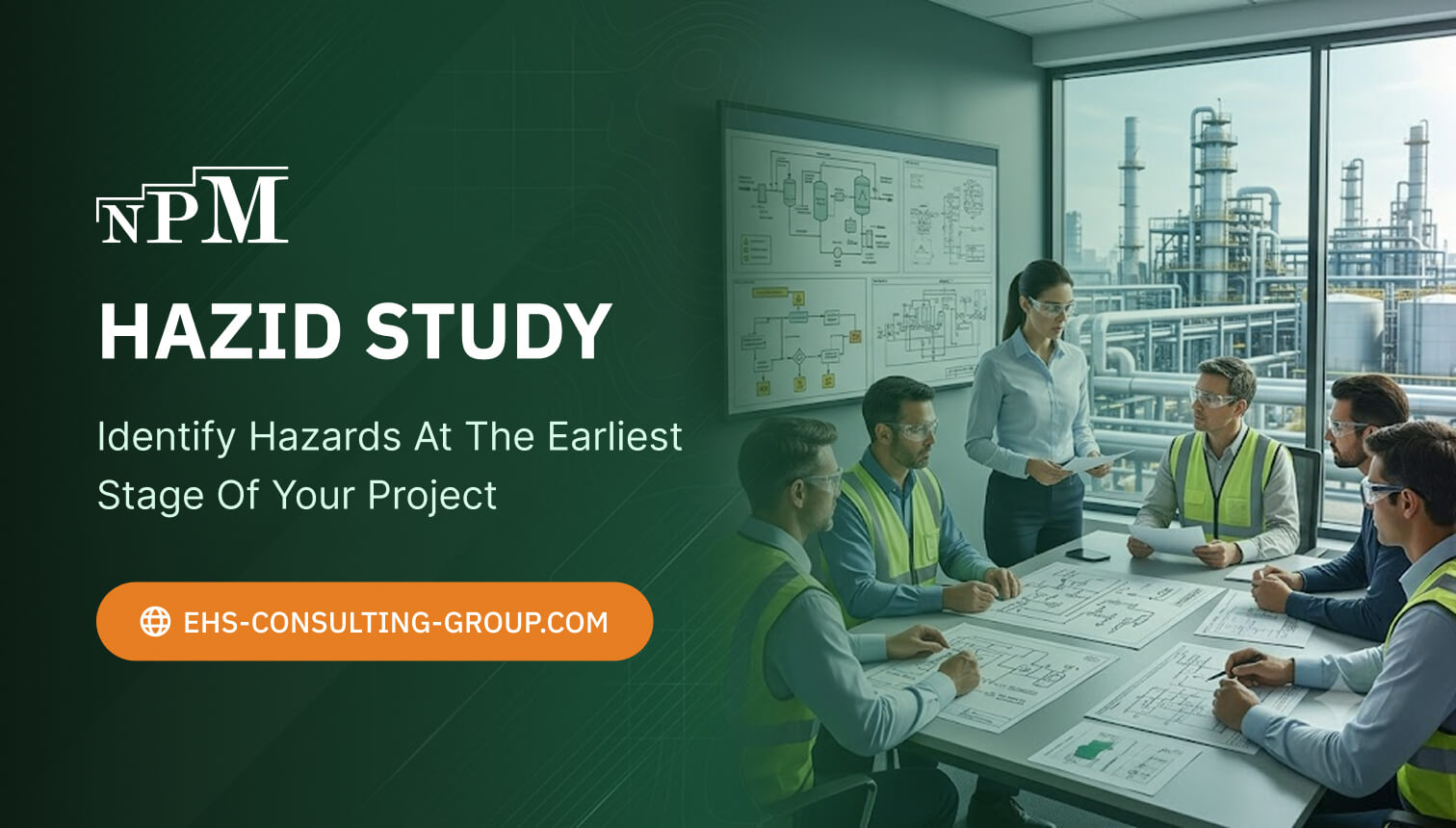
Our core objective is to transform risk studies and barrier diagrams into day-to-day operational discipline through Barrier Management Program Services UAE. We design practical, auditable controls and assurance loops that operators, maintainers, and supervisors can execute consistently across shifts and contractors. By embedding assurance routines into existing systems, Barrier Management Program Services UAE delivers sustainable performance—reducing incident potential, improving readiness for regulator audits, and demonstrating management commitment to ALARP principles.
- Define, document, and validate Safety Critical Elements and Critical Controls linked to bow-ties and Major Accident Hazard scenarios under Barrier Management Program Services UAE.
- Develop performance standards with acceptance criteria, degradation modes, test frequencies, and contingency plans that are workable in UAE facilities.
- Integrate verification into the CMMS and field procedures, enabling scheduling, completion tracking, and defect escalation for Barrier Management Program Services UAE.
- Establish barrier health dashboards and KPIs that provide real-time visibility of control effectiveness for leadership.
- Strengthen MoC, permit-to-work, and incident learning so changes and corrective actions protect barrier integrity over time.
Scope of Work & Methodology

NPM applies a structured methodology that anchors Barrier Management Program Services UAE to your existing risk registers, bow-ties, and operational systems. We begin by aligning your risk scenarios and escalation factors with barrier functions, then confirm which controls are truly critical to preventing or mitigating Major Accident Events. Leveraging international guidance and UAE regulatory expectations, we draft performance standards and assurance protocols, validate them with site teams, and pilot the routines on representative assets. Throughout Barrier Management Program Services UAE, we drive pragmatic integration with CMMS, work management, and competency frameworks so execution becomes routine rather than an add-on.
The following table summarizes the typical phases, activities, and outputs NPM deploys during Barrier Management Program Services UAE:
| Phase | Key Activities | Primary Outputs |
|---|---|---|
| 1. Diagnostics | Document review; interviews; site walkdowns; bow-tie and SCE gap analysis | Gap report; prioritized MAH scenarios; draft SCE/control list |
| 2. Design | Performance standards; verification tasks; KPIs; escalation pathways | Approved standards; RACI; barrier assurance plan |
| 3. Integration | CMMS task build; procedure updates; competency and training mapping | Live work orders; revised SOPs; competence requirements |
| 4. Pilot & Refinement | Pilot verification; dashboard setup; lessons learned | Pilot report; calibrated KPIs; optimized task sets |
| 5. Rollout & Handover | Scale-up across assets; coaching; governance cadence | Full implementation; governance calendar; sustainability plan |
Our methodology for Barrier Management Program Services UAE emphasizes engagement with operations, maintenance, engineering, and HSE stakeholders. Workshops test assumptions against field reality; walkdowns verify tag numbers, bypasses, and failure modes; and data mapping aligns new assurance tasks with existing scheduling and reporting to avoid administrative burden while improving control.
Duration and Format of Barrier Management Program Services UAE

The timeline for Barrier Management Program Services UAE depends on facility complexity, number of Major Accident Hazard scenarios, and the maturity of your existing controls. A focused diagnostic may be completed in 2–4 weeks for a single site, while a multi-asset program of design, integration, pilot, and rollout frequently spans 3–6 months. For large portfolios, NPM phases Barrier Management Program Services UAE to sequence high-risk units first, accelerating risk reduction where it matters most.
Delivery formats for Barrier Management Program Services UAE are hybrid by design. We combine on-site walkdowns, facilitated workshops, and control testing with remote analytics, document collaboration, and dashboard development. Remote sessions are leveraged for follow-ups and governance meetings, while on-site visits are scheduled for critical stages—initial diagnostics, pilot verification, and handover. This blended approach minimizes disruption to production while maintaining the rigor required for Barrier Management Program Services UAE.
Benefits and Practical / Operational Use Cases

Clients select NPM for Barrier Management Program Services UAE to embed control assurance into daily operations and demonstrate compliance readiness to regulators and insurers. By elevating visibility on critical control health, leadership can prioritize maintenance, focus incident investigations on barrier failures, and ensure contractors align with site expectations. The result is fewer vulnerabilities during shutdowns, turnarounds, and start-ups; faster recovery from equipment failures; and improved audit outcomes across the Emirates.
- Barrier Management Program Services UAE translate bow-ties into testable routines with traceable results, enhancing confidence before regulatory inspections.
- Improved SCE reliability through performance standards and escalation workflows reduces unplanned downtime.
- Integrated dashboards from Barrier Management Program Services UAE provide early warning on deteriorating controls and overdue verifications.
- Clear RACI and competency mapping reduce human error in critical tasks across shifts and contractors.
- Embedded lessons learned from incidents and near misses strengthen barrier design and execution over time.
Why Choose Us

NPM builds Barrier Management Program Services UAE on deep process safety expertise, pragmatic field experience, and a commitment to making controls executable in real operations. Our specialists have implemented barrier assurance in refineries, gas processing, offshore assets, storage terminals, and utility plants—translating standards into everyday practice. We maintain independence from OEMs and software vendors, enabling objective recommendations for Barrier Management Program Services UAE that fit your systems and culture.
Clients further benefit from NPM’s international knowledge base and participation in professional networks, including collaboration with the broader advisory ecosystem of CABINET NPM. This perspective ensures Barrier Management Program Services UAE align with global good practice while staying tuned to UAE regulatory expectations. Our approach emphasizes measurable improvements and a robust handover that your teams can sustain.
Detailed Service Offerings

Barrier Management for Oil & Gas Facilities

Oil and gas operations—from upstream production and gathering to midstream pipelines and downstream refining—face a unique mix of ignition sources, hydrocarbon inventories, and dynamic process conditions. Barrier Management for Oil & Gas Facilities focuses on linking MAH scenarios such as loss of containment, fire and explosion, and toxic releases to a fit-for-purpose suite of prevention, detection, and mitigation controls. NPM’s work under Barrier Management Program Services UAE for this segment includes defining Safety Critical Elements (e.g., ESD valves, gas detection, deluge), building performance standards with acceptance criteria, and integrating verification tasks into your CMMS to ensure timely, traceable execution. This engagement is typically required during major project commissioning, pre-startup safety reviews, and brownfield modifications that affect shutdown logic, alarms, or relief systems. The practical outcome of Barrier Management for Oil & Gas Facilities is a live, maintainable barrier assurance regime with dashboards that show real-time control health, supported by clear RACI ownership and escalation rules that align with your procedures and UAE regulatory expectations. As part of our Barrier Management Program Services UAE, this service strengthens confidence before regulator inspections and third-party audits.
Click on the following link for more details: Barrier Management for Oil & Gas Facilities.
Barrier Management for Petrochemical Plants
Complex petrochemical units operate with high temperatures, pressures, and reactive chemistries that demand robust barrier design and disciplined assurance. Barrier Management for Petrochemical Plants targets scenarios such as runaway reactions, overpressure events, and hazardous monomer releases, mapping them to critical controls including reactor protection systems, relief and flare networks, inerting, contamination prevention, and secondary containment. Under NPM’s Barrier Management Program Services UAE, we translate HAZOP/LOPA outputs into practical performance standards, define normal and upset operating envelopes, and specify verification tasks that capture degradation mechanisms unique to polymers and intermediates. This service is typically engaged when plants debottleneck, introduce new feedstocks or catalysts, or after incidents reveal latent control weaknesses. Outcomes include a prioritized SCE register with test frequencies, calibrated KPIs, and an integrated assurance calendar aligned to turnarounds. Barrier Management for Petrochemical Plants further embeds barrier checks into shift routines and lab QA/QC workflows, ensuring operators and supervisors maintain control integrity even under high-throughput demands. When delivered as part of Barrier Management Program Services UAE, it provides evidence-based compliance and a defensible record ahead of regulator or insurer reviews.
Click on the following link for more details: Barrier Management for Petrochemical Plants.
Barrier Management for LNG Facilities
LNG import and regasification terminals, peak-shaving plants, and storage systems require precision control over cryogenic inventories, boil-off gas, and vapor dispersion risks. Barrier Management for LNG Facilities centers on integrity of tanks and piping, BOG handling, gas detection and ESD zoning, high-integrity pressure protection, and emergency isolation to manage flammable vapor hazards. Within NPM’s Barrier Management Program Services UAE, we confirm alignment between LNG hazard analysis, zoning classification, and the actual placement and testing of detection and isolation barriers. The service is typically required during terminal expansions, tie-ins, or changes to send-out capacities where new operating envelopes can stress existing critical controls. Practical outcomes include detailed performance standards sensitive to cryogenic effects, calibrated verification routines for valves and detection loops, and field-ready job plans that integrate with CMMS scheduling. Barrier Management for LNG Facilities also strengthens drills and emergency response linkages to ensure mitigation barriers—from deluge to mustering—perform under realistic scenarios. As a subset of Barrier Management Program Services UAE, this work provides operators and leadership with dashboard visibility of control health and timely escalation pathways for overdue or failed tests.
Click on the following link for more details: Barrier Management for LNG Facilities.
Barrier Management for Offshore Facilities
Offshore assets—fixed platforms, FPSOs, and mobile drilling units—operate in constrained environments where evacuation and emergency response are challenging. Barrier Management for Offshore Facilities focuses on blowout prevention, hydrocarbon containment, HVAC and pressurization, fire and gas detection, explosion protection, structural integrity, and lifesaving systems. Under NPM’s Barrier Management Program Services UAE, we translate offshore safety cases and bow-ties into practicable assurance routines, recognizing offshore maintenance constraints and simultaneous operations (SIMOPS). This service is typically engaged for life-extension programs, post-upgrade verifications, and when audit findings highlight gaps in SCE ownership or verification close-out. The practical results include harmonized performance standards across topsides and marine systems, integrated job plans that respect offshore work windows, and a barrier health dashboard that leadership can review onshore to prioritize interventions. Barrier Management for Offshore Facilities embeds clear RACI among operations, maintenance, and contractors, with escalation routes suited to remote asset conditions. Delivered as part of Barrier Management Program Services UAE, it strengthens readiness for regulator inspections and classification society reviews and ensures critical controls remain effective between campaigns.
Click on the following link for more details: Barrier Management for Offshore Facilities.
Regulatory Landscape & Industry Context in the UAE
Barrier Management Program Services UAE must align with a multifaceted regulatory environment. In Abu Dhabi, OSHAD’s framework (now administered by the Abu Dhabi Public Health Centre and related competent authorities) sets expectations for risk management, control measures, and assurance. In Dubai, Dubai Municipality and the UAE Civil Defence Fire and Life Safety Code govern construction safety, fire protection, and life-safety systems. Federal Decree-Law No. 33 of 2021 shapes labor and contractor responsibilities, while MOHRE oversight intersects with competency and training obligations. International standards such as ISO 45001 and ISO 14001, as well as NFPA guidance, are routinely referenced by regulators and insurers.
Industrial clusters amplify the need for robust controls. Jebel Ali Industrial Area and JAFZA integrate logistics, warehousing, and processing where flammable and toxic inventories are common; in Abu Dhabi, KIZAD, Mussafah, ICAD, and Ruwais host upstream, downstream, and petrochemical assets; in the Northern Emirates, Hamriyah Free Zone, RAKEZ, SAIF Zone, Ajman Free Zone, UAQ FTZ, and Dubai Industrial City connect manufacturing and energy-intensive operations. Barrier Management Program Services UAE delivered by NPM address these contexts by calibrating performance standards and assurance priorities to local hazards, ambient conditions (heat, dust, humidity), and inspection cadences. We ensure critical control verification and barrier dashboards are audit-ready for authorities such as Civil Defence and municipality inspectors, and usable by frontline teams under UAE site realities.
Our Barrier Management Consulting Across the UAE
NPM provides nationwide coverage to scale Barrier Management Program Services UAE where you operate. We adapt to Emirate-level requirements, free-zone rules, and the unique industrial profiles of each hub—whether your focus is petrochemical throughput, logistics, or offshore support. The following geographic engagement demonstrates how our approach is localized to sector mix, regulators, and infrastructure in each location.
Barrier Management Program Services Abu Dhabi
Barrier Management Program Services Abu Dhabi are tailored to the Emirate’s concentration of upstream, refining, petrochemical, and logistics activities spread across Mussafah, ICAD, KIZAD, and the Ruwais complex, as well as export corridors through Khalifa Port. Operators must align barrier assurance with OSHAD requirements, Civil Defence inspections, and ADNOC’s corporate HSE expectations where applicable. NPM translates bow-ties and safety case expectations into executable performance standards and CMMS-integrated verification routines that fit Abu Dhabi’s operating cadence. We emphasize escalation workflows for overdue or failed SCE tests, practical integration with permit-to-work and MoC, and barrier health dashboards that leadership can review to allocate resources across sites in Mussafah and ICAD. For facilities moving product through KIZAD and Khalifa Port, Barrier Management Program Services Abu Dhabi prioritize ignition control, gas detection coverage, emergency shutdown, deluge reliability, and coordination with third-party service providers. The service is particularly relevant given the Emirate’s scale, regulator interface through OSHAD, and the density of high-hazard units at Ruwais where coordinated barrier governance reduces simultaneous risk exposures. As with all Barrier Management Program Services UAE, we validate routines on-site, coach supervisors, and ensure change control keeps barrier intent intact as projects progress.
Click on the following link for more details: Barrier Management Program Services Abu Dhabi.
Deliverables and Validation
NPM’s deliverables for Barrier Management Program Services UAE provide clarity, traceability, and audit readiness. You receive a validated SCE/Critical Control register mapped to your bow-ties; performance standards detailing function, dependencies, acceptance criteria, degradation modes, test frequencies, and contingency plans; a barrier assurance plan with RACI and escalation rules; CMMS job plans and task lists; updated procedures; and a barrier dashboard specification with KPI definitions. Each component is written in your document style for seamless adoption.
- Validation workshops: Cross-functional sessions where we test performance standards and verification tasks against field realities.
- Targeted walkdowns: Confirmation of tag numbers, bypass conditions, access, and environmental considerations impacting test execution.
- Technical reviews: Peer reviews to confirm alignment with UAE codes, international standards, and your corporate specifications.
- Pilot and feedback: Live execution of assurance tasks on selected units, with calibration of frequencies, tolerances, and escalation triggers.
- Handover and onboarding: Coaching supervisors and planners on the barrier calendar, dashboard interpretation, and governance cadence.
During Barrier Management Program Services UAE, the client organization owns implementation decisions and final sign-off. We recommend workshop groups of 8–15 stakeholders per site (operations, maintenance, instrumentation, HSE, engineering, planning, and contractor representatives) to ensure robust validation. Pre-engagement scoping—comprising a kick-off meeting, targeted document review, and an optional preliminary site visit—helps focus effort on the highest-value scenarios and controls.
Frequently Asked Questions About Barrier Management Program Services UAE
How often should a barrier management program be reviewed in the UAE, and what triggers a re-assessment?
Most organizations revisit Barrier Management Program Services UAE on an annual basis for governance and KPI review, with a deeper re-assessment every 2–3 years or after significant changes. Triggers include process modifications, new tie-ins, incident trends indicating barrier failures, repeated overdue verifications, regulator findings, or major staffing/contractor changes affecting critical tasks.
What is the difference between an initial barrier program design and a periodic review?
The initial phase of Barrier Management Program Services UAE defines SCEs and critical controls, performance standards, and the verification architecture, integrating tasks into the CMMS and dashboards. A periodic review evaluates control health trends, adjusts frequencies or criteria, addresses failure modes observed in the field, and incorporates lessons from incidents or audits without re-building the entire framework.
Who implements the recommendations—the consultant or the client organization?
Under Barrier Management Program Services UAE, NPM delivers the design, integration support, and coaching, while the client organization owns execution of verification tasks, corrective actions, and governance. This ensures controls are embedded in routine operations and remain sustainable beyond the engagement.
Which delivery format works best for multi-site organizations—on-site or remote?
Barrier Management Program Services UAE are most effective using a hybrid model: remote collaboration for document reviews and dashboard design, and on-site presence for diagnostics, walkdowns, pilot verification, and handover. Hybrid delivery reduces disruption while preserving the rigor required to validate controls in the field.
What team size and stakeholder involvement is recommended for workshops or interviews, and why?
We recommend 8–15 participants per workshop during Barrier Management Program Services UAE, including operations, maintenance, instrumentation/controls, HSE, engineering, planning, and relevant contractors. This mix captures practical insights on degradation modes, access constraints, and test feasibility, ensuring performance standards are executable.
What information and site access are required before the engagement can begin locally?
For Barrier Management Program Services UAE, we typically request PFDs/P&IDs, ESD and cause-and-effect matrices, bow-tie or HAZOP/LOPA outputs, alarm rationalization data, maintenance histories, SOPs, and MoC records. Site access is coordinated for walkdowns of SCEs and critical areas, with safety inductions completed per Emirate and facility requirements.
Know More About Our Work
NPM has delivered barrier assurance and process safety improvements across a wide range of high-hazard industries worldwide, from hydrocarbons and chemicals to power and complex logistics. Our projects focus on practical execution—turning risk studies into disciplined operations supported by clear performance standards and reliable verification routines. Explore how NPM applies the same rigor found in Barrier Management Program Services UAE to engagements across diverse sectors and geographies.
For more information about our references, visit Our References.
Partner with NPM for Barrier Management Program Services UAE
Discuss your facility’s barrier challenges, request a tailored scope, or schedule a diagnostic to prioritize risk reduction. Our specialists will help you shape an implementable plan aligned to your systems, regulators, and operating context.