
COMAH is widely recognized as a rigorous framework for managing major accident hazards in high-risk industries, and understanding its intent and mechanics is valuable for operators and HSE leaders across the UAE even though the regulation itself is UK- and EU-specific. At its core, the regime codifies what many process safety professionals already strive to achieve: clear identification of catastrophic scenarios, prevention through robust engineering and management controls, and credible preparation for emergency response. In this article, we unpack how the principles behind this approach translate to the realities of oil and gas, petrochemical, construction, manufacturing, logistics, and power generation operations in the UAE, and why aligning with these principles strengthens compliance, resilience, and stakeholder confidence.
Who Does This Affect?
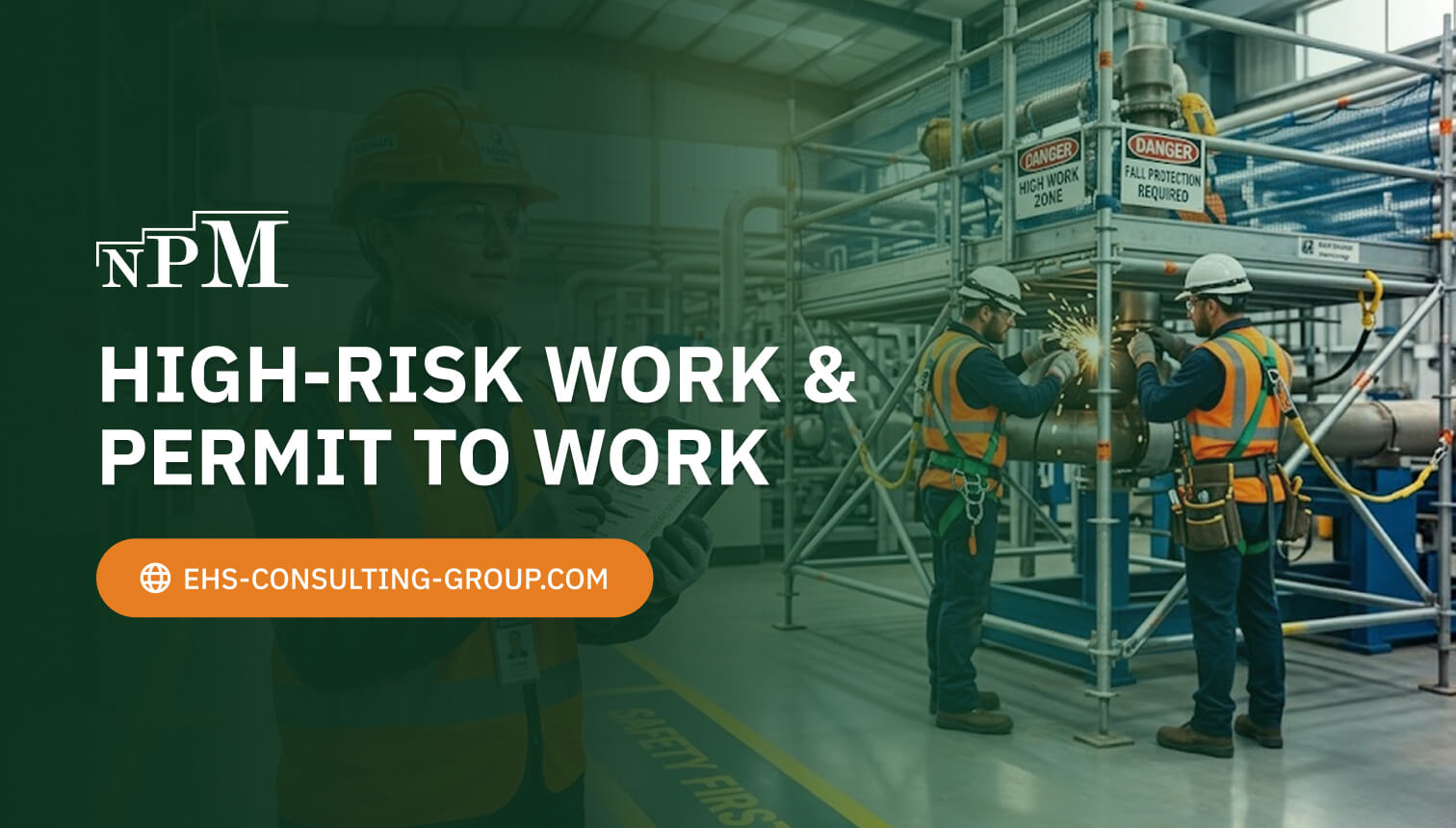
While the language of major accident control often brings refineries and petrochemical complexes to mind, the implications reach far beyond a single sector. The responsibilities and insights involved touch a wide range of roles and facility types in the UAE’s industrial landscape.
- HSE and Process Safety leaders responsible for risk management, barrier integrity, and assurance across production assets, terminals, and logistics networks.
- Plant managers, operations superintendents, and maintenance managers accountable for asset integrity, permit-to-work systems, and shutdown/startup risk.
- Emergency response coordinators and incident commanders who plan drills, mutual aid, and Civil Defence interfaces for onshore plants, offshore platforms, and high-density industrial zones.
- Engineering, projects, and modifications teams tasked with Management of Change (MoC), functional safety (IEC 61511) performance, and constructability that preserves hazard controls.
- Supply chain, contractor management, and logistics leaders overseeing storage, tank farms, pipeline interfaces, port operations, and high-consequence transport (LPG, ammonia, chlorine, LNG, hydrogen).
- Corporate risk, insurance, and business continuity teams who must quantify exposure, ensure coverage, and validate credible response capability.
Facility types impacted include oil and gas processing hubs, refineries, offshore platforms, gas compression and dehydration stations, petrochemical crackers, bulk liquid storage terminals, gas cylinder filling, high-rise construction with diesel/LPG storage, power and water plants (including those using ammonia for SCR or chlorine for disinfection), and warehouses handling flammables, oxidizers, or toxicants. Across each, operational leaders benefit from a structured lens on low-frequency, high-consequence events and how those should be controlled and rehearsed.
Why This Topic Matters

Having established who is involved, the next question is why major hazard discipline is an operational imperative rather than a compliance exercise. Catastrophic events are rare, but their impacts are disproportionate: loss of life, irreversible environmental harm, multi-year production outages, and reputational damage that reverberates across markets, investors, and communities. In the UAE context, operators coordinate oversight with MOHRE for workforce safety, local emirate-level authorities (e.g., Dubai Municipality), Civil Defence for fire and emergency preparedness, and Abu Dhabi Public Health Centre’s OSHAD framework for systemized occupational safety governance. Energy sector players align with ADNOC’s HSE and process safety expectations, which emphasize risk-based controls, assurance, and emergency readiness.
Major accident control is also about performance and continuity. A well-defined hazard inventory translated into actionable barriers reduces unplanned downtime. Knowing which Safety-Critical Elements (SCEs) protect against escalation—gas detection, ESD valves, deluge, fireproofing, relief systems—and the performance standards they must meet gives operations leaders a clear line of sight to the conditions that matter most. When projects expand storage, alter feedstocks, or introduce new chemicals, leadership needs a confident view of how consequence contours and impairment risks have shifted, whether layers of protection remain adequate (via LOPA), and how mutual aid and emergency response plans should adapt.
Finally, this topic matters because stakeholders expect transparency. Lenders and insurers scrutinize major hazard risk. Industrial neighbors and free-zone authorities need assurance that off-site impacts are understood and tolerable. Employees need clarity on alarms, muster, and roles during an incident. With that context, it becomes obvious why a comprehensive and principles-based major hazard framework is central to how high-risk businesses operate, invest, and grow.
Key Points to Understand

Translating the approach into day-to-day decision-making begins with a few foundational concepts. Although devised under a European regulatory umbrella, the structure offers a transferable blueprint for the UAE industrial setting.
Threshold substances and major hazard identification
At its simplest, the regime classifies establishments based on inventories of dangerous substances and the potential for large-scale consequences. While local UAE regulations use different mechanisms, the intent is common: quantify hazardous inventories, understand credible failure modes, and determine if risks extend beyond the fence line. Chemical properties, storage configuration, and proximity to populations or other hazardous installations all matter. Early clarity on whether a site is “major hazard scale” drives the level of analysis, assurance, and engagement expected with authorities and neighboring stakeholders.
Prevention through a documented policy and safety report
Two cornerstone deliverables encapsulate the approach: a policy-level commitment to prevent major accidents and a technical “safety report” (safety case) demonstrating how hazards are identified, risks are reduced to ALARP, and controls are maintained. For UAE operators, the same thinking is reflected through an integrated HSE management system (aligned with ISO 45001 and ISO 14001), a process safety framework, and major accident hazard studies supported by HAZID, HAZOP, QRA, LOPA, and SIL verification. The safety report’s spirit is to tell a defensible, traceable story from hazard identification to barrier assurance—something regulators and insurers value globally.
On-site and off-site emergency planning
Preparedness is as critical as prevention. The framework distinguishes on-site emergency arrangements (command, communications, firefighting, medical, evacuation) and off-site plans developed with public authorities to protect the surrounding community. In the UAE, this translates to robust Emergency Response Plans integrated with Civil Defence pre-incident planning, clear mutual-aid protocols in industrial clusters (e.g., Ruwais, Jebel Ali, KIZAD), and regular joint exercises that test communications, interoperability, and decision-making under stress.
Land-use planning and domino effects
Another pillar is using consequence modeling to inform land-use planning and prevent unsafe proximity between high-hazard inventories and vulnerable receptors. This is particularly relevant in ports and free zones where hazardous storage can adjoin logistics hubs and worker accommodations. Domino effects—where one event escalates to adjacent units or neighboring sites—must be identified with suitable separation distances, passive fire protection, and emergency access routes.
Inspection, public information, and transparency
Regulator inspections focus on high-value evidence: competency of those managing barriers, proof of SCE performance, and the currency of emergency arrangements. Transparency includes communicating with the public about hazards and protective measures at a level that builds trust without compromising security. Although driven by different statutes in the UAE, the expectations for competence, assurance, and public confidence are the same.
For a comprehensive background on how the UK frames this major accident control system, see the Health and Safety Executive’s overview of the regime via HSE’s COMAH guidance. While the legal details differ, the prevention-and-preparedness principles are broadly applicable.
Mapping concepts to the UAE context
Bringing these threads together, the table below aligns core concepts with common UAE analogues and practical implications for industrial operators.
| Concept | Core expectation | Typical UAE analogue/regulator | Practical notes for operators |
|---|---|---|---|
| Major hazard identification | Inventory and classify dangerous substances; assess consequence/likelihood | OSHAD, Dubai Municipality, Civil Defence; ADNOC HSE for sector specifics | Maintain a live hazard register linked to process safety studies and MoC |
| Major accident prevention policy | Demonstrable corporate commitment and governance | ISO 45001-aligned HSE MS; corporate governance requirements | Board-level oversight; KPIs for SCEs and barrier health |
| Safety report (safety case) | Integrated demonstration of ALARP and barrier assurance | Process safety case practices within ADNOC and major operators | Traceability from HAZOP/LOPA to design, procedures, and proof testing |
| Emergency planning (on-site/off-site) | Command, resources, mutual aid, community protection | Civil Defence, industrial area authorities, mutual-aid groups | Joint drills, interoperable comms, realistic muster/traffic modeling |
| Land-use planning | Use consequence contours to guide siting | Municipal planning, free-zone authorities | Domino assessment for clusters; emergency access and spacing |
| Inspection and assurance | Evidence of competence and SCE performance | Regulator inspections and operator assurance programs | Performance standards, test intervals, impairment management |
| Public information | Clear, appropriate communication of hazards/controls | Community outreach via local authorities | Balance transparency with security; multilingual materials |
| Contractor and supply chain control | Align third parties with major hazard controls | MOHRE, site permit-to-work systems | Induction to major hazards; contractor KPIs tied to barrier integrity |
How This Works in Practice

Moving from principles to operations requires embedding the discipline into the lifecycle of assets and the daily cadence of decisions. It begins with a well-defined hazard inventory kept current through Management of Change. Any proposed modification—tie-ins, storage increases, new chemicals, or layout changes—cues a defined review path: screening HAZID, targeted HAZOP, or full revalidation; consequence modeling if contours shift; and LOPA updates for any high-severity scenarios. Functional safety implications are addressed through IEC 61511 lifecycle activities: Safety Requirement Specifications (SRS), proof test intervals, bypass rules, and degradation management when parts are impaired.
In brownfield environments, integrating historical data with current risk pictures is vital. Incidents, near-misses, and inspection findings aren’t just statistics; they are signals about barrier health. For example, repeated instrument drift on gas detectors may quietly erode a key independent protection layer. A practical control is a monthly barrier review meeting where operations, maintenance, and HSE examine SCE impairment logs, overdue proof tests, and bypass trends to decide compensatory measures and restoration priorities. This approach extends to contractor controls: does the permit-to-work system reliably flag work near energized equipment or hydrocarbon containment, and do contractors receive a major hazards briefing tailored to their tasks?
Emergency preparedness follows a similar realism-first philosophy. Site emergency plans should be functional playbooks tested over time, not binders on a shelf. In industrial clusters, pre-incident planning with Civil Defence and neighboring operators should specify tactical water supply options, foam concentrate compatibility, road closures and traffic marshalling, and casualty collection points. Tabletop exercises test decision-making; partial drills practice a subset (e.g., control room evacuation under smoke); full-scale drills validate end-to-end interoperability. Data fuels realism: are muster points within safe contours? How long do headcounts take with current access control? If a unit’s deluge is impaired for maintenance, what compensatory firefighting resources are pre-staged?
Logistics and transport deserve equal attention. A well-run process unit can still face catastrophic risk from a road tanker BLEVE or a chlorine cylinder release during handling. Practical adaptation means enhancing driver induction at gates, inspecting vehicle grounding and bonding before loading, geofencing high-hazard routes, and integrating transport incidents into the site emergency plan. In construction, the analogy manifests in major temporary works: crane operations near live plant, diesel tank farms for power generation, or tunnel works with flammable gas risks. The control mechanisms—scenario identification, barrier definition, and rehearsed response—remain the same.
Benefits and Practical Use Cases

Applying a major hazard framework pays off in multiple, concrete ways. These benefits accrue in operations, projects, and corporate risk management.
- Clear decision-making: A barrier-based view elevates discussions from “we have procedures” to “we have three independent layers that collectively reduce severity within tolerable limits—and one is currently impaired.”
- Regulatory and stakeholder confidence: Demonstrable, scenario-based preparedness supports interactions with Civil Defence, municipal authorities, free zones, and insurers.
- Design and project value: Early hazard work informs inherently safer design—separation, relief capacity, access/egress—reducing retrofits and construction risk.
- Operational stability: Fewer surprise shutdowns when SCE performance standards are explicit and tracked; faster, safer recoveries when events occur.
- People protection and environmental stewardship: Focused controls and drills reduce exposure, protect communities, and limit environmental impact.
- Business continuity and reputation: Credible preparedness limits the scope and duration of disruptions, containing financial and reputational fallout.
These benefits are not theoretical. Consider a storage terminal adding LPG spheres: updated QRA reveals expanded thermal radiation contours, prompting relocation of a temporary workshop and upgrades to foam concentrate logistics. Or a CCGT power plant introducing ammonia for SCR: hazard studies inform double-walled storage, enhanced leak detection, and joint exercises with municipal responders. In a high-rise construction project near occupied assets, scenario analysis leads to relocating diesel storage, adding passive fire barriers, and redesigning crane operations scheduling to avoid live plant interfaces. Across all examples, the same discipline builds assurance.
For practitioners seeking technical depth on prevention, barriers, and leadership behaviors that strengthen process safety, the resources curated by the Center for Chemical Process Safety (CCPS) provide broadly applicable guidance complementary to regulatory frameworks.
Best Practices and Points of Caution

Building on the benefits and use cases, experienced operators follow a set of practical, field-tested habits that keep the focus on what matters most:
- Keep the hazard register living. Tie it to MoC so every inventory change, tie-in, or procedural shift triggers a risk screen. Don’t let the register become stale.
- Make scenarios credible. Base consequence models on realistic inventories, weather data, and occupancy patterns. Document assumptions and test their impact.
- Demonstrate ALARP with evidence. Show how inherently safer design, engineered protections, and administrative controls combine, and why further risk reduction would be grossly disproportionate.
- Manage barriers, not just tasks. Use Bowtie analyses to map preventive and mitigative controls, define SCEs, and set performance standards with measurable test criteria and intervals.
- Align functional safety with process risk. Calibrate SIS targets under IEC 61511 using LOPA, then sustain proof testing, bypass control, and cybersecurity for instrumented layers.
- Rehearse realistically. Alternate tabletop, partial, and full-scale drills. Rotate scenarios (fire, toxic release, loss of containment during loading, utility failures) and inject unfamiliar complications (impaired deluge, communications dropouts).
- Integrate with external responders. Co-develop pre-incident plans with Civil Defence and site neighbors. Share maps, foam compatibility data, and contact protocols.
- Respect the cluster effect. In ports and free zones, design for domino hazard mitigation and emergency access. Coordinate with planners on setbacks, road layouts, and hydrant capacity.
- Plan for local realities. Account for heat, sandstorms, traffic patterns, multilingual workforces, and peak shift changes in evacuation and headcount strategies.
- Treat documentation as a decision tool. Keep the “safety report” narrative functional and navigable so operators, not just auditors, use it to make better choices.
One caution stands out: avoid copying frameworks wholesale without tailoring to the UAE regulatory environment and your site’s specific hazard profile. The goal is disciplined thinking and demonstrable control, not a particular binder format. Another caution is over-reliance on single layers—e.g., assuming a deluge system is the universal answer. Balance passive, active, and procedural barriers and ensure redundancy where consequences are most severe.
Frequently Asked Questions About COMAH
Is this framework legally required in the UAE?
No. The specific regulation applies in the UK and EU contexts. However, the principles—major hazard identification, barrier-based risk reduction, and credible emergency preparation—are aligned with expectations from UAE authorities and industrial operators, and they are widely considered best practice for high-hazard facilities.
How does this relate to OSHA PSM or ADNOC HSE requirements?
It complements them. OSHA’s PSM standard and ADNOC’s HSE and process safety expectations align on prevention through engineering and management controls. The major accident control framework adds a strong emphasis on consequence-based demonstration (safety report) and coordinated off-site emergency planning, which maps well to UAE operational realities in industrial clusters.
Do construction projects need this level of analysis?
Where construction interfaces with live plants or involves significant hazardous inventories (diesel tank farms, compressed gases, hot works near confinement), a scaled version of major hazard analysis is prudent. The same logic—credible scenarios, layers of protection, and rehearsed response—applies, with attention to temporary works and changing layouts.
What’s the difference between a HAZOP and a safety report?
HAZOP is a systematic hazard analysis at unit or system level. A safety report synthesizes multiple studies (HAZID, HAZOP, QRA, LOPA, SIL) into a coherent demonstration that risk is managed to a tolerable level, barriers are defined and assured, and emergency response is credible for the site as a whole.
How often should we update our major hazard studies?
Updates should align with Management of Change and be revalidated at defined intervals (often five years for HAZOP, with more frequent targeted reviews for significant changes). Emergency planning components should be exercised at least annually, with learnings embedded into documents and training.
How do we engage with neighbors and authorities without oversharing sensitive information?
Share what responders need to protect life and property: site layouts, hydrant and foam data, access routes, and emergency contact protocols. For public information, balance transparency with security by focusing on protective actions, alarms, and muster instructions rather than detailed inventories or vulnerabilities.
Does this approach apply to logistics and transport?
Yes. Road tankers, rail, and marine loading can be sources of major accidents. Integrate transport scenarios into your hazard register, coordinate route controls with logistics providers, and exercise joint response for loading arm failures, hose ruptures, or vehicle fires.
Conclusion
The discipline described here is not about adopting a foreign regulation for its own sake. It is about embracing a proven way to think: identify what can cause catastrophic harm, install and assure the right barriers, and prepare to respond with speed and coordination. We have seen how safety reports unify HAZOP, LOPA, QRA, and functional safety into a living demonstration; how emergency plans gain realism through joint drills and data; and how land-use and domino considerations matter in UAE industrial clusters. Whether you operate a refinery, a storage terminal, a power plant, or a complex construction project, applying these principles will strengthen compliance, resilience, and confidence in your ability to prevent and control major accidents.
To go further on this topic, NPM’s broader Emergency Response Training UAE page covers this in more depth.
Our References
NPM’s track record in major hazard management and emergency preparedness spans complex facilities and operating environments worldwide. Our teams have supported operators in refining, upstream oil and gas, petrochemicals, power and water, bulk storage and logistics, and large-scale construction, always with the same intent: make catastrophic scenarios explicit, design and maintain effective barriers, and prepare organizations to respond decisively when it matters most. The depth of experience captured in NPM’s references illustrates how a disciplined, scenario-based approach adapts to local regulatory frameworks while holding to universal process safety principles—integrating HAZOP and HAZID findings into design choices, aligning LOPA and IEC 61511 lifecycle requirements with operations, and translating consequence modeling into practical emergency access, muster strategies, and mutual aid.
In these references, you will see examples of realistic joint drills with public responders, barrier health dashboards that make SCE status visible to operations leadership, and governance models that keep safety cases and emergency plans current as assets evolve. They also highlight how NPM helps align risk management with business objectives—enabling expansions, debottlenecking, or inventory changes while keeping major hazard risk demonstrably controlled. For organizations benchmarking against international expectations or seeking assurance prior to audits, insurance reviews, or investment decisions, the breadth of our work provides tangible insights into what “good” looks like—across engineering, operations, maintenance, and crisis management interfaces. We invite you to explore how these experiences could inform your own path to stronger prevention and preparedness.
For more information about our references, visit Our References.
Talk to NPM
If you would like to discuss how major hazard principles apply to your facility, or how to strengthen the connection between studies, barrier assurance, and emergency readiness, we are here to help. Our team welcomes technical questions and is happy to share perspectives tailored to your sector and operating context.
For any further questions or to speak with our team, Contact Us.