

HAZID Cost UAE is a topic that comes up frequently for HSE managers, project directors, and compliance officers who must plan risk studies in high-hazard industries without guessing at budgets or timelines. Understanding what drives the cost of a hazard identification study in the Emirates is not just a procurement concern; it is foundational for sequencing risk reviews sensibly across FEED, detailed design, construction, and operations, and for aligning with regulatory expectations from entities such as OSHAD, Civil Defence, Dubai Municipality, MOHRE, and operator-specific frameworks like ADNOC HSE requirements. This article unpacks the technical and contextual factors that influence HAZID budgeting in the UAE so decision-makers can forecast with confidence and justify investment internally.
Who Does This Affect?

Cost awareness around hazard identification is especially relevant to organizations that operate or build complex facilities where process safety and construction risk intersect. In the UAE, that includes:
- Oil and gas operators managing upstream assets (offshore platforms, artificial islands, gas gathering networks), midstream pipelines, and downstream facilities such as refineries and NGL fractionation units.
- Petrochemical complexes, polymer plants, storage terminals, and tank farms handling flammables, toxics, cryogenics, and pressurized systems.
- Power and utilities: CCGT plants, district cooling networks, water desalination, and waste-to-energy units integrating balance-of-plant risks with electrical safety.
- Construction and infrastructure works: high-rise and mixed-use developments, tunneling, marine works, and mega-project logistics yards where lifting, excavation, temporary works, and simultaneous operations (SIMOPS) drive exposure.
- Manufacturing and logistics: food processing (ammonia refrigeration), cement plants, steel rolling mills, battery storage, and high-bay automated warehouses.
Within these organizations, several roles typically steward HAZID planning and therefore grapple most with cost drivers:
- HSE leaders and process safety managers, who must align hazard studies with ISO 45001 and relevant process safety frameworks such as IEC 61511 for safety instrumented systems.
- Engineering managers and project directors, who need to integrate risk reviews into design gates without delaying procurement and construction milestones.
- Plant managers and operations superintendents, who ensure studies reflect real operating envelopes, maintenance strategies, permit-to-work regimes, and emergency response plans.
- Compliance officers and corporate risk teams, who justify budgets, ensure due diligence against OSHAD and Civil Defence codes, and maintain audit-ready documentation.
Because hazard identification touches so many disciplines—process, mechanical, electrical, control and instrumentation, operations, maintenance, lifting, logistics—budgeting must realistically account for multi-disciplinary engagement, not just facilitation hours. This sets the stage for why cost insight matters.
Why This Topic Matters
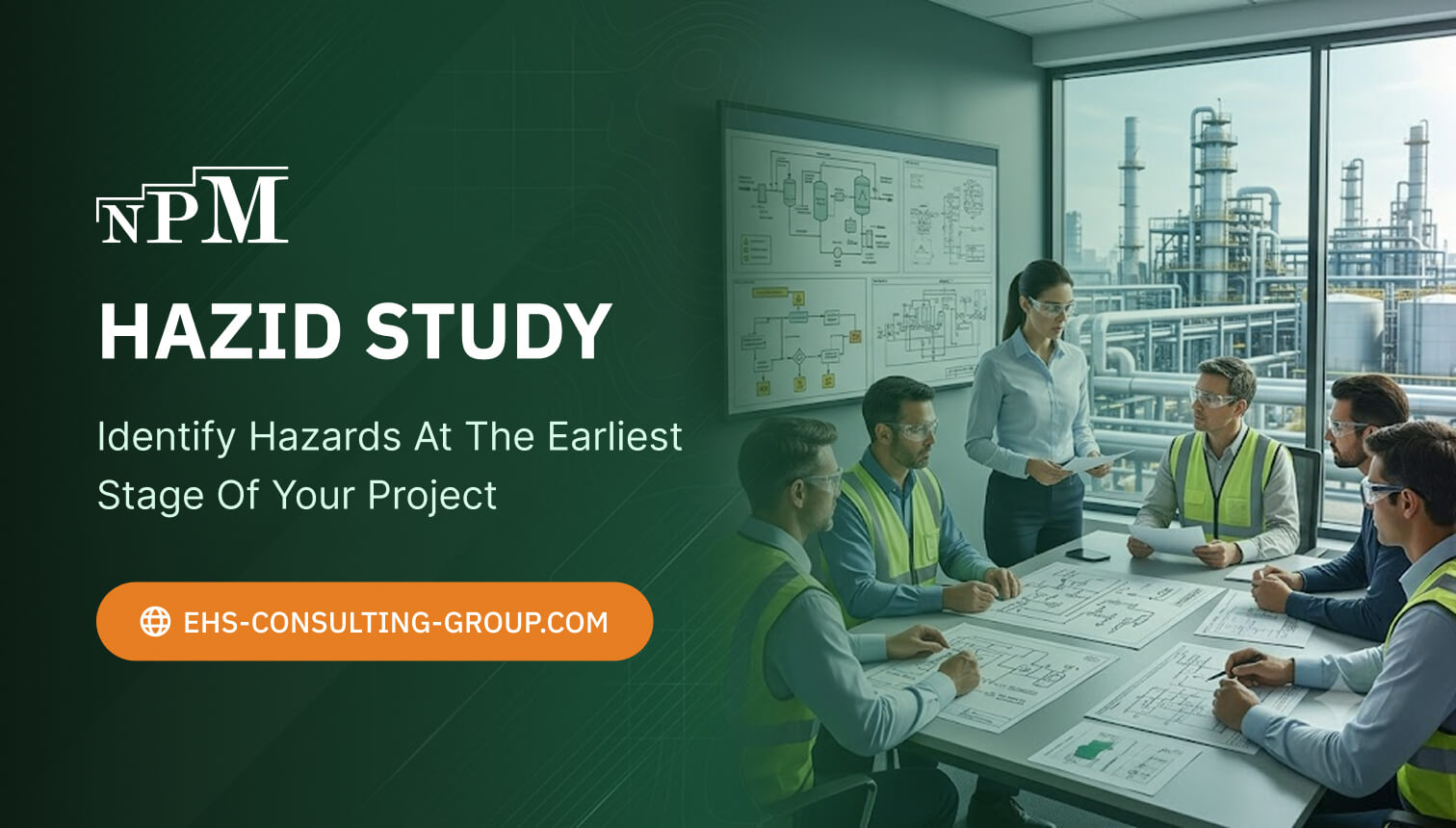
Once a project enters FEED or an existing facility considers modifications, a clear-eyed view of HAZID effort allows teams to synchronize risk work with engineering deliverables, procurement lead times, and construction windows. When organizations underestimate effort, they often discover late in the cycle that workshop sessions must be extended, site visits added, or additional specialists (e.g., explosion protection, human factors) brought in. The result may be rushed decision-making, superficial risk capture, and action logs that lack the specificity needed for ALARP demonstrations or for downstream HAZOP, LOPA, or Bowtie analysis.
From a compliance perspective, the UAE’s regulators and authorities having jurisdiction expect early, thorough hazard identification. Under OSHAD SF in Abu Dhabi, for example, risk assessment and control selection are central to the management system. Civil Defence reviews often examine hazardous material inventories, fire protection philosophies, and emergency planning—all of which benefit from a robust upstream HAZID. Where ADNOC guidelines apply, there is additional emphasis on systematic hazard registers, barrier management, and integration with QRA and EERA where major accident hazards are present. Misjudging cost can therefore mean misjudging scope and depth, which in turn complicates regulatory engagement and increases rework.
Strategically, spending the right amount at the right time changes outcomes: well-scoped hazard identification reduces design churn, enables more credible safety requirement specifications under IEC 61511, and focuses capital on the controls that most reduce risk. Conversely, “saving” on HAZID by rushing or trimming stakeholders may generate larger downstream costs—design changes, equipment retrofits, schedule slippage, and insurance queries after near-misses—that dwarf the original study budget.
Key Points to Understand

Cost is best understood by looking at how a hazard identification study is built. The following pillars typically determine the level of effort, and therefore the budget, for a UAE-based HAZID.
1) Scope definition and study boundaries

What is in-scope—entire facility, unit operations, utility systems, construction phases, SIMOPS with neighbors—drives the number of nodes or work packages. Early-phase HAZID at concept or FEED may be broad, focusing on hazardous materials, inventories, siting constraints, plot plan conflicts, and constructability hazards. Operational-phase studies often dig deeper into human-machine interfaces, operating envelopes, isolation strategies, emergency response, and maintenance activities such as heavy lifts or confined space entry. More breadth and more depth translate into more workshop time and documentation effort.
2) Information maturity and data availability

The quality of PFDs, P&IDs, process descriptions, 3D models, hazardous area classification drawings, and construction method statements determines how efficiently hazards can be identified and articulated. Incomplete or fast-evolving documentation adds iterations, clarifications, and rework, all of which increase effort. Mature documents allow the team to use structured guidewords and move systematically.
3) Multidisciplinary participation and stakeholder mapping

Effective HAZID relies on a cross-functional team. Onshore petrochemical nodes may require process engineering, operations, fire and gas, instrumentation, maintenance, and safety specialists. Marine or offshore nodes bring marine operations, lifting supervisors, and emergency response coordinators. The cost goes beyond the facilitator; real participation from internal SMEs is essential. Budgeting should anticipate the time these stakeholders commit as part of the study window.
4) UAE-specific logistics and access

Onsite sessions can require gate passes for industrial zones (e.g., JAFZA), ADNOC badging for Ruwais or offshore travel planning, or coordination with EPC site offices in remote locations. Offshore or island access can add helicopter or boat transfers and safety inductions. These logistics often represent a non-trivial cost component and must be factored in.
5) Language and documentation practice

Most industrial teams in the UAE operate bilingually (Arabic/English), and workshop facilitation may need to accommodate both comfortably. Deliverables—from hazard registers to action logs—must align with internal document control and audit expectations, often under ISO 9001 management systems. Translation, formatting, and document management effort should be reflected in cost planning when required.
6) Integration with other risk assessments
A well-structured HAZID informs HAZOP, LOPA, SIL assignment, Bowtie development, and sometimes feedstock or storage QRA. If an organization intends to flow outputs into these downstream analyses, the HAZID may need extra definition (e.g., consequence modeling placeholders, clearer barrier mapping, more precise initiating event statements). This additional rigor modestly increases effort but often saves time later.
7) Facilitation quality and tool support
Experienced facilitation and a disciplined guideword approach keep sessions focused. Some teams prefer software-based registers that support barrier taxonomy and traceability into action tracking systems. If tool configuration or data migration is needed, budget accordingly.
8) Corporate governance and procurement
Some organizations must align with group-level governance for technical assurance and document retention. For those seeking background on corporate governance materials and controlled documentation resources, see CABINET NPM. While not a driver of technical effort per se, structured governance can influence how deliverables are formatted and reviewed, with corresponding time allowances.
Bringing these strands together, the study effort can be visualized in terms of cost components. While every organization allocates budgets differently, the table below shows typical elements and their relative weight—useful for internal planning rather than as a quote.
| Cost Component | Indicative Share | Primary Drivers | UAE-Specific Considerations |
|---|---|---|---|
| Preparation and Scoping | 10–20% | Scope definition, document review, node planning | Alignment with ADNOC/OSHAD templates; bilingual prep as needed |
| Workshop Facilitation | 30–45% | Number of nodes, team size, complexity, guideword depth | Shift schedules; Ramadan timing; stakeholder availability |
| Documentation and Action Tracking | 20–30% | Register quality, action specificity, formatting standards | Internal document control, audit readiness, translation |
| Site Visits and Logistics | 5–20% | Site access, safety inductions, travel | Industrial zone passes, offshore transfers, accommodation |
| Specialist Inputs | 0–15% | Fire/explosion, human factors, SIMOPS experts | Alignment with Civil Defence codes and insurer expectations |
| Follow-up and Validation | 5–10% | Action log closure checks, management reviews | Integration with Bowtie, HAZOP/LOPA, or QRA pathways |
Given these variables, comparing “HAZID Cost UAE” across projects without context is misleading. The same facility type can exhibit widely different effort profiles depending on scope breadth, information maturity, and stakeholder engagement depth.
How This Works in Practice
To ground the cost drivers in day-to-day execution, consider how a typical UAE organization might navigate hazard identification across the asset life cycle.
At concept or FEED, teams often commission a strategic hazard review that focuses on process inventories, siting, plot plan conflicts, major utilities, and construction logistics. The workshop might be shorter but broader, with an emphasis on identifying major accident hazards and the primary barriers expected to control them. Here, cost is shaped by the diversity of stakeholders (from process engineers and construction managers to emergency response planners) and by the need to reconcile uncertainties in design data.
As design matures, a more structured review sweeps through systems methodically. Nodes may follow process boundaries, equipment groupings, or construction phases. Documentation quality starts to dominate costs: accurate P&IDs, 3D models, and method statements make workshops efficient; missing information elongates them. When teams appropriately budget for data validation and pre-read alignment, facilitation time is used for genuine risk thinking rather than document chasing.
For brownfield work—tie-ins to operating units in a refinery or modifications in a gas compression station—the real-world constraints of shutdown windows, permit-to-work requirements, and SIMOPS with nearby units require careful setup. Budgeting for site walkdowns, photography (respecting site security), and interface mapping avoids surprises during the workshop and makes the action register more executable for operations.
Offshore scenarios bring additional logistics. Planning must account for safety inductions, travel windows, and the number of participants who can practically attend on-site. It may be more efficient to combine onshore pre-sessions (to review drawings and agree on guidewords) with targeted offshore verifications. Cost here is less about workshop hours and more about the choreography of access and safety.
Finally, construction-phase HAZID for mega-projects—where tower cranes, deep excavations, heavy lifts, and multi-contractor SIMOPS dominate—shifts the balance of participants toward construction management and lifting supervisors. Method statements, lift plans, and temporary works designs need to be mature enough for meaningful review. Budgeting anticipates iterations as construction sequences evolve, particularly when interfacing with neighbors in dense urban zones under Dubai Municipality oversight.
Benefits and Practical Use Cases
When HAZID effort is right-sized and adequately resourced, the payoffs are tangible. The following benefits illustrate where thoughtful budgeting translates into operational value.
- Sharper early risk visibility: A well-run hazard identification exercise frames the “risk landscape” early, helping engineering teams avoid dead-ends and simplifying formal SIL allocation later under IEC 61511.
- Reduced design rework: When hazards are captured before procurement and detailed design freeze, late-stage changes diminish, saving both time and budget, particularly on long-lead equipment.
- Stronger regulatory engagement: Clear hazard registers and barrier logic resonate with Civil Defence reviewers and align with OSHAD’s risk management principles, smoothing approvals.
- Focused follow-on studies: A quality hazard register feeds directly into HAZOP, LOPA, Bowtie, and, where relevant, QRA, reducing duplication and accelerating assurance workflows.
- Actionable construction safety: For EPC-led projects, practical hazards tied to lifting, temporary works, logistics, and SIMOPS become trackable actions that site teams can execute.
- Portfolio learning: Consistent taxonomies across multiple assets create comparable datasets; portfolio leaders can then benchmark risk themes and prioritize improvement programs.
Concrete use cases in the UAE context include:
- Refinery revamp: Pre-turnaround hazard identification focused on tie-in sequencing and isolation strategies, preventing hot-work conflicts and clarifying emergency egress under partial unit shutdown.
- Offshore compression module: Early hazard identification addressing crane lifts, helideck interfaces, and temporary power, informing deck layout and minimizing SIMOPS conflicts during hook-up and commissioning.
- District cooling expansion: Hazard identification emphasizing ammonia handling, refrigerant isolation, and emergency ventilation, aligning with Civil Defence fire safety philosophies.
- High-rise construction: Focused sessions on crane positioning, wind and load charts, exclusion zones, and night-time operations under Dubai Municipality oversight, reducing near-miss frequency.
- Automated warehouse: Identifying lithium-ion storage hazards, fire detection strategy, and firefighting access routes, integrating outcomes with insurer recommendations and AHJ expectations.
Best Practices and Points of Caution
Experience suggests several practices that keep hazard identification effort proportionate while maintaining technical depth. These recommendations dovetail with the cost drivers described earlier.
- Calibrate scope to life-cycle stage: Broad-and-early at concept/FEED; deeper-and-focused at detailed design and operations. The wrong level at the wrong time wastes budget.
- Insist on data readiness: Build a document readiness checklist—PFDs, P&IDs, layout drawings, hazardous area classification, method statements—and freeze a pre-read pack one week ahead.
- Map stakeholders deliberately: Identify who must be in the room for each node. Understaffed sessions save short-term cost but cost more in rework when key voices revisit decisions.
- Plan logistics with realism: Account for site passes, inductions, offshore transfers, and accommodation. Protect workshop time from avoidable access friction.
- Use a disciplined guideword set: Consistency accelerates facilitation and yields comparable registers across assets, aiding portfolio analytics and audit readiness.
- Write actions that can be executed: Actions should be specific, owner-assigned, and time-bound. Vague actions invite repeated reviews and drag out close-out costs.
- Integrate outcomes: Flow HAZID outputs into HAZOP/LOPA, Bowties, and barrier management systems. The extra minutes spent tagging barriers save hours later.
- Respect bilingual dynamics: When stakeholders are mixed Arabic/English speakers, plan for facilitation and documentation that reflect this; it avoids repetition and translation churn.
- Anticipate regulatory lenses: Civil Defence priorities (fire and life safety), OSHAD’s risk framework, and operator requirements like ADNOC’s barrier focus should shape how hazards and controls are articulated.
- Avoid false economy: Excessive compression of workshop time, elimination of site verifications, or omission of key SMEs often migrates cost into design changes and schedule risk.
Two points of caution are especially common. First, confusing HAZID with HAZOP: they complement each other but are not interchangeable. HAZID’s earlier, scenario-oriented lens is not a substitute for node-by-node deviation analysis typical of HAZOP. Second, underestimating construction hazards in otherwise “process-centric” studies: lifting, temporary works, and logistics can dominate incident causation during projects and deserve their own space in scope and budget.
Frequently Asked Questions About HAZID Cost in the UAE
What are the top three drivers of HAZID cost in the UAE?
Scope breadth, information maturity, and logistics typically dominate. Broad scopes (e.g., full facility plus construction SIMOPS), incomplete documents (driving iterations), and site access complexity (industrial zone passes, offshore transfers) can each materially increase effort. Team composition and the need for bilingual facilitation also factor in.
How does a HAZID differ from a HAZOP in terms of cost profile?
HAZID is generally earlier-stage, scenario-based, and multidisciplinary, often requiring a wider spread of stakeholders but less line-by-line engineering depth than HAZOP. HAZOP tends to be longer per node due to detailed deviation analysis. Depending on scope, a HAZID may cost less overall than a full HAZOP, but if HAZID includes construction, SIMOPS, and emergency response depth, effort can be comparable.
Do regulators in the UAE expect a specific HAZID format that affects cost?
Authorities do not usually mandate a single format, but they expect clarity and traceability. Civil Defence looks for alignment with fire and life safety strategies; OSHAD emphasizes risk assessment rigor; ADNOC entities may look for barrier-oriented registers that interface with QRA or Bowtie. Meeting these expectations may require additional structuring and documentation, which should be included in budget forecasts.
Does offshore access significantly change the budget?
Yes. Offshore sessions add planning for inductions, travel windows, and sometimes accommodation. The workshop itself may be shorter than onshore equivalents, but the access choreography and safety requirements raise total effort. Many teams combine onshore preparatory sessions with targeted offshore verification to optimize cost.
Can remote or hybrid workshops reduce HAZID cost?
Remote tools can reduce travel and access costs, especially for preliminary reviews or follow-ups. However, remote formats can slow facilitation if drawings are complex or bandwidth is constrained, and they are a poor substitute for on-site verification of layout-dependent hazards. Hybrid arrangements often work best: remote pre-reads and follow-ups, with in-person core sessions or site walks.
How should we budget when HAZID outputs will feed LOPA or Bowtie analysis?
If downstream analyses are planned, allocate additional time to ensure initiating events, consequences, and barriers are articulated clearly with consistent taxonomies. That modest increase in HAZID effort pays off by reducing rework in LOPA and accelerating Bowtie development for management communication and assurance.
Is there value in including construction method statements in HAZID, and how does that affect cost?
Yes. Method statements make construction-phase hazard identification concrete: they reveal lifting sequences, temporary works, and access constraints. Incorporating them increases preparation and workshop time but markedly improves the quality of actions, reducing incident risk during execution.
How often should HAZID be revisited, and does revalidation cost less?
Revalidation is prudent when major modifications occur, when operational experience reveals new issues, or at set intervals (often aligned with management system requirements). Revalidations can cost less if a high-quality register exists and actions are tracked, but they may cost more if the previous output was weak or the facility changed significantly.
What role do insurers play in shaping HAZID scope and cost?
Insurers may not dictate scope, but their recommendations—especially on fire protection, hazardous area classification, and emergency response—can influence the depth of review. Addressing these topics early in HAZID can streamline insurance engagements and avoid separate, duplicative assessments later.
Are currency fluctuations or import costs relevant to HAZID budgets?
HAZID is primarily a professional effort rather than a materials purchase, so currency fluctuation has limited impact beyond any travel or accommodation priced in foreign currency. The more significant variables remain scope, logistics, and documentation requirements.
Conclusion
The costs associated with hazard identification in the Emirates reflect a practical combination of scope, information maturity, stakeholder breadth, and logistics, moderated by the expectations of regulators and industrial operators. Early in this article we underscored how breadth and depth should vary by life-cycle stage; in practice, that means calibrating study boundaries and team composition so facilitation time converts into real risk clarity. We also emphasized the tangible value of data readiness and execution planning—from industrial zone passes to bilingual documentation—which frequently determines whether budgets hold. When organizations treat “HAZID Cost UAE” not as a number to minimize but as an investment to right-size, they capture hazards earlier, align more smoothly with OSHAD and Civil Defence, and feed downstream HAZOP, LOPA, Bowtie, and QRA work with better inputs.
To go further on this topic, NPM’s broader HAZID Study Services UAE page covers this in more depth.
Explore NPM’s References
Evidence matters when planning risk studies, especially when projects are complex, schedules are tight, and multiple stakeholders must align around method and outcome. NPM’s references demonstrate how disciplined hazard identification—integrated with standards such as IEC 61511, API RP 14C/750, and ISO 45001—has supported clients across a broad spectrum of industrial contexts worldwide. In upstream oil and gas, our work has addressed offshore platform SIMOPS, helideck interfaces, emergency response, and temporary power hazards during hook-up and commissioning. In downstream refining and petrochemicals, our teams have supported revamps, tie-ins, and debottlenecking where shutdown windows and isolation strategies demand surgical clarity. Construction-heavy programs—high-rise developments, marine works, and major infrastructure—feature prominently in our portfolio, with emphasis on lifting, excavation, temporary works, and logistics risks. We also bring experience from manufacturing environments and automated logistics facilities, including ammonia refrigeration and battery storage hazards where fire and life safety considerations intersect with insurer expectations and authority approvals.
Across these references, a common thread runs through: structured facilitation, high-quality documentation, and a focus on actions that stakeholders can implement without ambiguity. NPM’s approach emphasizes cross-functional participation, bilingual fluency where needed, and careful integration with downstream studies such as HAZOP, LOPA, Bowtie, and QRA. We recognize that clients must defend budgets and schedules internally while meeting the expectations of regulators and insurers; our references illustrate how thoughtful planning and technical depth make that possible. Whether the challenge involves remote sites, offshore access, industrial zone constraints, or multi-contractor coordination, NPM’s record shows the value of making risk studies both rigorous and workable in the real world.
For more information about our references, visit Our References.
Speak with NPM
If you are exploring how these cost drivers relate to your facility, we are happy to share perspectives and help you calibrate effort to project phase and regulatory context. A short conversation can often clarify where scope depth saves time later and how to plan logistics without disrupting operations. For any further questions or to speak with our team, Contact Us.