

HAZOP Facilitator Skills are the quiet force that determines whether a hazard and operability study truly improves risk understanding or merely fills a compliance checkbox. In high-hazard industries operating across the UAE—refining and petrochemical complexes, offshore platforms, gas processing plants, storage terminals, high-rise construction projects, manufacturing lines, logistics hubs, and power generation—this capability is not a soft add-on. It is central to getting the best from a multidisciplinary team, aligning with standards such as IEC 61511 and API RP 14C/750, and transforming complex process data into defensible, auditable decisions that keep people, assets, and the environment protected.
While a HAZOP is supported by strong engineering and good P&ID hygiene, the catalyst of a valuable outcome is the person facilitating the conversation: guiding the application of guidewords, structuring deviations, probing for credible initiating events, testing assumptions around safeguards, and ensuring that documentation is clear and action-oriented. In the UAE’s regulatory environment—interfacing with ADNOC corporate requirements, OSHAD, Dubai Municipality, Civil Defence approvals, and MOHRE obligations—the quality of facilitation can materially affect the speed and certainty with which designs are accepted and changes are put into operation. This article examines the capabilities that distinguish effective facilitation, why they matter, and how they play out in practice across capital projects and operations.
Importantly, although this discussion touches on how NPM practitioners approach critical moments in a study, the aim here is educational: to provide managers, engineers, and HSE professionals with a practical, robust understanding of what “good” looks like so they can recognize, cultivate, and demand it—internally or with external partners—across the lifecycle from concept through operation.
Who This Concerns

Because HAZOP is a structured team method, facilitation quality affects a wide set of roles. The people who should pay closest attention include:
- HSE and process safety managers seeking reliable, traceable risk assessments aligned to corporate risk matrices and regulatory expectations.
- Plant managers, operations leaders, and offshore installation managers (OIMs) who need clear, implementable actions that do not disrupt safe production.
- Process, mechanical, instrumentation, and electrical engineers responsible for design integrity, SIS lifecycle management under IEC 61511, and relief/protection systems aligned to API and NFPA codes.
- Project directors, EPC/PMC teams, and package engineers who must integrate vendor skids, building services, or utility tie-ins without creating latent hazards.
- Maintenance, asset integrity, and inspection teams charged with sustaining barrier performance, including proof testing, bypass/override controls, and device reliability.
- Construction managers and logistics coordinators who face dynamic hazards in temporary works, hot work, SIMOPS, and material handling.
- Compliance officers liaising with OSHAD, Dubai Municipality, Civil Defence, and site audit teams who require auditable rationales for risk decisions.
These stakeholders rely on a facilitator’s ability to bring diverse inputs together—P&IDs, cause-and-effect charts, alarm rationalization records, safety instrumented function (SIF) data, relief calculations, operating procedures, and commissioning plans—so that the team’s knowledge is captured faithfully and can withstand internal and external scrutiny.
Why This Topic Matters
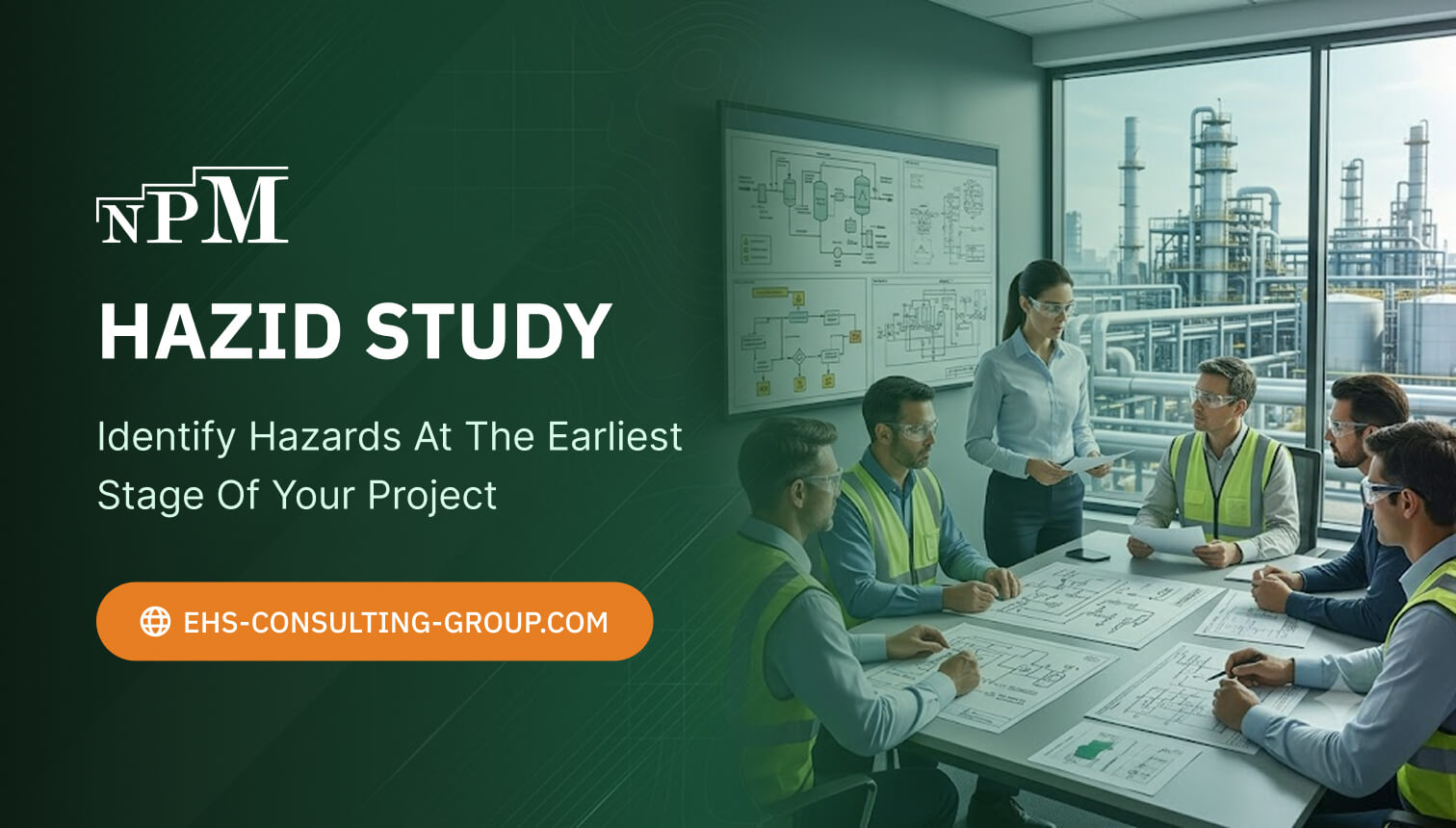
Earlier we touched on the breadth of people influenced by facilitation quality. The stakes behind that influence are high: safety performance, project schedule, capital efficiency, and regulatory confidence. A HAZOP that is poorly facilitated risks groupthink, superficial deviation analysis, undocumented assumptions, and misplaced confidence in controls that either do not exist in practice or are not sufficiently independent. Conversely, strong facilitation reveals hidden couplings—manual valve line-ups that defeat interlocks, control logic that overwhelms operators during upsets, temporary bypasses that have become permanent, or relief scenarios that were never re-validated after a process change.
The UAE’s industrial governance presents specific demands. ADNOC operators and their contractors are expected to demonstrate barrier-based thinking and a coherent link between hazard identification, risk evaluation, and mitigation measures. Civil Defence and municipal reviewers frequently look for traceability between design intent and protection layers, especially for fire protection, hazardous area classification, and emergency response routes. Where safety instrumented systems are claimed, IEC 61511 expects that the route from hazard to SIF target integrity (often via LOPA) is logical and documented. Without disciplined facilitation, this thread frays quickly, creating rework, delays, and potential non-compliance.
Finally, HAZOP informs many downstream processes: SIS design and proof-test intervals, alarm setpoints and shelving rules, procedural controls, maintenance tasks, training, and the management of change (MOC). If the facilitation does not anchor the right actions with the right owners, things slip. That is why understanding and investing in facilitation capability pays back across the safety lifecycle and operational performance.
Key Points to Understand

With the context set, it helps to break down facilitation capability into identifiable components. Each dimension contributes to the overall quality of the study and the utility of its outputs.
1) Method discipline that is flexible, not rigid

Effective facilitators master the structure—nodes, design intent, parameters, guidewords, deviations, causes, consequences, safeguards, and actions—while flexing to the plant’s reality. They know when to pause for a quick boundary check (e.g., whether the compressor antisurge loop belongs to this node) and when to proceed to maintain flow. They avoid “parameter shopping” and instead focus on meaningful deviations that reflect credible energy or material imbalances. The method serves insight, not the other way around.
2) Process and asset fluency
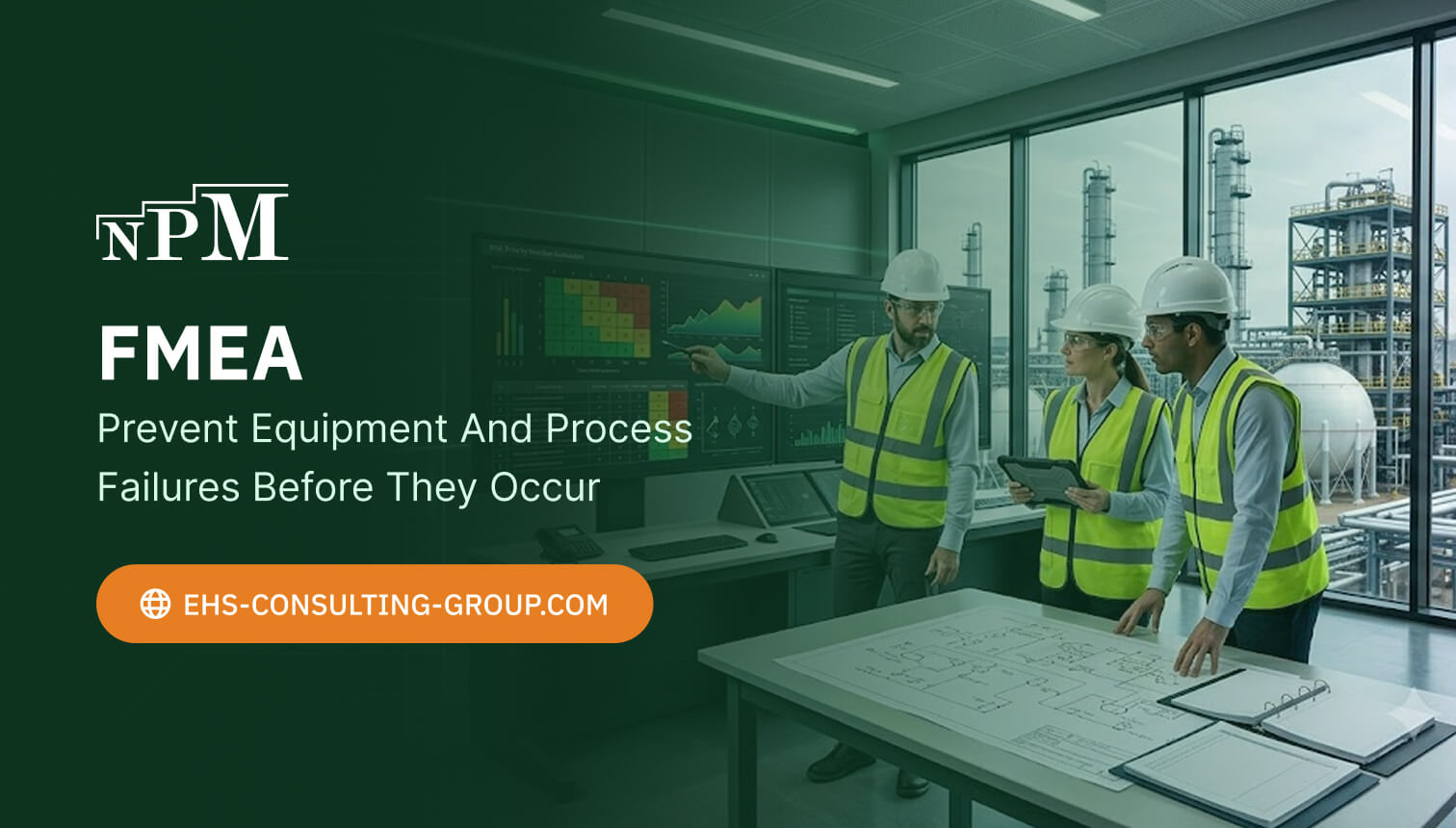
Industrial assets in the UAE range from sour gas facilities to jet-fuel terminals and power/water cogeneration plants. A facilitator need not be the plant’s lead process engineer, but they must be fluent enough to interrogate P&IDs, cause-and-effect matrices, ESD/PSD logic, flare and relief systems, and battery limits. Familiarity with API RP 14C for offshore safety systems, API RP 754 for process safety performance indicators, and relevant NFPA standards for fire protection enables faster, deeper discussion.
3) Human dynamics and cognitive bias management

Teams are human systems. Facilitation means drawing out quieter voices (often the control room operator who has seen real upsets), defusing overconfidence, and naming assumptions explicitly. Techniques include check-back questions, devil’s-advocate prompts, and rotating who speaks first to avoid anchoring. Psychological safety is not a buzzword; it is a prerequisite for surfacing weak signals that prevent incidents.
4) Integration with the safety lifecycle

HAZOP does not stand alone. A capable facilitator knows how the discussion will feed LOPA for SIL allocation, Bowtie analysis for barrier visualization, and QRA for risk contouring. They mark potential initiating events that warrant frequency/severity quantification, flag safeguard dependencies that reduce claimed independence, and anticipate where IEC 61511 lifecycle documentation will require evidence.
5) Documentation that stands up to audit

Minutes are a safety record. Clear deviation numbering, unique action IDs, unambiguous owners, verification methods (e.g., “update C&E matrix and re-run cause” rather than “check logic”), and references to drawing numbers and revision states are crucial. Well-facilitated teams agree on what gets recorded and why; reviewers can reconstruct the logic months later.
6) Cultural and multilingual fluency
UAE teams are often multilingual and cross-cultural, with contractors and vendors spanning time zones. A strong facilitator reads the room, calibrates language, paraphrases jargon into plain terms, and uses visual anchoring on the P&ID to keep everyone synced. This reduces misinterpretation and accelerates consensus.
7) Governance awareness
Understanding OSHAD requirements, ADNOC HSE expectations, Dubai Municipality and Civil Defence approval pathways, and corporate management systems (ISO 45001, ISO 14001) helps position outcomes so they slot smoothly into assurance processes. For further reading on professional governance topics related to organizational practice, see CABINET NPM.
Skill-to-Outcome Map
The following table illustrates how specific facilitation capabilities translate into in-room behaviors, documentary evidence, and practical risk reduction.
| Skill Area | In-Session Indicators | Evidence in Report | Risk Reduction Impact |
|---|---|---|---|
| Method Discipline | Logical node scoping, balanced pace, targeted guideword use | Consistent deviation structure, traceable logic paths | Fewer blind spots; credible coverage of high-risk scenarios |
| Process Fluency | Probing questions on control, protection, relief, utilities | Accurate references to P&ID, C&E, data sheets | Early detection of coupling/overrides that undermine barriers |
| Human Dynamics | Inclusive participation, bias checks, conflict resolution | Clear assumptions logged; minority views noted where relevant | Richer insight; reduced groupthink; stronger operational realism |
| Lifecycle Integration | Flags for LOPA/Bowtie/QRA; independence challenges tested | Actions tied to SIL/LOPA triggers or barrier register updates | Better SIL targets; coherent barrier management |
| Documentation Quality | Real-time action clarity and owner agreement | Unique IDs, acceptance criteria, revision control captured | Implementable actions; audit-ready trail for regulators |
How This Works in Practice
Translating capability into outcomes begins long before the first guideword is applied. Building on the skills above, facilitators shape the conditions for a productive conversation and a robust record.
Preparation starts with ensuring the right information and people are present. Up-to-date P&IDs, PFDs, cause-and-effect charts, instrument indexes, alarm summaries, and relief device data (including assumptions for relieving scenarios) anchor the discussion. Representatives from process, operations, maintenance, I&C, electrical, safety, and where relevant, vendors or package suppliers, must have the authority and knowledge to answer questions. The facilitator validates boundaries so the team understands what is inside each node (e.g., whether the fuel gas knockout drum is inside the gas turbine node or treated separately).
In-session, the facilitator sets a cadence that balances depth and momentum. If a deviation—say, “high pressure” on an amine absorber—opens a rich line of inquiry (blocked outlet, rich amine pump trip, control valve failure stuck closed, temperature effects, analyzer failure), the facilitator manages branching without losing the main thread. They test safeguard independence: does the high-pressure trip share the same transmitter as the control loop? Is the relief valve setpoint close enough that normal operations flirt with chatter? Could an operator realistically respond within alarm annunciation time during startup? These questions lead to concrete, verifiable actions rather than generic reminders.
For brownfield modifications, facilitation must surface legacy constraints: hardwired interlocks that are difficult to change, informal workarounds that have become normal, or outdated drawings. The facilitator helps the team decide where to draw a practical line between design improvement and operational proceduralization, always checking the ALARP principle and company risk criteria. In construction and logistics contexts, similar dynamics appear around temporary works and SIMOPS; facilitation steers the team to explicitly define interfaces, permits, and isolation plans that are robust under time pressure.
Post-session, quality shows in how actions are framed. “Review PSV sizing” is weak. “Recalculate PSV-101 for blocked outlet and fire case using current heat input and relieving capacity; update datasheet and isometrics; revise P&ID 17-AB-001 Rev C accordingly” is actionable and auditable. Integration with downstream processes—alarm rationalization, SIF proof test intervals, procedures, training, and MOC—is intentional, not an afterthought. Where LOPA is required to set SIL targets, the facilitator ensures initiating event frequencies and protection layer credits reflect reality rather than wishful thinking.
Finally, experienced facilitators accommodate hybrid participation. On UAE megaprojects with global supply chains, a vendor’s package specialist may join remotely. The facilitator keeps visual anchors (shared drawings), confirms understanding more often, and re-reads decisions for clarity to mitigate the risk of remote miscommunication.
Benefits and Practical Use Cases
When the skills discussed above are present, tangible benefits accrue. These are not abstract; they translate directly into safer, more reliable, and more compliant operations.
- Sharper hazard discovery: Teams uncover couplings such as instrument air failures cascading into multiple safeguards or “hidden” manual valves that defeat an ESD trip during maintenance.
- Improved barrier integrity: Independence checks prevent over-crediting shared sensors or common logic modules, supporting IEC 61511-compliant SIL allocation.
- Cleaner, faster approvals: Well-documented rationales align with ADNOC and Civil Defence examiners’ expectations, reducing iterations.
- Reduced rework: Action clarity avoids vague tasks that resurface in later phases, saving engineering hours and schedule.
- Operator-centered design: Alarm rates and human response windows are treated as engineering parameters, improving control room effectiveness.
- Lifecycle traceability: From HAZOP to LOPA to maintenance tasks, there is a continuous thread that audit teams can follow without ambiguity.
Concrete examples frequently seen across UAE facilities include re-baselining relief scenarios after a compressor change-out; revising gas detection layouts following recognition of ventilation patterns in process buildings; tightening override governance after discovering long-standing SIS maintenance bypasses; and resolving interface hazards between a vendor skid and a host DCS that previously assumed incompatible alarm priorities. Each of these outcomes stems from the same core: disciplined facilitation that channels the team’s expertise into decisions and records that stand up under pressure.
Best Practices and Points of Caution
Strong facilitation is a craft. The following practices, many of which address pitfalls observed in busy projects and operating plants, help sustain quality:
- Make the drawing the “single source of truth.” Keep the P&ID on screen and reconcile debates against it immediately. Note drawing revisions explicitly.
- Define node intent clearly. Ambiguous boundaries create duplication and gaps; agree on what “normal operation” means for each node, including batch and startup conditions if relevant.
- Challenge safeguard credibility. Ask for proof of independence, testing, and human response times; downgrade credits when evidence is weak.
- Document assumptions and minority views. Uncertainty is inevitable; name it so it can be resolved or monitored.
- Avoid solution bias too early. Capture the hazard first, then evaluate candidate mitigations against the risk matrix and lifecycle requirements.
- Use the corporate risk matrix, not a generic one. Calibrate likelihood and consequence language to the organization’s taxonomy to avoid misclassification.
- Integrate with LOPA and Bowtie intentionally. Flag deviations that need quantification; do not shoehorn LOPA where it is not warranted.
- Protect psychological safety. Rotate speaking order, paraphrase, and invite operators and technicians to lead parts of the discussion where they hold critical knowledge.
- Timebox without rushing. Deep dives are sometimes necessary; when they occur, create an action to resolve offline and keep the workshop moving.
- Close the loop. At the end of each day, review actions for clarity, ownership, and verification method; summarize unresolved items and next steps.
Caution is warranted around two recurring traps. First, turning HAZOP into a design review dilutes focus; park design debates unless they materially change hazard exposure. Second, “paper safeguards” can creep in—procedures or alarms that exist in documents but not in the lived reality of operations. Evidence and operator testimony should guide whether a control is credited.
Frequently Asked Questions About HAZOP Facilitator Skills
What distinguishes a facilitator from a HAZOP chairperson?
Titles vary by organization. In many teams, the facilitator and chair are the same person, but the distinction is useful: the facilitator is responsible for the process—ensuring method discipline, participation, and documentation quality—while the chair is accountable for governance decisions such as scope acceptance, alignment with company standards, and escalation of unresolved issues. In smaller teams one individual often wears both hats; in complex projects, they may be split.
Do facilitators need to be process engineers?
They do not have to be the design authority, but they must be sufficiently fluent in process and control to guide credible analysis. The key is an ability to interrogate P&IDs, control narratives, and protection layers, and to recognize when a design specialist must weigh in. Domain fluency reduces the risk of superficial or misdirected discussion.
How can organizations assess the quality of facilitation?
Look for in-session indicators (balanced participation, focused use of guidewords, clear scoping) and for documentary evidence afterward (unambiguous deviations, assumptions logged, actions with acceptance criteria and owners, consistent references to drawing revisions). Post-study follow-through—actions implemented without rework, clean audits—is a strong practical signal.
Where do HAZOP, HAZID, and What-If studies fit together?
They complement each other. HAZID is typically earlier, scanning broadly for hazards at concept or early design. What-If studies are flexible and sometimes used for procedures and non-process systems. HAZOP is a detailed, parameter-driven method focused on deviations from design intent. Skilled facilitators know when to draw from each, and how outputs feed into LOPA, Bowtie, and QRA where warranted.
How do facilitators handle vendor packages and interfaces?
Interfaces are a common source of latent risk. Facilitators ensure the right vendor representatives are present, define boundary conditions (utilities, alarms, ESD, communication protocols), and test assumptions about commissioning and maintenance. They document interface hazards explicitly and tie actions to responsible parties on both sides of the battery limit.
What role does IEC 61511 play in facilitation?
IEC 61511 frames the safety instrumented system lifecycle. Facilitators ensure that discussions about initiating events and protection layers set up coherent SIL allocation via LOPA where applicable, that independence claims are tested, and that documentation supports lifecycle steps—design, verification, validation, operation, and maintenance.
How do you keep a HAZOP from becoming a design debate?
By separating hazard identification from solutioning. The facilitator captures the hazard and its drivers first, records potential mitigations as actions, and routes detailed design discussions to the right forum. If a design change would materially alter hazard exposure, the team agrees on a re-scope or a return point to avoid circular debate.
Can an internal person facilitate, or is independence required?
Internal facilitation can work if the individual can maintain impartiality and has credibility across departments. Independence helps when organizational dynamics or vested interests risk biasing outcomes. Whether internal or external, the benchmark is the same: method discipline, robust documentation, and the ability to surface and resolve assumptions.
Conclusion
The thread running through this article is simple: the caliber of facilitation determines the caliber of HAZOP outcomes. We have seen how method discipline, process fluency, human dynamics, lifecycle integration, and audit-ready documentation combine to create studies that uncover real hazards, credit only credible safeguards, and translate findings into implementable actions. In the UAE context—where regulators, corporate standards, and complex assets intersect—these capabilities are not optional. They underpin safer operations, cleaner approvals, and enduring confidence in risk decisions. Organizations that recognize and cultivate strong HAZOP Facilitator Skills give themselves a measurable edge in both safety and performance.
To go further on this topic, NPM’s broader HAZOP Study Services UAE page covers this in more depth.
Explore NPM’s References
NPM’s references tell the story of how disciplined, human-centered facilitation translates into practical safety improvements across complex industries worldwide. From brownfield upgrades in mature refineries to greenfield upstream developments, from petrochemical steam cracker expansions to LNG storage terminals and power/water cogeneration units, our teams have worked with owners, EPC/PMC partners, and operators to surface latent risks and close them decisively. The portfolio spans hazard assessments, SIS lifecycle integration aligned with IEC 61511, barrier management programs, alarm rationalization, and major accident hazard reviews linked to QRA and Bowtie frameworks. These projects frequently interface with local and national regulators, independent verifiers, and corporate assurance functions, giving us a pragmatic perspective on what documentation and decision trails stand up to audit.
Readers exploring our references can expect concise case narratives that focus on the “so what”: how a study improved barrier independence, how a relief scenario revalidation prevented costly rework during commissioning, or how a re-scoped node structure accelerated an offshore turnaround by removing ambiguity. The thread across geographies and sectors is the same—build strong teams, ask the right questions, and record decisions so they can be defended and acted upon. Whether you manage an integrated gas plant, a tank farm with complex marine interfaces, a high-rise construction program, or a manufacturing line with critical utilities, you will likely find a parallel in our past work that helps you calibrate expectations for your own facility. The intent of sharing these references is not promotional excess but professional transparency: to give peers a clear view of the standard we hold ourselves to and the outcomes that standard enables.
For more information about our references, visit Our References.
Speak with NPM
If you would like to discuss how these facilitation principles apply to your plant, project, or organization, we are happy to share perspectives and answer questions. Whether you are preparing for a study, reviewing an existing one, or strengthening internal capability, an initial conversation can help clarify next steps. We welcome thoughtful dialogue from technical leaders across the UAE industrial landscape and beyond.
For any further questions or to speak with our team, Contact Us.