

Hot Work Permit Explained is more than a definition—it is a practical framework that determines when ignition-producing tasks may proceed, under which conditions, and with which safeguards, to keep people and assets safe. In high-risk industries across the UAE—Oil & Gas, Petrochemical, Construction, Manufacturing, Logistics, and Power Generation—the permit-to-work (PTW) process applicable to hot work creates a shared language between operations, maintenance, and HSE. This article unpacks what the permit entails, how it fits into broader process safety practice, and how teams can apply it effectively, without turning it into a box-checking exercise.
Hot work remains one of the most common sources of industrial fires. Cutting, welding, grinding, and brazing are routine, but they are never ordinary in a yard with flammable gases, in a refinery unit with residual hydrocarbons, or inside a logistics warehouse with combustible packaging. Understanding how a hot work permit is initiated, assessed, authorized, executed, and closed makes the difference between controlled risk and uncontrolled loss. The discussion below focuses on the UAE regulatory and operational context while referencing globally recognized standards such as NFPA 51B, OSHA 29 CFR 1910.252, ISO 45001, and process safety concepts linked to HAZOP, LOPA, and Bowtie analysis.
Who Does This Affect?
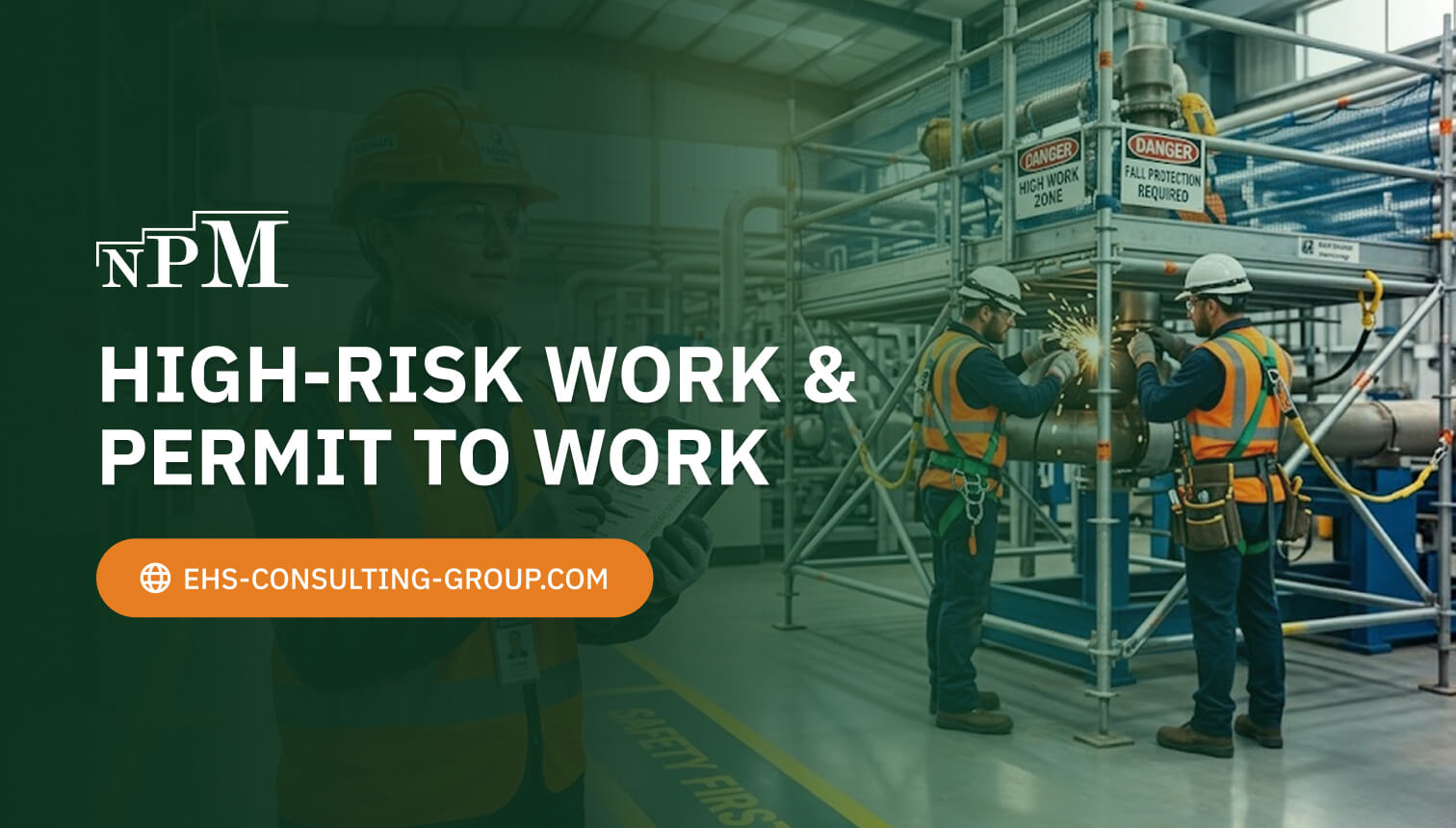
The hot work permit process touches multiple roles. Knowing who participates—and how—reduces confusion and accelerates safe execution:
- HSE Managers and Process Safety Leads responsible for governance of the PTW system and alignment with standards (ISO 45001, ADNOC HSE requirements, OSHAD, Dubai Municipality codes, Civil Defence permitting).
- Plant Managers and Operations Superintendents accountable for area readiness, isolations, SIMOPS coordination, and hot work authorization.
- Maintenance Supervisors, Welding Foremen, and Performing Authorities directing the work crew, ensuring task risk assessments are accurate and controls are in place.
- Permit Issuers/Controllers maintaining PTW discipline, from request through close-out, often integrated with digital control of work platforms.
- Authorized Gas Testers conducting atmospheric checks (LEL, oxygen, toxic gases) and documenting acceptance criteria.
- Fire Watch personnel trained to spot ignition hazards and respond, including post-work surveillance in line with NFPA 51B recommendations.
- Project Engineers and Construction Managers planning shutdowns/turnarounds and coordinating brownfield modifications in live plants.
- Contractor Supervisors and Subcontractors whose crews cut, weld, and grind in client facilities, including offshore platforms, storage terminals, and high-rise construction sites.
These stakeholders draw from the same permit foundations, but their focus differs: operations look at isolations and SIMOPS; maintenance centers on job method and competency; HSE verifies risk controls and compliance; fire watch guards the last line of defense. The permit connects these perspectives into one decision: can the work proceed safely here and now?
Why This Topic Matters

Industries with flammable inventories face a paradox: you must modify and maintain assets to keep them safe and productive, yet those same activities introduce ignition sources. A hot work permit does not eliminate risk; it orchestrates controls so that risk is demonstrably reduced to an acceptable level in that specific time and location. That orchestration is critical in refineries, gas plants, offshore platforms, pipelines, petrochemical crackers, tank farms, power stations, and warehouse retrofits—anywhere combustible materials or atmospheres could be present.
Beyond the immediate safety imperative, several contextual drivers raise the stakes:
- Regulatory and authority oversight: OSHAD in Abu Dhabi, Dubai Municipality, and Civil Defence requirements, plus industry operators’ rules (e.g., ADNOC HSE) reference or incorporate NFPA and related standards. Demonstrable PTW discipline is expected.
- Process safety integration: HAZOP, LOPA, and Bowtie analyses identify hazardous scenarios; hot work control is often a key barrier in the bowtie. Weak permits equate to weak barriers.
- Business continuity: A single fire can cascade into downtime, lost production, and reputational damage. Sound permits form part of operational resilience.
- Assurance and auditability: ISO 45001 systems require documented risk controls and change management; a robust permit trail provides that assurance.
When permits are treated as a living control—supported by training, competency, and verification—they reinforce safety culture. When reduced to formality, they create an illusion of safety that evaporates when conditions deviate from the plan.
Key Points to Understand

Having established who is involved and why it matters, the next step is clarity on what the permit covers and how it works in detail. The following building blocks are consistent across sectors, though terminology may differ by operator or site standard.
What Counts as Hot Work
Hot work typically includes welding (arc, MIG/TIG, oxy-acetylene), cutting, grinding, gouging, soldering, brazing, heat treatment, hot air guns, open flames, and spark-producing tools. Activities like hot tapping on live lines, or the use of internal combustion engines and non-Ex-rated electrical tools in hazardous zones, may also be classified as hot work. On construction sites, even temporary power distribution and cable jointing can be treated as hot work depending on proximity to combustibles.
The Permit Workflow
While forms vary, effective workflows converge on a few critical steps:
- Initiation: A performing authority requests hot work, stating exact location, scope, method, and timing.
- Assessment: A task-specific risk assessment/JSA considers ignition sources, fuel sources, and potential oxygen enrichment, referencing P&IDs, plot plans, and hazardous area classification.
- Preparation and Isolations: Equipment and areas are prepared—product removed or inerted, drains and vents checked, nearby combustibles cleared, blinds installed where needed, energy sources locked-out/tagged-out.
- Gas Testing: Authorized testers verify atmosphere (e.g., LEL below site threshold, oxygen between safe limits, toxics below OEL) and document continuous or periodic monitoring requirements.
- Authorization: The designated authority (e.g., area owner, operations manager) confirms conditions and signs. Some sites require additional approvals for high-risk settings or SIMOPS.
- Execution and Supervision: Work proceeds with a trained fire watch, appropriate firefighting equipment, hot work screens/blankets, and housekeeping maintained.
- Post-Work Fire Watch and Close-Out: The area is rechecked, fire watch remains for a defined period, and the permit is closed with as-left conditions verified.
Where It Applies: Area Classification and Context
Risk is highly sensitive to context. Work in a designated hazardous area (e.g., IEC 60079 Zone 1/2) calls for stricter criteria than work in a non-classified workshop. Outdoor tasks may be influenced by wind direction and speed. Confined spaces often require both hot work and confined space permits, with upgraded controls for ventilation, standby rescue, and continuous gas monitoring. In tank farms, the history of product stored and the potential for trapped vapors in sumps or drains can elevate risk even when tanks appear “empty.”
Roles and Competency
Permit roles should be clearly defined, trained, and competent:
- Permit Issuer/Controller: Validates preconditions, checks isolations, and ensures the permit is technically complete.
- Authorizing Person/Area Authority: Owns the plant area, confirms SIMOPS, and has the authority to approve or deny work.
- Performing Authority: Leads the crew, ensures controls are installed and maintained, and communicates changes.
- Authorized Gas Tester: Calibrated instruments, correct sampling methods (including remote sampling), and accurate documentation.
- Fire Watch: Equipped, positioned, and trained to react; understands the job area and potential escalation paths.
Competency ties back to ISO 45001 requirements for training and evaluation, and many sites align their hot work practices with NFPA 51B guidance to define fire watch duration and protection requirements. ADNOC HSE codes and operator-specific standards may set additional competencies or refresher intervals.
Controls and Acceptance Criteria
Controls span engineering, administrative, and PPE layers. Typical acceptance criteria include LEL below a site threshold (often 0%–10% LEL at start and maintained well below intervention limits), oxygen within safe bounds (commonly 19.5%–23.5%), and removal or shielding of combustibles within a defined radius (e.g., 11 meters, subject to site standards). Extinguishers of the correct class and capacity, fire hoses on charge where available, and a clear egress route are standard measures. In hazardous areas, temporary enclosures or “habitats” with positive pressure may be employed to segregate ignition sources from the ambient atmosphere. Where there is any doubt, a conservative approach is warranted: reclassify as hot work and apply controls rather than argue it down to “cold work.”
Documentation and Records
Permits create an auditable trail of risk management decisions. Good practice includes attaching annotated photos of the work location, isolations, and temporary protections; retaining gas test results with timestamps; and cross-referencing related permits (e.g., confined space or electrical isolation). Digital control-of-work systems can improve consistency, prompt users for missing data, and support analytics on permit volume and near misses. For document control, organizations often store PTW procedures, forms, and historical permits in secure repositories or governance platforms such as CABINET NPM, ensuring controlled access and versioning alongside other HSE and engineering records.
UAE Regulatory and Standards Landscape
While the UAE does not have a single hot work regulation applied identically across all sectors, operators are expected to demonstrate alignment with recognized best practice. OSHAD (Abu Dhabi) provides a system framework for occupational safety, Dubai Municipality issues safety guidelines applicable to worksites, and Civil Defence may require permits or approvals depending on location and scope. Many operators, including ADNOC group companies, reference or adopt NFPA codes (notably NFPA 51B for hot work) and harmonize with OSHA concepts and ISO 45001 management system requirements. Site-specific rules always govern; where multiple frameworks apply, the stricter provision typically prevails.
A Quick Reference Table
The table below summarizes typical controls scaled by relative risk. Always defer to your site standard and authorizing person’s judgment.
| Context | Example Hazards | Typical Controls | Approval Authority |
|---|---|---|---|
| Workshop (non-classified) | Sparks, radiant heat, combustible storage | Housekeeping, fire blankets, extinguisher, fire watch as required | Area owner or maintenance supervisor |
| Process unit (shutdown, gas-free verified) | Residual hydrocarbons, trapped vapors | Isolations/blinds, gas testing, continuous monitoring, fire watch, hose/hydrant on charge | Operations manager or designated authorizing person |
| Live hazardous area (Zone 1/2) with habitat | Flammable atmospheres, loss of containment | Positive-pressure habitat, Ex-rated equipment, continuous gas monitoring, SIMOPS control | Senior operations authorization plus HSE concurrence |
| Confined space (tank, vessel) | Oxygen deficiency/enrichment, flammable/toxic vapors | Combined permits, forced ventilation, rescue plan, continuous monitoring, extended fire watch | Area authority, confined space entry controller |
| Construction site near combustible cladding | Flying sparks, hot slag, hidden voids | Non-combustible barriers, spark containment, spotters, post-work patrol | Site HSE lead and construction manager |
How This Works in Practice

Translating the permit into day-to-day operations requires discipline and adaptability. Consider a brownfield modification in a gas plant. The performing authority submits a permit request to cut and weld a bracket near a cable tray. Operations notes a parallel activity—a nitrogen blowdown upstream—that could agitate residual liquids. The permit issuer convenes a quick SIMOPS review: either sequence the activities to avoid overlap or escalate controls (e.g., temporary barriers, increased monitoring). This blending of schedule, risk controls, and field realities is the heart of PTW.
During refinery turnarounds, hot work volume rises sharply. The system must scale without diluting rigor: staging extra firefighting equipment, assigning additional fire watch personnel, deploying mobile gas monitoring, and reinforcing permit audits at peak hours. In storage terminals, routine maintenance like roof repairs or nozzle replacements can be deceptively hazardous; historical product residues in drain lines spark unexpected LEL readings. Logistics hubs retrofitting racking or installing sprinklers face combustible packaging and high-bay dust; pre-job housekeeping and spark containment become decisive controls.
Offshore, the challenge is compounded by simultaneous operations (production, maintenance, lifting) in a constrained space. Hot work often necessitates habitats with continuous gas monitoring and strict ventilation control, supported by marine standby fire response. Power plants must consider wind impacts on spark travel and intake pathways that could pull smoke or vapors toward turbines. In all these contexts, the permit provides the structure to make the right operational calls, at the right time, under clear accountability.
Benefits and Practical Use Cases

When well-designed and faithfully applied, the permit system offers tangible outcomes beyond compliance. These are not abstract benefits—they show up in work quality, schedule reliability, and incident prevention.
- Lower ignition risk in mixed operations: In facilities handling hydrocarbons and routine maintenance, structured permits reduce the overlap of incompatible tasks and prevent “surprise” ignition sources.
- Fewer reworks and delays: Clear scope definition, photographs of location, and documented isolations reduce misunderstandings and the need for repeat visits to “fix” something missed.
- Better SIMOPS control: Permit cross-references flag conflicts—e.g., solvent cleaning near welding; forklift traffic under spark-producing tasks—and enable rescheduling or upgraded controls.
- Improved emergency readiness: Fire watch roles, equipment staging, and post-work inspections lead to faster detection and suppression of smoldering materials.
- Audit-ready compliance: Documentation mapped to ISO 45001 and operator standards withstands internal reviews and external inspections by authorities or insurers.
- Knowledge feedback loop: Data from permits (hot spots, repeated deviations) informs HAZOP/LOPA updates, Bowtie barrier effectiveness reviews, and design-out initiatives.
Concrete use cases include hot tapping under controlled conditions, habitat-supported welding in classified areas, local welding in logistics warehouses after combustible housekeeping and shielding, and construction retrofits where cladding or insulation presents concealed combustibles. In each case, the permit converts a general requirement—manage ignition risk—into specific, verifiable controls at a specific time and place.
Best Practices and Points of Caution

The essentials are simple, but execution can drift without vigilance. Seasoned practitioners consistently emphasize the following practices:
- Define “hot work” broadly and conservatively. If in doubt, classify as hot work and apply controls.
- Insist on precise location and scope. Vague “area welding” permits invite uncontrolled deviations.
- Verify isolations using drawings and field checks. For process equipment, consider positive isolation (blinds/spades) rather than relying solely on valves when feasible.
- Use calibrated gas detectors, representative sampling, and continuous monitoring where the risk could change (confined spaces, process adjacency, habitats).
- Assign a competent fire watch, equipped and positioned with a clear line of sight. Post-work surveillance should match the hazard—many sites take guidance from NFPA 51B on duration.
- Control combustibles at scale: sweep wider than the immediate spark radius, consider elevated platforms and lower levels where sparks can travel or fall.
- Shield and separate: use non-combustible screens, fire blankets, and covers on open drains or cable trays; consider positive-pressure habitats in hazardous zones.
- Integrate permits for combined hazards: hot work plus confined space, hot work plus working at height (spark fall protection), hot work plus electrical isolation.
- Watch SIMOPS relentlessly: pre-job briefings, radio checks, and simple whiteboard maps help avoid incompatible overlaps.
- Guard against permit fatigue. Rotate reviewers where possible, keep checklists concise, and emphasize field verification over desk approvals.
- Escalate when conditions change. Stop-work authority applies when wind shifts, product movement restarts, detectors drift, or the job scope creeps.
- Close the loop. Post-job inspections and lessons learned feed back into standards, training, and design improvements.
By treating the permit as a control that must prove itself in the field—and not merely a document—the organization aligns practice with principle and keeps ignition risk under control.
Frequently Asked Questions About Hot Work Permits
Which activities are always considered hot work?
Welding, cutting, grinding, gouging, soldering, brazing, and any task using open flames meet the definition almost everywhere. In many facilities, using non-Ex-rated electrical tools in hazardous zones or performing hot tapping on live lines also qualifies. When materials or conditions could produce sparks or sufficient heat to ignite combustibles, treat it as hot work unless a competent authority determines otherwise under the site standard.
How long should the fire watch remain after work is completed?
Duration depends on site rules, material hazards, and the potential for smoldering. Many organizations adopt guidance similar to NFPA 51B, which recommends a post-work fire watch period, often on the order of at least 30–60 minutes, extended when hazards dictate (e.g., thick insulation, multi-level work, or hidden voids). Always follow the stricter of your corporate standard and the authorizing person’s instruction.
What gas testing is required before and during hot work?
At a minimum, combustible gas (LEL) and oxygen levels must be verified, with toxics measured where relevant to the process history (e.g., H2S, CO). Acceptance criteria are set by site standard, but common practices include requiring LEL to be well below a conservative threshold at start and during work, and oxygen within safe limits. Continuous monitoring is preferred where conditions may change, especially in confined spaces and habitats.
When is a hot work habitat appropriate?
Habitats—temporary enclosures with positive pressure and controlled ventilation—are used when performing hot work near or within hazardous areas that cannot be fully gas-freed or isolated from potential releases. They help segregate the ignition source from ambient atmospheres. Their use must be engineered, monitored continuously, and authorized at an elevated level under the PTW system.
Who can authorize a hot work permit?
Authorization belongs to the designated area authority or operations manager per the site PTW procedure. Some contexts require additional sign-offs (e.g., HSE endorsement, fire authority) for higher-risk work such as hot work in live units, on offshore platforms, or during complex SIMOPS. Competency, role clarity, and independence from the performing crew are essential to preserve checks and balances.
How does hot work permitting interface with confined space entry?
Hot work inside confined spaces requires a combined control approach: both permits (hot work and confined space), robust ventilation, continuous atmospheric monitoring, a trained attendant, and a rescue plan. Materials and slag management become more critical, and the fire watch role may extend both inside and outside the space, with longer post-work surveillance.
Are NFPA and OSHA standards mandatory in the UAE?
UAE authorities and industry operators often reference or adopt elements of NFPA and OSHA in their own requirements. OSHAD, Dubai Municipality, and Civil Defence set expectations, and operators such as ADNOC align their standards to recognized international codes. In practice, sites follow their governing operator or corporate standard, which in turn maps to internationally accepted best practice.
Can a permit be reused if the job restarts the next day?
Permits are valid only for the defined period and conditions. If a job stops and restarts, revalidation or a new permit is typically required, including fresh gas tests and a check that conditions and SIMOPS are still acceptable. Never assume yesterday’s permit is adequate for today’s work without formal reauthorization.
Conclusion
Hot work permitting succeeds when it turns general safety intent into location- and time-specific controls that stand up to changing plant conditions. From defining scope precisely, to verifying isolations and gas test results, to sustaining vigilant fire watch and post-work checks, each element supports the next—forming a barrier chain recognizable in any Bowtie diagram. Integrated with ISO 45001 systems, aligned to NFPA 51B and operator rules, and reinforced through competent roles and SIMOPS awareness, the permit becomes a practical safeguard rather than a ritual. Organizations that pair clear standards with field verification, good documentation, and a culture that empowers stop-work decisions are the ones that consistently avoid ignition incidents while keeping maintenance and projects on schedule.
To go further on this topic, NPM’s broader Permit To Work Training UAE page covers this in more depth.
Our References
NPM’s track record with permit-to-work systems, hot work governance, and process safety assurance spans refineries, petrochemical complexes, offshore assets, power generation units, utilities, construction megaprojects, and large logistics hubs. Across these environments, our teams have worked with clients to align hot work permitting with ISO 45001 management systems, map permit controls to Bowtie barriers, and embed practical checks that hold up in the field. We understand the realities of shutdown schedules, brownfield interfaces, and SIMOPS pressures where a disciplined hot work process protects both the critical path and the asset integrity envelope. Our perspective is shaped by worldwide experience: different regulatory landscapes, different operator standards, and a common objective—reduce ignition risk without paralyzing necessary work.
What often distinguishes sustainable systems is not the form itself but the clarity of roles, the quality of the pre-job conversation, and the evidence that controls are in place before the spark is struck. NPM has supported organizations to refine permit workflows, define gas testing protocols, set competency criteria for fire watch and gas testers, and incorporate digital documentation with photographic evidence to support audits and investigations. Whether the setting is an offshore platform with habitat-managed welding, a tank farm with historical residues, or a construction site with combustible cladding, we focus on practical outcomes: fewer deviations, stronger SIMOPS coordination, and robust post-work surveillance. This experience is reflected in our references portfolio, which highlights projects where hot work permitting was a central control in the broader risk management approach.
For more information about our references, visit Our References.
Speak with NPM
If you are evaluating how your hot work permit process performs in practice—or how to integrate it more effectively with SIMOPS, isolation standards, and confined space controls—our team is available to discuss practical options. We are happy to answer questions, share perspectives from comparable facilities, and help you translate recognized standards into workable steps for your site.
For any further questions or to speak with our team, Contact Us.