

MEWP Operator Training Program is central to elevating safety performance and regulatory compliance when working at height in the UAE’s industrial sectors. Whether the job is commissioning an overhead pipe run in a gas processing plant, replacing façade panels on a high‑rise, or installing lighting in a logistics hub, mobile elevating work platforms (MEWPs) remain one of the most useful—and riskiest—pieces of access equipment on site. Understanding how a structured, competence‑focused approach to operator preparation fits into an organization’s overall HSE framework is not simply a nice‑to‑have; it is the difference between controlled risk and systemic exposure.
This article examines what robust MEWP training should achieve, how it interfaces with standards and local regulations, and the way it supports safe, efficient execution for Oil & Gas, Petrochemical, Construction, Manufacturing, Logistics, and Power Generation operators across the UAE. The aim is educational and practical: to give HSE leaders, site managers, and supervisors the context needed to embed MEWP competence into their management systems without turning the conversation into a brochure about a specific class.
Who Does This Affect?
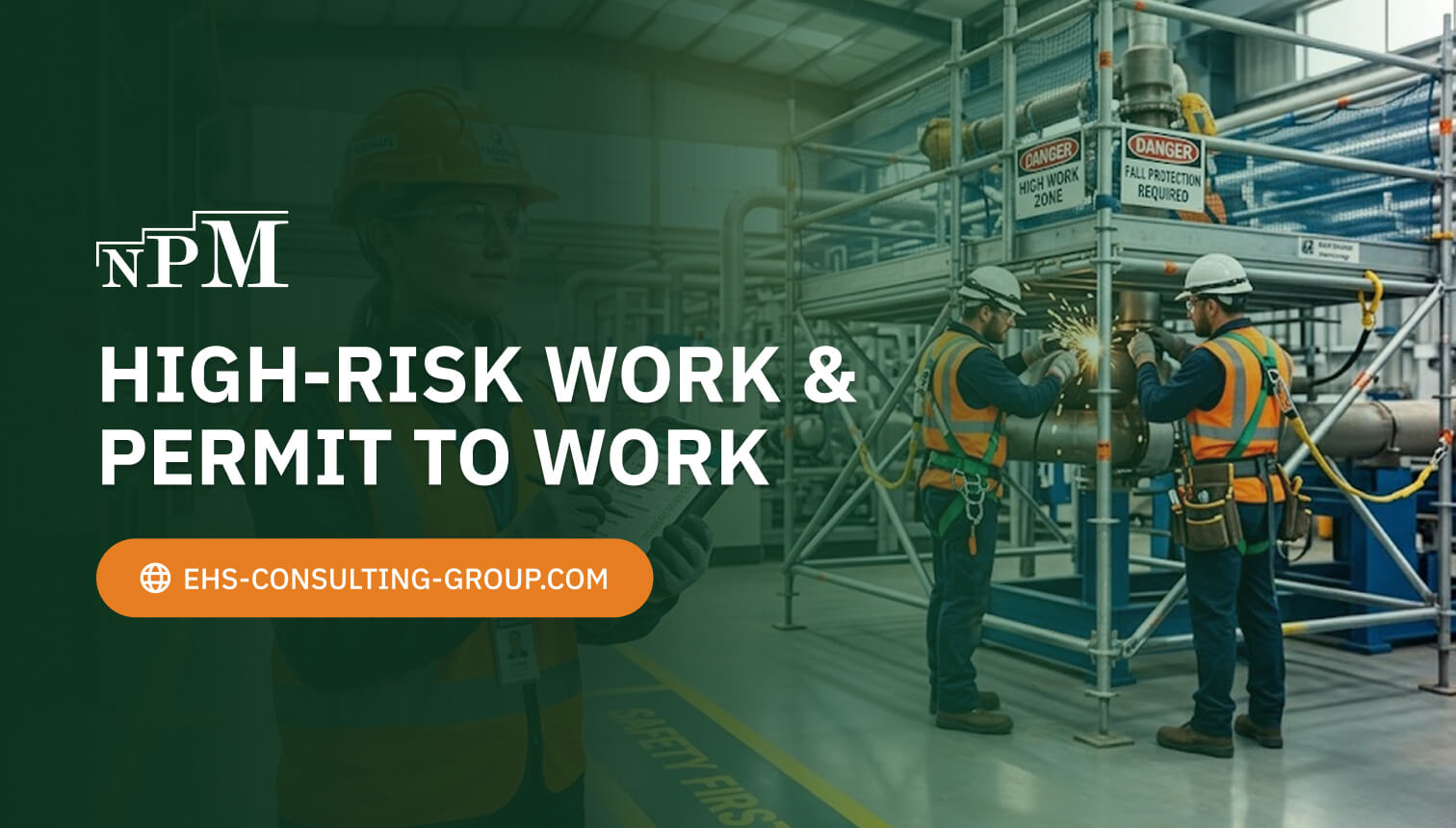
Although “MEWP operator” suggests the individual at the controls, competence around elevated work touches multiple parties. Clarity about who is involved helps assign responsibilities and avoid gaps that contribute to incidents. In UAE industrial operations, the topic concerns:
- Operators and spotters/banksmen who directly control or guide MEWPs on the job
- Supervisors, permit‑to‑work (PTW) issuers, and work‑at‑height coordinators accountable for planning and oversight
- HSE managers and compliance officers integrating competency evidence into ISO 45001 management systems
- Maintenance teams responsible for inspections, defect tagging, and ensuring availability of MEWPs with valid third‑party certificates
- Project engineers and planners who define access solutions and sequence work near energized equipment, process lines, and live operations
- Contractor management, procurement, and logistics functions selecting and verifying rental providers and machine specifications
Across facility types—refineries, offshore platforms, petrochemical crackers, tank farms, fabrication yards, high‑rise construction, power stations, and distribution centers—the consequences of an untrained operator are similar: loss of control, entrapment, overturning, contact with overhead lines, or material strikes. A focused approach to competence and familiarization therefore sits at the interface of operations, maintenance, and HSE.
Why This Matters in UAE Industrial Operations

Several forces make MEWP competence a non‑negotiable element of safe work at height in the UAE. First, regulators and authorities—OSHAD in Abu Dhabi, Dubai Municipality, the Ministry of Human Resources and Emiratisation (MOHRE), and Civil Defence—expect demonstrable competence for elevated work. ADNOC HSE requirements and major operators’ contractor HSE standards also emphasize competency assurance and verification on industrial sites. In parallel, international good practice offers recognizable benchmarks: ISO 45001 for safety management systems; ISO 18878 for MEWP operator training; EN 280 and ANSI A92 equipment‑specific requirements; and BS 8460 guidance for safe use of MEWPs.
Second, the risk profile of elevated work changes with environment. Refineries and terminals introduce hydrocarbon ignition hazards and restricted emergency access routes. Construction and heavy manufacturing introduce changing ground conditions and dynamic interfaces with cranes, scaffolds, and forklifts. Logistics hubs often operate 24/7, requiring tightly controlled movement around pedestrians and material flows. A training‑led approach—supported by point‑of‑work risk assessment, PTW, and rescue planning—reduces incident likelihood and consequence across these diverse contexts.
Finally, competence protects productivity. Well‑prepared operators lose less time to repositioning, misinterpretation of load and outreach limits, and conflicting controls. They are more likely to identify unsafe conditions early (e.g., soft soils, wind exposure, overhead obstructions) and to coordinate effectively with rigging, electrical isolation, and confined‑space teams. Avoiding a single tip‑over, entrapment, or power line contact can save lives, reduce downtime, and protect reputation in a jurisdiction that rightly insists on stringent safety performance.
Key Points to Understand

A helpful way to think about elevated‑work competence is to break it into the machine, the person, and the system—MEWP characteristics and limitations; operator capabilities and behaviors; and the organization’s processes that make safe decisions repeatable. The following concepts anchor that framework.
MEWP Types and Classifications
Not all MEWPs behave the same. Training and site controls should reflect equipment class, terrain, and the task.
- Vertical lifts and scissor lifts (often classified as 3a) are stable platforms for up‑and‑down work with limited outreach.
- Articulating or telescopic boom lifts (often classified as 3b) offer reach and maneuverability but introduce swing dynamics, higher tip‑over potential, and complex controls.
- Vehicle‑mounted platforms and spider/atrium lifts add setup variables—outriggers, ground bearing pressure, and stabilizer configurations—that can vary daily.
Competent operators must understand load charts, outreach envelopes, wind limits, slope tolerances, emergency descent procedures, and the effect of attachments or materials loaded on the platform. Equipment familiarization is site‑ and model‑specific; being trained on one category does not automatically confer proficiency on another model with different control logic or load‑sensing systems.
Competence Frameworks and Evidence
Demonstrable competence is the operative word. In a management system aligned to ISO 45001, this means defined competencies for roles, verified training outcomes, and periodic re‑assessment. Recognized benchmarks such as ISO 18878 and BS 8460 set expectations for the balance of theory (hazard recognition, regulations, risk controls) and practical evaluation (pre‑use inspection, maneuvering, emergency procedures, and platform control). In Oil & Gas projects, ADNOC HSE and major operator specifications commonly expect a formal card/certification plus supervised familiarization on the specific machine to be used, documented in line with contractor HSE plans.
Just as importantly, supervisors and banksmen must be able to interpret machine indicators and alarms, enforce exclusion zones, and intervene before unsafe acts escalate. Training that ignores the team dimension—signaller communications, hand signals, and coordination with lifting operations—leaves a gap in real‑world control.
Risk Assessment and Control Hierarchy
Competent elevated‑work planning applies the hierarchy of controls before anyone sets foot on a platform. Eliminate if feasible (do the work from the ground or prefabricate), substitute (use fixed platforms or scaffolds if more stable for the duration), and then engineer and administer controls: correct MEWP selection, ground preparation, traffic management, isolation of energy sources, weather thresholds, and emergency planning. PPE is the final layer (e.g., appropriate fall protection on booms with attachment points; task‑specific gloves; arc‑rated PPE near energized parts).
Formal methods help make this consistent. HAZID workshops during constructability reviews surface elevated‑work hazards early. Bowtie analysis for entrapment or tip‑over illustrates barriers and escalation factors. For critical work around process equipment, SIL/LOPA thinking—while primarily for instrumented functions—reinforces the discipline of verifying performance of protective layers such as interlocks, proximity alarms, and physical barriers. The key point is not to turn MEWP use into an academic exercise but to use familiar process safety tools to anchor practical controls.
Inspection, Certification, and Maintenance Interlock
MEWPs are lifting equipment and fall under inspection regimes akin to cranes and hoists. In the UAE, third‑party certification and periodic inspection are standard expectations, often referenced in client specifications and PTW prerequisites. Daily pre‑use checks by operators should align with the manufacturer’s manual and include structural members, tires/tracks, hydraulic leaks, guardrails, emergency stop, tilt sensors, alarms, platform entry gate, fall arrest anchor points, and control function tests. Defects should be tagged out and reported through maintenance workflows prior to use.
| Common Hazard | Primary Controls | Training Emphasis |
|---|---|---|
| Tip‑over due to slope/ground failure | Ground bearing check, spreader pads, slope limits, outriggers fully deployed | Reading slope indicators, assessing soils/compaction, setup on pads |
| Entrapment/crushing against fixed structure | Spotter positioning, anti‑crush bars, controlled approach speed, exclusion zones | Platform positioning, communication protocols, emergency lowering |
| Electrocution from overhead lines | Minimum approach distances, isolation/permits, dielectric assessment | Recognizing line voltage categories, defining no‑go zones |
| Falling objects/materials | Toe boards, tool tethering, overhead protection (OPC) where needed | Load management on platform, housekeeping, drop prevention |
| Wind and weather effects | Manufacturer wind limits, wind‑sail area controls for panels/banners | Reading wind charts, task adjustment with sail area |
When operators understand why these checks matter, they are more likely to stop the job and resolve a defect rather than “making do”—a behavior shift that is a core objective of any credible MEWP Operator Training Program.
How This Works on Site

Translating competence into consistent field practice is where organizations succeed or struggle. From planning through execution, controls are most effective when embedded in normal workflows rather than bolted on as exceptions.
Planning begins with selecting the right access method and class of machine. For example, a 3b articulating boom may be necessary to reach over pipe racks in a gas processing train, while a 3a scissor might be preferred for repetitive installation works within a warehouse aisle. The selection should consider floor loads, ground bearing capacity, approach paths, proximity to live equipment, and weather exposure. Where process safety demands it, work near hazardous areas should be scheduled during low‑risk conditions, coordinated with isolation plans, and supported by gas testing. That planning stage is also where rescue arrangements are finalized—who will operate ground controls, how quickly emergency services can access the location, and what to do if the platform is obstructed or stuck at height.
Just before the task, the PTW issuer or supervisor verifies prerequisites: valid third‑party certificates, operator competence evidence, and a completed task risk assessment. A short, focused toolbox talk aligns the team on hazards, the route of travel, spotter positioning, exclusion zones, and signals. In Oil & Gas plants, alignment with control of work (CoW) is critical—especially when MEWP movement intersects with crane lifts, hot works, or live process units. In construction, coordination with scaffold teams avoids conflicts, and in logistics facilities, traffic management and pedestrian separation plans are confirmed.
During execution, experienced operators perform a “dynamic risk assessment” as conditions evolve. If the wind picks up, if the ground softens after irrigation or washdown, or if a new overhead obstruction appears (temporary pipe spool, cable tray, or HVAC duct), the operator pauses, reassesses, and repositions. Supervisors support that decision‑making and, importantly, protect it—stopping production pressure from pushing teams beyond safe limits. After the task, a short debrief captures lessons for similar works: was the machine adequate, were exclusion zones sufficient, did communications work? Feeding those observations back into planning closes the loop.
Benefits and Practical Use Cases

When elevated‑work competence is treated as a managed capability rather than a one‑time certificate, organizations realize benefits that are both safety‑ and performance‑oriented. Consider the following practical examples drawn from UAE industrial contexts:
- Oil & Gas turnarounds: During a refinery shutdown, hundreds of elevated tasks fight for space. Competent operators reduce near‑misses from congestion, respect overhead pipe racks, and coordinate with crane lifts, keeping the critical path intact.
- High‑rise construction: Curtain wall installation often creates sail‑area challenges. Teams trained to read wind limits and apply temporary bracing avoid uncontrolled platform movement and panel loss.
- Logistics and manufacturing: Routine maintenance under mezzanines and conveyors benefits from scissor lifts, but low headroom and pedestrians complicate movement. Training and banksman coordination minimize contact incidents and maintain flow.
- Power generation: Boiler tube inspections require careful approach in tight, hot environments. Familiarization with machine outriggers and emergency descent reduces risk if conditions deteriorate.
- Petrochemical projects: Electrical and instrumentation (E&I) works near live trays in process units demand strict exclusion zones and voltage awareness. Operators trained to respect minimum approach distances avoid flashover incidents.
These outcomes translate to measurable performance. Fewer property damage cases, less rework, and fewer delays from equipment downtime or incident investigations. At an organizational level, competence evidence supports ISO 45001 audits, client HSE prequalification, and compliance inspections by OSHAD or Dubai Municipality. In ADNOC‑controlled environments, solid competency records dovetail with contractor HSE expectations and reduce findings during site audits.
Best Practices and Points of Caution

From field experience and alignment with recognized standards, the following practices consistently differentiate strong elevated‑work performance from the average. Equally, each point carries common pitfalls to avoid.
- Match the machine to the task and environment: Over‑specifying a boom where a scissor suffices adds complexity; under‑specifying creates reach or stability risks. Verify outreach with load charts, not assumptions.
- Treat familiarization as non‑negotiable: A certification proves baseline knowledge; hands‑on familiarization for the actual model (controls, alarms, descent) closes the competency loop. Skipping this step is a recurrent root cause in incident investigations.
- Control the ground: Many tip‑overs trace back to ground failure. Validate ground bearing capacity, use pads, and confirm fully deployed outriggers. In construction, do not set up over unverified trench backfill or near temporary shoring.
- Respect weather and sail area: Wind limits in manuals often assume minimal sail area. A cladding panel or banner can multiply forces; set lower thresholds accordingly and secure materials with controlled rigging.
- Define and enforce exclusion zones: Mark and maintain clear zones for people and vehicles. In busy terminals and warehouses, physical barriers and a banksman are often the only effective controls.
- Plan rescue before starting: Identify who can operate ground controls and how quickly. If entrapment occurs at height, minutes matter. Drill the process for emergency lowering and, where justified, consider secondary guarding devices.
- Integrate with CoW and electrical safety: Minimum approach distances to overhead lines vary with voltage; verify with the utility owner and site rules. Where isolation is not feasible, establish no‑go zones and dedicated supervision.
- Document competence and supervision: Keep records organized and accessible for audits and client reviews. Supervisors should be competent to recognize unsafe operation and intervene decisively.
For those building internal guidance or refreshing procedures, curated technical resources can help orient teams and maintain document control discipline. As a neutral, non‑promotional example of a resource directory used by many safety professionals, see CABINET NPM for structured access to technical and governance materials that can inform policy alignment and knowledge management.
Frequently Asked Questions About MEWP Operator Training Program
What standards should a credible MEWP operator preparation align with?
Good practice references include ISO 18878 for operator training, BS 8460 for safe use of MEWPs, and equipment compliance under EN 280 or ANSI A92. Within the UAE, alignment with OSHAD requirements, Dubai Municipality guidelines, MOHRE expectations, and client‑specific standards (e.g., ADNOC HSE) ensures local compliance. ISO 45001 provides the overarching management system framework for defining, verifying, and reviewing competence.
How often should MEWP operator competence be reassessed?
Reassessment frequency should be risk‑based. Many organizations use a two‑ to three‑year cycle for formal refreshers, coupled with event‑driven checks (after an incident, long inactivity, or introduction of new equipment). Supervisors should conduct periodic on‑the‑job observations, and operators must complete model‑specific familiarization whenever using a different MEWP type or control system.
Is a general certificate enough to operate any MEWP?
No. A certificate demonstrates baseline knowledge and practical skills but does not replace model‑specific familiarization. Control layouts, load‑sensing, stabilization, and emergency procedures vary by model. Before first use on a new machine, the operator should review the manual, perform a supervised walk‑through of controls, and practice emergency lowering.
What are typical wind limits for MEWPs?
Manufacturer manuals specify wind thresholds for each model; a commonly cited limit for many platforms is around 12.5 m/s (28 mph), but this is not universal. Limits are typically defined for minimal sail area. If lifting panels, signage, or ducting, practical thresholds should be reduced to account for increased wind loading. On offshore or exposed desert sites, gusting can exceed averages—use conservative triggers and stop‑work criteria.
Do operators always need fall protection on MEWPs?
For boom‑type platforms, a harness with a suitable lanyard attached to a designated anchor point is widely required to protect against catapult or ejection. For scissor lifts, many jurisdictions allow work without harnesses provided guardrails are intact and gates closed; however, client or site rules may mandate fall protection regardless. Always follow the site’s standard and manufacturer guidance.
How should MEWP use integrate with permit‑to‑work systems?
PTW should verify operator competence, third‑party equipment certification, task‑specific risk assessment, and rescue planning. Where MEWP work interfaces with other critical activities—hot work, lifting, electrical isolations—the PTW and control of work process should coordinate scheduling, define exclusion zones, and assign a supervisor with clear authority to stop or adapt work.
What causes most MEWP incidents, and how does training address them?
Frequent contributors include ground failure, entrapment during approach, contact with overhead power lines, and misuse of controls. Robust training builds hazard recognition, reinforces pre‑use inspection discipline, teaches controlled approach and spotter coordination, explains wind and load effects, and drills emergency procedures. Combined with effective supervision and planning, these competencies reduce incident likelihood and severity.
Are there special considerations for MEWP use in hazardous (classified) areas?
Yes. Equipment selection must consider potential ignition sources; standard MEWPs are not rated for explosive atmospheres. Work planning should include gas testing, isolation, and alignment with process safety controls. Where access is essential, alternative methods or specialized equipment may be required, and additional oversight is typical in ADNOC or similar major‑operator environments.
Conclusion and Next Steps
Elevated work is an everyday reality across the UAE’s industrial landscape, yet it remains a disproportionate contributor to serious incidents. A structured MEWP Operator Training Program—grounded in recognized standards, aligned with OSHAD, Dubai Municipality, MOHRE, and client HSE expectations, and integrated with PTW and maintenance—helps organizations move from reactive controls to a stable, demonstrable competency framework. As discussed above, success depends on more than a card: it requires model‑specific familiarization, disciplined ground and weather management, strong supervision, and a culture where operators are empowered to pause and reassess. When these elements are present, safety performance improves, and so does execution reliability on shutdowns, construction milestones, and routine maintenance alike.
To go further on this topic, NPM’s broader Mobile Elevated Work Platform Training UAE page covers this in more depth.
Explore NPM’s References
NPM’s work in elevated‑work risk management and broader HSE disciplines spans industries, project scales, and geographies. Our teams have supported clients on refinery turnarounds, petrochemical brownfield expansions, offshore maintenance campaigns, new‑build construction, large‑format logistics facilities, and power generation overhauls—each bringing distinct elevated‑work challenges. In some cases, the focus has been on developing competency matrices aligned to ISO 45001, defining role‑based requirements for operators, supervisors, and banksmen. In others, the priority has been integrating elevated‑work controls into control of work systems, advising on risk assessments for works over live pipe racks, or establishing wind management protocols for façade installation on high‑rise projects. We have helped organizations embed practical, visual pre‑use checklists into daily routines; establish robust familiarization records for multiple MEWP categories; and refine rescue planning where platform entrapment is a credible scenario. Our references reflect not only technical rigor—linking practices to frameworks like ISO 18878, BS 8460, and EN 280—but also operational empathy: understanding how to make safe behavior the easiest behavior in a congested, time‑pressured environment. Beyond MEWPs, NPM’s portfolio covers process safety (HAZOP, Bowtie, LOPA), construction safety management, environmental compliance, and regulatory readiness audits, demonstrating the breadth needed to align elevated‑work competence with the rest of the safety system. We invite you to explore these references to gauge how our approach translates from paper to plant, site, and field, and how lessons learned in one sector can strengthen performance in another.
For more information about our references, visit Our References.
Speak with NPM
If you are considering how to strengthen elevated‑work competence, align procedures to recognized standards, or translate lessons learned into everyday practice, our team is happy to discuss practical options. We welcome technical questions and context about your facility, workforce, and risk profile so we can point you to relevant considerations.
For any further questions or to speak with our team, Contact Us.