

MEWP Rescue Planning is one of the most time‑critical and misunderstood aspects of working at height across construction sites, refineries, petrochemical units, power plants, logistics hubs, and heavy manufacturing facilities in the UAE. When a mobile elevated work platform becomes immobilized or an operator is incapacitated or entrapped, seconds matter. Rescue is not a generic emergency response; it is a task-specific, engineered, and rehearsed activity that must be designed into the job long before the platform leaves the ground. This article breaks down how rescue thinking should be integrated into safe systems of work, why regulators and standards expect it, and what HSE leaders can do to make it reliable and auditable without slowing operations.
Who Does This Affect?
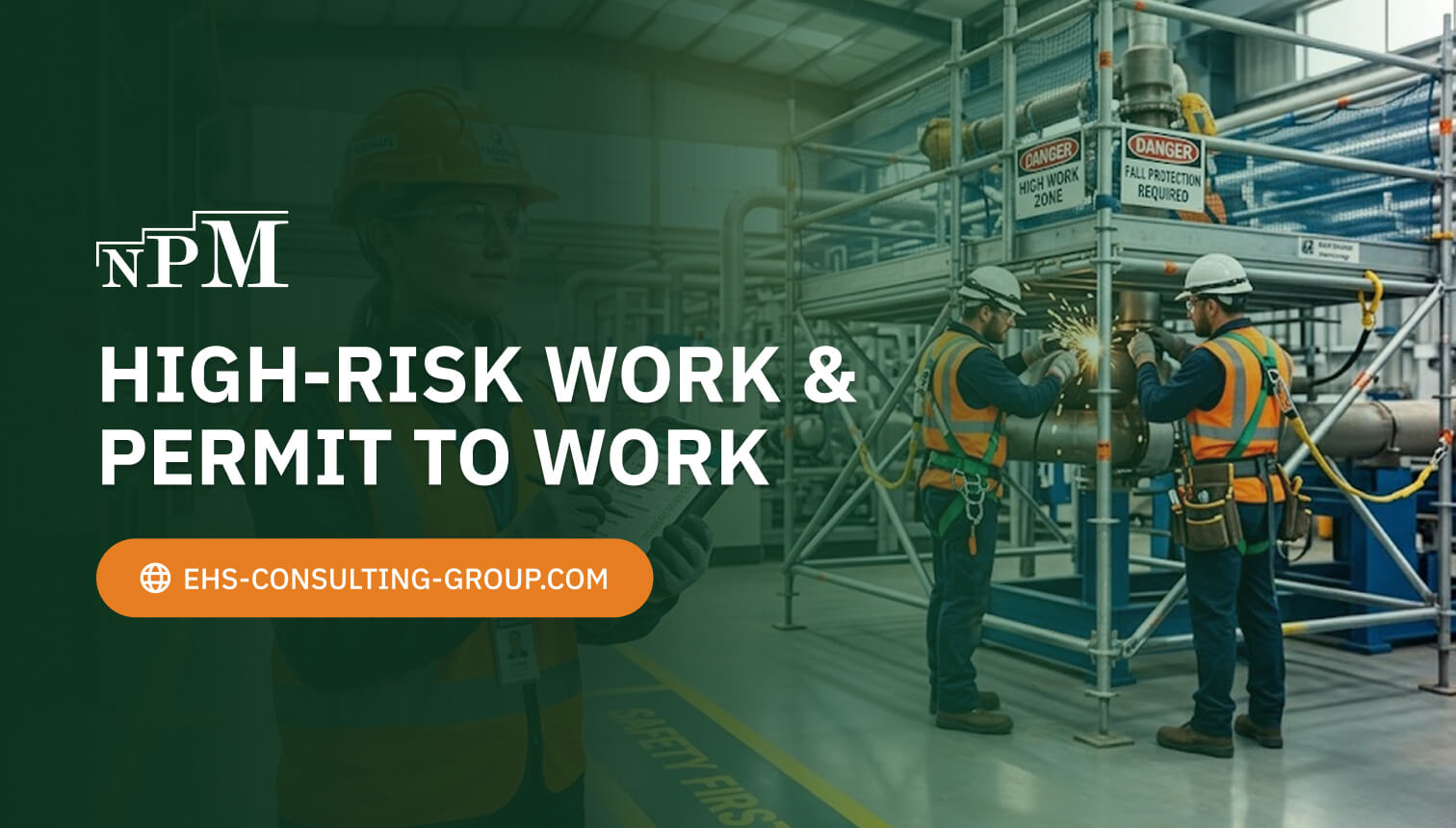
Rescue preparedness touches multiple functions across an organization, not just the individuals up in the basket. The immediate audience includes HSE managers, site safety officers, lifting supervisors, MEWP operators, and spotters. But effective planning also requires coordination with permit-to-work (PTW) coordinators, maintenance planners, electrical and mechanical isolation authorities, emergency response teams (ERT), fire wardens, and contractor HSE representatives. In oil and gas and petrochemical settings, operations supervisors, area authorities, and control room personnel must be involved because process conditions, hazardous area classifications, and simultaneous operations (SIMOPS) influence what can or cannot be done during a rescue. On construction megaprojects, project directors, subcontractor package managers, and logistics teams also play roles, as rescue routes, staging areas, and exclusion zones cross trade boundaries.
Different facility types introduce different concerns. In refineries and gas processing plants, risks include entrapment against pipe racks, energized equipment, and exposure to flammable atmospheres. Warehouses and logistics centers add aisle constraints, racking, and pedestrian/vehicle interfaces. Power generation sites face turbine hall access limitations, crane interlocks, and overhead live systems. On high-rise construction, façade works compound wind, edge protection, and crane coordination issues. Across all of these, MEWP categories (scissor lifts, boom lifts, vehicle-mounted platforms, vertical mast lifts) behave differently during failures, so planning must be equipment-specific.
Why This Topic Matters

The stakes are high for three reasons: time, complexity, and regulatory accountability. Time is unforgiving during incidents such as suspension trauma after a fall-arrest engagement, crush/entrapment between the basket and a fixed structure, or medical incapacitation at height. International guidance emphasizes minimizing hang times and response delays; many organizations set internal performance targets measured in minutes, not tens of minutes.
Complexity arises because platforms can fail in multiple ways—hydraulic, electrical, control system, terrain instability—and because rescue must occur in constrained geometries. Add in process hazards in brownfield petrochemical environments, and an otherwise straightforward lowering manoeuvre may be precluded until energy sources are isolated or gas readings confirm a safe atmosphere. That is why rescue is not improvisation; it is a controlled operation within a controlled operation.
Regulatory accountability is explicit. ISO 45001 requires organizations to establish, implement, and maintain processes needed for emergency preparedness and response, including testing and reviewing them. In the UAE, expectations from OSHAD (Abu Dhabi), Dubai Municipality, MOHRE, and Civil Defence align with international practice that rescue arrangements be documented, competent, and exercised. Industry operators like ADNOC articulate requirements around working at height, lifting, and SIMOPS, and many sites reference standards such as ANSI A92 and BS EN 280 for MEWP safety. For high-hazard facilities governed by process safety frameworks (e.g., IEC 61511, API RP 750), emergency arrangements must also integrate with major accident hazard (MAH) scenarios, often using tools like HAZOP, Bowtie analysis, and LOPA to define escalation controls and recovery preparedness.
Key Points to Understand

MEWP rescue preparedness is a system, not a checklist. Several building blocks must be designed to work together under pressure.
1) Scenario definition and time windows
Begin by identifying credible failure modes and their critical time constraints: entrapment/crush, medical emergency, power or hydraulic failure, platform overreach, tire or outrigger failure, fire in or near the platform, encroachment into restricted zones, and weather-induced instability. Each demands different response logic and different competencies. Establish target response times that reflect human physiology and site risk (e.g., quick intervention for entrapment; swift but staged response for power loss without injury).
2) Layered rescue methods
Rescue options should be layered, moving from the least risky and fastest to more complex alternatives:
- Self-escape: controlled descent by the operator using platform controls or emergency descent devices.
- Assisted descent via ground controls: a spotter or trained rescuer lowers the platform from ground level using the manufacturer’s emergency controls.
- Auxiliary power/hydraulic release: activating backup systems when main power is unavailable.
- Secondary MEWP: positioning another platform to transfer the person, when geometry allows.
- Rope-based rescue: technically advanced option requiring specialist competence and a separate risk assessment.
- Crane with man basket: last resort due to coordination complexity, dynamic loads, and regulatory constraints.
3) Integration with permit-to-work and isolations
Rescue moves faster when the PTW defines isolatable energy sources, authorized persons for lock-out/tag-out (LOTO), gas testing, and barriers that may need to be temporarily adjusted during rescue. This is especially relevant on ADNOC assets and in facilities implementing rigorous isolation standards. The plan should clarify who can authorize deviations or partial suspensions of work to allow safe rescue without opening pathways for escalation.
4) Equipment readiness and compatibility
Rescue kits are not generic. Contents typically include reach poles, cutting tools suitable for webbing and energy absorbers, trauma relief straps, anchor slings for temporary anchor creation, and means of communication. These must be compatible with the harness and lanyard standards used on site (e.g., EN 361/355). For MEWPs, ensure familiarity with the specific emergency lowering procedures of each model. Electric, diesel, and hybrid units differ in manual descent mechanics, and some vehicle-mounted platforms incorporate outrigger interlocks that change the rescue sequence.
5) Communications and command
Clear roles are essential: the initial spotter raises the alarm; the incident controller coordinates; a trained rescuer manages the descent or transfer; the area authority liaises on isolation; and first aid responds at ground level. Radios must have a designated channel for emergency traffic. The plan should state the single point of command to minimize simultaneous, conflicting actions at the equipment.
6) Competency and drills
Competency covers operators, rescuers, and supervisors. It is not enough to show a certificate for operation; rescuers must be specifically trained and authorized for emergency lowering, platform model differences, and, where applicable, rope systems. Drills should be realistic, measured, and documented, with learning captured into the plan. NPM often sees performance improve dramatically when drills use the actual bottleneck geometry—tight pipe racks, narrow aisles—rather than an open yard.
7) Documentation and governance
Rescue plans should be controlled documents with versioning, mapped to equipment IDs and locations, and referenced in the job hazard analysis (JHA) or task risk assessment (TRA). Governance frameworks and policy libraries can help standardize how these documents are created and maintained across multi-site organizations; for example, corporate HSE governance resources such as CABINET NPM can be used to align templates, approval pathways, and change control practices across business units. The goal is consistency without stifling the site-specific tailoring that makes a rescue plan credible.
Illustrative scenarios and response envelopes
The matrix below summarizes typical scenarios, triggers, time sensitivities, and first-choice methods. These are not rules; they are prompts for site-specific engineering of the plan.
| Scenario | Typical Triggers | Critical Time Window | Primary Rescue Method | Competency / Equipment Notes |
|---|---|---|---|---|
| Entrapment/crush | Basket pinch against structure; unintended boom motion | Immediate intervention (minutes) | Ground controls to reverse motion; stabilize, then lower | Spotter drills; model-specific anti-entrapment devices; medical standby |
| Medical incapacitation | Heat stress, cardiac event, fainting | Rapid but controlled (under 10 minutes if possible) | Ground-controlled lowering or secondary MEWP transfer | First-aid readiness; stretcher at base; seamless comms |
| Power/hydraulic failure | Battery depletion; pump fault; control system error | Urgent if exposure risks present | Use emergency lowering valves/aux power per OEM | Rescuer trained on OEM procedure; correct tools for valves |
| Exposure to hazardous atmosphere | Process leak; gas alarm; hot work escalation | Immediate evacuation | Rapid descent; consider standby BA team if required | Integration with gas testing; area authority involvement |
| Platform overreach/unstable terrain | Outriggers on uneven ground; excessive wind | Stabilize before movement | Do not move until stability regained; use secondary MEWP if needed | Stop-work authority; structural/engineering input |
| Proximity to overhead lines | Approach or contact with energized conductors | Immediate hazard control | Do not touch platform; isolate source; utility liaison | Electrically safe work practices; exclusion zones |
How This Works in Practice

Translating principles into site reality starts with anchoring rescue planning in the way work is already organized. Most industrial facilities use a PTW system, a JHA/TRA, and a daily coordination meeting. The rescue plan should be a companion document, referenced at permit stage, briefed during toolbox talks, and verified during pre-start checks. If a site uses SIMOPS control, the plan should be flagged in the SIMOPS register so adjacent work parties know what might happen if a rescue is triggered.
Consider a brownfield refinery upgrade where teams use a 45‑foot boom between pipe racks. The geometry makes secondary MEWP access difficult and crane access impossible. In such a case, the plan may prioritize rapid ground-control lowering supported by anti-entrapment devices and reach-pole techniques to free a lodged operator’s controls. The ERT is positioned near the egress route with a stretcher and first-aid pack. Gas monitoring is assigned to a dedicated sentry because a rescue could require temporarily pausing hot work permits in adjacent zones.
Now shift to a high-rise façade installation using electric scissor lifts along a podium deck. The primary risk is power loss and wind gusts causing dynamic loads. The plan calls for trained spotters at ground level with battery status checks before elevation, a cache of compatible emergency lowering tools, and a secondary vertical mast lift stationed within travel distance for transfer if scissors cannot descend. Wind thresholds are posted, and the supervisor has authority to halt elevation when gusts exceed manufacturer limits.
At a power plant turbine hall, aisle widths and floor load limits constrain movement. The plan anticipates medical emergencies due to heat stress and noise fatigue. Before works, the team agrees the fastest route to the nearest medical post, and isolation authorities note how to de-energize adjacent systems if a rescue requires a temporary barrier removal. Radios are checked on a dedicated emergency channel to avoid interference with the control room network. Drills are run during off-peak hours to validate the descent path and to time stretcher transfer over grating floors.
In logistics warehouses, narrow aisles and racking demand careful sequencing. The plan defines how to clear aisle obstructions rapidly, how to coordinate with forklift operations to hold traffic, and where to stage a secondary platform. Operators know the exact location of manual release valves. Spotters are trained to keep a constant line-of-sight and to avoid pushing the platform into racking during entrapment recovery.
Benefits and Practical Use Cases

Good rescue planning pays back in risk reduction, operational continuity, and regulatory confidence. Benefits include:
- Faster intervention: pre-identified methods reduce hesitation and time lost debating options.
- Lower severity: minimizing hang times and crush forces reduces injury outcomes and recovery times.
- Operational resilience: defined roles prevent chaotic scene management, limiting knock-on delays across trades.
- Audit readiness: documented drills and competencies demonstrate compliance with ISO 45001 and local regulator expectations.
- Contractor alignment: shared plans help main contractors, subcontractors, and third parties coordinate effectively.
- Learning culture: after-action reviews turn drills and real events into systematic improvements.
Concrete use cases show the variety of contexts where a solid rescue plan proves its value:
- Turnaround/shutdown work in refineries, where multiple lifts occur in congested pipe alleys under strict SIMOPS control.
- Brownfield modifications in gas plants with hazardous areas, requiring gas testing integration and rapid descents.
- Façade installation on mixed-use towers, with changing wind profiles and crane operations in proximity.
- Internal maintenance in turbine halls and boiler/HRSG structures, with constrained access and noise/heat stress exposure.
- Lighting and sprinkler maintenance in logistics warehouses, navigating racking, MHE traffic, and narrow aisles.
- Tank farm inspections at storage terminals, balancing ATEX considerations and uneven berm terrain around bunds.
Across these scenarios, NPM often observes that marginal gains—like standardizing radio phrases, placing rescue kits at predictable waypoints, and clarifying who owns the ground controls—shave minutes off response times without significant cost. The common thread is pre-commitment: decide in advance how to act, then rehearse it until it is second nature.
Best Practices and Points of Caution

To convert principles into dependable performance, consider the following practices and pitfalls.
Recommended practices
- Engineer the job: design out entrapment geometries (e.g., maintain standoff distances, use foam guards on beams near pinch points), not just rely on procedural controls.
- Map rescue routes: from platform position to ground egress to medical post, with measured travel times and obstruction-clearing plans.
- Assign single-point command: reduce conflicting inputs at the equipment by designating one incident controller.
- Validate OEM methods: run drill-downs on the exact MEWP models on site; do not assume uniform emergency lowering across brands.
- Integrate with process safety: if working in MAH areas, align the rescue with Bowtie barriers and define what authorizations are needed to modify barriers during rescue.
- Measure performance: time drills, record decision points, and set improvement targets. Treat results as safety KPIs.
- Account for human factors: heat, noise, and time pressure impair judgment; design checklists and prompts to support rescuers.
- Stage equipment: cache rescue kits near high-use zones and signpost their locations; verify fit with harnesses and lanyards in use.
Points of caution
- Do not improvise rope rescue: if rope access is the plan, ensure competent teams, suitable anchors, and a separate rescue-of-the-rescuer plan.
- Avoid crane man-baskets as default: they add complexity, require additional permits, and can escalate risk in windy or congested conditions.
- Manage energy sources: rushed interventions around hydraulics, batteries, or nearby energized equipment can create secondary incidents.
- Beware weather and terrain: wind, sand, and gradients change platform behavior and rescue feasibility.
- Respect electrical hazards: never touch a platform suspected of being energized until isolation is confirmed.
- Document changes: modifications to plant or workface geometry invalidate old rescue assumptions; update and brief accordingly.
Frequently Asked Questions About MEWP Rescue Planning
How fast should a rescue be executed after a fall-arrest event or entrapment?
Target the fastest safe intervention possible. Many organizations aim for single-digit minutes for initial release actions in entrapment scenarios and rapid descent when a fall-arrest system has engaged, to reduce suspension trauma. The exact target depends on site risks, but the plan should be designed and drilled to meet a defined response envelope.
Can ground controls always be used to lower a platform during an emergency?
Often, but not always. Ground controls are the first assisted option, yet their effectiveness depends on the failure mode and geometry. For entrapment, reversing the last motion may free the operator; for hydraulic failure, manual release valves or auxiliary power may be needed; for energized contact or gas hazards, special precautions apply. Plans must be OEM-specific and risk-assessed.
When is a secondary MEWP appropriate for rescue?
Use a secondary platform when ground-controlled descent is impossible or too slow and when geometry allows safe basket-to-basket transfer. This requires trained rescuers, stable platforms, and clear communication. In congested petrochemical areas or narrow warehouse aisles, a secondary platform may not be practical; other options should be pre-validated.
Is a crane with a man-basket a suitable rescue method?
It is generally a last resort. Crane rescues add coordination complexity, potentially higher dynamic loads, and permit and competency implications. They can be effective in open construction zones when pre-planned with engineering input, but they are rarely the first-choice option in brownfield process areas.
How often should MEWP rescue drills be conducted?
Frequency should match risk and activity levels. As a baseline, run drills for each MEWP model used on site and for each distinct geometry encountered (e.g., pipe rack vs. open yard) at least annually, and after significant plant or procedure changes. High-activity sites often drill quarterly, measuring time-to-release and time-to-ground as KPIs.
What equipment should be pre-staged for MEWP rescue?
At minimum: compatible reach poles, webbing cutters for lanyards, trauma relief straps, temporary anchors, radios on the designated emergency channel, first-aid and stretcher kits, and documentation of OEM emergency lowering steps. Where rope rescue is part of the plan, include harnesses, descent devices, and edge protection suited to the specific geometry.
What are UAE-specific considerations for MEWP rescue plans?
Expect alignment with ISO 45001 and local authorities such as OSHAD, Dubai Municipality, MOHRE, and Civil Defence. Industrial operators like ADNOC specify detailed expectations for working at height, lifting, and SIMOPS. Rescue plans should be documented, competency-based, and evidenced through drills and audits consistent with these frameworks.
How should MEWP rescue integrate with PTW and SIMOPS controls?
Reference the rescue plan in the PTW, assign isolation authorities and gas testing responsibilities, and list the rescue plan in SIMOPS registers so adjacent work parties understand potential impacts. Define who can authorize temporary changes to barriers or routing during a rescue to avoid ad hoc decisions under pressure.
What common pitfalls lead to delayed or unsafe rescues?
Over-reliance on a single method (e.g., assuming ground controls will always work), unfamiliarity with OEM emergency procedures, lack of clear command, missing or incompatible rescue kit components, unvalidated access routes, and unmeasured drill performance are frequent causes of delay or error.
Conclusion
Rescue planning for mobile elevated work platforms succeeds when it is treated as an engineered part of the job, not an afterthought. By defining realistic scenarios, layering rescue options, integrating with PTW and process safety controls, and rehearsing with the actual equipment and geometry, HSE and operations teams can cut vital minutes off response times while maintaining control of the scene. The regulatory landscape in the UAE expects this level of preparedness, and the operational payoff—in injury severity reduction and schedule resilience—is significant.
To go further on this topic, NPM’s broader Mobile Elevated Work Platform Training UAE page covers this in more depth.
Our References
NPM’s track record with high-risk work at height spans complex industrial settings worldwide, from greenfield petrochemical projects to brownfield refinery turnarounds, from high-rise façade works to congested warehouse operations. Across these contexts, our teams have helped clients embed MEWP rescue thinking into their safe systems of work—linking emergency lowering procedures to equipment IDs, coaching supervisors on command and communication under pressure, and integrating rescue routes with SIMOPS, isolations, and site access logistics. In process industries, we have aligned rescue preparedness with HAZOP outcomes, Bowtie barriers, and LOPA findings to ensure that emergency actions remain compatible with escalation controls around major accident hazards. In construction and logistics, we have addressed geometry-specific constraints—narrow aisles, shifting laydown areas, crane coordination—and translated OEM instructions into practical, drillable sequences. Our references also include competency uplift programs that standardize model-specific knowledge across multi-vendor fleets, and governance frameworks that keep rescue plans synchronized with equipment changes and site modifications.
Beyond technical design, NPM’s portfolio highlights measurable improvements: shorter time-to-release and time-to-ground metrics, clearer role ownership during incidents, and audit-ready documentation aligned with ISO 45001 and local regulatory expectations. Whether the setting involves hazardous areas, live utility interfaces, or demanding schedules, the common theme in our references is disciplined preparation converted into reliable field performance. For organizations seeking assurance that their rescue planning is more than a paper exercise, these case examples illustrate how methodical integration and realistic rehearsal make the difference when the unexpected happens.
For more information about our references, visit Our References.
Speak with Our Team
If you would like to discuss how these principles map to your specific equipment, layouts, and permit systems, we are glad to help. NPM can share practical insights on tailoring rescue routes, defining command roles, and measuring drill performance without disrupting operations. Our aim is to support your teams in building plans that work under real conditions, not just on paper.
For any further questions or to speak with our team, Contact Us.