
In industrial risk management, mutual-aid agreements are the backbone of scalable emergency response when an incident exceeds on-site capacity. In the UAE’s high-hazard sectors—oil and gas production, petrochemicals, large construction programs, power generation, logistics hubs, and coastal terminals—no single facility can credibly maintain every specialized resource for every credible worst-case. Mutual-aid arrangements fill that gap with pre-arranged support across operators, neighbors, authorities, and contractors so that foam, pumps, HAZMAT teams, medical capabilities, marine assets, and technical rescue can be mobilized quickly and used safely under a unified command structure.
This article examines how these agreements work in practice, what they must contain to be effective, and how they interface with process safety, business continuity, Civil Defence command, and recognized frameworks like ISO 45001, ISO 22320, and incident command practices. The aim is to help HSE leaders and operational managers move from informal goodwill to formalized, tested cooperation that stands up under real pressure—whether that pressure comes from a tank fire at a refinery, a toxic release at a chemical terminal, or a complex rescue on a construction megaproject.
Who Does This Affect?
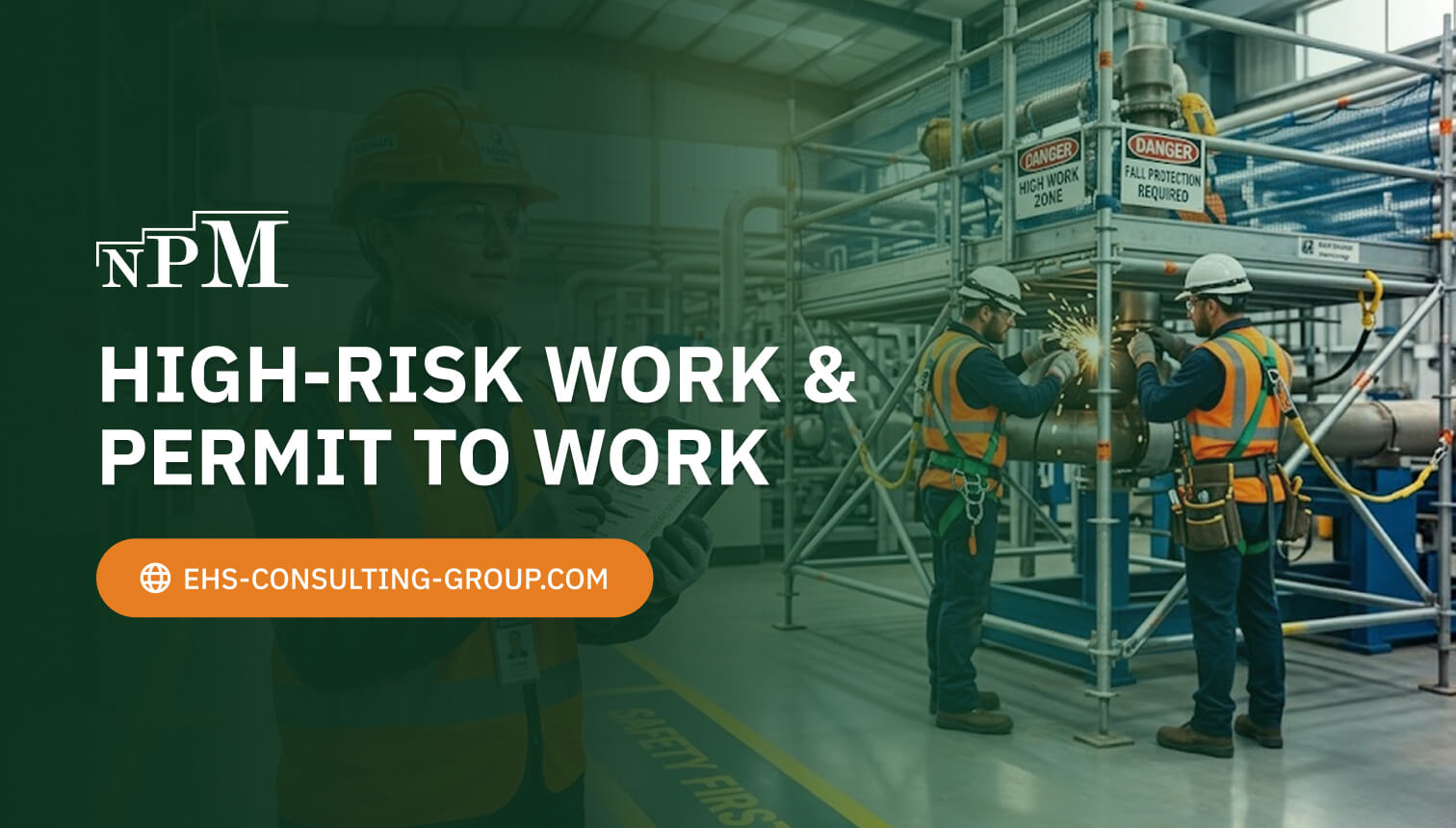
While emergency managers are the most visible sponsors of cooperative response, robust arrangements depend on multiple disciplines and decision-makers. The following groups typically have a stake in how mutual assistance is designed, governed, and executed:
- HSE Directors, Emergency Response Coordinators, and Security Managers who own preparedness, incident management, and site protection.
- Plant Managers and Operations Leaders accountable for continuity of production and safe shutdowns during major events.
- Industrial Fire Brigades and specialized teams (confined space, high-angle, HAZMAT, medical) who will operate alongside external responders.
- Process Safety and Risk Teams using HAZID, HAZOP, LOPA, Bowtie, SIL, and QRA findings to define credible scenarios and capability needs.
- Maintenance, Utilities, and Engineering groups responsible for critical systems (deluge, foam proportioning, hydrants, ventilation, power).
- Logistics and Supply Chain for moving equipment, foam stocks, booms, and diesel under constrained conditions.
- Legal, Insurance, and Finance for liability allocation, cost recovery, and evidence-quality documentation through and after an event.
- Corporate Communications and Community Relations when incidents have offsite effects or require public notification.
The facility types most likely to rely on structured cooperation include refineries and gas plants, offshore and onshore production assets, pipeline and storage terminals, ports handling IMO Class cargoes, power and desalination plants, large warehouses, and high-rise construction sites. Industrial zones with multiple occupants—such as petrochemical clusters and free zones—also benefit from area-wide arrangements that define resource sharing and command interfaces with local Civil Defence.
Why This Topic Matters

In a growing incident, the window for decisive action is measured in minutes. Foam stockpiles, high-capacity pumps, breathing apparatus, rescue teams, and environmental protection equipment are finite; surge capacity must already be planned if it is to arrive in time. Without formal agreements, valuable minutes are lost to ad hoc phone calls, gate access issues, radio incompatibility, uncertainty over who is in charge, and hesitation about liability and cost. These frictions are avoidable—if roles, triggers, and interoperability have been worked out in advance and exercised.
In the UAE, expectation from regulators and authorities such as Civil Defence, Dubai Municipality, MOHRE, and the Abu Dhabi Public Health Center (OSHAD) is clear: industrial operators must plan for credible worst-case scenarios. In oil and gas, requirements from major operators and concession holders like ADNOC emphasize risk-based preparedness and demonstrable capability. Serious incidents—major fires, explosions, toxic releases, or marine spills—can quickly engage multiple agencies. Mutual support is not merely neighborly; it is mission-critical to life safety, property protection, and environmental containment.
Beyond safety, these arrangements matter for continuity and reputation. Insurers and corporate governance bodies often look for written, exercised cooperation frameworks, not informal understandings. From a process safety perspective, if your Bowtie analyses identify escalation factors that exceed on-site capacity, then bridging those gaps through cooperative response is a risk control in its own right. Effective mutual support converts a recognized vulnerability into a managed capability.
Key Points to Understand

Before drafting documents, it helps to unpack how cooperative response actually functions. Several elements recur in effective frameworks, regardless of sector or location.
Definitions and Scope
Terminology varies. Some organizations distinguish mutual aid (two-way, reciprocal sharing) from assisted aid (non-reciprocal support) or from commercial call-out contracts with defined SLAs. For industrial operators, the aim is similar: pre-authorized, safely integrated resources that can be requested at speed. Scope typically covers firefighting (including foam and deluge support), HAZMAT, medical and ambulance support, technical rescue, oil spill response (shoreline and marine), marine firefighting, and sometimes specialist engineering capabilities (e.g., structural shoring, crane operations, utility isolation).
Command and Control
Command integration is the first principle. The Incident Command System (ICS), or a compatible structure aligned with ISO 22320, gives responders a common language for roles (Incident Commander, Operations, Planning, Logistics, Finance/Administration) and for building Unified Command when external authorities (e.g., Civil Defence) assume overall leadership. Your document should spell out how incoming resources “check in,” how they are assigned to Divisions/Groups, who approves tactics, and how safety officers are appointed.
Interoperability and Compatibility
Equipment works best when it actually connects: hydrant threads, hose couplings, foam concentrate types and proportioners, radio bands and encryption, gas detection alarms, and SCBA cylinder pressures. Simple mismatches—radio channels that cannot be shared, foam that will not proportion correctly, or incompatible hose fittings—can erase the value of additional resources.
Triggers, Thresholds, and Request Path
Clear criteria for when and how to request assistance prevent hesitation. Triggers might include loss of redundancy (e.g., a primary firewater pump offline), scale of fire beyond X monitors, presence of toxic releases outside containment, or medical load beyond on-site clinic capability. The request path should survive stress: a 24/7 duty phone with escalation, alternate contacts, and a confirmation protocol.
Legal, Insurance, and Cost Recovery
Well-written documents answer practical questions up front. Who is liable for injuries to assisting personnel? How is damage to loaned equipment handled? Are there indemnities and limits? What is the cost model—reciprocal, at-cost, or pre-agreed rates? How are invoices documented? If these aren’t clarified in advance, they will become a distraction during and after the incident.
Training and Exercises
Joint tabletop exercises, communications checks, and live drills are the proof that arrangements are workable. They expose access issues, staging and parking constraints, radio gaps, foam compatibility, and handover protocols. They also build trust—no small thing when asking teams to work shoulder-to-shoulder under rapidly evolving conditions.
| Core Element | Why It Matters | Typical UAE Industrial Considerations |
|---|---|---|
| Scope & Resources | Defines what can be shared and what not to expect | Foam stocks for hydrocarbon tanks, HAZMAT kits for chlorine/ammonia, marine tugs with monitors, desert pipeline access vehicles |
| Activation Triggers | Removes hesitation and confusion in the first 10 minutes | Automatic call-outs for Level 2/3 incidents, pump failures, mutual notification to Civil Defence |
| Command & Control | Ensures tactical cohesion and responder safety | ICS/Unified Command with Civil Defence; pre-identified Staging Area and Safety Officer |
| Communications | Enables coordination and accountability | TETRA talkgroups, cross-band gateways, plain-language protocols for multilingual teams |
| Interoperability | Prevents equipment incompatibility on arrival | Hose coupling adapters, foam concentrate compatibility, hydrant thread standards, SCBA cylinder alignment |
| Legal & Cost | Reduces post-incident disputes and delays | Indemnities, insurance declarations, pre-agreed recharge rates and documentation |
| Training & Drills | Validates the plan under realistic conditions | Quarterly tabletop, annual multi-agency live drill, communication checks each shift |
Guidance on emergency and incident management concepts is widely documented; for example, the National Fire Protection Association (NFPA) publishes standards that influence industrial incident command, firefighting, and pre-incident planning. While your agreement will be tailored to local law and authority expectations, mapping to recognized frameworks helps align roles and terminology across organizations.
How This Works in Practice

Translating a document into action begins with the incident detection and classification process already present in your emergency response plan. When an event crosses defined thresholds, the Incident Commander (initially the senior site responder) simultaneously notifies Civil Defence and triggers cooperative support through the agreed duty contact. The agreement specifies a primary and backup call path with confirmation steps to ensure the request is received and understood.
Arriving resources check in at a designated Staging Area, where they receive a safety briefing, assignment, and communications instructions. If Civil Defence has arrived, Unified Command is formed: operational decisions are made collaboratively, and assisting organizations are assigned to Divisions/Groups with clear supervisory chains. For example, during a tank farm fire, one partner may deploy a high-capacity foam trailer to the North Sector while another provides an additional pumper to maintain firewater pressure; a third might stage at a secondary hydrant to protect exposure tanks. In a HAZMAT release at a terminal, one neighbor’s detection and monitoring team may integrate with the site’s Entry Team while another contributes decontamination capability.
Where events have environmental dimensions—such as marine spills—mutual aid can accelerate deployment of booms, skimmers, and shoreline protection teams, while port authorities or coastal responders assume lead roles. Similarly, on construction megaprojects, high-angle rescue resources might be requested from a neighboring site brigade with specialized gear, while the home site maintains command and coordinates with Civil Defence for patient transfer.
Once stabilized, the Incident Commander executes demobilization according to the plan: releasing assisting teams in a controlled sequence, documenting equipment use and condition, and initiating the post-incident debrief. Finance/Administration functions capture hours, consumables (e.g., liters of foam used), and equipment wear for cost recovery or reciprocal balance. The after-action review records performance, lessons, and improvement actions—feeding back into training and plan updates.
Benefits and Practical Use Cases

Well-built cooperation multiplies capability. Benefits become most obvious in the scenarios HAZOP, Bowtie, and QRA analyses worry about—rare but high-consequence events where speed and scale matter.
- Faster, bigger water and foam application: High-capacity monitors, additional foam stocks, and extra pumpers can prevent escalation at storage tanks, loading racks, and process units.
- Specialist rescue where minutes matter: Confined space, rope rescue, trench collapse—skills often concentrated in a few teams across an industrial zone.
- HAZMAT depth: Additional gas detection, plume modeling support, decontamination lines, and trained entries extend safe operating envelopes during toxic releases.
- Medical surge: Extra EMTs, ambulances, and triage setups improve patient outcomes during multiple-casualty events.
- Marine/firefighting integration: Tugs with monitors, booms, and skimmers for marine terminals or coastal facilities.
- Operational resilience: Mutual availability of generators, lighting towers, temporary pumps, and breathing air compressors supports sustained operations.
Industry associations have long advocated structured cooperation among operators in high-hazard sectors. The International Association of Oil & Gas Producers (IOGP) promotes collaborative safety practices that, in many jurisdictions, extend naturally into emergency mutual support—especially in multi-operator basins or clusters where shared risk profiles and logistics make cooperation effective.
Best Practices and Points of Caution

Turning the concept into something that works under stress takes discipline. The following practices reflect lessons repeatedly observed during multi-agency responses and exercises:
- Anchor scope in risk: Use HAZID, HAZOP, LOPA, Bowtie, and QRA outputs to identify capability gaps and set resource targets (e.g., minimum foam stocks, pump capacities, HAZMAT competencies).
- Define command bridges: Write down how ICS/Unified Command forms with Civil Defence, where Staging is located, how Safety is assigned, and which radio channels are used for what.
- Engineer interoperability: Audit couplings, hydrants, foam concentrates, SCBA pressures, and connectors; purchase adapters and conduct practical compatibility tests.
- Institutionalize communications: Pre-program TETRA or UHF/VHF talkgroups, define plain-language protocols, and specify fallbacks if encryption or interop fails.
- Clarify legal and financials: Establish indemnities, insurance declarations, equipment care responsibilities, cost recovery rates, and evidence-quality recordkeeping.
- Protect information and IP: Use NDAs and data-sharing rules for drawings, P&IDs, hazardous materials inventories, and security-sensitive information.
- Integrate training: Run joint tabletops, walk-throughs, and live drills; include arrival procedures, check-in, tasking, and demobilization—not just fire streams.
- Measure and improve: Track response times, staging throughput, communications success rates, and drill findings; assign corrective actions with due dates.
- Avoid over-reliance: Mutual aid is a surge mechanism, not a substitute for minimum on-site capability. Set realistic assumptions for first 10–15 minutes.
- Plan for geography and weather: Account for desert distances, traffic patterns, access control at free zones, and seasonal winds affecting plume behavior.
Two cautions recur. First, ambiguity about who is in charge quickly degrades safety; Unified Command with clear span-of-control must form immediately. Second, technical compatibility must be proven, not assumed. A five-minute radio check or foam proportioning test during a drill can save precious minutes later.
Frequently Asked Questions About Mutual-Aid Agreements
What is a mutual-aid agreement in an industrial context?
It is a formal, pre-arranged framework that enables two or more organizations to request and provide emergency assistance—people, equipment, or expertise—under defined triggers, with agreed command integration, communications, legal terms, and cost arrangements. It is designed for speed and safety, not for ad hoc improvisation.
How is a mutual-aid agreement different from a commercial service contract?
Mutual aid is typically reciprocal and centered on cooperation between peer organizations, often without profit margins, while a service contract buys capacity from a vendor with defined SLAs. Many operators use both: a reciprocal arrangement with neighbors and a separate call-out contract for specialized resources (e.g., marine spill response).
Who commands assisting teams when Civil Defence is present?
When Civil Defence assumes overall control, Unified Command is established. Assisting teams integrate under the site’s ICS structure, with tactical assignments and safety oversight coordinated jointly with Civil Defence. The mutual-aid document should describe this interface explicitly to avoid confusion on arrival.
What resources are most commonly shared in UAE industrial zones?
High-capacity foam and monitors for tank and rack fires, additional fire pumps and hose lines, HAZMAT entry and monitoring teams, confined space and rope rescue specialists, ambulances and EMTs, marine tugs with monitors, oil spill booms and skimmers, lighting towers, breathing air compressors, and portable generators.
How often should we run joint drills with our partners?
At minimum, conduct semi-annual tabletop exercises and at least one multi-agency live drill annually. Communications checks and short practical drills (hose/hydrant connections, foam proportioner compatibility, radio interoperability) can be more frequent—quarterly or each shift for communications checks in high-activity zones.
How do liability and insurance typically work?
Arrangements usually include mutual indemnities, declarations of insurance cover, and defined responsibilities for damage to loaned equipment. Some agreements use at-cost recharge for consumables and maintenance. The exact structure should be reviewed by legal and insurers to meet corporate and local requirements.
What if our radio systems are incompatible?
Plan for it. Options include pre-programmed shared talkgroups, cache radios for visitors, cross-band gateways, and plain-language protocols. Assign a Communications Unit Leader (COML) role in ICS to manage the handshakes and verify interoperability during drills.
Can private site brigades support public emergencies offsite?
Potentially, but the agreement must address authorization, liability, and command. Typically, assistance focuses on industrial neighbors or shared zones. Offsite assistance to public incidents requires explicit alignment with authorities and may be limited by license or corporate policy.
Conclusion
From the lens of process safety and operational resilience, cooperative emergency response is a risk control that turns improbable-but-plausible scenarios into manageable events. The essential ingredients—clear triggers, Unified Command with Civil Defence, proven interoperability, and practiced logistics—were highlighted earlier in the discussion of scope, command, and compatibility. When these elements are captured in a well-governed document and exercised, leadership can trust that surge resources will arrive and integrate safely, whether the challenge is a storage tank fire, a toxic release, or a complex rescue on a megaproject. To go further on this topic, NPM’s broader Emergency Response Training UAE page covers this in more depth.
Explore NPM’s References
Organizations considering improvements to cooperative response often want to see how similar challenges have been addressed elsewhere. NPM’s references showcase a wide spectrum of industrial risk contexts where integrated emergency planning, command alignment, and interoperable logistics made a measurable difference. You will find examples from refineries and gas processing complexes, marine terminals, large construction programs, and power and desalination facilities—each with its own operating constraints, risk profile, and regulatory interfaces. Across these varied environments, the common thread is the translation of risk studies—HAZOP, Bowtie, and QRA—into practical arrangements that stand up during real incidents and complex multi-agency drills. Our teams have supported clients in crafting agreements that specify resource typing and availability, map ICS/Unified Command interfaces with authorities, and validate compatibility through scenario-focused exercises. The project narratives emphasize not just the documents produced, but also the performance outcomes: faster mobilization, fewer interoperability surprises, clearer accountability, and smoother demobilization with robust cost tracking. Whether you are operating in a dense industrial cluster or a remote asset with long logistics tails, these references provide tangible, context-rich insights that can inform your own planning decisions and governance approach.
For more information about our references, visit Our References.
Speak with NPM
If you would like to discuss how cooperative response could be structured for your facilities, or you have questions about command integration, interoperability, or exercise design, we are glad to help. A short conversation can clarify priorities and practical next steps aligned to your risk profile and regulatory context. For any further questions or to speak with our team, Contact Us.