

Process Safety Management Program for LNG Facility is not a single document or checklist; it is a disciplined way of designing, operating, maintaining, and governing the entire lifecycle of liquefied natural gas assets so that low-frequency, high-consequence events are prevented or controlled. For LNG import terminals, regasification plants, export jetties, floating storage and regasification units (FSRUs), and small-scale bunkering operations, process safety brings together engineering design, barrier management, human performance, and regulatory alignment. This article unpacks how such a program works in the UAE’s operating context, how it connects standards like NFPA 59A and IEC 61511 to day-to-day practice, and what leaders should expect to see in a mature system that actually reduces risk and improves reliability.
Who This Concerns in LNG Operations

Building on that framing, it helps to be explicit about who is directly affected by process safety in LNG. The scope stretches across the enterprise and into the supply chain.
- HSE directors and process safety managers who define policy, lead risk assessments, own barrier models, and report metrics to senior leadership and regulators.
- Operations superintendents, control room supervisors, and shift teams who implement isolations, start-ups, ESD sequences, and emergency response protocols.
- Asset integrity, mechanical, and inspection engineers responsible for tanks, cryogenic piping, vaporizers (ORVs/SCVs), BOG compressors, loading arms, and relief systems.
- Instrumentation, electrical, and automation specialists who design, proof-test, and maintain safety instrumented systems (SIS) in line with IEC 61511, fire and gas detection, and emergency power supplies.
- Project and design engineering (including EPC/M) teams who integrate hazard analysis (HAZID/HAZOP/LOPA), occupied building risk, and layout rules into new builds and brownfield modifications.
- Marine terminal and jetty operations who coordinate ship/shore interfaces, loading arm interlocks, ESD link, SIMOPS, and port authority interfaces.
- Contractors and vendors who perform hot work, cold work, confined space entries, scaffolding, coatings, insulation, and specialized cryogenic valve maintenance.
- Security and emergency response units coordinating with Civil Defence, port authorities, and mutual aid partners on credible major accident scenarios.
- Compliance officers liaising with OSHAD (Abu Dhabi), Dubai Municipality EHS, MOHRE, and industry-specific requirements such as ADNOC HSE expectations for risk studies and asset integrity.
Because process safety intersects with people, plant, and procedures, it is not confined to a single department. The strength of the program depends on how well these roles align and how consistently they apply agreed standards under both routine and abnormal operating conditions.
Why This Matters in LNG
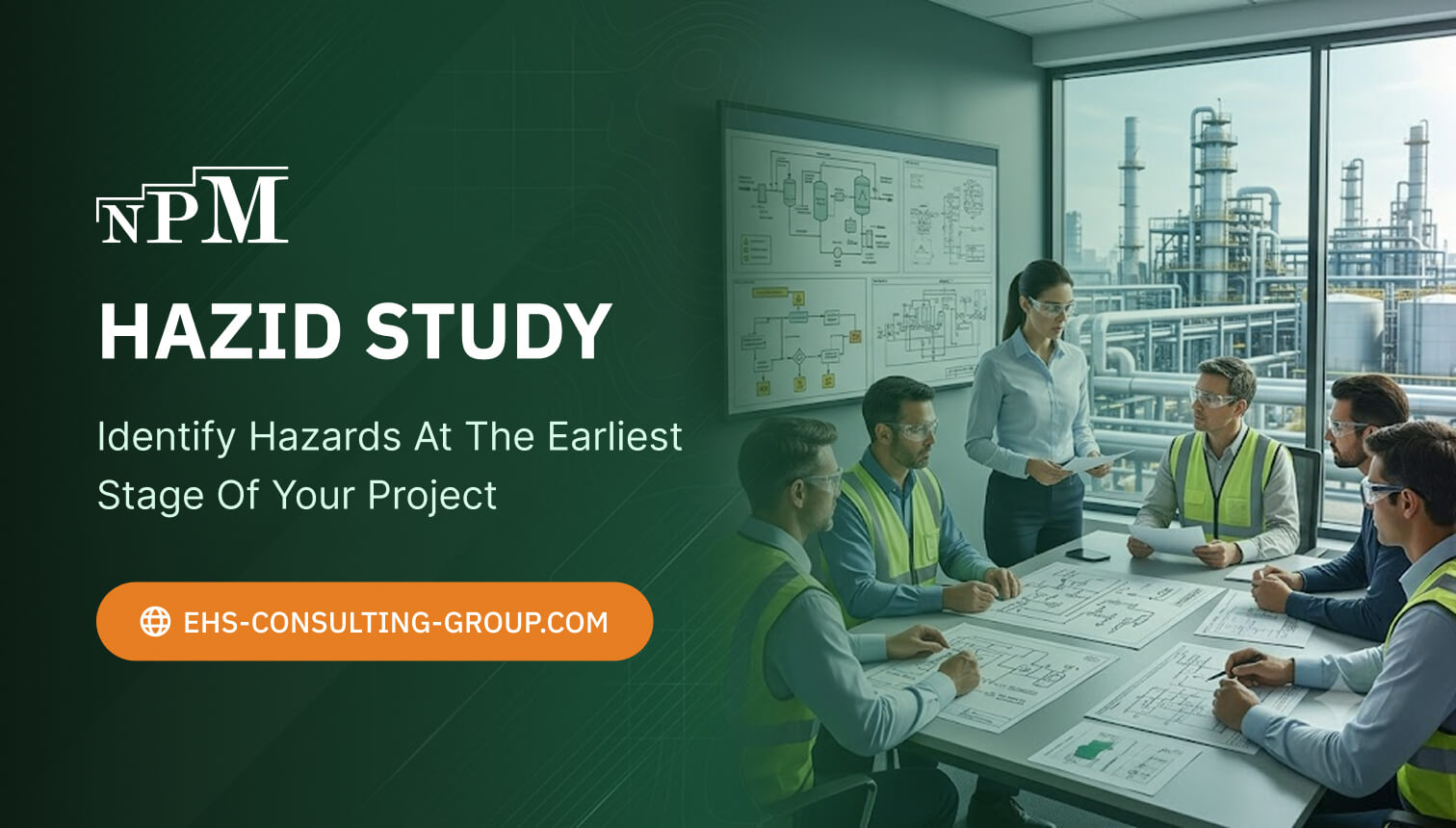
Turning LNG into a liquid at roughly −162°C and then handling it in bulk introduces hazards that differ from typical oil and gas operations. The primary risks are cryogenic exposure, brittle fracture, rapid vaporization, and the potential for flammable vapor cloud formation and pool fires. While LNG is not explosive in its stored state, the loss of containment followed by dispersion into a flammable range can create fast-moving hazards. Events at storage tanks, cold boxes, jetties, or truck/bunkering stations can escalate quickly unless barriers perform as intended.
From a regulatory and assurance standpoint, UAE operators align with frameworks including NFPA 59A for LNG facilities, IEC 61511 for functional safety, CCPS risk principles, and local authorities’ requirements. These may include OSHAD-SF in Abu Dhabi, Dubai Municipality EHS requirements, UAE Civil Defence codes for fire protection and emergency response, and ADNOC HSE expectations where applicable. Demonstrating compliance is not just about permits; it is about showing that risks are identified through methods like HAZOP, LOPA, Bowtie, and QRA, and that safety-critical elements (SCEs) have clear performance standards and assurance routines.
Finally, LNG projects are capital-intensive and reputationally exposed. A robust program reduces the likelihood of catastrophic events, improves availability (for example, through reliable BOG management and jetty turnaround), and protects license-to-operate in sensitive port and coastal environments. As markets evolve towards small-scale LNG and marine bunkering, a disciplined approach to simultaneous operations (SIMOPS) and interface management becomes even more consequential.
Key Points to Understand

The core of an LNG-focused process safety approach can be organized around a few enduring principles: lifecycle thinking, barrier-based risk management, functional safety integrity, and robust organizational controls. Each is briefly introduced below and expanded with LNG-specific points.
1) Lifecycle Risk Management

A credible LNG program spans concept, FEED, detailed design, construction, commissioning, normal operations, turnarounds, modifications, and decommissioning. Hazard identification (HAZID) starts early with siting and layout, including separation distances, impoundment sizing, and occupied building location. During design, HAZOP and LOPA studies determine credible deviations and protection layers. As the facility operates, periodic revalidation (e.g., 5-year PHA updates), management of change (MOC), and pre-startup safety reviews (PSSR) ensure that the risk picture remains current. Decommissioning and mothballing present their own cryogenic, inerting, and contamination hazards which must be planned with the same rigor.
2) Barrier Models and Safety-Critical Elements (SCEs)

Bowtie analysis helps visualize how preventative and mitigative barriers stop an initiating event (e.g., LNG spill from a loading arm) from turning into a major accident (e.g., pool fire escalating to tank impingement). LNG-relevant SCEs typically include:
- Emergency shutdown (ESD) valves and interlocks on jetty, storage, and process lines
- Fire and gas detection mapped to ventilation and congestion, with tested coverage
- Impoundment basins, trenches, and sloped paving designed to contain cryogenic spills
- Deluge, foam, and dry chemical systems with defined demand scenarios and flow rates
- Passive fire protection and structural steel fireproofing at jetty and tank areas
- Emergency power and UPS supporting SIS, F&G, and communications
- Vent and relief systems sized to two-phase flow and BOG surges, consistent with API 521 principles
Each SCE needs a performance standard defining critical attributes (functionality, availability, reliability, survivability, and response time), verification tasks, and assurance frequency.
3) Functional Safety and IEC 61511

LNG facilities typically rely on safety instrumented functions (SIFs) such as high-high level shutdown in tanks, high-high pressure trips on BOG compressors, and jetty ESD link actions. IEC 61511 provides the lifecycle framework from hazard analysis and safety requirement specification (SRS) through design, verification, installation, commissioning, and proof testing. SIL targets are often set using LOPA, considering initiating event frequencies, other independent protection layers (IPLs), and tolerable risk criteria derived from QRA or corporate risk policies. Proof test intervals must reflect achievable test coverage and realistic demand rates, especially for SIFs tied to ship arrivals and loading windows.
4) Hazard Studies and Quantitative Risk Assessment

A mature LNG program links qualitative studies (HAZID, HAZOP, Bowtie) with quantification (QRA, dispersion, explosion, and fire modeling). Vapor dispersion modeling for LNG spill scenarios (on land and water) drives the design of exclusion zones, detection layouts, and emergency response planning. Occupied building risk assessments consider shelter-in-place versus evacuation, HVAC shutdown logic, and blast/thermal load resistance. For terminals adjacent to public infrastructure, public risk tolerability criteria guide decisions on separation and protective measures.
5) Asset Integrity for Cryogenic Service

Integrity management in LNG has to address brittle fracture risk, differential contraction, ice formation, and contamination in cold boxes and brazed aluminum heat exchangers (BAHX). Inspections focus on insulation condition, supports, anchors, expansion loops, vacuum integrity in double-walled tanks, and leak detection. Relief devices must consider thermal relief in blocked-in cryogenic lines and relief of nitrogen inerting operations. Risk-based inspection principles can be adapted, but integrity strategies must be tuned to cryogenic damage mechanisms rather than copying liquid hydrocarbon playbooks.
6) Operating Discipline and MOC
Permit-to-work, energy isolation (LOTO), line-up verification, and shift handover practices are the last line of defense against human error. MOC is central: even a small instrument range change or bypass on a tank gauge can undermine multiple barriers if not thoroughly reviewed, tested, and documented. PSSR ensures final verification of safeguards and procedures before introducing LNG or returning to service post-maintenance. Linking MOC to drawing updates, SIS SRS updates, and competency refreshers closes gaps that often accumulate between engineering intent and field reality. For a broader governance perspective on change control and risk ownership in industrial settings, see CABINET NPM.
7) Emergency Preparedness and Response
Emergency response planning for LNG coordinates internal teams and external agencies. Key elements include credible worst-case scenarios (e.g., large pool fire, vapor cloud drift towards public areas), activation thresholds, communications protocols with port control and Civil Defence, foam and water supplies sized to demand durations, and drills with ship crews, tug operators, and mutual aid partners. Evacuation versus shelter-in-place decisions must be pre-defined and practiced, accounting for prevailing winds and gas dispersion behavior.
Illustrative LNG-Focused PSM Elements
| PSM Element | LNG-Specific Focus | Typical Evidence |
|---|---|---|
| Process Hazard Analysis (PHA) | HAZOP/LOPA for tanks, BOG, vaporizers, jetty; dispersion modeling | HAZOP reports, LOPA worksheets, QRA, occupied building risk study |
| Operating Procedures | Cold box cooldown/warmup, inerting, ship connection, ESD-1/ESD-2 logic | Approved procedures, control room job aids, shift training records |
| Training & Competence | Cryogenic hazards, SIMOPS, permits, emergency roles, bypass governance | Competency matrices, assessments, drill reports, refresher schedules |
| Mechanical Integrity | BAHX, insulation, supports, impoundments, reliefs, loading arms | PM plans, inspection reports, RBI rationale, thickness/NDE data |
| Management of Change | SIS setpoints, detector mapping, materials, ship/shore interface changes | MOC forms, risk assessments, approvals, PSSR, updated SRS |
| Pre-Startup Safety Review | Verification before LNG-in or post-major maintenance | Completed PSSR checklists, punchlists, test records, relief verification |
| Emergency Planning | Pool fire strategy, dispersion alarms, evacuation routes, mutual aid | ERP, drill evaluations, foam inventory, hydrant/deluge test data |
| Contractor Management | Cold work near cryogenic systems, hot work during SIMOPS | PTW audits, toolbox talks, SIMOPS plans, competency checks |
| Audits & KPIs | Barrier assurance, proof test compliance, permit quality | Bowtie assurance logs, KPI dashboards, audit close-outs |
How This Works in Practice
Translating principles into daily reality begins with how facilities are laid out and operated. Consider a land-based terminal receiving LNG: the ship berths and connects loading arms that are integrated with a ship/shore link to coordinate ESD sequences. Tanks accept LNG at low pressure, with in-tank pumps ready for send-out. BOG compressors handle vapor displaced by filling and by thermal input; vaporizers (ORVs using seawater or SCVs using submerged combustion) convert LNG to gas for pipeline export. Each step has characteristic deviations—arm release, pump trip, overfill, cold shock on piping—that must be anticipated in procedures, interlocks, and operator training.
In practice, process safety shows up in dozens of micro-decisions:
- Operators conduct a pre-transfer meeting with the ship, review ESD logic and handshakes, confirm gas detection status, and verify exclusion zones are clear of ignition sources and non-essential personnel.
- Control room teams monitor high-high level trips with proof-tested instrumentation and avoid unnecessary bypasses. If a bypass is essential for maintenance, a formal risk assessment, time-bounded permit, and compensating measures are implemented.
- Maintenance crews cooling down a cold box follow a tightly controlled sequence to avoid thermal shock and hydrate formation, with clear acceptance criteria for temperature gradients and hold points.
- Engineering manages small MOCs—such as changing a detector setpoint or re-routing a cable tray near a jetty fire zone—with the same discipline as major changes, because barriers can be degraded by details.
- Turnaround planners integrate PSSR with permit closeouts, making sure that all SCEs tested under maintenance are reintroduced in a fully functional state before LNG is reintroduced.
For FSRUs, interface complexity increases. The regasification unit sits on a vessel with marine-class systems, while the onshore pipeline and metering remain in an industrial regulatory space. Process safety governance must bridge class society rules, port authority conditions, and land-based authority requirements, ensuring clarity on who owns which barrier and how proof tests and drills are synchronized.
Benefits and Practical Use Cases
When properly implemented, an LNG-focused process safety program delivers improvements that are visible in both risk and performance terms.
- Lower catastrophic risk: LOPA/SIL-derived SIFs and verified physical barriers reduce the likelihood of major events. Updated QRA confirms reduced individual and societal risk contours relative to tolerability criteria.
- Higher availability: Better management of BOG compressor trips, reliable loading arm interlocks, and deluge readiness cut transfer cancellations and unplanned downtime.
- Regulatory confidence: Clear linkages from hazard studies to design basis and operating discipline make interactions with Civil Defence, OSHAD, Dubai Municipality EHS, and industry regulators more predictable.
- Insurance resilience: Demonstrable barrier performance standards and audit trails typically strengthen positions with insurers and financiers.
- Organizational learning: Incident learning loops, KPI dashboards for leading and lagging indicators, and competency maintenance stop repeat failures and improve decision-making during abnormal operations.
Concrete use cases include optimizing proof test intervals for jetty ESD valves based on real demand rates; refining occupied building siting or HVAC shutdown logic after a dispersion study; reconfiguring firewater loops and foam coverage following a pool fire scenario analysis; and aligning SIMOPS plans during LNG bunkering with risk assessments that define when hot work is unacceptable and when compensating controls are sufficient.
Best Practices and Points of Caution
Experience from LNG operations suggests a set of recurring themes that differentiate robust programs from those that exist mostly on paper.
- Align standards intelligently. Do not simply transplant OSHA 1910.119 language into an LNG context. Start with NFPA 59A for siting and protection, use IEC 61511 for functional safety lifecycle, draw on CCPS risk principles, and ensure alignment with local authority requirements.
- Treat SCE performance standards as a living set. Define functional requirements, test intervals, pass/fail criteria, impairment management, and temporary overrides with clarity. Review them after incidents, drills, or significant MOCs.
- Integrate marine and process interfaces. Jointly exercise ESD link tests with ships, validate loading arm emergency release functionality, and maintain clear communications protocols with port control. Ensure that ship/shore checklists are more than a formality.
- Govern bypasses and overrides rigorously. Temporary defeat of SIFs, detector inhibit, and manual permissives should trigger time-bound authorizations, higher-level approvals, and compensating measures.
- Engineer for cryogenic realities. Verify materials compatibility, insulation integrity, expansion allowances, and supports. Plan for thermal relief in isolated cryogenic lines and prevent water ingress that can freeze, block, and overstress piping.
- Strengthen MOC-PSSR discipline. Ensure that engineering intent (drawings, SRS, cause-and-effect) matches as-built conditions and that post-maintenance functional testing validates the end-to-end barrier chain.
- Use Bowties for barrier assurance, not just visualization. Tie verification tasks and KPIs to specific barriers, owners, and frequencies, and review barrier health during leadership meetings.
- Connect cyber and process safety. OT cybersecurity changes can indirectly affect safety functions; treat relevant cyber changes under MOC and confirm no unintended consequences on trip functions or communications during emergencies.
- Keep people prepared. Drills should reflect realistic dispersion and pool fire scenarios, not only internal checklists. Include shore-based, marine, and public interface elements.
- Close the learning loop. Track recommendations from hazard studies, incident investigations, and audits to closure with clear ownership and due dates. Revalidate assumptions during PHA revalidations.
Frequently Asked Questions About LNG Process Safety Management
How is an LNG-focused program different from generic OSHA PSM?
OSHA PSM (29 CFR 1910.119) is a robust baseline, but LNG requires emphasis on NFPA 59A, cryogenic damage mechanisms, dispersion and pool fire modeling, marine interfaces, and SCEs like impoundment and jetty ESD link. Functional safety per IEC 61511 is critical because many key protections are instrumented. The result is a program tuned to LNG’s unique hazards and applicable local authority requirements.
What role does IEC 61511 play in LNG facilities?
IEC 61511 governs the entire safety instrumented system lifecycle: hazard analysis, SRS, SIL determination (often via LOPA), design, verification, installation, commissioning, operation, maintenance, and modification. In LNG, typical SIFs include high-high level trips in tanks, compressor surge/shutdown protections, and ESD interlocks on loading arms. Proof testing and bypass governance are essential to maintain SIL performance over time.
How often should LNG process hazard analyses be revalidated?
Many organizations target five-year revalidation cycles for HAZOPs, aligned with good practice and regulatory expectations. However, significant changes to process conditions, equipment, or layout (including new bunkering operations or different ship classes) justify earlier reviews. QRA and dispersion models should be updated when layout, inventory, or transfer rates change materially.
What KPIs are useful for monitoring LNG process safety?
Useful indicators include SCE impairment hours, proof test compliance percentage, overdue PSSR/MOC actions, permit quality audit scores, number and duration of safety system bypasses, F&G detector availability, emergency response drill findings closed, and leading indicators tied to barrier verifications defined in Bowties. Lagging indicators include loss of primary containment events (tiered by consequence) and demand failures on SIFs.
How should LNG facilities plan for emergency response?
Start from credible scenarios: large pool fire, vapor cloud release and ignition, and jetty incidents. Predefine activation thresholds, isolation actions, evacuation versus shelter-in-place, and communications with Civil Defence and port control. Size foam and water resources to scenario demands, verify hydrants and deluge performance, and conduct joint drills with ship crews and mutual aid partners.
Do small-scale LNG and bunkering operations require the same rigor?
Yes, although the scale changes, hazards remain significant due to proximity to public areas and SIMOPS with other port activities. The same disciplined approach—HAZID/HAZOP, dispersion studies, barrier management, SCE performance standards, and strong contractor controls—applies. Interface management and exclusion zones are especially important in busy terminals.
What are common integrity pitfalls in cryogenic systems?
Frequent issues include insulation damage leading to cold spots and brittle fracture risk, inadequate allowance for thermal expansion, water ingress and ice blockage, and contamination in cold boxes that can cause overpressure or structural damage. Maintenance plans should focus on early detection and preservation of cryogenic suitability rather than generic hydrocarbon inspection regimes.
How do UAE authority requirements fit into LNG process safety?
Operators cross-reference NFPA 59A and international good practice with local authority expectations such as OSHAD-SF in Abu Dhabi, Dubai Municipality EHS requirements, UAE Civil Defence approvals for fire protection and EER, and where relevant, ADNOC HSE requirements. Early engagement, clear demonstration of risk studies, and barrier assurance routines make approvals more predictable and resilient.
Conclusion
A credible LNG process safety program weaves together lifecycle risk management, barrier assurance, functional safety discipline, and real-world operating controls. It accounts for cryogenic behavior, integrates marine and onshore interfaces, and translates hazard studies into performance standards and field practice. When those elements are connected—through MOC and PSSR rigor, reliable SIF proof testing, realistic dispersion-driven emergency planning, and meaningful KPIs—leaders gain the double dividend of risk reduction and reliable operations. That is the difference between a binder on a shelf and a living system that actually protects people, the environment, and business continuity.
To go further on this topic, NPM’s broader Process Safety Management Services UAE page covers this in more depth.
Explore NPM’s References
Evaluating process safety approaches benefits from seeing how they were applied in practice. NPM’s references encompass work across LNG, refining, petrochemicals, power generation, and complex logistics facilities worldwide. For LNG specifically, our track record spans projects where hazard studies informed layout and impoundment design, where Bowtie models matured into verifiable barrier assurance regimes, and where functional safety programs aligned with IEC 61511 delivered demonstrable reliability improvements in safety instrumented functions. Beyond design and assessment, references often illustrate the subtle organizational elements that make programs succeed—such as how MOC and PSSR prevented a latent error from reaching operation, or how realistic dispersion modeling reshaped emergency drills and building HVAC strategies. Readers interested in LNG terminals, FSRUs, or small-scale bunkering can look for cases showing interface management between ship and shore teams, testing of ESD link performance, and revalidation cycles that closed recommendations with measurable outcomes. Exploring references is not about replicating another facility’s template; it is about understanding patterns of decision-making, the evidence trail behind barrier claims, and how management systems adapt as facilities evolve. NPM’s portfolio provides that context with the technical depth expected by engineering leaders and the practical clarity needed by operations and HSE teams who live with these systems every day.
For more information about our references, visit Our References.
Speak with NPM
If you would like to discuss how these principles apply to your LNG terminal, regasification unit, or bunkering operation, our team is available to share perspectives. We are happy to talk through specific questions on barrier assurance, functional safety, or regulatory context in the UAE and beyond. For any further questions or to speak with our team, Contact Us.