
Risk reduction is the organizing principle behind credible HSE and process safety management in high-hazard industries, and it deserves a clear, practical explanation grounded in how facilities actually operate in the UAE. Whether you run a refinery unit, a bulk liquid terminal, a high-rise construction project, a logistics hub handling dangerous goods, or a combined-cycle power plant, the job is the same: identify what can go wrong, understand how likely and severe it could be, and implement controls that make the residual risk tolerable and demonstrably managed. This article unpacks how that works, how to make it measurable, and how to embed it within daily operations and lifecycle decisions without turning it into a paperwork exercise.
Who Does This Affect?
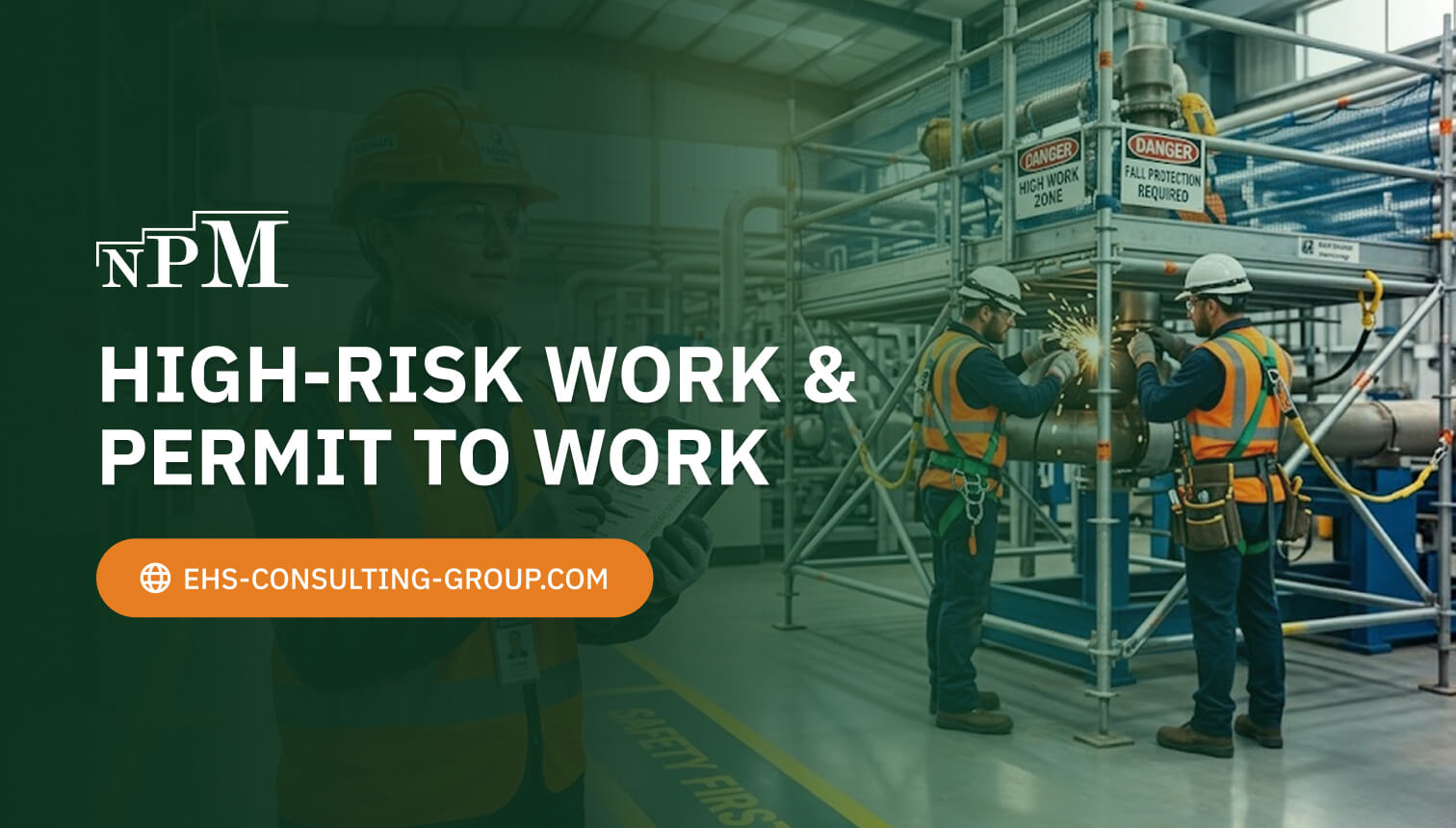
Risk is everybody’s business, but certain roles and functions carry core accountability for how hazards are identified, analyzed, and controlled. In the UAE’s Oil & Gas, Petrochemical, Construction, Manufacturing, Logistics, and Power Generation sectors, the following stakeholders are typically central to the discussion:
- HSE and Process Safety managers responsible for frameworks, governance, and assurance.
- Plant managers and O&M leaders accountable for safe, reliable throughput and availability.
- Process, mechanical, electrical, instrumentation, and control engineers who design, specify, and maintain safeguards, including SIS and safety-critical elements.
- Construction project directors, site managers, lifting supervisors, and temporary works coordinators overseeing dynamic risks and SIMOPS.
- Maintenance planners and supervisors integrating permits-to-work, isolation standards, and proof testing into turnarounds and daily routines.
- Logistics, warehouse, and marine/port supervisors handling hazardous materials, road tanker loading, and berth operations.
- Compliance officers monitoring alignment with ADNOC requirements, OSHAD frameworks (as administered by Abu Dhabi’s competent authorities), Dubai Municipality codes, Civil Defence approvals, and MOHRE obligations.
- Executive leadership setting risk tolerability criteria, funding priorities, and safety culture expectations.
Across these functions, risk management must also be lived by contractors who execute a large proportion of the work: EPC firms, rigging/lifting providers, scaffolding teams, NDT inspectors, tank cleaners, shutdown specialists, and others. Their activities often interact with process equipment and utilities, so controls cannot exist on paper alone—they must be briefed, verified, and evidenced at the point of work.
Why This Topic Matters

The stakes are high because the hazards are real: loss of primary containment (LOPC), ignition and explosion in congested process areas, toxic releases, dropped objects during complex lifts, energized work in tight spaces, excavation collapses, and high-energy rotating equipment failures. For Oil & Gas and Petrochemical sites, major accident hazards can escalate across units through shared utilities, flare systems, or interlocking process routes. For Construction, short-lived but severe hazards emerge from cranes, formwork, hot works, and temporary electrical. Logistics and power generation face their own acute risks, from battery energy storage systems to turbine overspeed and grid upsets.
From a regulatory perspective, organizations in the UAE operate under a mosaic of authorities and standards—ADNOC’s HSE expectations for concession areas, OSHAD-aligned frameworks in the capital, Dubai Municipality technical codes and approvals, Civil Defence for fire and life safety acceptance, and MOHRE for labor and welfare compliance. Layer on recognized standards such as ISO 45001 and ISO 14001, and discipline-specific references like IEC 61511 for safety instrumented systems, API recommended practices for offshore and facilities engineering, and NFPA codes for fire protection. Solid risk governance ties these requirements into one integrated decision process, where controls are justified, prioritized, and monitored.
Equally important is operational continuity. Unplanned outages, emergency flaring, environmental exceedances, and rework from inadequate controls translate directly into cost, schedule disruption, and reputational damage. Strong risk decision-making helps leaders allocate capex and opex where it measurably counts—towards independent protection layers, reliable alarm management, robust proof testing, and engineered barriers—rather than towards administrative controls that look tidy in a matrix but cannot stop an overpressure, an arc flash, or a falling load.
Key Points to Understand

Having established the scale of the challenge and the regulatory context, the next step is to break down how effective risk management is structured and executed across the lifecycle—from concept and FEED to commissioning, operations, and decommissioning.
1) The difference between hazards, scenarios, and risk
A hazard is a source of potential harm (e.g., flammable hydrocarbon under pressure; a suspended load; energized busbars). A scenario is a credible pathway from initiating cause through to consequences (e.g., blocked discharge leading to overpressure and PSV lift to flare; sling failure causing a dropped load onto a temporary walkway). Risk combines the likelihood of the scenario and the severity of its consequences, considering existing safeguards. The job is to visualize and quantify scenarios clearly enough to select controls that are effective and independent.
2) Hazard identification and analysis methods
For process facilities, HAZID and HAZOP provide structured techniques to surface deviations and initiating causes, while bowtie analysis visualizes how threats, barriers, and consequences fit together. LOPA quantifies residual risk by testing whether independent protection layers (IPLs) reduce frequency to tolerable levels. In instrumented protection contexts, SIL assignment and verification are performed to match safety integrity requirements to target risk reduction factors. At the facility boundary, Quantitative Risk Assessment (QRA) helps test land use planning, cumulative risk, and offsite effects. In construction and logistics, task-based risk assessments (Toolbox Talks, Job Safety Analysis) plus engineering checks (temporary works design, lift plans) serve similar purposes on a tighter time scale.
3) The hierarchy of controls and barrier integrity
The hierarchy ranks controls from most to least reliable: elimination, substitution, engineering controls, administrative controls, and PPE. For process safety, engineered barriers and independent instrumented protections are the backbone. Administrative controls—procedures, checklists, permits—are essential, but must not be mistaken for risk reductions equal to hard barriers. Evidence that barriers work is just as important as their design—think proof tests for SIFs, functional trips of ESDs, verification of blast-rated doors, or pull-testing of anchor points.
4) Safety instrumented systems and performance standards
Where consequences are severe, facilities often rely on instrumented protections—trip functions that detect a hazardous condition and move the process to a safe state. Standards such as those maintained by the International Electrotechnical Commission (IEC) are central references for lifecycle management: defining SIFs, assigning SIL targets, designing independent architectures, and maintaining proof test intervals. Performance standards extend beyond SIS, covering safety-critical elements like firewater pumps, deluge systems, explosion relief, gas detection, passive fire protection, and shutdown valves—each with functional requirements, assurance tasks, and acceptance criteria.
5) Human and organizational factors
Even excellent engineering can be defeated by flawed interfaces, time pressure, or misaligned incentives. Alarm rationalization to prevent flooding, ergonomics at operator panels, clear maintenance isolation points, and an accurate, current P&ID set are human-factor foundations. Organizationally, Management of Change (MOC), competence, shift handover quality, and contractor onboarding have outsized influence on real risk at the job site.
6) Monitoring and learning
Robust key performance indicators (KPIs) combine leading and lagging views: completion of proof tests; overdue corrective actions; SIS bypass hours; emergency response drill performance; LOPC tiers; near-miss quality; and nonconformance closure rates. Formal incident investigations, learning teams, and barrier health reviews ensure that data becomes insight and then action—closing the loop before the next campaign or turnaround.
Illustrative control strategies across sectors
The table below sketches control hierarchies with industry-specific examples to help translate principles into plant- and site-level actions.
| Control Level | Description | Oil & Gas / Petrochemical Example | Construction Example | Typical Evidence |
|---|---|---|---|---|
| Elimination | Remove the hazard entirely | Design out dead-legs and unnecessary hydrocarbon inventory | Prefabricate modules at ground level to avoid work at height | Design basis, model reviews, redlines |
| Substitution | Replace with a less hazardous option | Use nitrogen purging instead of air; choose lower-toxicity chemicals | Non-sparking tools; water-based cutting over hot work | Material specs, method statements |
| Engineering Controls | Isolate people from hazards | Relief valves to safe flare, double-block-and-bleed, gas detection, blast walls | Edge protection, crane anti-collision devices, trench shoring | P&IDs, layout drawings, test certificates |
| Administrative | Procedures, training, permits | Permit-to-work with isolations, SIMOPS plan, bypass management | Lift plans, temporary works permits, toolbox talks | PTW records, logs, audits |
| PPE | Personal protective equipment | FR clothing, SCBA for toxic service areas | Fall-arrest harnesses, cut-resistant gloves | Issue records, inspections |
How This Works in Practice

Translating principles into daily operations starts with clarity about where decisions are made and how evidence is captured. Bowties and HAZOP action logs are only as useful as the way they feed into work controls, maintenance, and project gates.
Consider a brownfield modification to tie in a new heat exchanger on a live hydrocarbon unit. HAZOP identifies overpressure scenarios during startup; LOPA shows the need for an additional independent high-pressure trip to maintain tolerable risk. The SIS team designs a SIF with a SIL target aligned to the LOPA outcome; procurement selects certified instruments; proof test intervals are set; and operations define bypass management rules, including permit conditions and time limits. Before energization, a Pre-Startup Safety Review (PSSR) verifies that the SIF is installed, loop-checked, and function-tested, that process documents are as-built, and that operators are trained on deviations and alarms. The MOC is only closed when evidence is complete and stored.
On a high-rise construction site, the equivalent chain starts earlier in method statements and temporary works designs. Lifting studies determine crane positions and slewing radii relative to energized overhead lines; anti-collision zones are set; and weather limits are defined. Where simultaneous operations conflict (e.g., a façade lift above hot works), the SIMOPS plan prioritizes separation by time and space. Toolbox briefings and point-of-work risk assessments translate the plan to the crew, backed by engineered protections like edge barriers and load moment indicators.
In logistics, road tanker loading at a terminal marries process safety and industrial safety. Bonding and grounding, overfill protection, vapor recovery, and emergency shutdown buttons are engineered controls; driver induction, pre-entry checks, and parking discipline are administrative layers. Environmental controls—spill kits, sumps, and response drills—tie into ISO 14001 aspects and emergency planning. Power generation sites follow similar logic for turbine overspeed protection, fuel gas valving, and switchyard access control, with strict lockout/tagout (LOTO) and arc-flash boundaries embedded into the permit-to-work system.
Across all these domains, independent verification is crucial: proof testing of SIFs on a defined interval; function tests of deluge and foam systems; practice musters with time-to-muster metrics; and third-party checks for lifting accessories. Field supervision should routinely test whether barriers work as assumed, not just whether forms are filled.
Benefits and Practical Use Cases

When organizations treat risk rigorously and measurably, several benefits accumulate. These gains show up in safety performance, environmental compliance, and cost control, because the same controls that prevent incidents often stabilize operations and reduce rework.
- Fewer process upsets and LOPC events due to well-designed IPLs and rationalized alarms.
- Reduced downtime and deferred production because proof-tested protections operate when needed.
- Credible compliance demonstrations during regulator and insurer engagements, supported by performance standards and assurance evidence.
- Better capital allocation through SIL/LOPA-driven decisions, reducing spend on low-value administrative mitigations.
- Improved contractor performance and fewer site conflicts via robust SIMOPS planning and field verification.
- Clearer learning from near misses through bowtie-based barrier health reviews.
Industry experience and guidance published by organizations such as the Center for Chemical Process Safety (CCPS) reinforce these outcomes, emphasizing independent protection layers, effective competence, and leadership attention to barrier integrity. For UAE operators engaging with ADNOC or seeking Civil Defence acceptance, the ability to demonstrate this layered approach—complete with records of tests, bypass controls, and closeout of findings—tends to reduce friction in approvals, drive better audit outcomes, and support permitting for expansions and brownfield works.
Concrete examples include:
- Offshore gas compression: HAZOP/LOPA highlighted high-severity scenarios in seal gas failures. Installing an independent high-high pressure trip with a verified SIL target cut scenario frequency by an order of magnitude and supported a safe-upset response without platform shutdown.
- Refinery hydrotreater revamp: Alarm management rationalization removed nuisance alarms, concentrated operator focus, and shortened response times during a feed quality upset—preventing an auto-shutdown and saving a day of lost production.
- Construction of a tank farm: Enhanced lift planning and anti-collision zones for crawler cranes eliminated near-miss trends and allowed parallel workfronts under a robust SIMOPS envelope—delivering schedule gains without eroding safety margins.
- Warehouse DG area upgrade: Substituting to double-walled IBCs and segregated storage with spill containment reduced environmental exposure and improved Civil Defence acceptance testing.
- Combined-cycle plant outage: Systematic LOTO and verification of zero-energy state on HRSG access points removed latent risks of stored energy, cutting permit deviations and increasing first-time-right work.
Best Practices and Points of Caution

Experience across facilities shows patterns—habits that strengthen risk controls and pitfalls that undermine them. The following guidance distills what consistently works:
- Define risk tolerability and decision rights up front. Document when the organization accepts, mitigates, or stops work, and who makes that call.
- Use structured methods (HAZOP, LOPA, bowties) and calibrate them with real operating data—trip rates, bypass hours, alarm floods, near misses.
- Preserve independence of protection layers. A level alarm and a high-level trip on the same transmitter is not two IPLs; common cause matters.
- Anchor barrier health in performance standards. Each safety-critical element needs functional requirements, assurance tasks, and clear acceptance criteria.
- Control bypasses and overrides tightly. Define authorization levels, technical justifications, time limits, and compensating measures.
- Close the loop from findings to fixes. Track actions to completion with due dates, owners, and verification of effectiveness.
- Integrate contractor management. Prequalification, induction, supervision ratios, and field verification must align with your barriers, not operate in parallel.
- Keep drawings and documentation live. P&IDs, cause-and-effect charts, and instrument indices must match the plant—redlines aren’t optional.
- Practice emergency response realistically. Drills should stress critical interfaces—control room to field, communications, headcounts, and isolation.
- Learn without blame. Investigations should examine barrier performance and system factors, not only personal error.
Be cautious about common traps: treating checklists as risk controls, inflating risk reduction credits for administrative steps, overlooking human-machine interface issues, and allowing schedule pressure to dilute MOC or PSSR. Also, do not assume that a single “silver bullet”—a new detector, a revised procedure—can compensate for weak fundamentals. Referencing global standards bodies such as the IEC for instrumented functions and CCPS for IPL and bowtie good practice helps keep discipline and independence at the center of your program.
Frequently Asked Questions About Risk Reduction
What is the difference between a hazard and risk, and why does it matter in daily decisions?
A hazard is the inherent potential for harm (e.g., flammable gas, energised equipment), while risk is the combination of how likely a hazardous scenario is and how severe the consequences would be. This distinction matters because you cannot control hazards that are intrinsic to the work, but you can design and verify controls to reduce the risk they pose. Daily decisions—issuing permits, authorizing bypasses, scheduling work—should be based on whether risk is tolerable with current barriers, not on whether a hazard exists at all.
How do HAZOP, LOPA, and QRA fit together without duplicating effort?
HAZOP systematically identifies deviations and causes at the node level; LOPA quantifies specific scenarios from HAZOP and tests whether independent protection layers bring frequency to a tolerable level; QRA aggregates scenario frequencies and consequences to evaluate societal/individual risk across a site or area. They are complementary. A good practice is to ensure traceability: HAZOP deviations that drive LOPA should be clearly referenced, and LOPA outcomes should be visible inputs to SIS/SCE design and performance standards, while QRA aligns with land use and emergency planning.
What does ALARP actually mean in an industrial context?
ALARP—As Low As Reasonably Practicable—means risks are reduced unless the cost (including time and effort) of further reduction is grossly disproportionate to the additional risk reduction gained. Practically, you define tolerability criteria, assess what further controls are available, and then judge disproportion. Documented decisions are critical: if a design stops short of the most protective option, justification must show why additional measures are not reasonably practicable.
How should we prioritize capital projects aimed at improving safety?
Link projects to quantified risk reductions and performance standards. For example, a project that adds an independent high-integrity trip to prevent a high-consequence event with non-tolerable frequency should rank ahead of administrative refinements. Use LOPA-derived targets, SIL needs, and bowtie barrier gaps to score options, and incorporate lifecycle costs (proof testing, maintainability) into the case.
How often should risk assessments be reviewed or refreshed?
Review intervals depend on change pace and hazard profile. For stable operations, a periodic review every few years may suffice, but any significant modification should trigger an MOC and targeted reassessment. For construction, where conditions change rapidly, risk assessments need refresh at each major phase or shift, with point-of-work checks daily. After incidents, near misses, audit findings, or regulatory changes, focused reviews should verify that assumptions remain valid.
What is the role of human factors in preventing incidents even when engineering is strong?
Human factors address how people perceive, decide, and act within systems. Good engineering can be undermined by poor alarm design, confusing procedures, cluttered control rooms, inadequate training, or fatigue. Conversely, ergonomic panels, intuitive displays, clear isolation points, and manageable alarm loads help people use engineering effectively. Competence and supervision close the loop, ensuring the team can spot deviations early and respond correctly.
How do UAE regulatory requirements influence our approach to risk decisions?
Authorities such as ADNOC, OSHAD-aligned bodies in Abu Dhabi, Dubai Municipality, Civil Defence, and MOHRE set expectations for HSE frameworks, fire and life safety systems, labor welfare, and environmental controls. Effective risk management demonstrates alignment by showing that hazards are identified, controls are engineered and independent where needed, and assurance evidence exists. Clear documentation and performance data typically streamline approvals and audits.
What evidence do auditors and insurers commonly ask for to verify controls?
They look for traceability from hazard studies to implemented barriers, current drawings and cause-and-effect charts, performance standards for SCEs, proof test records, bypass/override logs, maintenance history, training and competence records, emergency drill reports, and closure evidence for previous findings. For construction, lift plans, temporary works designs, inspection records, and SIMOPS controls are central.
Is PPE ever an acceptable primary control?
PPE is critical, but as the last line of defense it should not be the primary risk control for high-severity scenarios. Use engineering and elimination/substitution first wherever practicable. Where residual risks remain after higher-order controls, PPE is then specified and enforced as part of a layered approach.
Conclusion
Steady, demonstrable risk control is not a single activity but a lifecycle discipline—beginning with clear hazards and scenarios, quantified decisions on tolerability, engineered barriers with defined performance standards, and robust assurance to prove that controls work when needed. For UAE operators across Oil & Gas, Petrochemical, Construction, Manufacturing, Logistics, and Power Generation, this approach builds a coherent chain from HAZOP and bowties through LOPA, SIL, and emergency response, and it integrates cleanly with regulatory expectations. When risk reduction is treated as a measurable management system—not a formality—organizations see fewer upsets, safer projects, and better compliance outcomes.
To go further on this topic, NPM’s broader Process Safety Services UAE page covers this in more depth.
Explore NPM’s References
Risk work is most convincing when it is rooted in lived project experience: late-stage design changes on a refinery unit that required fast but disciplined LOPA and SIL alignment; complex SIMOPS on a brownfield expansion with hot tapping near live lines; proof testing campaigns that revealed hidden vulnerabilities in instrumented protections; and emergency response drills that exposed communication gaps and spurred concrete improvements. NPM’s references showcase this breadth across industries and geographies. You will find examples where bowtie analysis clarified barrier responsibilities for operations and contractors, where performance standards translated abstract intentions into measurable criteria, and where PSSR checkpoints caught last-minute deviations before startup. Just as importantly, our portfolio demonstrates how human and organizational factors—shift handovers, alarm rationalization, and field supervision—are integrated with engineering controls to build real resilience. By reviewing our track record, you can see how methodologies like HAZOP, HAZID, QRA, LOPA, and SIL determination are applied in practice to reduce risk, meet regulator expectations, and keep projects and plants on plan. The references also reflect a range of facility types—offshore platforms, onshore terminals, petrochemical units, high-rise construction, warehouses handling dangerous goods, and power generation sites—so you can compare contexts similar to your own. NPM’s worldwide experience provides a practical lens for decision-makers who need evidence that structured risk management leads to tangible, auditable improvements in safety and reliability.
For more information about our references, visit Our References.
Speak With NPM
If you would like to discuss how these principles apply to your facility, our team is available to share practical perspectives from comparable operations. We welcome technical questions about hazard studies, barrier integrity, or assurance evidence requirements. A short conversation can help you calibrate next steps without obligation. For any further questions or to speak with our team, Contact Us.