
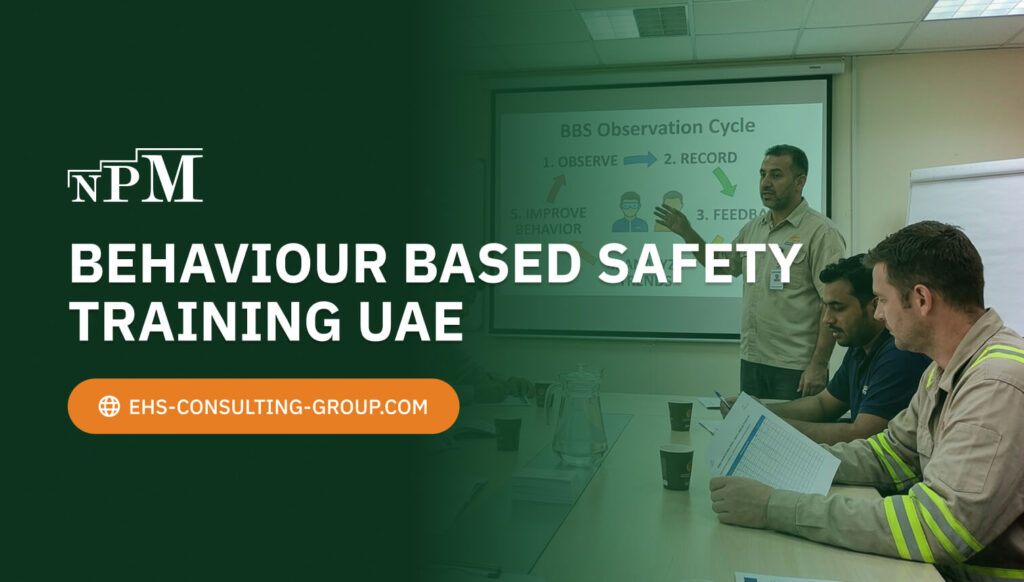
Safety Observation Techniques are a practical way for high-risk industries to see what is really happening on the job — not just what procedures say should happen — and then act on those insights before an incident occurs. In oil and gas, petrochemicals, construction, manufacturing, logistics, and power generation, a single unsafe act around energy isolation, working at height, lifting, or confined spaces can escalate quickly. Systematic observation turns frontline behaviors and conditions into usable data, so leaders can strengthen controls, meet ISO 45001 expectations for worker participation and continuous improvement, and align with UAE frameworks such as OSHAD, Dubai Municipality EHS guidelines, Civil Defence requirements, MOHRE labor safety provisions, and ADNOC HSE standards.
In practice, observation is more than a quick “look-around.” It is a disciplined way to verify critical safeguards, validate permit-to-work effectiveness, check adherence to procedures, surface weak signals (e.g., near misses avoided by luck), and build a culture where people feel safe to speak up. Whether you operate a refinery, a fabrication yard, a high-rise construction site, a logistics hub with heavy forklift traffic, or a combined-cycle power plant, consistent observation provides a leading indicator you can manage — and that you can connect to risk assessments like HAZOP, HAZID, Bowtie, LOPA, and QRA to make decisions grounded in risk.
This article explains how observation programs function, who should be involved, where common pitfalls arise, and how to integrate observations with existing safety management systems. It is an educational overview, intended to help HSE managers, plant managers, and compliance officers translate best practice into daily reality across complex operations in the UAE and beyond.
Who Does This Affect?

Observational approaches reach across organizational levels, but several roles carry particular responsibility for making them work. HSE managers and site safety leads set expectations, define observation protocols, and ensure consistency across contractors. Line supervisors and permit issuers verify that work-as-done matches work-as-imagined in method statements and risk assessments. Operations and maintenance teams provide the daily presence needed to spot weak controls — frayed slings, missing lockout tags, poor housekeeping, or shortcuts during hot work. Project managers, construction foremen, and lifting supervisors use observations to validate that high-risk tasks (e.g., critical lifts, scaffold erection, excavation shoring, live plant tie-ins) follow the right sequence and supervision intensity. Contractors and subcontractors are central too; their engagement is essential in oil and gas shutdowns/turnarounds, petrochemical brownfield works, and construction projects with many trades on site.
At a corporate level, functional leaders — HR, procurement, training, and compliance — play enabling roles. HR supports observer training and coaching. Procurement integrates observation expectations into contractor pre-qualification. Training teams ensure high-energy hazards are prioritized in observation checklists and behavior cues. Compliance officers align observation KPIs with ISO 45001, OSHAD, and ADNOC HSE reporting needs. In logistics and manufacturing, warehouse managers and production supervisors can use observation data to refine traffic management plans and machine guarding checks. Finally, senior leadership sustains momentum by reviewing observation quality, not just quantity, and by visibly acting on what the data says.
Why This Topic Matters

Serious injuries and fatalities rarely arise from a single failure. They result from patterns of small deviations — a missing barricade here, a bypassed interlock there, a rushed pre-use crane inspection — that accumulate until a high-energy event finds a path. Observations expose these small deviations early. That is why observation is a cornerstone of behavior-based safety and why it is embedded within management system standards focused on worker participation and continual improvement.
From a regulatory perspective, understanding and applying observational practice supports compliance with national and emirate-level frameworks. Audit findings by regulators or clients (including ADNOC group companies) increasingly ask for evidence of effective leading indicators: the quantity and quality of observations, closure of corrective actions, and the linkage of findings to training, permit to work quality, and risk assessments. Insurers, too, look for observation-driven learning as a predictor of performance.
Operationally, observation offers three benefits that incident metrics alone cannot provide. First, it gives visibility into variability in everyday work — the gap between procedure and practice. Second, it can validate the health of critical controls you identified through HAZOP, Bowtie, or LOPA, confirming they are not merely “on paper.” Third, it creates a continuous learning loop that actively involves the workforce, improving trust and surfacing issues earlier. When tied to robust feedback and action tracking, observation becomes a practical engine for risk reduction.
Key Points to Understand

To apply observation effectively, several dimensions deserve attention: what you observe, how you observe, how you record and analyze, and how you close the loop with feedback and action. Each dimension influences others, so thinking of the method as a system — rather than a card or form — helps.
Observation Types and When to Use Them
Organizations typically blend structured and opportunistic observation in order to capture both routine and unusual work. The table below summarizes common modes.
| Observation Mode | Primary Use | Frequency | Strengths | Typical Pitfalls |
|---|---|---|---|---|
| Planned walkthroughs | Routine verification of controls and behaviors on defined routes/areas | Daily to weekly | Consistency, broad coverage, trendable data | Can become box-ticking if routes never change |
| Task-focused observations | Focused review of high-risk work (e.g., lifting, confined space, hot work) | Per critical task | Depth on critical steps and controls | Observer bias if only “good” jobs are selected |
| Event-triggered spot checks | Quick look after near miss, change, or permit issue | As needed | Captures weak signals tied to variability | Data may be thin if not documented properly |
| Campaign observations | Short-term emphasis on a risk theme (e.g., dropped objects, line-of-fire) | 1–4 weeks | Raises awareness, concentrates learning | Fades without follow-up or reinforcement |
| Peer-to-peer coaching | Worker-to-worker feedback on behaviors at the point of work | Continuous | Builds culture and trust | Requires skill to avoid “policing” tone |
Behavioral Anchors: What “Good” Looks Like
Observation checklists should name the specific behaviors or conditions that matter — not generic labels. Consider high-energy hazards and the critical behaviors that control them: positive isolation proven, confined space attendants actively monitoring, “line-of-fire” checks before torqueing flanges, exclusion zones enforced on crane lifts, man-riding winches tested, scaffold tags accurate, and permit-to-work requirements verified at the job. Use the ABC model (Antecedent-Behavior-Consequence) to clarify what cues trigger safe actions and what consequences reinforce them. Observers should be trained to describe what they see in plain, observable terms, not inferences or judgments.
Risk Integration with HAZOP, Bowtie, and LOPA
Observation is most powerful when it validates risk controls identified in formal studies. If HAZOP reveals overpressure risks managed by relief devices and operating procedures, observations can verify that operators actually follow the procedure during start-up. If Bowtie diagrams show “dropped object prevention” as a key barrier on offshore platforms, observation can check tethering practices at height. If LOPA assigns credit to administrative controls, observation can test whether those credits are realistic under production pressure. This linkage makes observation data more actionable in management reviews and MOC (Management of Change) decisions.
Data Capture, Coding, and Trending
High-quality data begins with simple, usable capture methods: a pocket card, a QR code form, or a mobile app. Coding categories should mirror your risk profile and regulatory reporting: life-saving rules, line-of-fire, energy isolation (LOTO), working at height, confined space, lifting, hot work, traffic/pedestrian interactions, ergonomics, housekeeping, chemical handling, and environmental aspects aligned to ISO 14001. Trend analysis benefits from a small set of quality indicators (e.g., percentage with detailed narrative, number of actions closed, time-to-close, repeat findings) rather than a large number of superficial metrics. Analytics should look for patterns by area, contractor, shift, and task type, and compare leading indicators (observations) with lagging indicators (incidents, near misses) for validation.
Just Culture and Psychological Safety
Observations work when people trust the process. That means no-blame conversations, curiosity over criticism, and a visible willingness by supervisors to correct system issues (tools, staffing, planning) — not just individual behavior. A just culture distinguishes between human error, at-risk behavior, and reckless violations, responding proportionally and fairly. Confidentiality rules, respectful communication, and clear escalation paths encourage participation from employees and contractors alike.
Governance and Alignment with Standards
Observation programs should sit clearly within the safety management system. Procedures describe who observes, how often, what gets recorded, and how data flows into management review. Training covers interviewing and coaching skills, hazard recognition, and bias awareness. Internal audits check consistency and quality. This governance aligns with ISO 45001 clauses on worker participation and performance evaluation, and it supports requirements from OSHAD, Dubai Municipality, Civil Defence, MOHRE, and ADNOC HSE specifications. For broader safety governance resources and industry insights that complement these expectations, organizations sometimes consult knowledge repositories such as CABINET NPM, which can help teams benchmark their frameworks and language.
How Does This Work in Practice?

Translating method into action starts with the work itself. Begin at the job site — the permit point, the laydown area, the scaffold, the unit boundary, the turbine deck, the trench, the loading bay — and observe how teams navigate real constraints. Are isolation points readily accessible? Are exclusion zones set and respected? Is the job overseen by someone competent for the risk level? Are tools and PPE appropriate and in good condition? These concrete checks connect abstract standards to daily practice.
Once the observation is made, the next step is dialogue. Short, constructive conversations with the team help validate what the observer believes they saw. “I noticed you paused to check the lift path after the wind picked up — can you tell me what cues prompted that?” or “I see two tags on this isolation; can we review the isolation plan together?” Open questions surface context, such as schedule pressure or equipment availability, which may explain why work drifts from plan. Observers should thank workers, reinforce good practice, and agree on any immediate corrective actions that are safe to perform without disrupting operations.
Documentation should be quick and clear. A short narrative describing the situation, behavior or condition, and consequence or potential consequence beats a long checklist without detail. Photographs may help but should follow site rules for confidentiality and security. Observations with significant risk implications should trigger a timely escalation, while lower-level improvements can route through area supervisors or the continuous improvement log. Importantly, actions need owners and deadlines; otherwise trust erodes.
In multi-contractor environments (e.g., shutdowns, major projects), joint observation campaigns help align expectations. A refinery may run a “line-of-fire” focus month, during which client and contractor supervisors conduct joint observations, share trend data at daily coordination meetings, and feature learning points in toolbox talks. In logistics operations, weekly walkdowns can target pedestrian-forklift interactions at dock doors, cross-aisles, and battery charging areas, with traffic plan updates prioritized from trends. Power plants might concentrate on lockout-tagout observations during outage seasons when simultaneous operations spike. In each case, the observation data should inform the next week’s plan.
Benefits and Practical Use Cases

Done well, observation programs deliver tangible value that leaders can see in frontline practice and in dashboards. Consider the following benefits and examples:
- Verification of critical controls: At an LNG terminal, targeted checks of lifting operations identified recurring shortfalls in exclusion zone management during tandem lifts. Corrective actions included revised rigging plans and spotter training, which eliminated repeat findings within two months.
- Early warning signals: In a construction project, observations noted frequent ad hoc cutting tasks away from designated stations. This trend prompted the addition of mobile extraction units and training refreshers, reducing airborne dust exposures and cleanup near misses.
- Closed-loop learning: A manufacturing site saw repeated glove selection issues for chemical handling. Observation data fed into procurement changes and point-of-use PPE availability, with toolbox talk reinforcement; compliance improved markedly.
- Contractor alignment: A refinery turnaround integrated observation protocols into contractor onboarding. The result was more consistent permit adherence and fewer last-minute reworks, measurable in reduced permit rejections and time-to-close observations.
- Risk-informed campaigns: An offshore asset linked dropped object observations to Bowtie barrier health reviews, leading to upgraded tethering policies and better pre-task checks on tools at height.
Crucially, these benefits rely on the integrity of the process. A large number of low-quality entries cannot substitute for a smaller number of high-quality observations with clear narratives and timely actions. Quality makes the data credible in management meetings and meaningful for workers who see their input drive change.
Best Practices and Points of Caution

To get consistent results, organizations should adopt a few disciplined habits and be alert to common traps.
- Start from risk: Prioritize observation content around your highest-energy hazards and your most consequential activities. This ensures attention aligns with your QRA, HAZOP, and barrier models.
- Define “good” precisely: Use behavior statements that are objective and observable. Replace “uses correct PPE” with “wears cut-resistant gloves when handling sheet metal; visor down during grinding.”
- Coach, don’t police: Train observers in basic coaching language and active listening. Reinforce a just culture where people can safely discuss constraints, errors, and improvement ideas.
- Focus on quality: Track and review narrative richness, action closure rates, recurrence, and distribution across shifts and contractors — not just raw counts.
- Integrate with systems: Link observation data to management reviews, toolbox talks, MOC, and training plans. Use insights to update risk assessments and permits.
- Calibrate observers: Periodically “pair-observe” to align interpretation standards. Use internal audits to spot bias or drift.
Equally, several cautions are worth noting:
- Avoid quotas that drive gaming: Targets should incentivize meaningful engagement, not padding numbers.
- Protect confidentiality appropriately: Handle photos and narratives with care; avoid identifying individuals unless needed for action.
- Prevent “tick-box” fatigue: Vary routes, rotate themes, and bring fresh focus topics rooted in current risk.
- Don’t bypass supervisors: Observers should collaborate with line leadership so actions are feasible and aligned with production needs.
- Measure behaviors, not just conditions: Conditions matter, but behavior around controls (tests, verifications, communications) is where serious risk lives.
Frequently Asked Questions About Safety Observation Techniques
How are safety observations different from inspections or audits?
Inspections and audits assess compliance against predefined standards and are often periodic, formal, and checklist-driven. Observations are more frequent, conversational, and behavior-focused, emphasizing how work is actually performed and the health of critical controls in real time. Both are necessary; observations supply leading indicators that feed audits and management reviews with richer context.
How many observations should our site generate?
There is no universal benchmark because risk profiles differ. Rather than fixate on counts, aim for coverage of high-risk work and representative sampling across shifts, areas, and contractors. A practical approach is to define a minimum cadence per supervisor or area and then monitor quality metrics (narrative detail, actions closed, recurrence). Over time, calibrate volumes based on signal-to-noise in your data and the resources available to close actions.
What makes a “high-quality” observation entry?
Clarity and actionability. A quality entry describes the task and context, the specific observed behavior or condition, why it mattered (potential consequence or barrier affected), and any immediate corrective or reinforcing action taken. It avoids vague terms like “unsafe act” without detail. Where relevant, it connects to a critical control (e.g., LOTO verification step) or life-saving rule.
Should observations be anonymous?
Anonymous options can encourage reporting of sensitive issues, but most observation programs benefit from identifiable entries so supervisors can follow up and close the loop. A balanced approach is to allow anonymity for submissions while promoting a culture where named observations are the norm and are handled constructively. Protecting confidentiality in published summaries is good practice regardless.
How do observations align with ISO 45001 and UAE regulations?
ISO 45001 emphasizes worker participation, operational control, and performance evaluation. Observation programs operationalize those principles through daily engagement, verification of controls, and measurable leading indicators. In the UAE context, observations support compliance expectations under OSHAD, Dubai Municipality EHS rules, Civil Defence requirements for hot work and fire risk control, MOHRE labor safety provisions, and client specifications such as ADNOC HSE guidelines. Linking observations to formal risk assessments further strengthens alignment.
Do digital tools improve observation quality?
Digital tools can reduce friction in documentation, standardize categories, and enable real-time analytics and dashboards. They do not replace the need for skilled observers, clear behavior definitions, and timely action closure. If you adopt digital capture, pilot it in high-risk areas first, tune categories to your risk profile, and ensure data ownership and feedback mechanisms are established before scaling.
How should contractors be included?
Set clear expectations in contracts and onboarding, train contractor supervisors in your observation method, and include contractors in joint walkthroughs and reviews. Use shared categories and definitions so data is comparable. Close the loop with both client and contractor actions, and review trends together in coordination meetings. Consistency and fairness are essential to sustain engagement.
What KPIs should we track?
Track a blend of quantity and quality: observation count by area/shift, percentage with detailed narrative, ratio of positive reinforcement to corrective findings, time-to-close actions, and recurrence rate of top issues. Consider “barrier health” indicators tied to Bowtie controls, and periodically correlate observation trends with incidents and near misses to validate predictive value.
Can observations reduce serious injury potential?
Yes, particularly when they focus on high-energy hazards and critical task steps. Observations that verify life-saving rules, LOTO steps, line-of-fire controls, dropped object prevention, and scaffold integrity can interrupt the pathways to severe harm. Success depends on quality, timely action, and leadership attention to the patterns the data reveals.
How do we prevent the process from becoming a tick-box exercise?
Emphasize coaching conversations over form completion, rotate focus themes based on risk, audit the quality of entries, and showcase actions taken as a result of observations. Leadership should review a small, meaningful set of quality indicators and ask about learning and barriers cleared — not just whether targets were met.
Conclusion
Safety Observation Techniques work when they are risk-driven, behavior-specific, and embedded in daily leadership practice. The earlier sections outlined who needs to be involved — from supervisors to contractors — and why the method matters: it validates critical controls identified by HAZOP, Bowtie, and LOPA; it generates leading indicators regulators and clients value; and it creates a learning culture grounded in just, constructive conversations. We then explored how to structure observations, capture and analyze data, and apply insights across oil and gas, petrochemical, construction, manufacturing, logistics, and power contexts. Finally, we highlighted practical benefits, from tighter control validation to contractor alignment, along with best practices that guard against quotas, bias, and “tick-box” fatigue. Taken together, these points show that observation is not an add-on task — it is an indispensable way to connect risk intent to work-as-done.
To go further on this topic, NPM’s broader Behaviour Based Safety Training UAE page covers this in more depth.
Explore NPM’s References
NPM’s references reflect the reality that robust safety observation is relevant across industries and geographies. Our teams have supported organizations operating refineries, onshore gas plants, offshore platforms, tank farms, petrochemical complexes, power plants, cement works, metal fabrication shops, logistics hubs, and major construction programs. In each domain, the environments differ — a crane lifting a process spool on a live unit is not the same as a crawler crane assembling a tower crane on a high-rise site — yet the principles hold: define “what good looks like” at the point of risk, observe consistently, and act swiftly on what the data reveals. Our portfolio includes observation frameworks tied to ISO 45001 management systems, campaigns designed around life-saving rules, integration with permit-to-work upgrades, and behavioral coaching for supervisors who must balance production and safety under real pressure.
Because the conditions for high-consequence events are similar worldwide, our experience spans diverse regulatory contexts as well as client specifications — from hydrocarbon processing to large-scale construction and logistics networks. We have seen how observation data, when structured well, can sharpen management reviews, shape toolbox talks, and prioritize engineering or procedural improvements emerging from HAZOP, HAZID, or Bowtie analyses. More importantly, we have seen how respectful, evidence-based conversations build trust with workers and contractors, which in turn increases reporting, enhances data quality, and accelerates risk reduction. If you are assessing how to strengthen your own approach, reviewing representative case studies, campaign designs, and lessons learned can help you benchmark and avoid common pitfalls while tailoring methods to your operations and culture.
For more information about our references, visit Our References.
Speak with NPM
If you would like to discuss how observation can be targeted to your highest-energy hazards, or how to align it with your existing management system and contractor model, we are happy to share practical perspectives. Our team welcomes technical questions and is available to explore options that fit your operational context and regulatory environment. For any further questions or to speak with our team, Contact Us.