

SWIFT Workshop Guide is a phrase many HSE and operations leaders use when they want a clear, practical way to structure a fast, collaborative hazard review without the complexity of a full HAZOP. In the UAE’s high-hazard sectors — from upstream and downstream oil and gas to construction, petrochemicals, manufacturing, logistics, and power generation — structured what‑if sessions offer a disciplined format to surface credible deviations, human factors, and operational vulnerabilities before they escalate into incidents or compliance gaps. This article distills how these workshops work, when they add the most value, and how to connect them to broader process safety frameworks and UAE regulatory expectations.
Rather than describing a particular engagement or course, the focus here is on how to plan and facilitate an effective structured what‑if review, how to choose the right scope and participants, how to make the most of guidewords and prompts, and how to translate workshop insights into risk controls and action tracking aligned with local requirements (OSHAD SF, Dubai Municipality EHS standards, Civil Defence codes) and recognized international good practice (IEC 61511, ISO 45001, ISO 14001, NFPA codes, API practices). The result should be a shared understanding of risk, a pragmatic set of actions, and a transparent record of the decisions taken.
Who Does This Affect?

Understanding and successfully running a structured what‑if session concerns a wide range of roles and facility types. In practice, it touches both decision‑makers and practitioners who influence or execute risk controls:
- HSE managers and process safety engineers responsible for risk assessment frameworks, risk registers, and barrier management.
- Operations superintendents, control room managers, and permit-to-work coordinators who oversee day‑to‑day plant risk controls.
- Maintenance planners, electrical and instrumentation supervisors, and turnaround managers planning intrusive work and isolations.
- Project, engineering, and commissioning teams (including EPC and OEM representatives) working through design changes, tie‑ins, and pre-startup safety reviews.
- Construction HSE leads on high‑rise, civil, and tunnelling projects coordinating method statements, lift plans, and temporary works.
- Manufacturing, logistics, and warehouse managers addressing material handling, traffic management, and machinery safeguarding.
- Power generation O&M teams dealing with rotating equipment, HV switchgear, fuel systems, and control system modifications.
Because structured what‑if reviews bring people together across disciplines, they are often a catalyst for aligning engineering viewpoints with operational realities. That cross‑functional dialogue is particularly important for management of change (MOC), PSSR checkpoints, and the verification of critical controls that underpin ALARP risk decisions.
Why This Matters
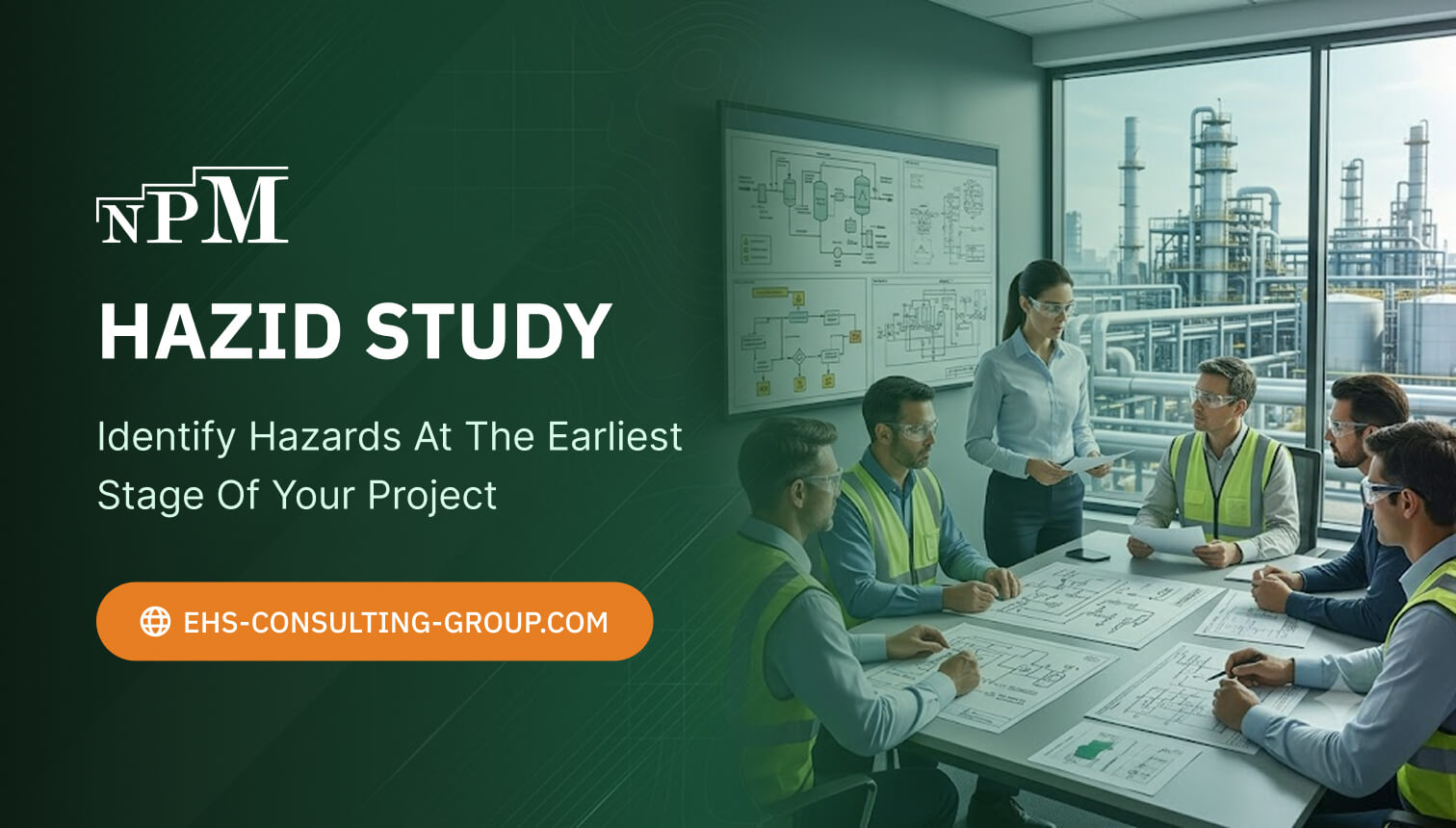
Earlier hazard identification is always more economical and effective than late-stage mitigation. Structured what‑if workshops sit in a sweet spot between quick, ad‑hoc risk reviews and heavy, resource‑intensive HAZOPs or QRAs. For minor design changes, operating procedure updates, new tasks, or brownfield tie‑ins, they provide a robust mechanism to test assumptions and probe for credible deviations — especially where human factors and operating context dominate risk.
In the UAE, regulators and duty holders expect systematic hazard identification and risk assessment. OSHAD SF in Abu Dhabi recognizes risk assessment as foundational to safe systems of work; Dubai Municipality’s EHS requirements and Civil Defence fire codes reference formal reviews for fire and life safety; ADNOC’s HSE Procedure Framework and various CoPs emphasize the management of change and assessment of residual risk. Structured what‑if sessions help demonstrate diligence and traceability: how deviations were considered, what safeguards exist, and which actions are needed. They also help align risk language across teams, reducing the chance that critical details get lost between design documents, procedures, and actual operations.
Key Points to Understand

Having framed the importance, it’s useful to break down what structured what‑if workshops actually are and how they function. The term SWIFT (Structured What‑If Technique) captures a disciplined brainstorming method using guidewords and prompts to challenge the status quo. The goal is not exhaustive re‑engineering but targeted inquiry backed by the right documentation and subject‑matter expertise.
The Core Idea

At its heart, this technique asks a simple, structured question: “What if X happens?” where X is a deviation from intended design or procedure. Systematic prompts ensure coverage — for example, no flow, reverse flow, overpressure, loss of utilities, maintenance error, bypassed interlock, external event, simultaneous operations, or impaired detection. The session tests the consequences, safeguards, and the need for further action. Because this approach looks beyond equipment into operations and human factors, it can be particularly powerful for procedural risks and task‑based hazards in construction, manufacturing, and logistics as well as process facilities.
Inputs and Preparation
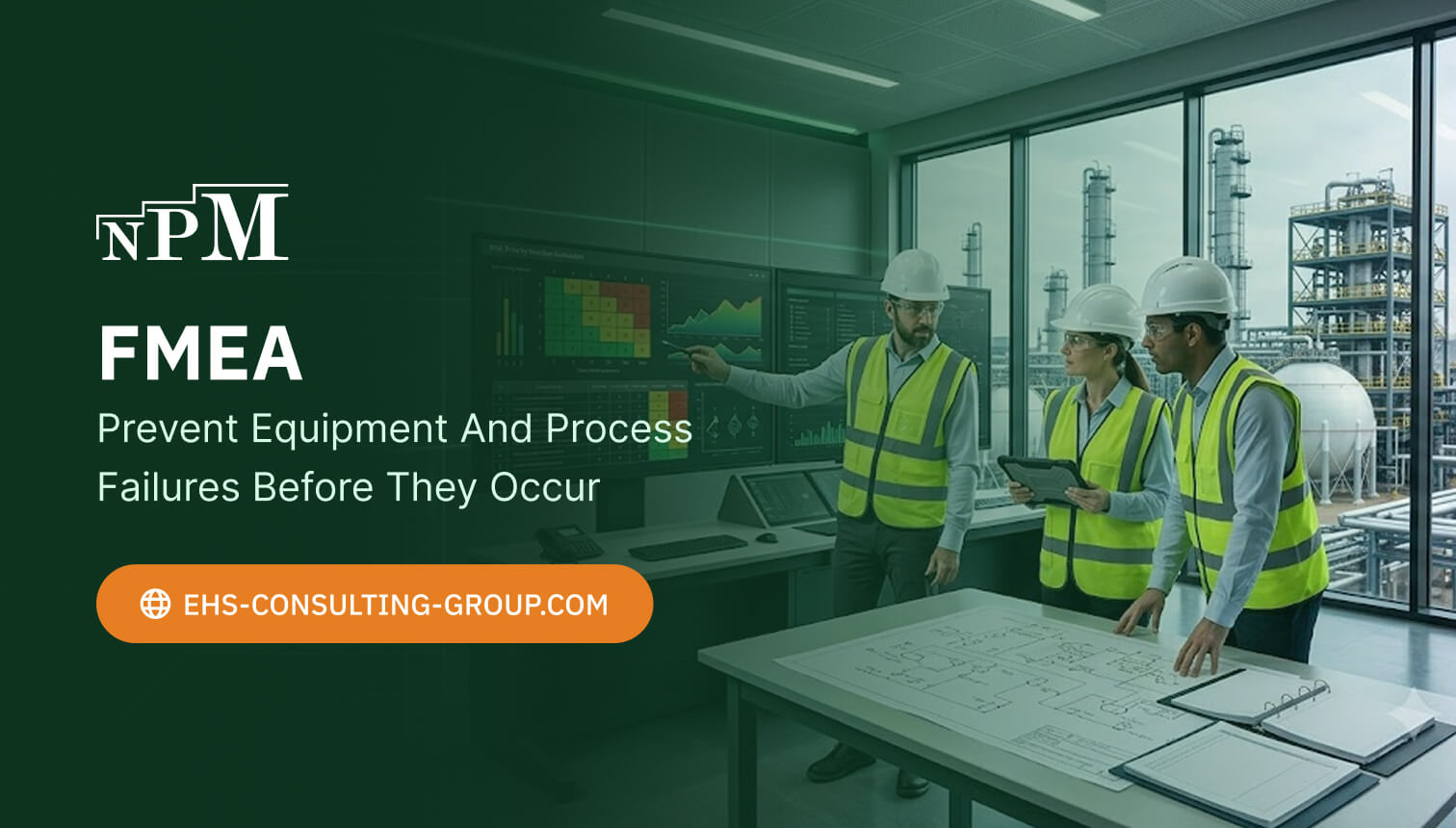
Good preparation keeps the workshop evidence‑based. Typical inputs include:
- P&IDs, PFDs, cause‑and‑effect diagrams, and alarm rationalization summaries (for process units and utilities).
- Operating procedures, start‑up/shutdown sequences, and critical task analyses.
- Method statements, lift plans, and temporary works designs (for construction and maintenance projects).
- Equipment manuals, control logic descriptions, and vendor data sheets (for packaged systems and skids).
- Recent incident/near‑miss learnings, deviation reports, and MOC documentation.
- Applicable standards and internal specifications (e.g., IEC 61511 for SIFs, ISO 45001 for OHS management, NFPA codes for fire protection interfaces).
Scoping is equally important: define boundaries, set objectives, and select nodes or functional slices that make sense — for example, a single pump‑tank loop, a crane lift sequence, or a forklift traffic route through a warehouse. Over‑broad scope dilutes the session; overly narrow scope can miss interfaces.
People and Roles

A productive workshop blends operational experience, engineering insight, and safety oversight. Typical roles include a facilitator who drives the guidewords and maintains pace, discipline SMEs, operations and maintenance representatives, safety/risk professionals, and a scribe who captures the rationale, safeguards, and actions. Deciding who to invite should be driven by the potential deviation scenarios and the controls under consideration. Encourage constructive challenge and psychological safety: dissenting views often surface latent conditions.
Guidewords and Prompts

Guidewords make this technique systematic. Prompts often span technical, procedural, and external stressors, such as:
- Process: no/low/high flow, reverse flow, contamination, overpressure, under‑temperature, loss of cooling, valve fails open/closed, instrument drift.
- Human and procedural: step omitted, wrong sequence, mislabelled equipment, overridden/bypassed interlock, inadequate isolation, unfamiliar contractor, fatigue.
- External: utility failure, SIMOPS conflicts, harsh weather, power dips, vibration, construction damage, fire/explosion exposure from nearby units.
Tailor prompts to the context. In logistics, traffic conflicts and pedestrian interfaces dominate; in construction, lifting and temporary works are common; in power generation, loss of excitation or protection relay misoperation may be relevant. For each prompt, explore consequences, existing safeguards (engineering and administrative), detectability, and the need for further action or verification.
Outputs and Integration

The output is a structured record: deviations considered, consequences, existing safeguards, risk rating per the organization’s matrix, and actions. Quality matters: actions should be specific, owned, and time‑bound within the organization’s governance system. Integrate the results into the risk register, MOC actions, CMMS work orders, or functional safety lifecycle tasks (IEC 61511) as appropriate. Where instrumented protective functions are involved, the workshop can signpost the need for SIL or LOPA study, while purely procedural controls may trigger training updates, toolbox talks, or supervision enhancements.
How It Compares to Other Methods
Structured what‑if reviews sit alongside HAZID, HAZOP, JSA/TRA, LOPA, bowties, and QRAs. Each has a place. The table below offers a high‑level comparison to help choose wisely for a given objective and resource level.
| Method | Primary Use | Depth | When It Fits Best | Typical Outputs |
|---|---|---|---|---|
| Structured What‑If (SWIFT) | Targeted hazard review using prompts | Moderate | Minor design/operational changes, task risks, brownfield tie‑ins | Deviations, safeguards, actions, risk ratings |
| HAZID | Early, broad hazard identification | Low–Moderate | Concept/design phases to map major hazards | Hazard register, recommendations |
| HAZOP | Systematic design/operability review | High | Complex processes, greenfield units, critical changes | Detailed deviations, causes, consequences, safeguards, actions |
| LOPA | Risk target checks using IPLs and frequencies | High | When risk targets and IPL adequacy must be quantified | Risk gap, SIL requirements, IPL credits |
| Bowtie | Visual barrier analysis | Moderate | Communicating major accident hazards and barriers | Bowtie diagrams, barrier effectiveness actions |
Choosing among these depends on objectives, complexity, and regulatory context. In many UAE facilities, a structured what‑if can be the right tool for management of change, while a full HAZOP remains essential for complex design modifications affecting safeguards or operability at scale.
For additional reading on governance and decision‑making approaches that often underpin effective risk workshops, see CABINET NPM.
How This Works in Practice
Having covered the mechanics, consider how this unfolds in real operational settings. The most effective sessions start well before people gather around a screen or whiteboard. A clear scoping note sets the objective — for example, verifying that a proposed bypass procedure for a gas detection transmitter during maintenance keeps risk ALARP — and defines the system or task boundaries. The organizer circulates the relevant P&IDs, procedures, and recent incident learnings. Participants confirm they’ve read the materials, and any queries are resolved early to avoid tangents.
Once in session, the facilitator walks through the defined nodes or task steps, applying relevant guidewords. For a refinery pump replacement under MOC, prompts might explore wrong rotation, incorrect seal plan, mis‑set relief valves, temporary isolation quality, or risks from SIMOPS during a turnaround. For a high‑rise crane lift, the group may test weather limits, communication failures, exclusion zone breaches, or incomplete method statements. Each deviation is translated into potential consequences, and the team validates existing engineering controls (e.g., relief devices, interlocks, limit switches) and administrative controls (e.g., permit quality, supervision, briefings). Where uncertainty exists — say, the set point of an interlock or a procedural step — an action is raised to verify or correct.
Documentation discipline matters. The scribe should capture not only the action but the rationale: why the group believes the residual risk is tolerable or which assumptions require proof. This makes the record durable. Later, when auditors, insurers, or regulators ask, the organization can show how it tested deviations, what it concluded, and how it verified the controls.
After the workshop, integration is critical. Actions feed into the organization’s tracking system with clear owners and due dates. If the session flagged an instrumented protective function for further study, the functional safety team schedules SIL/LOPA analysis aligned with IEC 61511 lifecycle tasks. If procedural improvements are needed, supervising staff align toolbox talks and training with ISO 45001 processes. For fire protection or life safety issues, the team checks alignment with Civil Defence code and any relevant NFPA standard. In this way, the workshop is not a one‑off but a living part of risk management.
Benefits and Practical Use Cases
Structured what‑if workshops are not a silver bullet, but when used judiciously they deliver quick, defensible insights that keep changes on schedule without skimping on diligence. Benefits include:
- Speed with substance: Faster than a full HAZOP yet rigorous enough to stand up to internal and external scrutiny.
- Cross‑functional alignment: Operators, maintainers, and engineers share a common picture of risk and controls.
- Human factors visibility: Prompts bring out latent conditions in procedures, labelling, access, and supervision that purely technical reviews miss.
- Regulatory traceability: A transparent record of deviations considered and decisions taken supports OSHAD SF and local EHS requirements.
- Actionable outputs: Specific actions with owners tie directly into MOC, CMMS, and risk registers.
- Gateway to deeper analysis: Sessions naturally identify cases needing LOPA, SIL assessment, or detailed design review.
In practical terms, consider these representative applications across UAE industries:
- Oil and gas: Verifying the adequacy of temporary bypass procedures for a gas compressor control upgrade; exploring pigging risks on a pipeline segment with limited isolation points; testing emergency depressurization sequencing during partial shutdowns.
- Petrochemicals: Checking for reverse flow or contamination during catalyst handling; validating tank overfill protections and operator response for storage terminals; exploring simultaneous operations in loading bays.
- Construction: Evaluating hoisting plans for a tower crane with potential communication gaps; testing temporary works stability during staged concrete pours; verifying exclusion zones and ground conditions for heavy lifts.
- Manufacturing: Probing lockout/tagout steps for a packaging line; ensuring guarding and interlock integrity after a sensor replacement; analyzing flammable solvent transfer tasks and earthing/bonding controls.
- Logistics: Mapping forklift and pedestrian interfaces with new racking layouts; checking trailer coupling/uncoupling procedures; validating battery charging and ventilation provisions.
- Power generation: Reviewing HV switching sequences to avoid back‑feeds; checking gas turbine purge and ignition sequences under degraded instrument conditions; testing black‑start arrangements for realistic failure modes.
In each case, the workshop translates system knowledge and operational experience into concrete safeguards and actions, setting up a coherent link to the organization’s risk management system and, where relevant, to compliance obligations under ADNOC requirements, OSHAD SF, or Civil Defence oversight.
Best Practices and Points of Caution
Drawing on lessons from many facilities, several best practices consistently improve workshop quality and defensibility, while avoiding common pitfalls.
- Right‑size the scope: Define nodes or tasks that can be reviewed thoroughly in the available time; avoid over‑ambitious agendas.
- Prepare, then facilitate: Circulate documents early, resolve open questions, and use the live session for analysis rather than basic familiarization.
- Balance the room: Mix engineering, operations, maintenance, and safety perspectives; include someone who understands alarm response and someone who owns the procedure.
- Make guidewords your friend: Use a tailored checklist that covers process, procedural, and external hazards; avoid skipping prompts because “we don’t have time.”
- Document assumptions: Write down why the group considered a deviation non‑credible or why a safeguard was deemed effective; this avoids future confusion.
- Calibrate risk ratings: Use the organization’s matrix consistently and challenge optimistic assumptions about detection and response.
- Connect to lifecycle: Where protective instrumentation is involved, link findings to IEC 61511 tasks; ensure that any claims about IPLs can be substantiated.
- Mind human factors: Validate labelling, access, training, and supervision; auditability of administrative controls matters as much as hardware.
- Guard against groupthink: Encourage dissent, appoint a “devil’s advocate,” and rotate who answers first to keep the analysis honest.
- Close the loop: Track actions to completion, verify effectiveness, and capture learnings for future sessions and standards updates.
Points of caution include relying on memory over documents, skipping external stresses (e.g., power dips, weather), and underestimating the effort required to verify the status of existing safeguards (such as an interlock that was assumed functional but has a known override practice). Recognize when the session flags a need for deeper analysis — for example, a credible scenario with potential for major consequences might require LOPA or a bowtie to verify barrier adequacy and independence. Finally, keep an eye on change fatigue: align sessions with organizational governance so teams see the connection to real decisions and resource allocation.
Frequently Asked Questions About SWIFT Workshops
What is the difference between a structured what‑if session and a HAZOP?
Both are systematic hazard reviews, but they differ in depth, objective, and resource intensity. A structured what‑if uses guidewords to explore credible deviations in a targeted scope (often tied to an operational change, procedure, or task). HAZOP is more exhaustive, node‑by‑node, and is typically reserved for complex systems or major design changes. Many organizations use the former for MOC or task‑level risk assurance and the latter for full design reviews.
When is a structured what‑if the right choice?
It is most effective when evaluating procedural changes, minor design modifications, brownfield tie‑ins, commissioning steps, and task‑based hazards where human factors and operations dominate. If the change significantly alters process dynamics, introduces new chemicals, or affects the integrity of multiple safeguards, consider escalating to HAZOP and, if needed, LOPA.
Who should participate in these workshops?
Include a balanced team: operations and maintenance representatives who understand the realities of the plant or site, engineers familiar with the system design and controls, and a safety professional who can challenge assumptions and ensure risk ratings and controls align with organizational standards. For construction or logistics, add supervisors who manage the workfront and a planner with detailed knowledge of method statements or traffic patterns.
How do guidewords get selected?
Start from a standard list covering process deviations, human factors, and external events, then tailor to the context. For example, if reviewing a crane operation, prompts for weather limits, communication failures, and exclusion zones are essential. In a process unit, prompts for isolation integrity, interlock overrides, and utility failures are key. The aim is comprehensive coverage without drifting into irrelevant scenarios.
Is this acceptable for regulatory compliance in the UAE?
UAE regulators expect systematic risk assessments that are appropriate to the scale and complexity of the change. Structured what‑if workshops, when properly scoped and documented, provide traceable evidence of hazard identification and risk reduction consistent with OSHAD SF and local EHS expectations. For fire and life safety, align findings with Civil Defence requirements and relevant NFPA codes. As with any method, ensure the depth matches the risk.
Can this approach be used outside process plants?
Yes. The technique is equally effective for construction method statements, complex lifts, manufacturing line changes, and warehouse traffic management. The guidewords shift toward procedural and interface risks, but the logic remains the same: explore credible deviations, test controls, and assign actions.
How do the outputs connect to functional safety (IEC 61511)?
If the workshop identifies scenarios mitigated by instrumented protective functions, it should flag further analysis — such as LOPA — to confirm the risk target and SIL requirements. Actions may include verifying proof test intervals, bypass management, or alarm response procedures. The key is to integrate findings into the lifecycle so that claims about risk reduction are evidence‑based.
What are common pitfalls to avoid?
Common issues include inadequate preparation, over‑broad scope, skipping human factors, lack of documentation for non‑credible decisions, inconsistent risk ratings, and weak action descriptions. Another pitfall is failing to close the loop — actions without owners or verification can undermine the value of the workshop.
Conclusion
Structured what‑if sessions turn focused, cross‑functional conversation into concrete risk controls and documented decisions. When applied with discipline — clear scope, relevant guidewords, credible participants, and strong documentation — they fill a crucial middle ground between quick checks and heavyweight analyses. Across UAE industries, they align neatly with MOC and PSSR expectations, bridge engineering intent with operational reality, and surface human‑centred vulnerabilities that technical reviews may miss. Used alongside HAZOP, LOPA, and bowtie analysis where appropriate, they help organizations maintain ALARP, demonstrate compliance, and keep projects and operations on track without sacrificing safety.
To go further on this topic, NPM’s broader SWIFT Study Services UAE page covers this in more depth.
Explore NPM’s References
NPM’s track record spans complex, high‑hazard operations worldwide, bringing a practical lens to risk reviews that translates across cultures, standards, and facility types. When evaluating how structured what‑if sessions deliver value, it helps to see where similar thinking has been applied in the real world: commissioning tie‑ins in refineries and gas plants, procedural changes in petrochemical units, heavy lifts and temporary works in large construction programs, manufacturing line modifications with intricate interlocks, and warehouse traffic reorganizations under tight space constraints. Our past work shows how disciplined facilitation and good documentation produce outcomes that withstand internal governance and external scrutiny, from corporate audits to regulator inquiries. The same principles carry through whether the objective is verifying the adequacy of overfill protections at a tank farm, stress‑testing maintenance isolation steps for rotating equipment, or aligning emergency response procedures with new process conditions. We emphasize integration: how workshop outputs connect to risk registers, CMMS, functional safety lifecycle tasks, and continuous improvement systems aligned with ISO 45001 and ISO 14001. The common thread is creating a defensible line of sight from hazard identification to action closure and performance monitoring. Exploring references can help you benchmark expectations, calibrate the level of detail that regulators and insurers find credible, and understand how different teams sustain momentum from workshop room to field implementation.
For more information about our references, visit Our References.
Start a Conversation with NPM
If you are weighing how a structured what‑if approach could strengthen your MOC, PSSR, or task‑based risk reviews, we are happy to discuss considerations specific to your facility and regulatory environment. Share your objectives and constraints, and we can help you think through scope, participants, and how to integrate outputs into your existing systems.
For any further questions or to speak with our team, Contact Us.