

Work At Height Regulations Explained is more than a headline—it is a daily operational concern for HSE managers, construction supervisors, and plant leaders across the UAE who are accountable for preventing falls and dropped-object incidents. In practice, understanding how height-related duties are defined, controlled, inspected, and documented requires more than a checklist; it demands a coherent framework that links regulations, international standards, and internal procedures into one safe system of work. This article unpacks that framework for high-risk industrial settings—Oil & Gas, Petrochemical, Construction, Manufacturing, Logistics, and Power Generation—so that decision-makers and frontline teams can align policy, permits, equipment, training, and contractor oversight with the UAE’s regulatory expectations and recognized good practice.
Who Does This Affect?
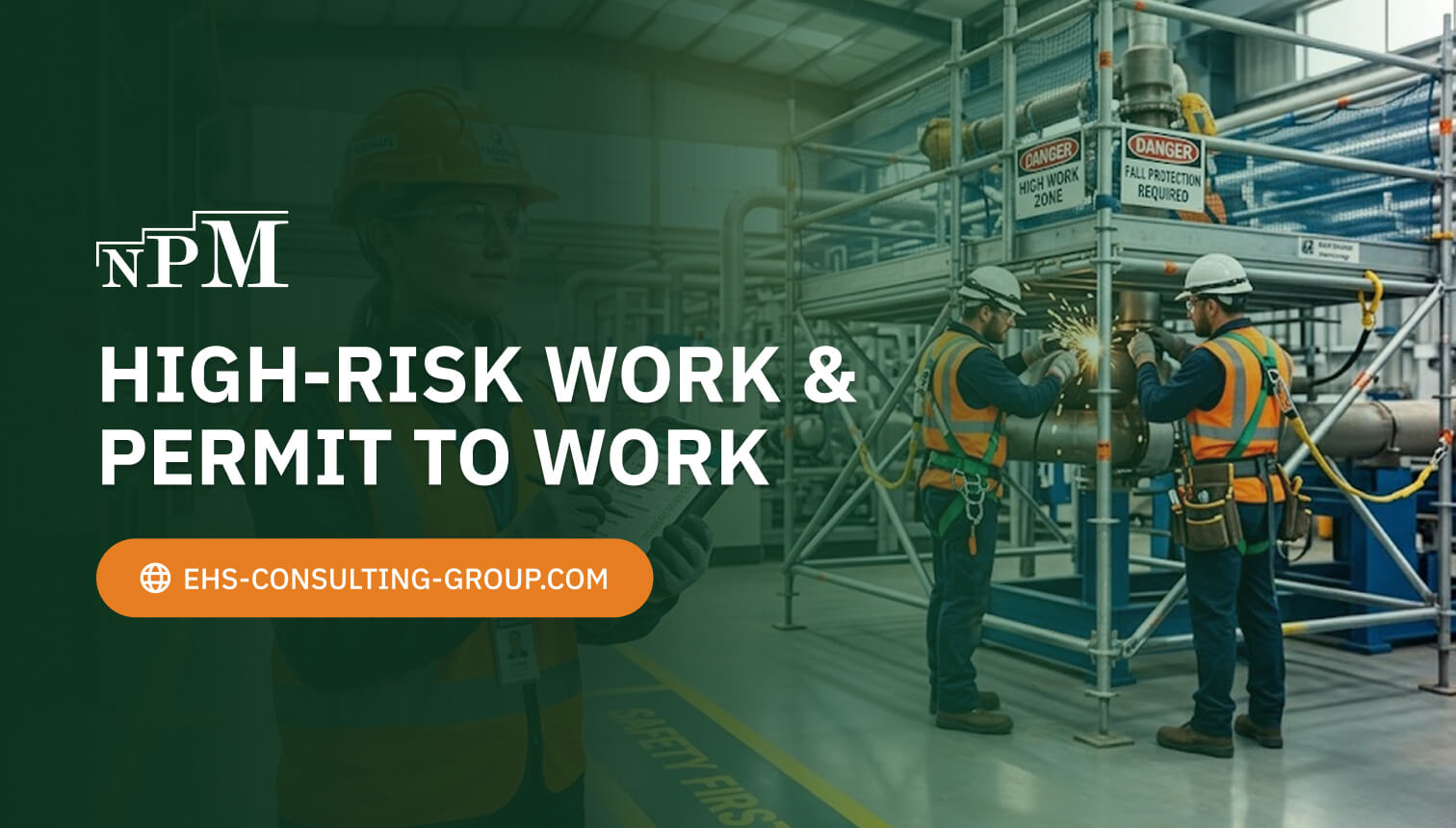
Clarifying who is accountable for working at height makes it easier to assign roles, maintain competence, and ensure controls are applied consistently. In UAE industrial operations, the subject touches multiple functions and external stakeholders:
- HSE leaders and site safety officers responsible for policy, risk assessments, permits to work, and incident investigation.
- Operations and maintenance teams executing tasks on platforms, pipe racks, conveyors, furnaces, distillation columns, turbines, and gantries.
- Construction managers, site engineers, and supervisors coordinating scaffolding, MEWPs, cranes, and formwork on high-rises and industrial builds.
- Facilities and asset integrity managers overseeing inspections of ladders, scaffolds, fixed access systems, and lifelines.
- Project controls and shutdown/turnaround coordinators managing concurrent tasks and scheduling to avoid interface risks.
- Contractor management, procurement, and commercial teams setting competency, equipment, and method statement requirements in contracts.
- Emergency response coordinators and first responders responsible for rescue plans, drills, and medical readiness for suspension trauma.
- Quality and audit teams integrating ISO 45001-aligned processes and verifying conformance to regulatory requirements and corporate standards.
These responsibilities typically intersect with external authorities such as Abu Dhabi’s OSH framework (historically OSHAD), Dubai Municipality, Civil Defence, MOHRE, and industry operators (e.g., ADNOC group companies), whose rules and approvals influence how height-related work is planned, controlled, and reviewed.
Why This Matters

Falls from height remain a leading cause of severe and fatal injuries worldwide and are a recurring risk profile in UAE industry—from fabric maintenance on offshore platforms to façade works on high-rises. The stakes are multidimensional:
- Safety and wellbeing: Preventing fatalities, life-changing injuries, and secondary harm from falling objects or rescue delays.
- Compliance: Aligning with UAE regulatory frameworks, client/operator specifications, and approvals from authorities such as Dubai Municipality and Civil Defence.
- Operational continuity: Avoiding shutdowns, project delays, and reputational damage triggered by incidents and stop-work orders.
- Liability and insurance: Demonstrating due diligence through documented risk assessments, competence, inspections, and control measures.
- Contractor governance: Ensuring third-party alignment with site rules, interface controls, and permit-to-work (PTW) conditions.
Understanding height control is not a box-ticking exercise; it is an integrated discipline. When risk assessments, method statements, PTW, equipment certification, and emergency preparedness align as one system, risk reduces, clarity increases, and workforce confidence strengthens. Conversely, gaps in planning, insecure anchorage, poor equipment conditions, or inadequate rescue planning can rapidly escalate even “routine” tasks into high-consequence events.
Key Points to Understand

It is helpful to translate rules into a practical model: define the work, choose the safest method, control the residual risk, verify the controls, and document what was done. The following components provide a structured view of how to approach height-related activities in UAE industrial operations.
What Counts as “Work at Height”
In industrial settings, work at height generally includes any activity where a person could fall a distance liable to cause injury. This extends to tasks performed:
- On elevated structures (scaffolds, platforms, structural steel, pipe racks, tanks, furnaces, boilers, silos, turbine decks).
- Using access equipment (ladders, mobile elevated work platforms/MEWPs, suspended access platforms, mast climbers).
- At ground level near edges, pits, or openings, where the fall is into a lower level.
- On fragile surfaces (roof sheeting, skylights) and temporary or partially completed structures.
This broad definition matters because it captures “hidden” height risks—such as floor openings on construction decks, conveyor maintenance over traffic aisles in logistics hubs, and valve access on elevated pipe runs in refineries.
The UAE Regulatory Context
UAE jurisdictions and operators set expectations that converge on the same principles: eliminate, prevent, or protect against falls using a risk-based approach. In practice, duty-holders consider:
- Local authority requirements in each Emirate (e.g., Dubai Municipality’s safety codes and guidance; Abu Dhabi’s OSH framework and Codes of Practice).
- Federal ministry expectations (e.g., MOHRE for employer duties and worker welfare).
- Client/operator requirements (e.g., ADNOC group HSE Guidelines; offshore safety requirements and PTW systems).
- International standards that inform good practice (ISO 45001 for OHSMS, EN/ANSI standards for equipment, and recognized best practice from bodies such as IOSH/IRATA for access methods where applicable).
The regulator’s priority is consistent: plan the work, use the safest method, ensure competence, certify equipment, supervise execution, and be ready for rescue.
The Hierarchy of Controls for Height
A hierarchy-based approach ensures that height risks are addressed at source:
- Eliminate the need to work at height (e.g., ground-level assembly, remote tools, permanent platforms installed during design per IEC/ISO design safety concepts).
- Prevent falls by using collective measures (e.g., engineered platforms, guardrails, scaffolds to recognized standards, edge protection, toe boards, debris netting).
- Use restraint systems to keep workers from reaching fall edges (travel restraint lines, rated anchor points).
- Use fall arrest as a last line of defense (full-body harness, shock-absorbing lanyards, self-retracting lifelines), paired with a prompt rescue plan.
Well-run sites check that project method statements reflect this hierarchy and are consistent with permit conditions, lifting plans, and simultaneous operations (SIMOPS).
Roles and Competence
Clear responsibility is foundational. Typical roles include:
- Appointed Person/Responsible Manager: Authorizes the method and resources for safe execution.
- Competent Person/Supervisor: Verifies scaffolding, MEWPs, and lifelines are suitable and inspected; oversees toolbox talks and point-of-work risk assessments.
- Scaffolders/Access Specialists: Qualified and certified to erect, modify, and dismantle scaffolding to recognized standards.
- Operators and Users: Trained and competent (e.g., MEWP operators, harness users), understanding anchor selection, fall factors, and equipment limits.
- Rescue Team: Practiced in site-specific rescue methods; familiar with suspension trauma risks and equipment.
Competence is not a one-time certificate; it combines training, experience, and ongoing verification—especially when site conditions or equipment change.
Safe System of Work: Risk, PTW, and Rescue
A robust safe system integrates several elements:
- Risk Assessment: Task-specific and location-specific; addresses fragile surfaces, weather, dropped objects, electrical hazards, and access/egress.
- Method Statement: Describes setup, sequencing, interfaces with other trades, and hardware specifications (e.g., anchor ratings, scaffold class).
- Permit to Work: Confirms controls, isolations, and barricading; aligns with hot work, lifting, or confined space permits where relevant.
- Pre-Job Briefing: Toolbox talk ensures shared understanding and last-minute risk checks.
- Rescue Plan: Defines prompt retrieval methods for arrest scenarios; assigns roles, equipment, and escalation routes.
Sites governed by ISO 45001 typically tie these elements together through documented procedures and internal audits, with periodic management review to test effectiveness.
Equipment and Inspection
Equipment selection and inspection frequency underpin reliability:
- Scaffolds: Erected/altered/dismantled by qualified personnel; tagged and inspected daily/weekly and after modifications or severe weather.
- MEWPs: Pre-use checks by operators and scheduled maintenance by competent technicians; wind-speed limits and ground bearing pressures respected.
- Harnesses and Lanyards: Pre-use visual checks; periodic detailed inspection by a competent person; traceability maintained.
- Anchors and Lifelines: Rated, located, and documented; temporary lifelines tensioned correctly; permanent systems inspected per manufacturer guidelines.
- Ladders: Industrial-rated, secured, and used only for short-duration, light tasks; alternatives preferred.
Documentation ensures traceability. Many organizations centralize certificates, pre-use checklists, and inspection records to keep audits efficient and prevent expired equipment circulating on site. In practice, HSE teams often use structured repositories or workflow tools—an approach supported by document control solutions such as CABINET NPM—to align approvals, validity dates, and version control.
Typical Requirements and Frequencies
While site-specific rules and manufacturer instructions prevail, the table below summarizes common expectations seen across UAE industrial projects and facilities. Always adapt to the controlling authority’s requirements and specific operator specifications.
| Item | Typical UAE Reference Context | Common Frequency/Trigger | Key Notes |
|---|---|---|---|
| Scaffold inspection/tag | Emirate safety codes; client/operator HSE rules | Before first use; after modification; after severe weather; weekly | Qualified inspector; tag at access point; load class/limits displayed |
| Harness and lanyard detailed inspection | Site procedures; manufacturer guidance | At defined intervals (e.g., 3–12 months) plus pre-use | Traceability label; retire if damaged or after a fall arrest event |
| MEWP pre-use check | Operator’s manual; site rules | Each shift or operator change | Wind limits respected; ground assessment and exclusion zones |
| Permanent lifeline inspection | Manufacturer standard; asset integrity plan | Per OEM recommendation (e.g., annual) and after impact | Competent inspector; signed record; user training required |
| Rescue drill | Emergency response plan | Planned drills; after changes to layout/equipment | Time-to-rescue assessed; equipment staged and maintained |
| PTW and method statement review | Site PTW system; operator requirements | Per task; revalidated with scope changes | Interface with hot work/lifting/confined space managed |
How This Works in Practice

Translating principles into field execution means anticipating constraints, interfaces, and human factors before the job starts. Consider a few recurring contexts across UAE industry:
In refineries and petrochemical plants, scaffold access for exchanger pull, valve replacement, or corrosion under insulation (CUI) remediation must integrate with process isolations, lifting plans, and hot work controls. Pre-job walkdowns confirm tie-off points, overhead obstructions, and potential dropped-object hazards over live areas. Scaffolding tags communicate status; toe boards, debris netting, and exclusion zones align with a dropped objects (DROPS) plan. Permit issuers check weather and simultaneous operations, while operators test MEWPs for ground conditions and wind limits near flare stacks or open areas.
On high-rise construction, façade installation and formwork cycles require synchronized sequencing so that edge protection, temporary platforms, and hoist operations do not create conflicting risks. Method statements define how materials move to height and how workers maintain three points of contact on ladders—if ladders are permitted at all for the task. With many subcontractors involved, a central permit office or digital PTW dashboard helps avoid overloading the same elevation with multiple teams.
In manufacturing and logistics facilities, maintenance at roof level frequently involves fragile surfaces and skylights. Work planners must identify permanent access routes, rated anchors, and the feasibility of mobile platforms inside racking aisles. A short-duration task on a ladder may be acceptable for a quick sensor reset, but a pump replacement above a mezzanine walkway demands collective protection or a MEWP. The difference is not trivial; it is embedded in the hierarchy of controls.
For power generation and offshore assets, height work interacts with mechanical isolation, turbine enclosures, helideck zones, and marine weather. Rescue planning becomes acute: if fall arrest is used inside a turbine hall or on a platform with restricted access, the rescue method must be feasible with available equipment and trained responders. Time-to-rescue is not a paperwork metric; it is a physiological imperative due to the risk of suspension trauma.
At the operational level, this all converges on four essential questions supervisors ask themselves before giving the go-ahead:
- Is the method the safest reasonably practicable option (elimination/collective protection before arrest)?
- Are the controls real and present (certificates, tags, barricades, anchors, weather checks)?
- Is the team competent and briefed (toolbox talk, rescue plan understood, interfaces resolved)?
- Can we verify and learn (inspections, supervision, incident learning, and document control)?
Benefits and Practical Use Cases

Decoding and applying height regulations as a system delivers benefits that extend beyond compliance. When the hierarchy of controls, competence, and verification become routine, organizations see tangible outcomes:
- Fewer incidents and near misses: Stronger edge protection, disciplined anchor selection, and routine pre-use checks cut fall exposures and dropped-object events.
- Improved schedule reliability: Planned access methods and early engineering of platforms reduce rework and unplanned stoppages.
- Clear contractor expectations: Prequalification for scaffolding and MEWP operators filters risk before mobilization.
- Regulatory confidence: During inspections by local authorities or audits by operators, well-documented systems demonstrate control and due diligence.
- Better cost control: Preventing incidents avoids direct and indirect costs, from medical and repair expenses to schedule penalties.
- Informed design choices: Lessons learned feed back into design-for-access improvements on new-builds and retrofits, reducing lifetime risk.
Example use cases illustrate how these benefits materialize on the ground. A petrochemical facility facing repeated delays for exchanger maintenance engineered permanent access platforms and tie-off points at problem locations, cutting scaffold mobilizations and hot work permit conflicts. A logistics hub adopted a centralized register for fall-protection equipment with scheduled inspections and lockout-of-service rules; nonconformities dropped and audit scores rose. A high-rise project re-sequenced façade installation to maintain continuous edge protection and single-interface work zones; productivity increased and dropped-object incidents decreased.
Best Practices and Points of Caution

Practical vigilance, not slogans, keeps teams safe at height. The following recommendations reflect recurrent lessons in UAE industrial operations:
- Plan from the top of the hierarchy: Ask first how to eliminate or substitute the height risk—remote tools, preassembly, or permanent access—before defaulting to harnesses.
- Engineer collective protection: Prioritize guardrails, toe boards, and debris netting; specify scaffold class and load limits; use exclusion zones below active workfaces.
- Treat anchors as engineered components: Rated to appropriate loads; avoid ad hoc hookups; verify structure adequacy, especially on temporary or aged steelwork.
- Control fall factors: Avoid anchoring at foot level with short lanyards where fall factors and swing potentials increase; use overhead anchors or SRLs where feasible.
- Respect weather and environment: Define wind thresholds for MEWPs and suspended platforms; monitor gusting conditions around tall structures and coastal sites.
- Manage fragile surfaces: Assume rooflights or older sheeting are non-loadbearing; use crawling boards, warning lines, and barriers to control approach distances.
- Limit ladders to suitable tasks: Short-duration, light-duty work only; maintain three points of contact; secure and position properly; step off to safe platforms when possible.
- Stage a real rescue: Preposition rescue kits; drill retrieval methods that fit the geometry of the task; time-to-rescue is critical for fall arrest scenarios.
- Integrate with other controls: Coordinate with lifting plans, hot work permits (e.g., to address ignition risks near edge protection), and electrical isolations.
- Supervise interfaces: Multiple contractors on the same elevation raise complexity—ensure one controlling supervisor and compatible work methods.
- Keep documentation live: Certificates, inspections, PTW, and toolbox talks must reflect the job as executed, not an earlier revision of the plan.
Ultimately, the difference between compliance on paper and control in the field is visible: correctly tagged scaffolds, documented pre-use checks, well-fitted harnesses, working communication, and a practiced rescue team ready within minutes.
Frequently Asked Questions About Work at Height Regulations
What activities are considered “work at height” in industrial settings?
Any task where a person could fall a distance liable to cause injury qualifies, including work on scaffolds, MEWPs, platforms, roofs, and structural steel; near open edges, floor openings, and shafts; or on fragile surfaces such as rooflights. It also covers activities at ground level where there is a risk of falling into a lower level, such as pits or service trenches.
Are harnesses always required for work at height?
No. The hierarchy of controls requires you to eliminate the need to work at height where possible, or use collective protection like guardrails and scaffolds. Harness-based fall restraint or arrest is used when higher-order controls are not reasonably practicable. If fall arrest is the chosen option, an effective rescue plan is mandatory.
How often should scaffolds be inspected and tagged?
Scaffolds must be inspected before first use, after any modification, after severe weather, and at defined intervals (commonly weekly) by a competent person. A visible tag at the access point communicates status and any restrictions. Frequency may vary with site rules and specific operator requirements.
What defines a “competent person” for height work?
Competence blends formal training, relevant experience, and the authority to apply knowledge to the conditions at hand. For scaffolding, MEWP operation, and fall protection inspection, roles require recognized certifications and demonstrable field experience. Site owners/operators often set minimum competency criteria in their HSE procedures.
Do we need a rescue plan if we use fall arrest?
Yes. A site-specific rescue plan is non-negotiable when using arrest systems. It must define the rescue method, equipment, roles, and communication, and the team should practice drills. Rapid recovery is essential due to the risk of suspension trauma; relying solely on public emergency services is not sufficient.
When is a ladder acceptable for access or work?
Ladders are acceptable only for short-duration, low-risk tasks where three points of contact can be maintained and the ladder can be secured. For sustained or heavy work, or where stability is uncertain, use collective protection (platforms, scaffolds) or MEWPs. Many sites prohibit ladder use for primary work activities.
How do we control dropped-object risks at height?
Use toe boards, debris netting, tool lanyards, and exclusion zones; ensure material handling is planned (e.g., lifting bags, hoists); and maintain housekeeping on platforms. Supervisors should consider secondary retention for fixtures and verify that exclusion zones are enforced whenever overhead work is active.
What documentation should be available for audits?
Auditors typically look for risk assessments, method statements, PTW records, scaffolding tags and inspection logs, MEWP pre-use checks, fall protection equipment registers and inspections, training/competency records, and evidence of rescue drills. Documentation must be current and traceable to the actual work conducted.
Does ISO 45001 certification change height requirements?
ISO 45001 does not prescribe task-specific height rules, but it strengthens the management system that governs them: leadership, risk assessment, operational control, competence, communication, and performance evaluation. Sites with mature OHSMS typically achieve more consistent control of height risks.
What about weather thresholds for MEWPs and suspended platforms?
Follow the manufacturer’s limits and site rules regarding maximum wind speeds and gust conditions, and consider building-induced wind effects. If conditions approach limits or gusting is observed, stop and reassess. Weather changes can be rapid around tall structures and coastal areas, so continuous monitoring is essential.
Conclusion
Putting “Work At Height Regulations Explained” into action requires turning principles into repeatable habits: choose the safest method first, engineer collective protection, verify equipment and anchors, brief teams, and practice prompt rescue. Across refineries, high-rises, logistics hubs, and power plants, the same fundamentals apply—plan with the hierarchy in mind, manage interfaces through permits and supervision, and keep documentation traceable. This approach not only meets regulatory expectations from authorities and operators but also protects your people and your schedule. If you are aligning site procedures, training matrices, and contractor governance with these requirements, drawing on structured, field-tested guidance can accelerate consistency and control.
To go further on this topic, NPM’s broader Work At Height Training UAE page covers this in more depth.
Our References
NPM’s experience with height risk control spans complex industrial settings worldwide, from hydrocarbons processing and large civil builds to discrete manufacturing, logistics terminals, and power generation assets. Our teams have supported the implementation of robust height control frameworks that blend regulatory expectations, operator specifications, and recognized standards into practical procedures that people can execute on the ground. In one context, that may mean structuring a consistent scaffolding regime with clear tagging and inspection governance across multiple contractors. In another, it involves engineering access platforms during design to eliminate repeated temporary works, or establishing a disciplined program for fall-protection equipment traceability and periodic inspection.
Beyond procedure writing, NPM’s track record includes helping organizations close the loop between planning and verification. That encompasses risk assessments that genuinely reflect site conditions, pre-job walkdowns that validate anchors and exclusion zones, toolbox talks that cover dropped-object controls, and rescue drills measured against realistic time-to-rescue expectations. We also place emphasis on learning: incident reviews and near-miss analyses that feed directly back into improved method statements and design-for-access choices. Whether your operations involve simultaneous trades on a high-rise façade, maintenance on elevated pipe racks in a petrochemical complex, or turbine deck works during outages, NPM has supported comparable challenges and helped clients embed solutions that endure beyond a single project cycle. If you want to understand how these approaches performed in practice, our portfolio offers concrete examples of the outcomes achieved, the controls adopted, and the cultural improvements realized across multidisciplinary teams.
For more information about our references, visit Our References.
Speak with NPM
If you have questions about applying height control principles to your facility, we are happy to discuss practical approaches, common pitfalls, and ways to integrate requirements into your existing management system. Whether you are refining procedures, aligning contractor expectations, or planning complex shutdown activities, an informed conversation can help clarify next steps. For any further questions or to speak with our team, Contact Us.