
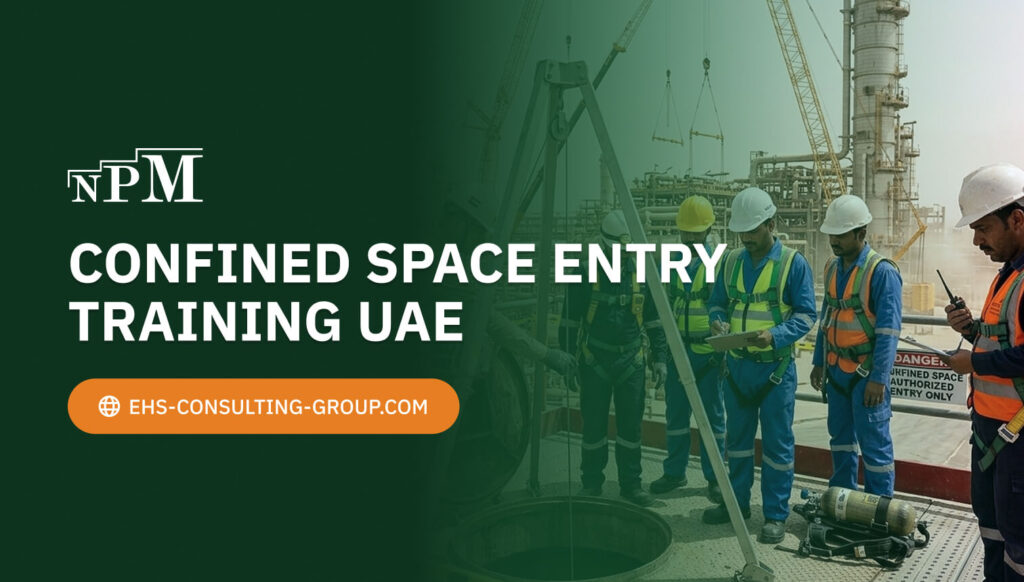
“Confined Space Permit Explained” is more than a headline—it is the backbone of how high-risk industries manage entry into tanks, pits, vessels, and other confined spaces without compromising people, assets, or the environment. In the UAE, where oil and gas production, petrochemical processing, power generation, manufacturing, logistics, and major construction projects run continuously, understanding how a permit-to-work (PTW) specifically governs confined space entry is essential to maintaining safe operations and staying compliant with local and international requirements. This article unpacks the permit’s purpose, its required content, how it connects with isolation and gas testing, and how it should be applied in real worksites to control life-threatening hazards.
Who Does This Affect?

While a confined space permit is signed and issued to authorize a specific task, it affects an entire chain of people and systems. At a minimum, the following roles, teams, and facility types have direct responsibilities or exposure:
- HSE managers, plant managers, and operations supervisors accountable for safe work authorization and oversight under corporate PTW procedures aligned to ISO 45001 and ADNOC HSE expectations.
- Maintenance planners, turnaround/shutdown coordinators, and project engineers who schedule tasks inside vessels, columns, boilers, excavations, and culverts—often under tight time windows.
- Designated Entry Supervisors, Gas Testers/Authorised Gas Testers, Standby Attendants (hole watch), and Entrants (craft technicians, inspectors, welders, cleaners) who enact the permit’s controls.
- Contractor HSE leads, permit applicants, and subcontractor teams working within ADNOC, Civil Defence, OSHAD (Abu Dhabi OHS framework), Dubai Municipality, and MOHRE regulatory expectations.
- Industrial sites with frequent entries: oil refineries, gas plants, offshore platforms, storage terminals, desalination plants, power stations (HRSG/boilers), manufacturing facilities (mixing vessels), logistics hubs (tank containers, freight holds), and complex construction works (manholes, shafts, tunnels).
Because permit-required confined spaces can change day-to-day based on atmospheric or process conditions, the subject concerns both the people authorizing work and those executing it on the ground. It also reaches into supporting systems—asset isolation (LOTO), ventilation, emergency response and rescue, and contractor management—making cross-functional clarity non-negotiable.
Why It Matters

Confined spaces kill when hazards are underestimated or controls are assumed rather than verified. Across our industry, incident investigations point to the same failure modes: insufficient isolation of energy sources, inadequate purging, missing or misused gas monitors, poor ventilation, non-existent or impractical rescue plans, and breaks in communication between shifts. The permit is a forcing function that organizes these controls, documents them clearly, verifies their status, and assigns accountability—before anyone breaks the plane of entry.
From a compliance standpoint, UAE operators align to a mosaic of expectations: OSHAD requirements in Abu Dhabi, Dubai Municipality Codes of Construction Safety and health/safety rules on sites, Civil Defence approvals for hot work and emergency response integration, MOHRE labor safety provisions, and oil and gas operator-specific systems (for example, ADNOC PTW, HSE rules, and contractor management protocols). Internationally recognized guidance such as ISO 45001 for OHS management, ISO 14001 for environmental controls where purging and venting are involved, NFPA guidance (including NFPA 350 for safe entry and cleaning of tanks and vessels), and OSHA 29 CFR 1910.146 concepts are often referenced or reflected in local procedures. Understanding the permit in this context is not just best practice; it is how organizations demonstrate due diligence and ALARP (as low as reasonably practicable) decision-making.
Operationally, the permit links risk analysis methods—HAZID, Bowtie, LOPA (for escalation potential), QRA inputs—to task-level control verification. For example, a risk register might flag asphyxiation and toxic exposure as credible scenarios in a crude tank; the confined space permit then operationalizes the barriers: isolation plans, inerting or purging strategies, continuous gas monitoring ranges and alarm setpoints, and emergency retrieval equipment on standby. When used correctly, the permit is both a legal record and an operational map for safe, efficient execution.
Key Points to Understand

What qualifies as a confined space?
A confined space is an area that: (1) is large enough for a worker to enter and perform tasks; (2) has limited or restricted means for entry or exit; and (3) is not designed for continuous occupancy. Typical examples in the UAE industrial context include process vessels, columns, drums, exchangers, boilers, sewage or stormwater manholes, valve pits, utility tunnels, culverts, ship tanks, cargo containers, and holds. Even excavations and trenches can meet the definition if they pose restricted egress and hazard conditions.
Permit-required vs. non-permit spaces
In practice, most industrial confined spaces are treated as permit-required because they present actual or potential serious hazards—oxygen deficiency or enrichment, flammable atmospheres, toxic gases (H2S, CO), mechanical agitation, engulfment, heat stress, reactive residues, or the possibility of energy reintroduction. When engineering controls and elimination measures reduce risk to a point where hazards are not present and cannot reasonably develop, organizations may classify a space as non-permit for very specific, controlled scenarios. However, given dynamic conditions (SIMOPS, environmental heat, adjacent hot work), conservative classification is common and prudent.
Hazards the permit must address
- Atmospheric: oxygen deficiency/enrichment, flammability (%LEL), toxicity (e.g., H2S, CO, solvent vapors), and displaced air due to inerting.
- Energy and movement: mechanical, hydraulic, pneumatic, electrical, thermal, and process flow; agitation/rotation; gravity (falling objects or collapse).
- Engulfment and entrapment: loose solids, sludge, water ingress, sand inflow (excavations), and internal configurations creating entrapment.
- Environmental and physiological: heat stress, humidity, noise, dusts, and physical strain due to PPE/respiratory protection.
- Interface hazards: hot work inside the space, nearby operations (SIMOPS), vehicle movement, and emergency egress constraints.
Roles and responsibilities defined by the permit
Clarity on responsibility is not administrative—it is a control barrier. Effective permits typically document:
- Entry Supervisor: ensures all controls are in place, verifies isolation and gas test results, authorizes entry, and suspends/cancels if conditions change.
- Entrants: perform the task, maintain communication, stop and exit upon alarm or adverse change, and follow PPE/respiratory requirements.
- Attendant (Hole Watch): remains at the entry point, controls access, maintains headcount, monitors conditions and communications, and triggers rescue.
- Authorised Gas Tester: performs pre-entry and continuous monitoring; records instrument type, calibration date, and results against defined acceptance criteria.
- Isolation Authority: executes and confirms LOTO/line break, blind/flange installation, double block and bleed, and zero energy verification.
What a robust confined space permit contains
While company formats vary, the essentials are consistent across UAE operators and international guidance. The table below organizes the typical elements and why they matter.
| Permit Element | Purpose | UAE-Relevant Notes |
|---|---|---|
| Space Identification & Task Description | Uniquely identifies the space and describes the work (e.g., tank cleaning, internal inspection, welding). | Aligns with plant tagging and PTW numbering; supports Civil Defence and site emergency teams in case of response. |
| Hazard Assessment | Documents atmospheric, energy, engulfment, heat, and SIMOPS hazards with references to prior HAZID/bowtie insights. | Integrates ADNOC HSE expectations and OSHAD risk assessment methods; recognizes H2S prevalence in oil & gas. |
| Isolation & Energy Control | Specifies LOTO points, blinds/spades, D&B, drain/vent, depressurization, and zero-energy verification. | Must meet company PTW and Dubai Municipality/Civil Defence requirements for hot work and energy safety. |
| Cleaning, Purging & Ventilation | Sets methods for removing residues, purging with air or inert gas, and providing forced ventilation with air changes. | Considers ISO 14001/environmental controls for venting; addresses regional heat/humidity constraints. |
| Atmospheric Testing | Defines gases to test, instruments, calibration/bump test status, frequency, alarm setpoints, and acceptance criteria. | Common tests: O2, %LEL, H2S, CO; offshore may add benzene or VOCs. Continuous monitoring required when hot work or residual risk exists. |
| PPE & Respiratory Protection | Specifies minimum PPE and triggers for APR/SAR/SCBA based on gas data and work type. | Heat stress controls are critical; plan hydration, work-rest cycles, and cooling strategies. |
| Communication & Rescue | Outlines constant communication method, retrieval equipment, rescue team readiness, and route to medical aid. | Requires coordination with site emergency response; may notify Civil Defence for specific works or hot work permits. |
| Authorization, Validity, & Shift Handover | Signature blocks, time limits, suspension criteria, and handover steps when conditions or crews change. | Aligns with 24/7 operations; emphasizes revalidation after breaks, gas reading expiration, or SIMOPS changes. |
Document control and traceability
Permits are legal and operational records; traceability matters for audits (internal, regulator, or operator), incident investigations, and continuous improvement under ISO 45001. Many organizations maintain digitized PTW systems or structured document repositories to ensure version control, retention, and accessibility for frontline supervisors. A structured approach to storing and retrieving safety-critical documents can be supported by tools like CABINET NPM, helping teams find the right, current template and record at the moment it’s needed.
How it links with broader safety systems
A confined space permit does not stand alone. It links to the site’s PTW hierarchy (cold work, hot work, electrical, excavation), hazard studies (HAZOP for process units, HAZID for projects), functional safety for automated safeguards (IEC 61511 in process industries), and emergency response planning with drills. For example, a LOPA might identify human and engineered layers guarding against toxic exposure; the permit must then confirm the layers relevant to the task are active and monitored, while recognizing any layers intentionally bypassed (e.g., opening a vessel removes its primary containment).
How This Works in Practice

With the essentials established, the challenge is applying them on a live site without slowing operations or missing critical details. The sequence below reflects how effective teams in UAE facilities approach confined space authorization.
- Plan the job using work packs that include drawings, P&IDs, isolation lists, and MSDS/SDS for residues; engaging operations, maintenance, and HSE early.
- Perform task-specific risk assessment referencing prior HAZID or bowties; identify atmospheric, mechanical, and SIMOPS interactions.
- Confirm isolation with LOTO, blinds/spades, and zero energy tests; if inerted, design a purging and re-oxygenation plan with oxygen and %LEL criteria.
- Clean, purge, and ventilate; consider flammable/toxic desorption and ensure sufficient air changes per hour; validate extraction points don’t recirculate.
- Conduct pre-entry gas testing at multiple levels and points inside the space; record instrument serial numbers and calibration validity; determine if continuous monitoring is required.
- Prepare the rescue plan, equipment (tripods, winches, retrieval lines), and team; verify competency and practice access routes.
- Brief the crew in a pre-job talk; verify understanding across mixed-language teams; check PPE and respiratory protection readiness.
- Authorize the permit; post it at the entry; control access via the attendant; monitor for change and suspend if conditions drift.
- Manage shift handovers; retest atmosphere if re-entry occurs; document any deviations or alarms; update the permit log.
- Close, cancel, and archive the permit once work is complete; capture learnings for improvement in the PTW system.
In refineries and petrochemical plants, this workflow often runs in parallel with turnaround schedules. Boiler entries in power generation need careful thermal stabilization and steam isolation. Sewer or wet well entries in utilities require water level control and biological hazard planning. Tunneling and deep excavations in construction expose crews to oxygen-poor environments and potential gas ingress; atmospheric testing plans must be tailored accordingly.
Benefits and Practical Use Cases

Applying a disciplined permit approach produces tangible outcomes that reach beyond compliance. Because the permit makes invisible hazards visible—and accountable—it reduces the chance of catastrophic failure while enabling predictable work execution.
- Lower incident potential: Verified isolation and gas testing close common fatality pathways: asphyxiation, toxic exposure, explosions, and engulfment.
- Regulatory confidence: Documented authorizations demonstrate alignment with OSHAD, Dubai Municipality, Civil Defence, MOHRE, and operator standards.
- Operational reliability: Fewer stoppages from alarms or near misses because conditions are controlled and continuously monitored where needed.
- Turnaround efficiency: Clear checklists and responsibilities reduce rework and delays, critical in time-compressed shutdown windows.
- Contractor integration: Consistent requirements for mixed crews ensure a single standard, minimizing misinterpretation across languages and companies.
Consider these real-world contexts:
- Crude storage tank cleaning: Multiple entries over days require a validated ventilation rate, continuous %LEL monitoring, hot work integration, and a rescue plan that works if the manway becomes obstructed.
- Amine contactor inspection: Toxic amine residues and H2S potential demand strict decontamination, specialized testing, and respiratory protection triggers.
- HRSG/boiler internal works: High-temperature history and residual steam/condensate risk call for meticulous isolation, cool-down verification, and falls protection within tight manways.
- Deep manhole inspections during infrastructure works: Risk of gas pockets from industrial effluents or decomposition necessitates forced ventilation and standby rescue with retrieval lines.
- Ship tank entries at a port terminal: Coordination with terminal control, vessel crew, and port safety clarifies ownership of alarms and rescue triggers, especially with changing shipboard atmospheres.
Best Practices and Points of Caution

Translating the “what” into effective “how” is where strong systems separate themselves. The following practices reflect hard-won lessons from high-hazard sectors.
- Define clear acceptance criteria for gas readings and retest intervals; re-validate after any pause, break, or process change. Treat readings as perishable.
- Continuously monitor when hot work, cleaning chemicals, or variable off-gassing are present; do not rely solely on pre-entry tests.
- Ventilate from clean to dirty air; ensure make-up air is uncontaminated. Validate extraction doesn’t pull fumes across entrants’ breathing zones.
- Calibrate and bump-test gas monitors; record serial numbers and calibration dates on the permit. Train crews not to clip monitors to harnesses where readings may lag.
- Engineer isolation as if controls will fail: blind/spade where feasible rather than relying on valves; drain and depressurize; verify zero energy.
- Integrate rescue early. A beautiful permit with an unworkable rescue plan is a trap; practice access and retrieval with real equipment.
- Manage SIMOPS through a control room or PTW coordinator; stop nearby work that could affect atmospheres (solvent use, engine exhausts, hot work).
- Plan for heat. In the Gulf climate, heat stress inside PPE rises quickly; set work-rest cycles, hydration, and cooling strategies into the permit conditions.
- Control communication: radios intrinsically safe where flammable potential exists; test signal inside the space; define loss-of-comms actions.
- Audit permits regularly; look for recurring weak points (e.g., vague hazard descriptions, missing instrument details) and correct the template.
A few points of caution:
- Do not normalize deviation because “we know this vessel.” Conditions change—residues, temperature, upstream processes, or weather can alter risk.
- Watch language barriers and complacency with experienced crews. Briefings should include confirmation of understanding, not just attendance.
- Avoid stacked permits that obscure responsibility. If multiple tasks occur inside one space, centralize control to a single Entry Supervisor.
- When inerting with nitrogen, treat oxygen deficiency as the primary hazard even after purging; verify oxygen levels stabilize before entry.
Frequently Asked Questions About Confined Space Permits
Is every tank, pit, or vessel automatically a permit-required confined space?
No. A confined space becomes permit-required when it contains or has the potential to develop serious hazards (atmospheric, engulfment, energy, etc.). In practice within high-hazard UAE industries, conservative classification is typical because conditions can change quickly, and the consequences are severe.
How often should gas testing be performed once entrants are inside?
At minimum, test pre-entry and at defined intervals that match the hazard profile and company procedures. Continuous monitoring is strongly recommended for hot work, potential off-gassing, H2S risk, or changing conditions, with alarms set to company acceptance criteria.
What’s the difference between suspending and cancelling a permit?
Suspension pauses a permit due to changing conditions (e.g., alarm, process upset, or a break in work). Re-entry requires verifying controls and retesting. Cancellation permanently closes the permit once the work is complete or the authorization is no longer valid; a new permit is required to restart.
Can the Entry Supervisor also act as the Attendant?
This is not recommended. The Attendant must maintain constant focus at the entry point without distraction. Combining roles can degrade vigilance and response time, especially during SIMOPS or busy turnarounds.
How do we manage hot work inside a confined space?
Integrate hot work controls into the confined space permit or run them as nested/linked permits under PTW governance. Increase ventilation, demand continuous gas monitoring, manage ignition sources, control fumes, and align with Civil Defence and site-specific hot work authorization rules.
When should SCBA be required?
When there is a credible risk that air-purifying respirators (APR) will be ineffective—unknown or highly variable atmospheres, oxygen deficiency, or possible sudden changes—supply-air or SCBA is warranted. The respiratory protection selection must reflect measured hazards, potential for escalation, and rescue feasibility.
What records must be retained from confined space permits?
Keep the approved permit, gas test logs (instrument details, times, readings), isolation lists and verifications, rescue readiness checks, training/competency records for involved roles, and any deviations or incident/near miss notes. Retention times follow company policy and applicable UAE regulatory expectations.
How do we address heat stress inside confined spaces in the Gulf climate?
Plan work during cooler windows where feasible, implement forced ventilation, set work-rest cycles and hydration rules, monitor workers for signs of heat strain, and choose lighter PPE where protection allows. Include these controls on the permit as conditions for entry.
What if contractors arrive with a different PTW system?
Host facilities’ PTW and confined space rules typically take precedence; align contractor procedures to the host’s system through induction and pre-job coordination. If an operator (e.g., ADNOC company) imposes a corporate PTW, all contractors must comply.
Can a digital system replace paper permits?
Yes, provided it preserves all required elements, signatures/approvals, and traceability. Digital systems can improve version control, analytics, and audit readiness—so long as the process on the ground remains disciplined and verifiable.
Conclusion: Bringing the Permit to Life
Understanding the mechanics behind a confined space permit—the hazards it targets, the roles it clarifies, and the verification it demands—turns a form into a living safety control. Earlier, we examined how atmospheric testing, isolation, ventilation, and rescue planning interlock; when managed as one system, they dramatically reduce the chance of catastrophic events while supporting timely maintenance and project delivery. For UAE facilities navigating OSHAD, Dubai Municipality, Civil Defence, MOHRE, and operator-specific requirements, a robust permit record also provides defensible evidence of control, especially when integrated with PTW, HAZID, and emergency response plans.
The difference between a nominal permit and an effective one is the discipline to apply it without shortcuts—calibrated monitors recorded on the form, isolation proven rather than assumed, ventilation validated, communication tested, and rescue plans rehearsed. Leaders who insist on these fundamentals—and audit them—build cultures where work is both safe and predictable.
To go further on this topic, NPM’s broader Confined Space Entry Training UAE page covers this in more depth.
Explore NPM’s References
NPM’s track record in high-hazard industries is built on real-world delivery where permits, procedures, and people have to work together under pressure. Our references span oil and gas upstream and downstream assets, petrochemical complexes, high-specification construction programs, utilities, power generation facilities, and logistics hubs handling complex cargo. Across these environments, we have helped leadership teams strengthen permit-to-work governance, align confined space practices with international standards like ISO 45001 and NFPA guidance, and integrate atmospheric testing, isolation, and rescue preparedness into operations that run around the clock. The value of this experience is not limited to one country or a single regulatory model; it comes from solving problems where hazards, human behavior, and schedules intersect worldwide.
When you explore our references, you will see a consistent thread: we focus on the interfaces that matter—between operations and maintenance, between contractors and host facility rules, and between formal documents and what actually occurs at the manway. That is where permits either succeed or fail, and where incident prevention is truly earned. You will also find examples of how NPM supports organizations in harmonizing corporate standards with site-specific realities, using audits, targeted coaching, and practical tools that make compliance verifiable and repeatable. Whether the need is to tighten the essentials (gas testing quality, isolation verification, rescue readiness) or to uplift entire PTW systems, our references illustrate outcomes that endure beyond a single turnaround or project phase.
For more information about our references, visit Our References.
Speak With NPM
If you have questions about how confined space permitting applies to your specific operations, our team is available to discuss practical approaches that fit your site’s risks and workflows. We welcome conversations with HSE leaders, plant managers, and supervisors who want to stress-test or improve their current controls. For any further questions or to speak with our team, Contact Us.