
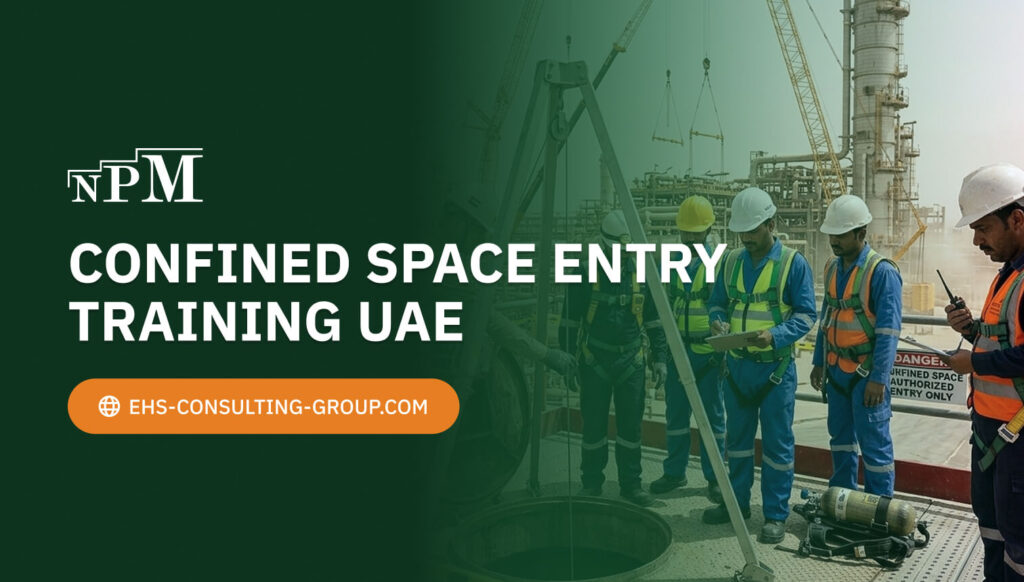
Confined Space Entry Procedures are one of those topics that experienced HSE leaders revisit again and again because the risks are unforgiving, the regulatory landscape in the UAE is exacting, and the operational realities across refineries, terminals, manufacturing plants, and construction sites can shift day to day. At its core, the discipline is about planning, permitting, and executing work in spaces not designed for continuous occupancy, where the atmosphere, energy sources, or configuration could harm workers within minutes. This article unpacks the technical and managerial dimensions that matter most to HSE managers, permit authorities, supervisors, and rescue coordinators who want a deeply practical, standards-aligned approach that stands up to audits and, more importantly, keeps people safe.
Unlike many safety topics that can be handled by “common sense,” confined space work resists shortcuts. Oxygen deficiency, H2S spikes in upstream facilities, flammable vapors in petrochemical vessels, and engulfment hazards in silos and sewers each require targeted controls. In the UAE context, organizations operate under frameworks such as OSHAD (Abu Dhabi Occupational Safety & Health System Framework), expectations from Dubai Municipality and Civil Defence, sector-specific requirements like ADNOC Codes of Practice, and management system standards such as ISO 45001. Bringing these threads together into a coherent, repeatable system is where organizations often succeed or stumble.
What follows is a practitioner’s view of how to define, implement, and continuously improve entry protocols, with examples from shutdowns, tank cleaning, utilities maintenance, and civil works. The focus is practical: how to assign roles, integrate gas testing with permit-to-work (PTW), choose ventilation strategies, prepare for rescue, and manage contractors without diluting standards. We also consider how methodologies like HAZID, HAZOP, Bowtie, and LOPA can strengthen prevention and recovery measures that sit behind every entry decision.
Who This Affects

While this subject is most familiar to HSE departments, the circle of people affected is wider. Clear roles and interfaces are essential across the following functions and contexts:
- HSE Managers and Advisors responsible for policy, PTW governance, and competency standards
- Operations and Maintenance Supervisors directing work on vessels, columns, pits, and sumps
- Permit Issuers, Area Authorities, and Entry Supervisors who authorize and control entry
- Standby Attendants and Rescue Teams (in-house or third-party), including Fire & Emergency Response
- Contractors and Subcontractors engaged in cleaning, inspection, welding, coating, NDT, and shutdown tasks
- Instrument Technicians and Electricians performing isolation/LOTO and atmosphere testing
- Turnaround and Construction Managers balancing simultaneous operations (SIMOPS)
- Compliance and Audit Teams assessing conformance with OSHAD, ADNOC, ISO 45001, and client standards
Across industries in the UAE, the facility types are diverse: offshore platforms, onshore production stations, refineries and petrochemical plants, storage terminals, power generation boilers, desalination facilities, wastewater networks, high-rise construction sites with utility vaults, and logistics hubs with tank containers and ISO tanks. Each brings unique atmospheric, mechanical, and access hazards, but the governance framework for safe entry can be consistent when built on strong definitions and clear accountability.
Why This Matters

The stakes are high. Historically, a disproportionate number of industrial fatalities occur in or around enclosed spaces due to asphyxiation, toxic exposure, explosions, or unsuccessful rescues. Unlike many other hazards, small lapses here can cascade quickly: a missed isolation, a non-intrinsically safe lamp, or an incorrectly calibrated gas detector can nullify multiple barriers at once. Additionally, “failed rescue” is a recurring theme, where well-intentioned coworkers enter without proper equipment, compounding casualties.
From a compliance perspective, ADNOC’s HSE requirements, OSHAD SF, and Dubai Municipality/Civil Defence expectations consistently emphasize systematic identification of confined spaces, robust PTW, documented risk assessments, competency, and emergency preparedness. External standards and guidance (e.g., NFPA 350, IMO guidance for marine spaces) further clarify good practice. ISO 45001 requires organizations to embed these controls into the management system with documented responsibilities, training, and continual improvement. For major hazard facilities, the link to process safety is direct: HAZOP, Bowtie, and LOPA analyses often identify residual risks that must be addressed through specific entry controls and proof testing of safeguards.
Operationally, a strong program reduces downtime and variability. When procedures are clear and repeated accurately, entries during shutdowns, emergency maintenance, or turnarounds proceed with fewer delays, fewer near misses, and cleaner audit trails. Conversely, weak governance exposes organizations to regulatory action, client penalties, or lost contracts—especially under ADNOC frameworks and EPC project requirements that scrutinize contractor performance.
Foundations of Confined Space Entry Procedures

Before selecting controls, it helps to anchor on consistent definitions and the control architecture that flows from them. In practice, the following elements form the backbone of a resilient system:
Definitions and Classification
Most organizations in the UAE align their definitions with OSHAD and international guidance. A confined space typically has limited openings for entry/exit, is not designed for continuous occupancy, and may present hazardous atmospheres, engulfment, or other serious hazards. Many organizations distinguish between “permit-required” spaces (where hazards are present or likely) and lower-risk spaces controlled through standard operating procedures. This classification drives the level of authorization, testing frequency, and rescue capability required.
Hazards Profile
Atmospheric risks (oxygen deficiency/enrichment, toxic gases like H2S and CO, and flammable vapors) often take center stage, but mechanical, electrical, thermal, and physical hazards are equally important. Engulfment (grain, powders, liquids), entrapment due to internal configurations, and process residues are common in petrochemical and manufacturing contexts. Heat stress and humidity are particularly relevant to the Gulf climate, and SIMOPS (e.g., hot work nearby) can add layers of risk that must be reflected in permits and gas testing plans.
Permit-to-Work and Roles
PTW underpins authorization and control. Key roles include the Permit Issuer/Area Authority, Entry Supervisor, Entrants, and the Attendant. Responsibilities must be unambiguous: the Entry Supervisor validates controls and stops the job if conditions change; the Attendant remains at the entry point, manages headcount and communications, and triggers rescue; the Permit Issuer ensures pre-conditions and isolations are in place and documented.
Testing, Monitoring, and Acceptance Criteria
Atmospheric testing should be performed by competent personnel using calibrated, bump-tested multi-gas detectors. Sampling should occur at top, middle, and bottom of spaces, recognizing stratification of gases and vapors. Typical acceptance criteria used in many organizations include oxygen between 19.5% and 23.5%, combustible gases below a conservative fraction of the lower explosive limit (for example, <10% LEL for entry and <1% LEL for hot work in many frameworks), and toxics below occupational exposure limits. Continuous or periodic monitoring is necessary where conditions could change (e.g., when ventilation effectiveness might vary or when adjacent processes are active).
Isolation and Energy Control
Mechanical blinds or spades, double block and bleed, locked closed valves, electrical isolation with LOTO, and control of pneumatic/hydraulic sources are standard techniques. Isolation design should reflect process hazards evaluated through HAZOP/LOPA, including backflow and pressure buildup scenarios. Verification (trying, not just tagging) is essential—operations should confirm zero energy and zero pressure where feasible.
Ventilation and Purging
Forced-air ventilation is the most common approach, designed to achieve multiple air changes per hour. For residual hydrocarbons, vapor scrubbers or local exhaust ventilation may be needed. Where nitrogen purging is used for process reasons, inert entry is a specialized case requiring supplied air (e.g., airline respirators or SCBA), strict line-of-sight and communications, and enhanced rescue planning. Heat stress management—work/rest cycles, hydration, and cooled air supply—must also be integrated.
Rescue and Emergency Preparedness
Rescue plans should be task-specific, practiced, and achievable with the available resources. Non-entry rescue (tripods, winches, retrieval lines where feasible) is preferable, but many industrial spaces demand entry-capable teams with proper SCBA, lighting, and communications. Integration with site Fire & Rescue and alignment with Civil Defence expectations are critical. Drill frequency and after-action reviews feed continuous improvement.
Documentation and Recordkeeping
Document control—permits, gas test sheets, isolation certificates, rescue plans, equipment calibration certificates, and close-out reports—needs to be centralized and auditable. Many organizations adopt digital PTW and document management systems to ensure traceability, notifications, and analytics on leading indicators. Systems such as CABINET NPM are often referenced internally to standardize controlled documents, templates, and versioning across multi-site operations.
Contractor Management and Competence
Where contractors conduct entries, host employers remain accountable for minimum standards. Prequalification should assess their confined space program, detector maintenance, training, and rescue capabilities. Onsite, a single PTW process and common language reduce ambiguity; site-specific inductions should address local hazards (e.g., H2S in upstream facilities, LNG vapors in terminals, or corrosive residues in desalination brine tanks). Competency programs should mirror OSHAD and ISO 45001 expectations, with role-based training for supervisors, testers, attendants, entrants, and rescuers.
| Primary Hazard | Typical Indicators | Example Controls |
|---|---|---|
| Oxygen deficiency/enrichment | O2 <19.5% or >23.5%; inert gas history | Pre-entry and continuous monitoring; ventilation; supplied air for inert entries |
| Toxic gases (H2S, CO, NH3) | Process history; odor unreliable; detector alarms | Gas testing; ventilation; respiratory protection if above exposure limits; process isolation |
| Flammable atmosphere | LEL readings, product residues | Gas-free verification; hot-work restrictions; intrinsically safe equipment; grounding/bonding |
| Engulfment/entrapment | Bulk solids, liquids, internal constrictions | Lockout and drain/clean; barriers and harnesses; non-entry retrieval where possible |
| Mechanical/electrical energy | Rotating kit, agitators, live conductors | LOTO; mechanical isolation (blinds); test for zero energy; verify residual energy removal |
| Heat stress | WBGT index; high humidity | Work/rest cycles; cooled ventilation; hydration; medical oversight |
How This Works in Practice

Building on the foundations above, day-to-day execution depends on crisp workflows that connect planning, authorization, monitoring, and learning. A typical sequence in a petrochemical tank cleaning or a power plant boiler inspection looks like this:
- Pre-job planning: Confirm the space is listed in the confined space register; review process history, previous hazards, and HAZOP notes; identify SIMOPS nearby.
- Isolation design and verification: Prepare isolation certificates; apply blinds/spades, lock and tag valves, isolate electrical drives; verify zero energy/pressure where practicable.
- Risk assessment: Document hazards and controls with input from operations, HSE, and the contractor; incorporate heat stress, manual handling, and access/egress issues.
- Rescue plan: Choose non-entry retrieval where feasible; otherwise, pre-stage trained entry rescue with SCBA/airline, communications, lighting, and casualty handling equipment.
- Atmosphere control: Ventilate to achieve target conditions; conduct pre-entry testing at multiple heights and points; document readings and instrument details; establish continuous or periodic monitoring strategy.
- Permit issue and briefing: The Entry Supervisor verifies conditions, barriers, and roles; conduct a toolbox talk that aligns all participants, covers emergency signals, and confirms language comprehension.
- Entry and supervision: Maintain attendant presence and a reliable tally system; manage shift handovers and weather impacts (e.g., temperature spikes, sand/dust); pause work for any condition changes.
- Close-out and learning: On completion, recover isolations safely; update the confined space register with lessons learned; feed data to ISO 45001 management review and KPIs.
Real-world nuance matters. In marine and offshore settings, motion and access constraints complicate retrieval strategies, pushing teams to pre-rig mechanical advantage systems and practice casualty packaging. In upstream facilities with H2S, backup respiratory protection and gas testing intervals are typically tightened, and exclusion zones around manways are larger. During construction, the inventory of spaces evolves daily—utility vaults, shafts, and formwork—so daily inspections and signposting are essential. Language diversity also matters: bilingual permits and pictograms reduce misunderstanding, and attendants should be chosen for both competence and communication skills, not merely availability.
Benefits and Concrete Use Cases

Organizations that institutionalize robust entry protocols experience tangible benefits beyond compliance. These include fewer incidents and near misses, higher schedule certainty during shutdowns and turnarounds, cleaner audits (internal and third-party), and stronger contractor performance due to unified expectations. There are also cultural dividends: when workers see that permits are meaningful and rescue is credible, speaking up about conditions becomes the norm.
Consider a few grounded scenarios where strong governance pays off:
- Refinery vessel inspection during a turnaround: Pre-approved isolation plans and validated ventilation configurations reduce start-up delays; LOPA insights inform conservative hot work limits irrespective of marginal gas readings.
- Municipal wastewater manhole maintenance: Non-entry cleaning with remote tools and retrieval lines eliminates the need for multiple entries; attendants are equipped with redundant communications to dispatch rescue rapidly if required.
- Power plant boiler inspection: Height and heat hazards are managed with cooled ventilation, scheduled work/rest cycles, and fall-protection tie-offs at every manway; ATEX-rated lighting avoids ignition risks from residual gases.
- Tank terminal cleaning: Strict anti-static measures and bonded transfer lines during sludge removal prevent ignitions; continuous LEL monitoring governs pauses for ventilation recovery.
- Manufacturing mixer maintenance: Mechanical isolation of agitators is complemented by a “try” step to confirm zero-energy; ergonomic plans and internal lighting layouts minimize strain and disorientation.
These examples show how the technical aspects—gas testing, isolation, ventilation—work best when aligned with management system elements: competence, SIMOPS coordination, and learning loops. They also demonstrate how Bowtie thinking clarifies preventive and mitigative barriers in a way that frontline teams can visualize, strengthening adherence in the field.
Best Practices and Points of Caution

With the fundamentals in place, several advanced practices and cautions can elevate performance and prevent the failure modes most often seen in incident investigations:
- Adopt a conservative stance on flammables: Treat 10% LEL as a hard stop for entry in many contexts, with lower thresholds for hot work. Remember LEL readings can lag behind dynamic vapor behavior.
- Engineer retrieval from the outset: Design anchorage points and clearance routes when planning entries; avoid ad hoc adaptations when someone is already unwell inside.
- Calibrate and bump-test gas detectors rigorously: Verify sensor response before each shift; manage cross-sensitivities and sensor poisons (e.g., silicones affecting catalytic beads).
- Ventilation effectiveness over time: Prove—not assume—ventilation. Validate with trend logs or repeated readings after breaks and after internal configuration changes (scaffolding, equipment movement).
- Integrate heat stress management: Monitor WBGT where possible; schedule tasks for cooler periods; provide cooled air at source, and ensure medical support is on standby during extreme heat.
- Avoid language drift in multinational crews: Use bilingual permits, verify understanding during toolbox talks, and ensure attendants can communicate without ambiguity under stress.
- Digitize PTW where feasible: Digital systems improve traceability, link isolations to permits, and generate analytics for leading indicators (e.g., percentage of permits with continuous monitoring, rescue drill completion rates).
- Drill realistically: Practice rescues inside representative spaces with full PPE and respiratory gear; time evolutions and review the ergonomics of casualty extraction routes.
- Respect inert entries as a specialty: If oxygen is intentionally displaced, treat the entire operation as a high-hazard operation with airline/SCBA, hard barriers, and a dedicated rescue team.
- Manage SIMOPS tightly: A hot work permit 15 meters away can change your ventilation needs and gas testing frequency; coordinate permits through a single area authority.
Common pitfalls include assuming a “clean” space based on prior experience, delegating the attendant role to a distracted helper, treating multi-gas detectors as infallible, and underestimating the complexity of extraction from vertical entries with elbows or constrictions. Most of these are preventable with disciplined supervision, periodic audits, and a culture that halts work at the first sign of drift from planned conditions.
Frequently Asked Questions About Confined Space Entry Procedures
How do I decide whether a space is “permit-required” or not?
Start from your organization’s definition aligned with OSHAD and recognized guidance. If a space can contain a hazardous atmosphere, has a configuration that could trap or asphyxiate, or presents other serious hazards (mechanical, electrical, engulfment), classify it as permit-required. When in doubt, err on the side of control—classification drives the depth of authorization, monitoring, and rescue readiness.
What are typical pre-entry gas testing requirements?
Sampling should be performed at multiple levels (top, middle, bottom) and at various points to account for stratification. Verify oxygen is within acceptable limits (commonly 19.5–23.5%), flammables are well below specified LEL thresholds, and key toxics (like H2S and CO) are below exposure limits. Always bump-test instruments before use, ensure calibration is current, and specify whether continuous or periodic monitoring is required based on the hazard profile.
Who can serve as the attendant, and can they do other tasks?
The attendant must be competent, focused solely on monitoring the entry and the entrants, maintaining communication, managing the tally, and initiating rescue if needed. They should not be assigned other tasks that distract from this role. The attendant should also have the authority to order evacuation if conditions change or if entrants exhibit signs of distress.
What does a credible rescue plan look like?
It identifies the specific space geometry, access points, and likely casualty scenarios; specifies non-entry retrieval or an entry-capable team with the right respiratory gear and communications; and is practiced under realistic conditions. The plan should integrate with site emergency response and Civil Defence coordination. Time benchmarks (e.g., time to first air) should be measured during drills to confirm practicality.
How should we manage hot work inside confined spaces?
Controls typically include lower LEL acceptance thresholds, continuous gas monitoring, enhanced ventilation, intrinsically safe equipment for non-welding tools, fire watch arrangements, and hot work permits cross-referenced to the confined space permit. Residual flammables (e.g., scaling hydrocarbons) require rigorous cleaning or inerting strategies, and you should be ready to suspend work if readings trend upward.
Do we need a confined space register, and what should it include?
Yes. A register lists each space, its location, configuration, hazard history, classification, typical control measures, and rescue considerations. Keeping it current (especially on construction projects) helps planners anticipate controls and communicates lessons learned from past entries to future teams.
How do we handle contractor entries under our PTW system?
Host employers retain accountability. Contractors should be inducted into the site PTW, use your permit forms unless a formal equivalency is approved, and meet your equipment standards (e.g., intrinsically safe lighting, calibrated detectors). Joint toolbox talks and a single area authority reduce confusion. Audit contractor performance and incorporate findings into prequalification for future work.
What about entries in extreme heat common in Gulf summers?
Manage heat stress proactively: schedule tasks in cooler hours when possible, provide cooled or dehumidified ventilation, enforce work/rest cycles, monitor physiological signs, and maintain hydration and shade at staging areas. Include medical oversight for higher-risk tasks, and adjust staffing to allow adequate breaks without rushing critical steps.
How often should rescue drills be conducted?
Frequency depends on risk exposure and organizational policy, but many operations aim for quarterly drills for high-exposure teams, with additional drills prior to major shutdowns or when new space types are introduced. Drills should be realistic—full PPE, respiratory protection, casualty packaging—and documented with actions to improve.
Are single-gas detectors acceptable for entries?
Single-gas devices can play a role for specific toxics (e.g., H2S in upstream operations), but multi-gas detectors are generally preferred for entries because atmospheres can shift unexpectedly and multiple hazards can co-exist. Select instruments based on your hazard analysis, and ensure users understand sensor limitations and cross-sensitivities.
Taken together, these questions reflect the practical tensions: working efficiently while preserving margin for safety, integrating contractors without diluting standards, and validating controls in real time rather than assuming yesterday’s conditions still apply.
Bringing the discussion full circle, an effective program connects technical controls with disciplined governance and learning. We have explored how roles, gas testing, isolation, ventilation, and rescue fit together; how PTW and SIMOPS coordination support safe execution; and how heat, language, and changing conditions in UAE facilities complicate decision-making. The payoff is not only regulatory alignment with OSHAD, Dubai Municipality, Civil Defence, and ADNOC expectations, but more predictable operations and a workforce that trusts the system because it works when pressure is high.
To go further on this topic, NPM’s broader Confined Space Entry Training UAE page covers this in more depth.
Our References
NPM’s track record with high-hazard industries is built on decades of practical experience in operations, maintenance, construction, and turnarounds, supported by recognized methodologies such as HAZOP, Bowtie, SIL/LOPA, and QRA. Across refineries, petrochemical complexes, offshore platforms, utilities infrastructure, power generation units, and large-scale construction programs, our teams have helped organizations embed disciplined controls for vessel entries, tank cleaning, sewer maintenance, and boiler inspections—often under demanding schedules and complex SIMOPS constraints. Our approach is to translate international good practice and applicable regulatory requirements into clear, workable procedures, role definitions, and training pathways that hold up under field conditions and third-party audit. We recognize that no two facilities or projects are identical: differences in process chemistry, access, environmental conditions, and contractor ecosystems must be reflected in the details of how work is planned and executed. The references showcased by NPM illustrate how these nuances are addressed in live operations and major project environments, from brownfield retrofits to new-build mega-projects. They also demonstrate our emphasis on measurable outcomes—reduced permit deviations, improved gas testing reliability, faster rescue readiness, and stronger compliance evidence for ISO 45001 management reviews and client audits. We invite you to explore how similar principles have been applied in contexts that may mirror your own organization’s challenges and ambitions, whether you operate a single plant or a multi-site portfolio with diverse risk profiles.
For more information about our references, visit Our References.
Speak With NPM
If you would like to discuss how confined space governance can be streamlined across your sites, or have a specific question about roles, gas testing strategies, or rescue readiness, we are here to help. Our team is happy to share perspectives tailored to your facility type, regulatory context, and operational tempo. For any further questions or to speak with our team, Contact Us.