
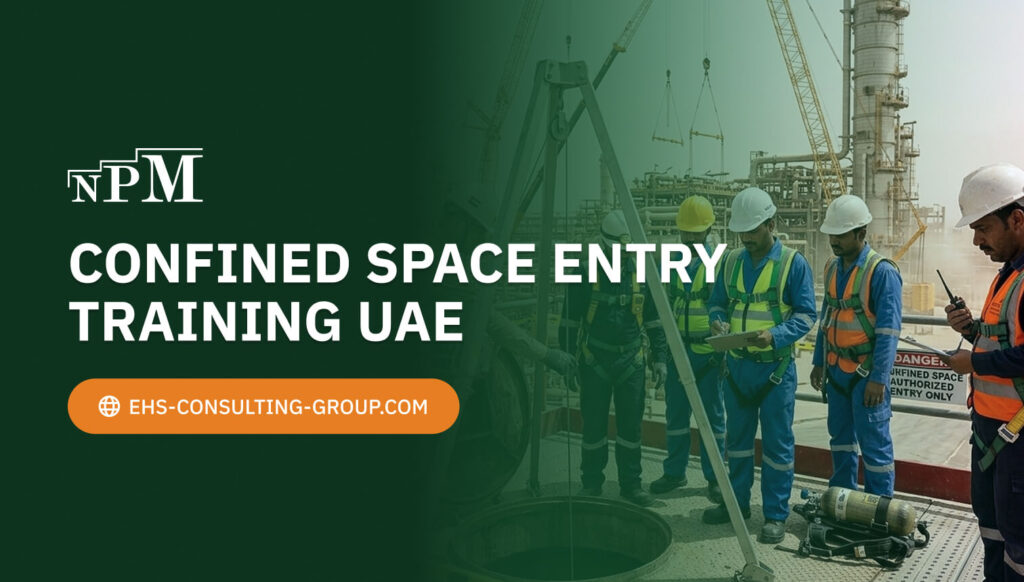
Confined Space Hazards Explained is more than a headline—it is the baseline knowledge HSE leaders, permit issuers, and supervisors need to protect people and operations across high-risk industries in the UAE. Confined spaces are deceptively common in oil and gas, petrochemical, construction, manufacturing, logistics, and power generation settings, yet the risks remain persistently misunderstood or underestimated. This article unpacks how these hazards arise, how they compound under operational realities such as SIMOPS and shutdowns, and how to control them in a way that satisfies both regulatory expectations and the demands of safe, efficient production.
Who Does This Concern?

The discussion touches nearly every operational function that interacts with tanks, pits, vessels, culverts, silos, sumps, pipelines, sewers, utility vaults, boiler drums, deaerators, cooling towers, and manholes—whether onshore or offshore. While the immediate audience might be HSE managers and permit-to-work (PTW) coordinators, a safer outcome relies on the awareness and discipline of many roles around them.
- HSE, PTW, and Operations: HSE managers, PTW issuers/receivers, area/shift supervisors, and control room operators who orchestrate isolations, gas testing, and entry authorizations.
- Maintenance and Turnaround: Mechanical, electrical, and instrumentation technicians; scaffolders; welders; NDT teams; cleaning crews; rope access specialists; and shutdown planners.
- Contractors and Subcontractors: Tank cleaning firms, hydro-jetting teams, coating/blasting crews, and inspection providers who often work under tight time pressure inside vessels.
- Emergency Response and Rescue: In-house first responders, Civil Defence liaisons, and standby rescue teams responsible for non-entry and entry rescues using retrieval systems.
- Logistics and Facilities: Wastewater plant operators, district cooling technicians, terminal/warehouse supervisors managing pits, sumps, and below-grade utilities.
- Management and Compliance: Plant managers and compliance officers accountable for aligning with OSHAD (Abu Dhabi OHSMS), Dubai Municipality safety codes, MOHRE requirements, Civil Defence expectations, and where applicable, ADNOC HSE directives.
Because confined spaces are embedded in routine tasks—desludging a sump, swapping a manway gasket, verifying coating adhesion inside a vessel—the hazard profile concerns not only those who physically enter, but also attendants, spotters, gas testers, and anyone authorizing the work.
Why Understanding This Matters

Confined space incidents rarely give second chances. A single atmospheric upset—oxygen deficiency from inert gas displacement, toxic vapor release from residual hydrocarbons, or explosive gas pockets at flammable limits—can escalate in seconds. Statistically, would-be rescuers account for a significant fraction of fatalities, demonstrating how quickly risk propagates from one person to several. In the UAE, practitioners also work within a strong regulatory framework that expects systematic hazard identification and demonstrable control. OSHAD, Dubai Municipality, MOHRE, and Civil Defence require employers to prevent exposure to known hazards and to evidence competence, supervision, and emergency preparedness. For oil and gas and petrochemical operators, ADNOC HSE requirements and internal corporate standards often further elevate expectations on isolation, gas detection, and rescue readiness.
From a management systems perspective, ISO 45001 encourages integrating confined space controls into the organization’s hazard/risk processes, ensuring resources, competency, and leadership oversight. Process safety methodologies—like HAZOP, HAZID, LOPA, Bowtie, and QRA—frequently surface confined space scenarios and barriers (e.g., effective isolation, continuous gas monitoring, inerting controls, and trained rescue) that must be maintained with the same rigor as any Safety Instrumented Function under IEC 61511. Understanding where these hazards come from and how they align to your PTW and barrier management systems directly reduces the likelihood of serious harm, unplanned downtime, and regulatory non-compliance.
Key Points to Understand

Establishing a clear shared understanding across teams reduces variability and closes the gaps where incidents occur. A few foundational points guide practical action:
What qualifies as a confined space
A confined space is not defined by size alone but by geometry and purpose: it is large enough to enter, has limited or restricted means of entry or exit, and is not designed for continuous occupancy. Examples include atmospheric tanks, oil-water separators, utility vaults, silos, excavations with shoring and limited access, and sections of pipelines taken out of service. “Permit-required” spaces add hazards such as actual or potential atmospheric risks, engulfment, converging walls/sloping floors, or other serious safety/health hazards.
Why atmospheres shift unexpectedly
Atmospheric hazards arise because process residues desorb or off-gas; scale reacts with cleaning chemicals; biological oxygen demand depletes oxygen; or inerting gases (nitrogen, CO2) displace breathable air. Temperature and agitation accelerate release; confined geometry slows dilution. Intermittent leaks, backflow from adjacent equipment, and stratification (heavier-than-air gases at low points) produce conditions that can pass pre-entry testing yet trend unsafe minutes later—hence the emphasis on continuous or frequent monitoring.
Isolation is a system, not a step
Lockout/Tagout (LOTO) and mechanical isolation—blinds/spades, double block and bleed where appropriate, line breaks—must address all energy forms: mechanical, electrical, hydraulic, pneumatic, thermal, and chemical. Where reflux, gravity flow, or cross-connections can reintroduce hazards, positive isolation (e.g., spading) is typically favored over valve closure alone. Isolation plans should be independently verified before authorizing entry, with clear drawings and tags matching the PTW.
Gas testing and instrumentation realities
Competent gas testing covers oxygen, flammables (expressed as %LEL), and toxics relevant to the process (H2S, CO, ammonia, VOCs). Use pumped sampling to test at multiple levels (top, mid, bottom) and around dead legs. Ensure instruments are calibrated, bump-tested, and correct for cross-sensitivities (e.g., hydrogen cross-sensitivity on certain electrochemical sensors). Readings dictate ventilation strategies and occupancy decisions, and they must be documented in the PTW or log.
Ventilation planning—not guesswork
Ventilation calculations consider volume, required air changes per hour, geometry, and source/characteristics of contaminants. Duct placement (supply/exhaust) avoids short-circuiting and ensures flow past the worker’s breathing zone. Spark-proof equipment may be necessary where flammable risks exist. Where purging with inert gas is part of the process, recognize that oxygen deficiency remains the dominant hazard until fully reconditioned and verified.
Barrier thinking and assurance
Bowtie analysis visualizes top events like “worker exposed to toxic atmosphere” and maps preventive and mitigative barriers: isolation, monitoring, ventilation, access control, communications, supervision, and rescue capability. LOPA thinking can be applied to justify the independence and reliability of these layers. Assurance then becomes a matter of maintaining barrier integrity—calibration intervals, competency of testers, stand-by rescue readiness, and robust PTW oversight.
Documentation and governance
Standardized procedures, checklists, PTW forms, and rescue plans reduce ambiguity. To keep governance materials current and accessible, organizations often use structured document repositories; resources like CABINET NPM illustrate how curated libraries support controlled, consistent access to policies and forms. Regardless of tool, ensure alignment to UAE regulators, internal corporate standards, and lessons learned from incident investigations.
| Hazard Category | Typical Sources | Indicators/Monitoring | Primary Controls |
|---|---|---|---|
| Oxygen Deficiency | Nitrogen purging, rusting/scale, microbial activity | O2 sensor (vol%), trending at multiple heights | Ventilation, purge to air, verification before and during entry |
| Toxic Gases/Vapors | H2S from sour residues, CO from combustion, VOCs from solvents | Electrochemical sensors, PID for VOCs, pumped sampling | Source isolation, cleaning/neutralization, continuous monitoring |
| Flammable Atmosphere | Hydrocarbon vapors, solvent cleaning, desorption during work | %LEL on catalytic/IR sensors, hot-work gas checks | Eliminate ignition sources, ventilation, delay entry until safe |
| Engulfment | Bulk solids (grain, catalyst), inflow from lines | Visual inspection, level verification, isolation confirmation | Positive isolation, barriers, harness/retrieval readiness |
| Mechanical/Energy | Agitators, conveyors, pressure/thermal energy | PTW isolation tags, zero-energy verification | LOTO, mechanical isolation (blinds/spades), bleed-down |
| Heat/Environmental | High humidity/temps, radiant heat in vessels | WBGT readings, work-rest cycles, hydration checks | Ventilation/cooling, shift rotation, medical readiness |
How This Works in Practice

Translating principles into safe entries requires disciplined coordination. Before work, the space is characterized using recent process history, drawings, and any relevant HAZOP/HAZID notes. A PTW is raised, isolations defined, and a pre-entry briefing confirms roles: entry supervisor, attendant, entrants, gas tester, and rescue lead. Mechanical and energy isolations are installed and verified; pipelines may be blinded, and double block-and-bleed arrangements assessed for adequacy given process criticality and corporate standards. If hydrocarbon residues are present, cleaning/neutralization steps address off-gassing potential.
Gas testing follows a deliberate pattern: initial characterization at all levels, targeted checks near nozzles and dead legs, and confirmation after any change (e.g., valve manipulation, increased ventilation, or hot work). Ventilation is set up to sweep through the breathing zone; where necessary, localized extraction prevents accumulation. Entry limits may be set on occupancy to avoid oxygen displacement from multiple workers in a small volume. Communication methods—voice, radio, hardline—are proven to work from inside the space to the attendant and, if needed, the control room. Rescue equipment (tripods, winches, retrieval lines, supplied-air escape packs) is staged and tested; Civil Defence contact protocols are known, but the team remains ready for immediate non-entry retrieval where the geometry allows.
During turnarounds and SIMOPS, the complexity increases. Multiple spaces may be open simultaneously, raising the need for area-wide gas monitoring, hot work zoning, and traffic management. When contractors are involved, a common understanding of entry criteria avoids one party assuming another has “already tested” or “already isolated.” In large facilities—refineries, LNG trains, offshore platforms, or power stations—control rooms often maintain entry boards with active confined space locations, status of gas checks, and time-based reminders for revalidation. Shift handovers document the space status, pending work steps, and any abnormal readings so the next team does not reset the risk clock.
For logistics and utilities, the scenarios are just as real: a wastewater sump with biological oxygen demand can degrade oxygen overnight; a district cooling plant’s large-diameter piping can trap pockets of cleaning agents; a warehouse dock pit can accumulate CO from forklifts. In each case, the same discipline applies: isolate, test, ventilate, monitor, communicate, supervise, and be ready to rescue without putting more people at risk.
Benefits and Practical Use Cases

When organizations internalize these concepts, the benefits extend beyond incident prevention to measurable operational gains.
- Fewer Disruptions: Robust entry planning reduces last-minute stoppages caused by failed gas tests or unclear isolations, supporting on-time maintenance during shutdowns.
- Regulatory Clarity: Documented PTW, isolation verifications, and rescue readiness demonstrate compliance to OSHAD, Dubai Municipality, MOHRE, Civil Defence, and sector-specific expectations such as ADNOC HSE requirements.
- Barrier Reliability: Integrating gas testing, ventilation plans, and rescue preparations into a barrier management approach ensures multiple independent layers rather than relying on a single control.
- Competency Assurance: Defined roles and training matrices help supervisors match task complexity with worker competence, minimizing exposure to untrained rescue attempts.
- Data-Driven Decisions: Trends from gas logs and near-miss reports feed into continuous improvement, including updates to HAZOP/HAZID nodes, LOPA assumptions, and PTW criteria.
- Efficient Turnarounds: Clear isolation and entry criteria prevent rework; for example, catalyst change-outs in petrochemical units or internal inspections of desalination evaporators proceed faster when space conditioning is engineered from the outset.
Concrete applications appear daily across the UAE industrial base: cleaning hydrocarbon tanks at storage terminals; internal inspections of heat recovery steam generators (HRSGs) at power plants; manhole entries during utilities expansion on construction sites; or vessel internals work during refinery turnarounds. In each case, success correlates to how well the team combines design knowledge of the equipment, process history, and disciplined application of PTW, monitoring, and rescue readiness.
Best Practices and Points of Caution

Practical safeguards often hinge on small disciplines executed well. The following practices reflect patterns NPM observes among organizations with consistently strong confined space outcomes:
- Define Clear Entry Criteria: Specify pre-entry gas thresholds aligned to your corporate standard and regulatory context (e.g., oxygen between safe limits, flammables well below alarm setpoints, toxics below exposure thresholds).
- Use Pumped Sampling Strategically: In large or complex geometry, extend sampling lines to suspected stagnation points; cross-verify readings before authorizing entry.
- Engineer the Ventilation: Size fans for calculated air changes; avoid short-circuiting by directing flow through the work zone; reassess after internal layout changes (e.g., scaffolds).
- Isolate with Independence: Where credible, prefer positive isolation (blinds/spades) over valve closure; validate isolation with a second checker and documented line-up.
- Test the Rescue Path: Practice non-entry retrieval where geometry allows; verify that lifelines and winches operate without snagging on internals or scaffolds.
- Plan for Heat Stress: In high humidity and temperature, adjust work-rest cycles, hydration, and ventilation; ensure medical support and emergency cooling provisions.
- Respect Cross-Sensitivities: Understand how your detectors behave around interfering gases; confirm calibration/bump-testing before shift, not after an abnormal reading.
- Control Simultaneous Operations: Map nearby hot work, chemical cleaning, or pressurization that could affect your space; sequence activities to avoid atmospheric swings.
- Brief with Visuals: Use P&IDs and simple sketches during the toolbox talk so entrants and attendants picture isolations, internals, and egress routes.
- Hold the Line on “No Lone Entry”: Maintain an attentive attendant with no other duties; ensure communication links are tested and continuous.
Two recurring cautions deserve emphasis. First, inerting can create a false sense of security: even after inert gas is removed, oxygen levels may not recover uniformly, and pockets of vapor can remain. Second, “temporary” changes under time pressure—like removing a duct or overriding an alarm—can compromise barriers. Apply Management of Change to any deviation, even during a turnaround, and capture lessons learned in your next HAZOP/HAZID review.
Frequently Asked Questions About Confined Space Hazards
What makes a space “permit-required” as opposed to just a confined space?
Permit-required spaces contain or have the potential to contain a hazardous atmosphere, risk of engulfment, inwardly converging walls or sloping floors that could trap an entrant, or other recognized serious hazards. The permit process ensures hazards are evaluated, controlled, and rechecked throughout the work, with roles, isolations, gas testing, and rescue prepared before entry.
How often should atmospheric testing be performed during an entry?
At minimum, test before entry and continuously or at frequent intervals suitable to the hazard potential and work evolution. Spaces with potential for rapid change—due to temperature, residuals, or nearby SIMOPS—warrant continuous multi-gas monitoring near the breathing zone and periodic pumped sampling at multiple heights.
Are ventilation fans enough to make the space safe for hot work?
Not by themselves. Ventilation reduces concentrations but does not replace monitoring and control of ignition sources. For hot work, you must confirm flammable gas levels well below conservative thresholds, maintain continuous monitoring, and ensure controls such as fire watch, housekeeping, and, where required, additional permits and approvals are in place.
When is supplied air necessary instead of filtering respirators?
Supplied air is necessary when oxygen content is unsafe or unknown, when contaminant concentrations are above filter capacity, or when there is potential for rapid atmospheric shifts. Filtering respirators do not supply oxygen and are unsuitable for oxygen-deficient or IDLH atmospheres.
How should isolation be verified beyond locking and tagging?
Verification includes physical checks (e.g., confirming blinds/spades installed in the correct locations), attempting to start isolated equipment to verify zero energy, pressure and temperature checks confirming safe states, and independent sign-off by a second competent person. Documentation should link isolation points to P&ID references and PTW tags.
What is the attendant’s primary responsibility?
The attendant maintains an accurate count and status of entrants, monitors the space and surrounding conditions, communicates with entrants, and initiates emergency procedures without entering the space. The attendant must be free of other duties and empowered to stop work if conditions change.
How do we account for heat stress in confined spaces during summer months?
Use a combination of engineering (ventilation, cooling), administrative controls (shorter work cycles, more frequent breaks, shaded recovery areas), physiological monitoring, and hydration plans. Incorporate heat stress indicators like WBGT in your pre-entry checks, and confirm medical readiness of workers assigned to these tasks.
What documentation satisfies regulators during inspections?
Typical expectations include PTW forms, isolation plans and verifications, calibration records for gas detectors, pre-entry and continuous testing logs, attendance records, training/competency matrices, rescue plans and drills, and incident/near-miss reports with close-out actions. Consistency and traceability are key.
Can we use drones or robots to reduce entries?
Yes, remote visual inspection tools and cleaning robots can minimize human exposure, especially for reconnaissance. However, they do not eliminate the need for confined space procedures if human entry still occurs; treat any follow-up entry with the full control set.
How do process safety studies support safer entries?
HAZOP and HAZID identify where confined spaces exist in the process flow and what deviations could introduce hazards. Bowtie maps barriers and escalation factors, and LOPA helps justify the independence and strength of layers such as isolation and monitoring. These insights inform PTW criteria and rescue preparedness.
A thoughtful approach to the themes in Confined Space Hazards Explained helps unify frontline practice with management expectations. The thread that runs through the entire topic is barrier integrity—understanding how hazards evolve, selecting independent layers of protection, and verifying those layers under real-world conditions like SIMOPS, heat stress, and contractor interfaces. Whether the space is a refinery tank, a power plant HRSG, a construction site culvert, or a terminal sump, the most robust programs keep documentation current, instruments reliable, people competent, and rescues ready to happen without delay.
To go further on this topic, NPM’s broader Confined Space Entry Training UAE page covers this in more depth.
Explore NPM’s References
NPM’s references demonstrate how disciplined confined space risk control can coexist with ambitious operational schedules, complex process configurations, and high regulatory expectations. Our portfolio spans refineries, petrochemical complexes, LNG facilities, offshore platforms, power generation assets, district cooling plants, large construction projects, and logistics hubs. In these environments, teams face recurring challenges: isolating aging equipment with undocumented modifications, validating gas testing across intricate geometries, sequencing entries during shutdowns with multiple open vessels, and integrating heat-stress management into summer work windows. NPM’s track record shows how consistent application of PTW governance, barrier-based thinking, and competency assurance helps clients achieve safer entries while maintaining turnaround performance.
Across worldwide engagements, NPM emphasizes a practical synthesis of standards and real-world constraints. We incorporate insights from incident investigations, HAZOP/HAZID outcomes, and LOPA/Bowtie rationale to strengthen the independence and reliability of controls. Our references illustrate improvements such as streamlined isolation verification checklists, calibrated instrumentation programs that reduce false confidence, ventilation plans sized from first principles rather than rules of thumb, and rescue drills adapted to real vessel geometries. The result is a measurable reduction in permit rework, fewer start-stop disruptions due to uncertain atmospheres, and demonstrable compliance with regulatory bodies, including OSHAD, Dubai Municipality, MOHRE, Civil Defence, and where relevant, ADNOC HSE expectations. These case experiences are as much about culture—clear roles, calm supervision, and disciplined documentation—as they are about equipment and procedures.
For more information about our references, visit Our References.
Speak with NPM
If you would like to discuss how these principles apply to your tanks, pits, vaults, or vessel entries, the team at NPM is happy to share practical perspectives. Whether you manage a single facility or a distributed portfolio, we can talk through how to align roles, instrumentation, and PTW governance with your operational realities. For any further questions or to speak with our team, Contact Us.