
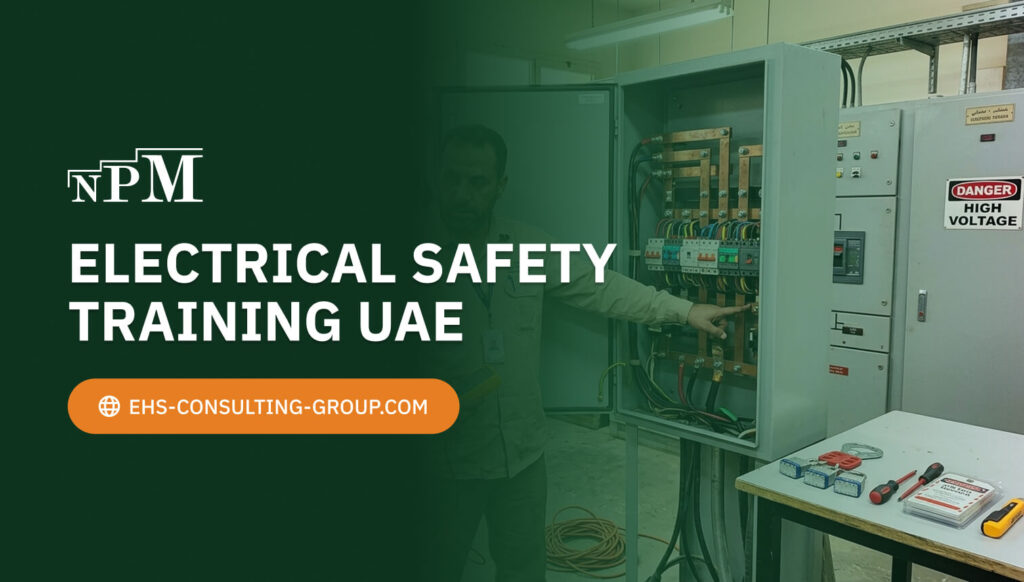
Electrical Permit To Work Explained is a topic many HSE, operations, and maintenance leaders ask about when they want a clear, shared understanding of how permit-to-work (PTW) systems control electrical hazards in complex industrial settings. While the idea of “notifying and authorizing” sounds simple, the discipline behind electrical permits touches isolation practices, competency, arc-flash risk, regulatory expectations, and how work is coordinated across multiple contractors and departments. This article unpacks what an electrical permit actually does, how it fits within a broader safe system of work, and how organizations in high-risk industries across the UAE can apply it credibly and consistently.
We will focus on how a robust approach connects to recognized standards and frameworks such as ISO 45001 for occupational health and safety management, NFPA 70E for electrical safety in the workplace, IEC 60364 for low-voltage electrical installations, and process safety methods like HAZOP, LOPA, and Bowtie for understanding electrical hazards in context. We will also point to regulatory expectations from OSHAD, Dubai Municipality, Civil Defence (UAE Fire and Life Safety Code), MOHRE, and ADNOC HSE requirements that practitioners should be mindful of when tailoring an electrical PTW to local conditions, including refineries, petrochemical complexes, construction megaprojects, manufacturing lines, logistics hubs, and power-generation assets.
Who Does This Affect?

Understanding and applying an electrical permit-to-work affects multiple roles and departments. The permit is not only for the technician at the switchboard; it is a coordination tool that aligns operations, maintenance, contractors, and safety teams under a single, controlled plan. In practice, the following functions are typically involved:
- HSE managers and site safety officers who own the safe system of work and verify that electrical activities meet risk control expectations.
- Operations managers, control room personnel, and permit issuers/authorizers who must balance production continuity with isolation, access, and energized testing needs.
- Electrical supervisors, authorized persons, and competent electricians who prepare isolation plans, perform lockout-tagout (LOTO), test for absence of voltage, and supervise live or proximity work under defined conditions.
- Maintenance planners and schedulers who sequence electrical work against shutdown windows, hot work, and other concurrent activities.
- Project engineers and EPC contractors on construction sites who manage temporary power, generator tie-ins, cable pulls, and HV/LV commissioning tasks.
- Contractor HSE leads and site coordinators who ensure their teams’ competencies, procedures, and risk assessments align with the host facility’s PTW system.
- Senior leadership who set risk tolerances and approve policies for live work exceptions, arc-flash labelling, and mandatory PPE levels.
Because electrical risks often interact with other hazards—confined space entry, hot work, work at height, lifting operations—permit coordination is just as important as permit content. Ensuring that each role understands its authorization boundaries and communication responsibilities is a central function of the electrical PTW.
Why This Topic Matters

The stakes of electrical work are high and immediate. Shock, arc flash, and arc blast injuries can be catastrophic, with permanent health consequences and serious business disruption. In addition to personal harm, electrical faults can trigger fires and explosions, particularly in oil and gas facilities and petrochemical storage terminals where flammable atmospheres may be present. Across the UAE, authorities and regulators pay close attention to electrical safety controls, and credible PTW practices are expected during inspections, audits, and incident investigations.
Beyond compliance, there are operational reasons to get this right. An electrical permit formalizes how power is isolated or managed, prevents inadvertent energization, and coordinates workfronts where multiple contractors share distribution boards or feed temporary loads. In power generation and utilities, a disciplined permitting and switching routine is central to grid reliability and safe maintenance of substations and switchgear. In construction, it prevents unplanned outages and protects workers near live temporary supply. In manufacturing, it helps ensure that preventive maintenance, drives tuning, and controls work do not introduce new hazards during shift changes.
When companies embed strong electrical PTW practices, they typically see fewer “near misses” related to mistaken breaker operation, unexpected backfeeds from generators, or poorly labelled isolation points. They also find it easier to demonstrate due diligence to internal auditors and to authorities such as OSHAD and Civil Defence. In short, clarity and discipline in the permit process translate to fewer surprises in the field.
Key Points to Understand

Building from the reasons this matters, it helps to understand what an electrical permit includes, how authorization works, and how it should tie into broader hazard controls and standards. The following sub-sections unpack those pillars.
What an Electrical PTW Covers
An electrical permit is the documented authorization for specific work on, near, or affecting electrical systems. It typically covers:
- Scope and location of work, including single-line references, panel or switchgear identification, feeders, and circuits.
- Hazard identification and risk assessment addressing shock, arc flash/blast, induced voltages, battery energy, and the surrounding environment (e.g., explosive atmospheres, wet areas).
- Controls to be applied: isolation method, LOTO detail, verification steps, earthing/grounding where applicable, and PPE level or category per arc-flash labelling.
- Authorization matrix: who prepares, who verifies isolation, who authorizes, and who supervises the job.
- Coordination notes with other permits (e.g., hot work, confined space) and with operations (e.g., switching schedules, standby power, temporary supplies).
- Testing requirements: dead testing, proving instrument on a known live source, test-before-touch routines, and re-energization steps with sign-offs.
- Shift handover, permit suspension/extension, and closure process with as-left conditions documented.
Where high voltage (HV) is involved—substations, transmission yards, and primary switchgear—additional controls, specialized competence, and detailed switching programs are needed. HV-specific routines often include independent checkers and precise communication protocols between the switching authority and field teams.
Roles, Competence, and Authorization
Clear roles and competencies are essential. Facilities usually define job titles like Permit Requester, Permit Issuer, Authorized Person (AP), Competent Person (CP), and Electrical Supervisor. Evidence of training, assessments, and experience should back these roles, often aligned with ISO 45001 frameworks and recognized electrical safety programs such as NFPA 70E. The table below gives a representative view:
| Role | Core Responsibilities | Competency Evidence | Approval Authority |
|---|---|---|---|
| Permit Requester | Defines scope; initiates risk assessment; proposes isolation points. | Job-specific training; system familiarity; risk assessment skills. | Submits to Issuer/Authorizer; cannot authorize. |
| Permit Issuer | Verifies risks and controls; checks LOTO plan; coordinates with operations. | Formal PTW training; knowledge of plant power distribution. | Issues permit upon satisfactory controls; may suspend/extend. |
| Authorized Person (AP) | Executes isolation/earthing; verifies absence of voltage; supervises work. | Electrical qualification; NFPA 70E or equivalent; practical assessment. | Signs verification; cannot self-authorize permits as Issuer. |
| Competent Person (CP) | Performs the task; follows controls and PPE; reports anomalies. | Trade certification; task-specific training and toolbox briefings. | Signs onto permit; no issuance authority. |
| Electrical Supervisor | Oversees electrical works; confirms competence; resolves conflicts. | Advanced certification; experience with HV/LV systems; leadership. | May authorize higher-risk permits per policy. |
Authorization arrangements should reflect risk. For instance, live testing above a certain incident energy level may require senior authorization and a written justification for energized work, while low-risk verification tasks under protective devices could follow a streamlined path with the same diligence.
Isolation, LOTO, and Verification
An electrical permit lives or dies by the quality of isolation and verification. Isolation means creating a physical, verifiable break from all energy sources: mains supply, generators, UPS/battery banks, and backfeeds from parallel circuits. LOTO locks the point of isolation under controlled custody with individually keyed locks and tags that explain who is working and why the isolation must not be removed. Verification confirms, by test, that circuits are de-energized before touch. Good practice borrows from NFPA 70E and IEC principles: use a properly rated test instrument, prove it on a known live source, test the circuit, then re-prove the instrument.
In HV systems, approved earthing/grounding procedures are standard once isolation is achieved, especially where induced voltages are plausible. In LV environments such as panel boards and MCCs, panel labelling, single-line accuracy, and clear demarcation of work boundaries reduce confusion.
Documentation and Control
Permit documentation should be clear, brief enough to be usable, and supported by referenced drawings, switching schedules, and risk assessments. Control rooms or work coordinators need a live picture of what is isolated, what is under test, and what is being restored. Digital PTW tools can improve visibility, but the logic of approval and verification must remain robust and auditable. For organized document management, some teams consult structured repositories and knowledge bases like CABINET NPM to keep procedures, forms, and checklists current and consistent across projects and sites.
Interface With Broader Safety and Regulatory Frameworks
An electrical PTW should align with national and emirate-level expectations. OSHAD requirements in Abu Dhabi emphasize hazard control and competence; Dubai Municipality inspections often review PTW discipline on construction sites; Civil Defence approvals are tied to the UAE Fire and Life Safety Code; and MOHRE expectations cover worker safety and training. In oil and gas and petrochemical contexts, ADNOC HSE requirements and site-specific Codes of Practice guide permit structure, role definitions, and training obligations. Where electrical risks intersect process safety, reference methods such as HAZOP, LOPA, Bowtie, and IEC 61511 (for instrumented safety systems) help teams understand how loss of power, spurious trips, or unsafe energization might compromise safety instrumented functions or cause abnormal operations.
How This Works in Practice

Translating the framework into the field requires consistent routines. Building on the components described above, consider how these steps play out day to day:
In refineries and petrochemical complexes, switchroom work is often booked against turnaround or mini-shutdown windows. The operations desk issues a switching plan, and the electrical supervisor coordinates isolations for MCC buckets, VFD cabinets, or control panels. The permit cross-references the single-line diagram and includes the required PPE level from arc-flash labels. Before work begins, the AP performs LOTO and tests for absence of voltage. If concurrent hot work is planned in the same building, the permits are cross-checked to avoid introducing ignition sources near exposed live parts or to prevent nuisance trips from portable power setups.
In power generation and utilities, HV/LV interfaces are routine. A switching authority manages step-by-step isolation of 11 kV or 33 kV feeders, with communication protocols ensuring each switching step is read back and confirmed. Earthing is applied and verified before work. The PTW defines the exact boundaries, including lockboxes and key control procedures. Re-energization follows a staged process with inspections and sign-offs.
On construction projects, temporary power is dynamic. Teams constantly tie new boards into rising structures, relocate distribution, and manage portable generators for critical loads like tower cranes or dewatering pumps. The electrical PTW ensures that tie-ins are planned, live work is minimized and justified, and panels are labelled to prevent confusion among multiple contractors. It also captures checks for GFCI/RCD protection, cable routing away from water and traffic, and the condition of temporary boards per IEC 60364 principles.
In manufacturing, where production must continue, permits help sequence preventive maintenance and controls work during shift changes. Short, well-planned isolations with verified zero-energy states prevent surprises when maintenance crews enter enclosures. When energized diagnostics are truly necessary, a formal justification, additional barriers, and PPE are applied under careful supervision.
Benefits and Practical Use Cases

When the permit process is consistently applied, the benefits are more than theoretical. The following examples illustrate tangible outcomes:
- Prevention of inadvertent energization: By enforcing LOTO and independent verification, facilities reduce “breaker thrown back on” incidents while technicians are still at work.
- Improved incident energy awareness: Arc-flash studies and labelling, referenced by the permit, drive correct PPE selection and task planning, reducing burn risk during justified energized work.
- Cleaner interfaces with process safety: Electrical permits that reference HAZOP/LOPA findings help avoid power-loss scenarios that could compromise protective layers or cause abnormal operating states.
- Stronger contractor control: A unified PTW system sets expectations on competence, access, and supervision when multiple firms share distribution boards or temporary power on large projects.
- Audit-ready documentation: Well-structured permits, cross-referenced to drawings and switching plans, demonstrate due diligence to OSHAD inspectors, ADNOC site auditors, and insurance assessors.
Consider a logistics hub where conveyor drives are being upgraded. The PTW defines isolation of individual motor starters, verifies absence of voltage, and ensures the programmable controllers are in a safe state to avoid unexpected startup. A second use case is a power plant where HV testing on transformers requires a detail-rich switching and earthing plan with independent checking and radio protocol adherence. In both cases, the permit crystallizes shared understanding between operations and maintenance, translating engineering intent into field-safe action.
Best Practices and Points of Caution

With the fundamentals in place, teams can raise the quality of their electrical permitting by adopting practices that guard against common pitfalls:
- Keep single-line diagrams accurate: Many permit problems stem from drawing drift. Include a routine to reconcile drawings with as-built reality, especially after projects and minor works.
- Treat temporary power as a high-risk system: Apply the same discipline to construction boards and generators that you would apply to permanent switchgear.
- Use independent verification for HV switching: A second pair of qualified eyes reduces the chance of a switching error with major consequences.
- Ban “borrowed labels”: Ensure all labels and arc-flash data reflect the actual system. Adopting labels from another site or vendor without validation undermines the entire control strategy.
- Be precise about energized work exceptions: If energized work is justified, document why it cannot be done de-energized, list specific additional controls, and obtain higher-level authorization.
- Manage concurrent permits: Cross-reference hot work, confined space, and lifting permits that might affect or be affected by electrical status changes.
- Plan re-energization as deliberately as isolation: Many incidents occur during restoration. Include checks, clear communications, and a controlled energization sequence.
- Align training with roles: Not everyone needs the same depth. Permit Issuers, APs, CPs, and supervisors should have role-appropriate training and assessments, refreshed on a set cadence.
- Close the loop with learning: Capture lessons from near misses, actual incidents, and audits to improve the permit template and routine briefings.
Frequently Asked Questions About Electrical Permit to Work
Is an electrical permit always required for low-voltage panel work?
Where there is risk of shock or arc flash, a formal permit is the best way to make sure hazards are identified, isolation is verified, and controls are agreed. Some facilities allow minor tasks under a documented “low-risk” routine, but these should be clearly defined, tightly bounded, and still require basic precautions, supervision, and sign-on records.
How does arc-flash analysis factor into the permit?
Arc-flash studies inform incident energy levels for equipment and tasks. The permit should reference the label or study output to define the PPE category, approach boundaries, and whether energized work is justified. Without this input, PPE selection often becomes guesswork and can either under-protect or overburden the worker.
What is the difference between isolation and LOTO?
Isolation is the physical act of separating equipment from all energy sources (mains, generators, UPS, backfeeds). LOTO is the administrative and physical control that secures that isolation so it cannot be removed without authorization. Both are required: isolation without LOTO can be reversed by mistake; LOTO without true isolation is a false assurance.
How should HV switching be controlled?
HV switching requires a documented program, trained and authorized personnel, precise step-by-step instructions, and read-back communications. Some sites require independent checking or a second authorized person to confirm critical steps. Earthing procedures and test-before-touch must be clearly stated and verified.
Can live work be justified?
Only in limited cases where de-energization is not feasible (for example, when testing that requires the circuit to be energized for diagnostic reasons) and where alternative risk controls can reduce risk to an acceptable level. This must be specifically justified in writing, authorized at a senior level, and supported by enhanced protection (PPE, barriers, insulated tools, additional supervision).
How long should an electrical permit remain open?
It should remain valid only for the defined task and time window. If work is suspended or shifts change, the permit should be paused, re-briefed, or re-issued to ensure the incoming team understands the status of isolation, testing, and site conditions. Prolonged open permits without active oversight introduce unacceptable risk.
Which UAE regulations are most relevant to electrical permitting?
OSHAD in Abu Dhabi sets comprehensive OHS expectations; Dubai Municipality inspects construction safety and can review PTW systems; Civil Defence enforces the UAE Fire and Life Safety Code; MOHRE addresses worker safety requirements; and ADNOC HSE requirements guide practices at many oil and gas sites. Industry standards like ISO 45001 and NFPA 70E complement these by providing structured approaches to hazard control and competence.
How do we handle temporary power on construction sites within the PTW?
Treat temporary power as a high-risk system. Require permits for tie-ins, generator parallel connections, and major relocations. Ensure RCD/GFCI protection is in place and tested, cables are defect-free and protected from traffic and water, and that panels are labelled with up-to-date single-lines. Coordinate permits among all contractors sharing boards to avoid unintended outages or exposures.
Conclusion
A disciplined electrical permit-to-work is the backbone of safe electrical maintenance, construction, and operations across high-risk industries. It turns intent into action: hazards are identified, isolations are executed, verification is witnessed, and people understand their roles. As discussed above, its strength rests on clear authorization, accurate documentation, strong LOTO and verification practices, and the way it interfaces with process safety and regulatory expectations. Whether you work around HV substations, refinery MCCs, or temporary distribution on a fast-moving construction site, the same principles apply—plan deliberately, communicate clearly, verify independently, and restore power with care.
To go further on this topic, NPM’s broader Electrical Safety Training UAE page covers this in more depth.
Our References
NPM’s track record with electrical safety, permitting, and integrated HSE systems spans complex facilities and demanding operating environments worldwide. Our teams have supported, reviewed, and helped enhance PTW frameworks in contexts as varied as upstream oil and gas operations, multi-train LNG and petrochemical plants, power generation and transmission networks, high-rise and infrastructure construction programs, advanced manufacturing, and large logistics terminals. In each setting, we pay particular attention to how electrical hazards interact with process safety, contractor management, and operational continuity—because a permit only works when it reflects how the site actually functions day to day.
Across projects, NPM emphasizes clarity of roles, practical templates aligned with ISO 45001 and NFPA 70E concepts, and integration with local regulatory expectations, including OSHAD, Dubai Municipality requirements, Civil Defence approvals, MOHRE obligations, and, where relevant, ADNOC HSE requirements. Our references illustrate how this translates into field-ready routines: sharper authorization matrices, improved single-line diagram governance, disciplined HV/LV switching protocols, and consistent LOTO programs that stand up to both audits and real-world pressures. They also show how permit systems can evolve as operations change—during turnarounds, expansions, and the integration of new technologies—without losing control of risk.
Whether your interest is reducing arc-flash exposure, strengthening contractor controls on a busy construction site, or aligning PTW documentation with digital control rooms, you can find relevant case examples in NPM’s body of work. These references are not just outcomes; they are practical illustrations of how complexity can be simplified into reliable routines that protect people and keep operations stable.
For more information about our references, visit Our References.
Speak With NPM
If you have questions about applying or refining an electrical permit-to-work in your facility, our team is glad to discuss practical options and considerations. We welcome inquiries from HSE leaders, plant managers, and electrical supervisors who want to stress-test their current approach or explore incremental improvements. For any further questions or to speak with our team, Contact Us.