

Management Of Change for Chemical Manufacturing is a disciplined, traceable way to control technical, operational, and organizational modifications that could impact process safety, quality, environment, and compliance at your plant. Delivered by NPM, this specialized consulting engagement embeds a robust, auditable MOC workflow across batch and continuous chemical operations—covering changes to equipment, control logic, materials, recipes, procedures, and personnel. This industry-specific offering is part of our broader Management Of Change Services UAE delivered across the country, with a sharp focus on the realities of reactors, distillation trains, tank farms, utilities, and loading racks common to the chemical sector.
Who Needs Management Of Change for Chemical Manufacturing?

Chemical manufacturers across the UAE—whether operating specialty batch reactors, continuous polymerization lines, pigment dispersion units, resins and coatings facilities, or blending and packaging plants—benefit directly from Management Of Change for Chemical Manufacturing because risk often originates in seemingly small modifications. A new solvent in a recipe, a control loop retune, a catalyst substitution, a heat exchanger replacement, a relief valve setpoint change, or a temporary bypass for maintenance can all carry disproportionate hazard potential. For operations leaders accountable to OSHAD (Abu Dhabi), Dubai Municipality, and Civil Defence requirements, and for organizations aligning with ISO 45001, ISO 14001, and IEC 61511 good practice, a consistent approach to Management Of Change for Chemical Manufacturing is essential to avoid runaway reactions, overpressure events, toxic releases, incompatible chemical mixing, or ignition in flammable zones. NPM supports HSE managers, plant managers, production superintendents, process safety engineers, engineering and maintenance teams, and quality leaders who must make timely decisions without compromising safety or compliance. Typical triggers for Management Of Change for Chemical Manufacturing include raw material changes due to supply constraints, reconfiguration of batch sequences to boost throughput, integration of new instrumentation into SIS/SIF architectures, modification of vent and flare headers, or repurposing of storage tanks for different hazard classes. Whether your facility is within JAFZA, KIZAD, ICAD, or an industrial estate regulated by an Emirate-level authority, Management Of Change for Chemical Manufacturing provides the assurance that each change is risk-assessed, approved, communicated, validated, and closed with full traceability.
Objectives of Our Management Of Change for Chemical Manufacturing
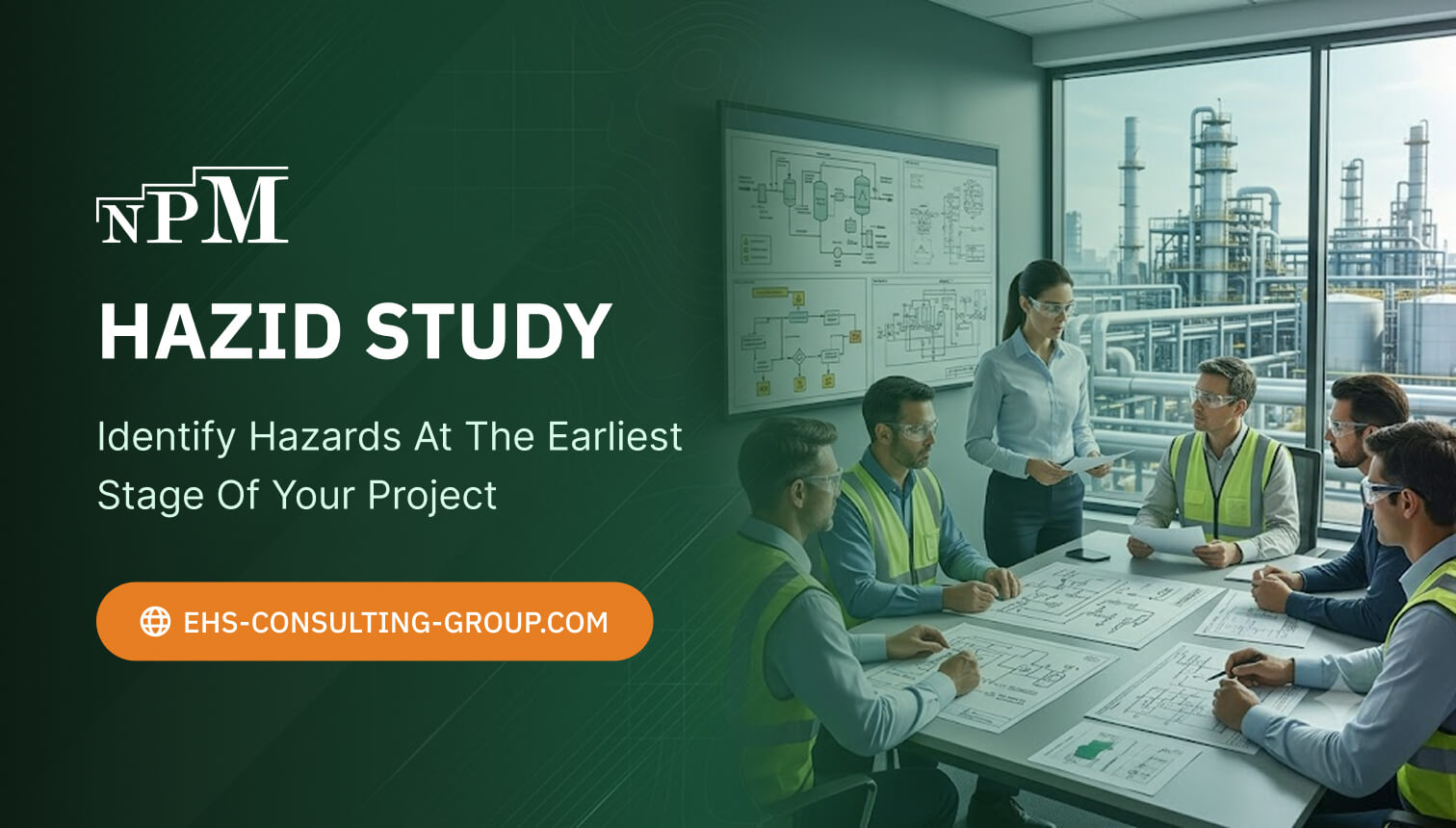
The primary objective of Management Of Change for Chemical Manufacturing is to reduce process safety and environmental risk by instituting a practical, enforceable workflow that is embedded in daily plant management. NPM structures Management Of Change for Chemical Manufacturing to: categorize changes (permanent, temporary, like-for-like) with clear criteria; connect each change to relevant Process Safety Information (PSI) and documentation (P&IDs, PFDs, hazardous area classifications, cause-and-effect charts, SDSs, control narratives); select a fit-for-purpose risk assessment method (checklist screening, HAZOP-style node review, LOPA where protection layers may shift, task-based risk analysis for procedural changes); and require formal approval gates before any field implementation. A critical objective of Management Of Change for Chemical Manufacturing is to maintain the integrity of Safety Instrumented Functions (SIFs) and relief/venting systems whenever equipment is altered or operating envelopes are extended, ensuring alignment with IEC 61511 and relevant API/NFPA codes. Another objective is to cut project cycle time and avoid late-stage rework by front-loading MOC considerations during engineering and procurement—capturing vendor substitutions, specification deviations, and construction field changes with the same rigor. Management Of Change for Chemical Manufacturing also targets organizational readiness: role clarity, escalations for emergency changes, training competency for shift teams, communication to contractors, and handover validation via pre-startup safety review (PSSR). Ultimately, NPM’s goal with Management Of Change for Chemical Manufacturing is to help your plant achieve fewer incidents, fewer non-conformities during audits, improved uptime, and cleaner, faster start-ups after modifications.
Scope of Work and Methodology Tailored to Chemical Plants

NPM’s methodology for Management Of Change in chemical plants starts with a diagnostic of your current change process against recognized good practice and local regulatory expectations. We review how requests originate (engineering, operations, quality, maintenance), how they are screened and risk-ranked, and how impacts to process safety information, SIS, relief systems, and environmental controls are evaluated. For batch environments, we pay particular attention to recipe changes, heat release calculations, and procedural controls to prevent exothermic runaways or incompatible additions; for continuous units, we examine control logic, interlocks, and throughput shifts that may alter heat/mass balance and upset response. In implementing Management Of Change for Chemical Manufacturing, NPM configures an approval matrix with practical thresholds—ensuring minor changes flow quickly while higher-risk changes trigger structured reviews (HAZOP-style sessions, LOPA, or SIL impact checks). We design forms and digital workflows to capture the lifecycle: request, screening, impact analysis, actions and safeguards, approvals, communication, implementation, PSSR/ORR, and close-out. The methodology integrates with maintenance CMMS, engineering document control, and training systems so data is not siloed. Where a corporate MOC policy exists, our work aligns site practice with group standards while meeting UAE regulatory interfaces (e.g., Civil Defence drawings updates, hazardous area dossier revisions, fire system impairment management). Throughout, Management Of Change for Chemical Manufacturing emphasizes right-sized documentation and timely decisions to keep projects moving safely.
- Gap assessment of current MOC against ISO 45001-aligned elements and UAE authority expectations, including OSHAD and Dubai Municipality interfaces.
- Design and rollout of streamlined MOC workflows, forms, and risk screens specific to batch and continuous chemical operations.
- Facilitated hazard reviews for higher-risk changes (HAZOP-style sessions, LOPA checks, SIS impact reviews per IEC 61511).
- Integration of MOC with document control, CMMS, training, and PSSR to ensure traceability from request to safe start-up.
By applying Management Of Change for Chemical Manufacturing with this structured methodology, your facility gains both agility and control—accelerating low-risk changes while ensuring that complex modifications receive the diligence they require.
Duration and Format of Management Of Change for Chemical Manufacturing

Engagement length and delivery format for Management Of Change for Chemical Manufacturing depend on facility scale, change volume, and multi-site complexity. For a single chemical plant with a moderate pace of modifications, NPM typically completes a rapid diagnostic and pilot within weeks, followed by staged rollout and coaching cycles over one to two months. Multi-site groups require coordinated standards and role matrices that accommodate different product lines, hazards, and shift structures. Our delivery combines on-site workshops, unit walkdowns, and document reviews with remote working sessions to accelerate decision-making and minimize disruption during campaigns, turnarounds, or commissioning windows. Management Of Change for Chemical Manufacturing can be embedded into capital project gates, routine maintenance planning, and production scheduling—so that risk review and approvals occur at the right moments. During implementation, we often facilitate initial MOC cases end-to-end to model best practice and then shift to QA/mentoring as internal champions take the lead. Post-rollout, NPM offers periodic health checks and KPI reviews to sustain performance and compliance.
| Engagement Tier | Typical Facility Profile | Format | Indicative Duration | Focus Areas |
|---|---|---|---|---|
| Tier 1 – Single Unit Pilot | One batch area or small continuous line | Hybrid (2–3 site days remote) | 3–4 weeks | Gap assessment, workflow design, pilot MOC cases, coaching |
| Tier 2 – Full Plant Rollout | Plant with multiple units and tank farm | Hybrid (4–6 site days remote) | 6–8 weeks | Workflow rollout, role matrix, facilitated hazard reviews, PSSR integration |
| Tier 3 – Multi-Site Program | 2–5 facilities with varied chemistries | Hybrid (custom cadence) | 10–16 weeks | Corporate standard, site tailoring, KPI dashboards, audit/assurance model |
NPM adapts Management Of Change for Chemical Manufacturing to your production calendar, recognizing turnaround freeze periods, restricted hot work windows, and contractor mobilization cycles common in UAE chemical estates.
Benefits and Practical / Operational Use Cases
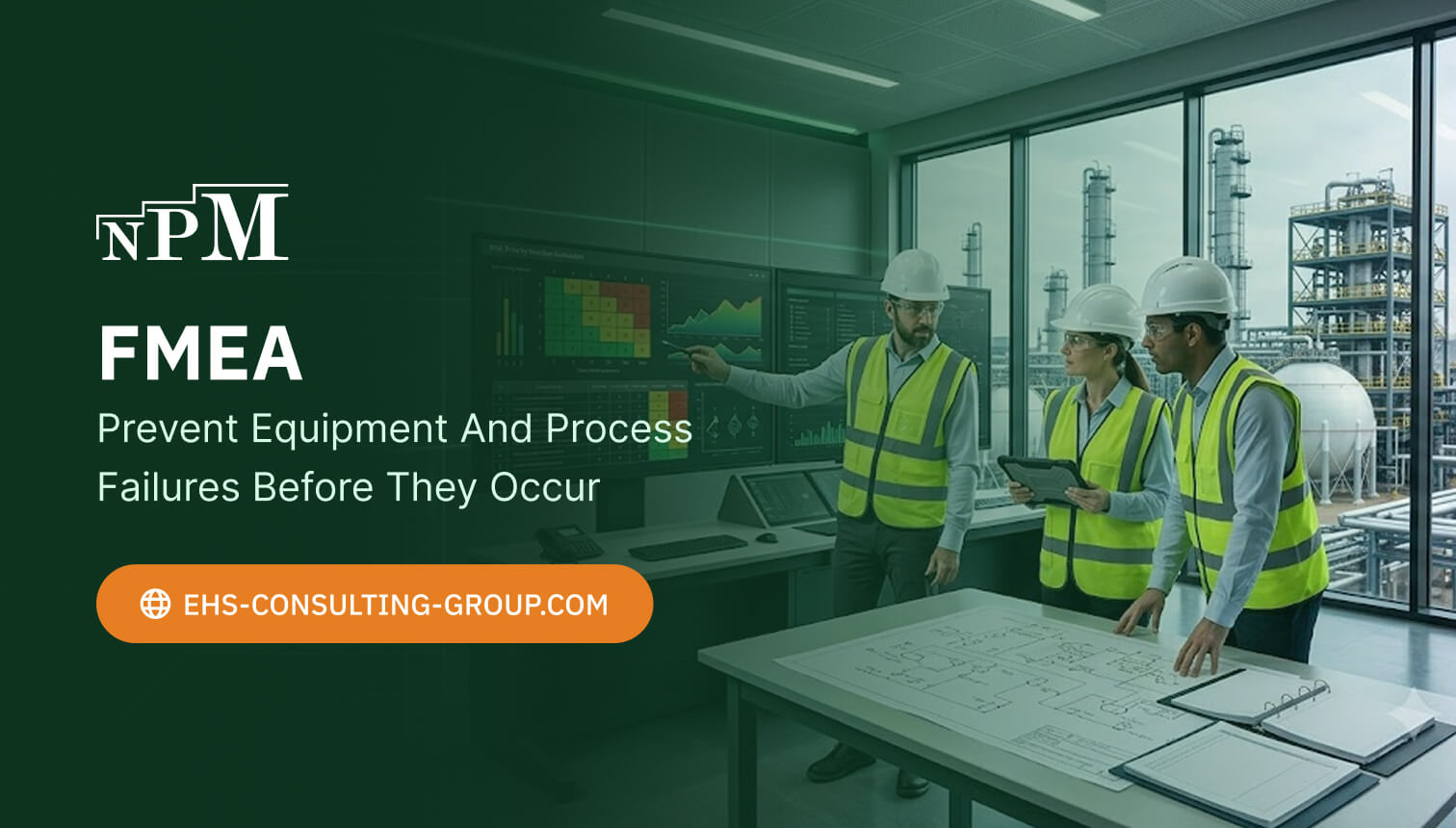
When properly implemented, Management Of Change for Chemical Manufacturing becomes a force multiplier for safety, productivity, and compliance. It reduces unplanned downtime by catching cross-impacts early—such as a new agitator motor’s starting current tripping MCC protections or a recipe step change that undermines control loop stability. It strengthens compliance posture by delivering auditable records that demonstrate due diligence to OSHAD inspectors, Dubai Municipality reviewers, Civil Defence officers, and third-party auditors. It enhances product quality through controlled recipe variations aligned to validated ranges, minimizing batch rework and waste. Management Of Change for Chemical Manufacturing also optimizes capital and maintenance projects by preventing rework from late design changes and ensuring that vendor substitutions and field deviations go through the same rigorous checks. In day-to-day operations, it clarifies ownership of changes, reduces friction between engineering and production, and accelerates low-risk improvements with confidence. NPM designs Management Of Change for Chemical Manufacturing to be user-friendly at the frontline, so supervisors and technicians can raise, track, and close changes without administrative burden.
- Introducing a new solvent in a batch process: Management Of Change for Chemical Manufacturing screens flammability, incompatibility, vent sizing, and PPE impacts before trial.
- Retuning a reactor temperature cascade loop: the MOC assesses overshoot risks, SIS trip integrity, and alarm management effects prior to implementation.
- Swapping a relief valve like-for-like: verification of set pressure, orifice size, metallurgy, and documentation updates prevents hidden capacity shortfalls.
- Reassigning a storage tank to a different chemical class: hazardous area verification, foam/water systems checks, and bund capacity confirmation are enforced before changeover.
Why Choose Us

NPM brings deep process safety engineering and chemical operations experience to every engagement. Our consultants have implemented Management Of Change for Chemical Manufacturing across diverse chemistries and plant designs, integrating with SIS per IEC 61511, verifying relief devices to API and ISO references, and aligning hazardous area dossiers with NFPA and Civil Defence expectations. We understand the realities of shift handovers, contractor interfaces, and tight project windows, so we configure workflows that deliver control without slowing the plant. Our approach is pragmatic: we tailor screening criteria to your risk profile, build forms that capture what matters, and embed training that sticks for operators, engineers, and supervisors. As part of a broader professional network, we also collaborate across disciplines to support adjacent needs like HAZOP, LOPA, and PSSR. Where helpful, we leverage knowledge-sharing avenues such as CABINET NPM to keep our methods current and connected to international best practice—while staying grounded in UAE regulatory requirements.
Detailed Service Offerings

Explore related industry-specific offerings and adjacent focuses that can help benchmark, cross-pollinate best practices, or scale your MOC program across diverse asset types. Each link below follows the required format and provides more context.
Management Of Change for Oil & Gas Facilities

This service supports oil and gas operators who must coordinate modifications across refineries, gas plants, pipelines, and terminals where process safety barriers are tightly interdependent. It covers changes to critical equipment, control systems, and operating envelopes, and is often initiated during brownfield projects, debottlenecking, or shutdown/turnaround work. The outcome is a robust, auditable MOC framework tuned to hydrocarbon hazards and regulatory interfaces.
Click on the following link for more details: Management Of Change for Oil & Gas Facilities.
Management Of Change for Petrochemical Plants
Designed for petrochemical complexes with crackers, polymerization units, and large utility systems, this service ensures that process and project changes do not erode inherent safety. It is typically required during catalyst changes, unit revamps, and control system migrations, yielding a high-integrity MOC program that sustains uptime and compliance while enabling continuous improvement.
Click on the following link for more details: Management Of Change for Petrochemical Plants.
Management Of Change for LNG Facilities
For LNG plants and terminals, this service addresses modifications to liquefaction trains, re-gasification systems, cryogenic storage, and loading operations. Often triggered by equipment upgrades, throughput changes, or integration of new safety functions, the engagement delivers an LNG-specific MOC approach that protects against cryogenic, flammable, and overpressure hazards.
Click on the following link for more details: Management Of Change for LNG Facilities.
Regulatory Landscape & Operational Risks in Chemical Manufacturing
Chemical manufacturers in the UAE operate under a mosaic of federal and Emirate-level frameworks and international standards that shape how Management Of Change for Chemical Manufacturing must function. In Abu Dhabi, OSHAD requirements set expectations for systematic risk management and documentation control; in Dubai, Dubai Municipality approvals and interfaces with Civil Defence influence fire protection, hazardous area classification updates, and emergency response planning. Across Emirates, MOHRE labor provisions and industrial authority rules (e.g., KIZAD, JAFZA) affect contractor control, training, and site access during change work. Internationally recognized references—ISO 45001, ISO 14001, IEC 61511 for SIS lifecycle, API standards for pressure-relief systems, and NFPA codes for flammables and electrical classifications—are commonly adopted as good practice during audits. Operationally, typical chemical hazards include exothermic reactions, runaway polymerization, cross-contamination, static ignition during loading, toxic off-gassing, dust explosivity for fine powders, and overpressure from blocked-in heat exchange. Facilities often feature tank farms with mixed classes of chemicals, batch reactors with jacketed heating/cooling, distillation columns, scrubbers, flare or vent headers, and wastewater treatment units. Management Of Change for Chemical Manufacturing ensures that modifications—from recipe tweaks to control narrative changes—prompt evaluation of relief capacities, ventilation and scrubbing efficiencies, hazardous area implications, and SIS interlocks. In the UAE context, traceability is crucial: updated P&IDs for Civil Defence submissions, revised hazardous area drawings aligned to NFPA/IEC, and maintained training records to demonstrate competency. NPM structures each Management Of Change for Chemical Manufacturing engagement so regulatory and operational realities are hardwired into your approval gates and PSSR checkpoints.
Our MOC Expertise Across UAE Industries
NPM applies the same disciplined MOC philosophy across multiple high-hazard industries in the UAE. While this page focuses on chemical manufacturing, our methodology scales to hydrocarbon processing, LNG, and other sectors where engineered barriers and procedures must be preserved through change. Reach out if you’re exploring a cross-site or multi-industry MOC program.
Deliverables and Validation
NPM’s deliverables for Management Of Change for Chemical Manufacturing are designed for clarity, usability, and audit readiness. You receive a customized MOC procedure with defined roles, screening criteria, and change categories (permanent, temporary, like-for-like) tailored to your batch or continuous operations. We provide request and approval forms, risk screening tools, and templates for detailed hazard reviews, including HAZOP-style worksheets, LOPA considerations, and SIS impact assessments per IEC 61511. A live MOC Register tracks every change from submission to close-out, including actions, accountable owners, due dates, and status. We integrate MOC with your document control so P&IDs, control narratives, hazardous area drawings, SDSs, and equipment files are automatically queued for update. For validation, NPM facilitates workshops with production, maintenance, engineering, HSE, QC/QA, and warehouse/logistics teams, conducts unit walkdowns to ground-truth assumptions, and holds technical reviews to verify relief and ventilation impacts. We coordinate pre-startup safety reviews (PSSR/ORR) to confirm that safeguards, interlocks, alarms, and procedures are in place and that training and communication have reached affected shifts and contractors.
Typical workshop teams for Management Of Change for Chemical Manufacturing include 6–10 stakeholders to match shift availability and unit coverage. For multi-site programs, we propose a kick-off scoping meeting, preliminary document review (P&IDs, equipment lists, control philosophies, hazardous area classification, recent incident learnings), and a pilot area visit to calibrate the workflow. The final report contains an executive summary, detailed gap analysis, the MOC procedure and forms, a populated register with initial cases, a training plan, KPIs and audit checklists, and a 90-day action plan. Implementation ownership rests with your organization; NPM provides coaching, QA reviews of early cases, and optional periodic health checks to ensure Management Of Change for Chemical Manufacturing continues to perform as designed.
Frequently Asked Questions About Management Of Change for Chemical Manufacturing
How often should Management Of Change for Chemical Manufacturing be reviewed or audited in a plant environment?
For most chemical facilities, an internal audit of Management Of Change for Chemical Manufacturing is recommended at least annually, with a mid-cycle health check during periods of high project activity. Triggers for ad hoc re-assessment include major process incidents, repeated near misses tied to change, control system migrations, or organizational restructuring that affects approval roles.
What is the difference between an initial MOC implementation and a periodic review in chemical manufacturing?
The initial rollout of Management Of Change for Chemical Manufacturing establishes governance, roles, workflows, and tools, and typically includes facilitation of early cases and PSSR integration. A periodic review validates that the process is being followed, KPIs are met, training remains effective, and gaps such as undocumented field changes are corrected—often with targeted refresher training or workflow refinements.
Who is responsible for implementing recommendations from the MOC engagement—the consultant or the plant?
NPM designs and helps operationalize the framework, but your organization owns implementation and ongoing execution of Management Of Change for Chemical Manufacturing. We mentor case owners and approvers, QA initial cases, and support PSSR, while site leadership, engineering, operations, and HSE teams execute, sign off, and sustain the process.
What delivery format works best for large or multi-site chemical manufacturers—on-site, remote, or hybrid?
A hybrid format is typically optimal for Management Of Change for Chemical Manufacturing. On-site sessions enable walkdowns, stakeholder workshops, and live facilitation of complex cases, while remote working accelerates document reviews, coaching, and KPI tracking—minimizing schedule conflicts across shifts and sites.
What team size and stakeholder mix do you recommend for change reviews and interviews in a chemical plant?
For routine reviews, 6–10 participants is effective: operations/shift supervision, process engineering, maintenance, HSE, instrumentation/control, and quality when recipe or specification changes are involved. This size balances diverse expertise with efficient decision-making during Management Of Change for Chemical Manufacturing reviews.
What information and access are required before starting the engagement?
Before commencing Management Of Change for Chemical Manufacturing, we typically request current P&IDs, PFDs, cause-and-effect matrices, hazardous area classification, SIS/SIF documentation, equipment lists and data sheets for affected assets, SDSs, existing MOC forms/workflows, recent incident and audit findings, and site access for unit walkdowns. These enable accurate risk screening and effective workflow design.
Know More About Our Work
NPM has delivered process safety and operational risk engagements worldwide across chemical, hydrocarbon, and high-hazard industries, helping organizations embed practical, high-reliability change management. Our track record spans greenfield startups, brownfield revamps, control system migrations, and multi-site governance programs—always focused on measurable risk reduction and audit-ready outcomes.
For more information about our references, visit Our References.
Speak With Our Team
Ready to strengthen governance, accelerate safe improvements, and reduce incident risk through a fit-for-purpose MOC program? NPM can help you scope a practical, right-sized approach for your facilities and timeline. Share your objectives, change drivers, and constraints, and we will propose an engagement structure that achieves results with minimal disruption.