

Manual Handling Training for Warehousing is a focused, practical program tailored to high-throughput storage, picking, packing, and dispatch operations across the UAE. Designed and delivered by NPM, this training equips warehouse teams—pickers, packers, MHE spotters, replenishment staff, supervisors, and HSE coordinators—with the knowledge and hands-on techniques to reduce musculoskeletal disorders (MSDs), prevent back/shoulder strains, and control risks when lifting, carrying, pushing, or pulling loads. This industry-specific offering is part of our broader Manual Handling Training UAE, built to align with ISO 45001 frameworks and fit real-world warehousing constraints such as shift work, peak-season surge, multilingual crews, and space-restricted aisles.
Who Needs Manual Handling Training for Warehousing?
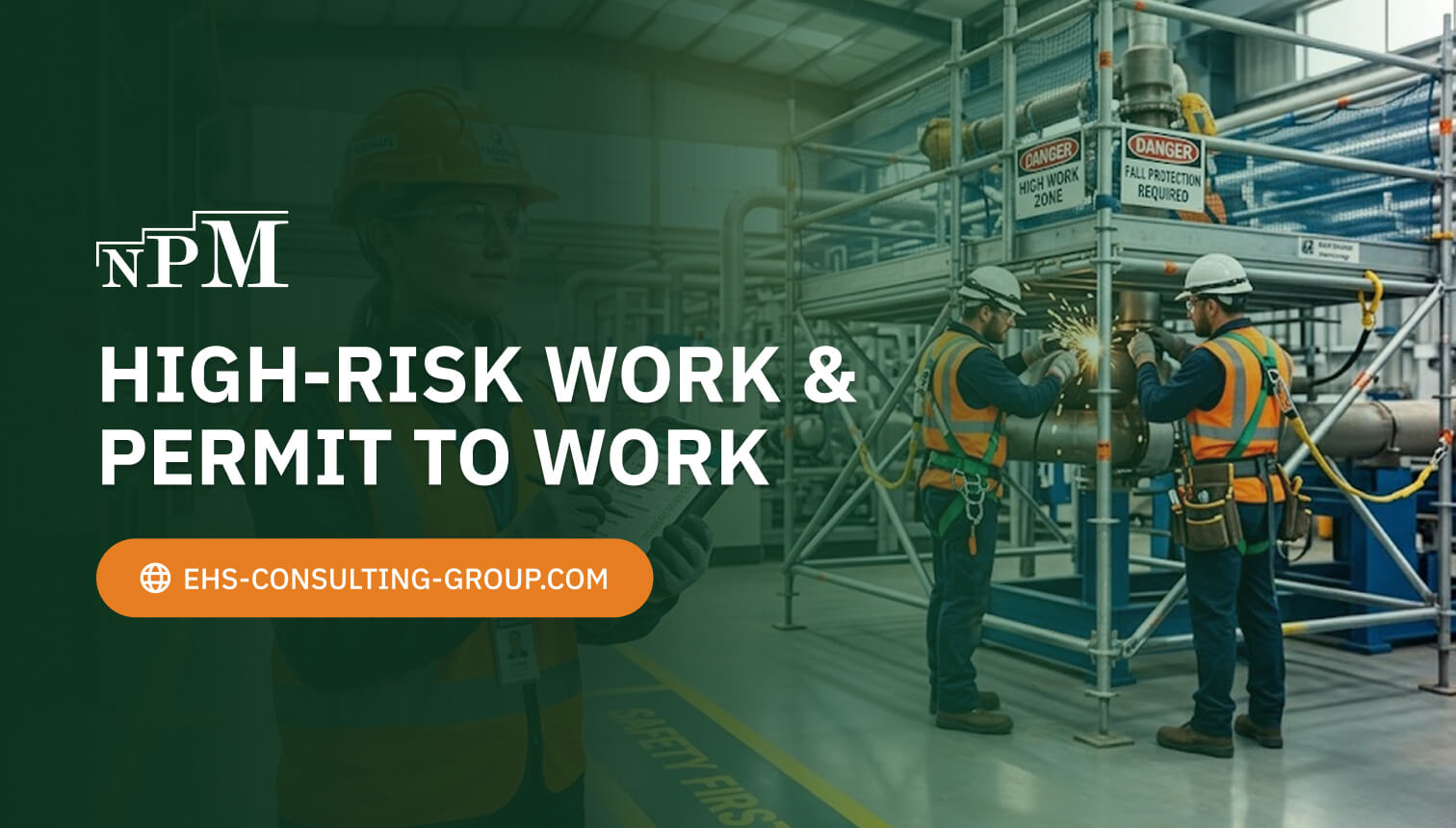
Warehouse operations present a unique combination of repetitive handling, variable load shapes, time pressure, and tight turning radii around racking and conveyors. That is precisely why Manual Handling Training for Warehousing is relevant to a wide span of roles—from inbound receiving through to outbound last‑mile dispatch. Inbound teams grapple with pallet breakdown, carton opening, and staging on dock levelers; put‑away crews navigate reach trucks and pallet jacks, often hand‑stabilizing loads; order pickers retrieve SKUs at awkward heights; packers repeatedly push, pull, and tape cartons; and dispatch teams transfer totes and parcels to cages or vans under strict cut‑offs. Supervisors and HSE coordinators must ensure SOPs are feasible, signage is clear, and ergonomic aids are used correctly without slowing flow. With Manual Handling Training for Warehousing, participants learn to assess the TILE factors (Task, Individual, Load, Environment), choose mechanical aids (pallet jacks, roller beds, lift tables), and apply body‑smart techniques suited to narrow aisles, mezzanines, and high‑bay racking. The training also addresses high‑risk scenarios like team lifts for bulky items, carton picking above shoulder level, container de‑stuffing, and push/pull forces during pallet repositioning. For UAE facilities operating across free zones and industrial hubs—JAFZA, KIZAD, Dubai South, ICAD—this training helps standardize safe handling behaviors across diverse crews and subcontractors, driving down near misses, sick leave, and manual‑handling‑related lost time.
- Inbound/receiving clerks handling de‑stuffing and staging
- Pickers, packers, and returns processing teams
- Replenishment staff and cycle counters working at height
- Supervisors, line leaders, and HSE coordinators overseeing SOPs
- Drivers and loaders managing vehicle cages and roll containers
Objectives of Our Manual Handling Training for Warehousing

Manual Handling Training for Warehousing is engineered to create measurable risk reduction on the floor without impeding throughput or pick accuracy. By the end of the program, participants can dynamically evaluate tasks using TILE, select the right aid for the load and route, and demonstrate posture‑protective techniques for lifting, lowering, carrying, pushing, and pulling. The course translates ergonomic theory into warehouse‑specific behaviors—how to split loads, plan routes around racking, pre‑stage totes at waist height, rotate tasks to avoid fatigue, and communicate during team lifts in multilingual crews. Supervisors learn to embed micro‑breaks, spot bad habits early, and coach effectively using visual cues and quick checks. HSE coordinators gain a framework to review incident trends, integrate handling checks into audits, and update SOPs for seasonal changes or SKU mix shifts. Critically, Manual Handling Training for Warehousing builds confidence: participants practice with the weights, packaging types, and equipment they actually use—cartons, totes, shrink‑wrapped pallets, roll cages, mezzanine pick modules—making the learning immediately transferable to daily work.
- Recognize biomechanical risk factors and common MSD precursors in warehouse tasks
- Apply TILE to plan safe lifts, carries, pushes/pulls, and team lifts in confined spaces
- Use mechanical and organizational aids effectively without reducing productivity
- Coach peers and report hazards early using clear, simple ergonomic language
- Embed safe manual handling into SOPs, pre‑shift briefings, and toolbox talks
Training Program and Module Outline

To ensure Manual Handling Training for Warehousing applies directly to your operational context, NPM structures the training as modular content that can be mixed‑and‑matched for ecommerce fulfillment centers, 3PL distribution centers, cold chain storage, spare parts warehouses, or retail DCs. We begin with biomechanics and risk recognition, then translate it to the warehouse floor—dock doors, receiving bays, racking aisles, mezzanines, pick towers, and packing benches. Participants learn how to lower peak spinal load during lifts, reduce push/pull forces by optimizing wheel/route conditions, and manage asymmetrical loads with split‑lift or two‑person techniques. Practical drills are central: lifting cartons of representative weight ranges, transferring totes to/from conveyor edges, manipulating roll cages on inclines, and stabilizing awkward items at shoulder height. Supervisors receive a coaching toolkit: simple observation checklists, signage cues, and micro‑interventions to reinforce correct techniques during real work. The program also addresses warehouse realities—time pressure from cut‑off times, equipment sharing during peak, multilingual crews, and integration with MHE traffic—to embed safe handling without disrupting takt time or service levels.
| Module | Focus | Typical Warehouse Area/Equipment | Hands‑On Practice |
|---|---|---|---|
| 1. Biomechanics & Risk Factors | Spine mechanics, MSD precursors, TILE | Training room with demo props | Neutral spine drills, grip & stance practice |
| 2. Lifting & Lowering | Safe lifting, lowering, stacking, splitting loads | Pallets, racking first/second levels | Carton lifts to varying heights, staged stacking |
| 3. Carrying & Route Planning | Load balance, route hazards, teamwork | Narrow aisles, mezzanine stairs | Route walk‑throughs, team carry coordination |
| 4. Push/Pull Techniques | Force reduction, wheel condition, ramp control | Roll cages, dollies, hand pallet trucks | Force‑meter practice, ramp starts/stops |
| 5. Mechanical Aids & Controls | Lift tables, conveyors, chutes, pick‑to‑light | Packing benches, conveyor hand‑offs | Setting elevation, safe hand‑off on conveyors |
| 6. Supervision & Coaching | Observation, feedback, SOP integration | Live floor walkdown | On‑floor coaching with quick checks |
- Core operator pathway: Modules 1–5 with practice under supervision
- Supervisor add‑on: Module 6 for coaching and SOP integration
Duration and Format of Manual Handling Training for Warehousing

Manual Handling Training for Warehousing is offered in flexible formats to match shift patterns, throughput demands, and peak seasons. The most common delivery is a half‑day (4 hours) operator session combining targeted theory with intensive practice on the warehouse floor using your actual cartons, totes, roll cages, and pick stations. For larger teams, NPM can run multiple staggered sessions in a day to avoid disrupting service levels. A full‑day option (6–7 hours) adds supervisor coaching and SOP refinement, including a brief floor audit and action planning. For multi‑site organizations, we provide a standardized curriculum with site‑specific scenarios, enabling consistent behaviors across DCs while accounting for local layout or SKU differences. Training is delivered on‑site to maximize realism; hybrid briefings can be used for pre‑work orientation, but practical assessment is always hands‑on. Language support is available (English, Arabic, Hindi/Urdu, Tagalog) to engage diverse crews. Manual Handling Training for Warehousing can be scheduled around shift changeovers, with micro‑coaching at the start of the next shift to reinforce behaviors in real work. NPM coordinates with your operations lead to pre‑stage representative loads, clear a safe practice zone, and align content with current incidents or ergonomic findings.
- Half‑day operator sessions: 4 hours, practical emphasis
- Full‑day with supervisor add‑on: 6–7 hours including coaching toolkit
- Staggered deliveries to cover multiple shifts without downtime
- Hybrid pre‑brief (virtual) plus on‑site practical for dispersed teams
Benefits and Practical / Operational Use Cases

Warehousing KPIs—pick rate, order accuracy, OTIF, dock-to-stock time—depend on sustainable human performance. Manual Handling Training for Warehousing delivers tangible operational benefits by reducing strain injuries and unplanned absences, stabilizing output even during peak demand, and lowering damage to goods through more controlled handling. The training helps embed simple upstream controls: staging pallets at waist height, using lift tables at packing benches, assigning team lifts for bulky SKUs, and planning routes that minimize twisting and overspeed. Participants learn to pre‑brief manual handling for atypical SKUs (large electronics, odd‑shaped spare parts), to adjust push/pull techniques when floor conditions change, and to communicate clearly in multilingual teams. Supervisors gain a coaching lens that converts “unsafe shortcuts” into safer, equally efficient behaviors, improving morale and retention. Manual Handling Training for Warehousing is equally relevant to cross‑dock hubs with fast turnarounds and to high‑mix fulfillment centers with variable carton weights; in both cases, it reduces ergonomic risk without compromising takt time. Over the medium term, organizations typically see fewer first‑aid cases, faster return‑to‑work, and a measurable rise in safe observations reported by crews—evidence that handling risk is being actively managed at source.
- Lower MSD rates and associated sick leave
- Fewer product drops/impacts and damage claims
- Improved pick consistency during peak seasons
- Higher engagement in near‑miss reporting and hazard spotting
Why Choose Us

NPM delivers Manual Handling Training for Warehousing with the realism, pace, and multilingual engagement that distribution centers require. Our instructors bring deep field experience across ecommerce fulfillment, 3PL DCs, retail distribution, cold chain, and automotive spare parts, translating ergonomics into floor‑level actions that do not bottleneck throughput. We design scenarios around your SKU profile, racking heights, and equipment availability, then measure improvement through observed behaviors and force‑reduction techniques. NPM’s approach integrates with your ISO 45001 management system and existing toolbox talks, making it easy for supervisors to reinforce behaviors using visual cues and short, repeatable drills. For governance and benchmarking, we maintain a consistent curriculum across sites while tailoring practicals to each layout. As part of a wider professional ecosystem, you can also learn more about our group context through CABINET NPM. Our goal is simple: make safe handling the fastest way to get the job done, so adoption sticks. From bilingual delivery to shift‑friendly scheduling and on‑floor micro‑coaching, NPM aligns training with the realities of UAE warehousing.
Detailed Training Offerings for Related Operations
Organizations often operate mixed facilities—manufacturing with adjacent warehouses, healthcare supply rooms, or logistics cross‑docks. Alongside Manual Handling Training for Warehousing, these related programs help standardize safe handling across your portfolio.
Manual Handling Training for Manufacturing
For organizations where warehouse teams also support kitting or line‑side replenishment, this course extends skills beyond aisles to workstations and assembly lines. Teams who have completed Manual Handling Training for Warehousing can bridge into manufacturing scenarios such as component staging, machine feeding, and changeover tasks, where static postures and repetitive reaches are common. It is typically scheduled during line trials or maintenance windows and results in SOP updates that balance takt time with ergonomic safeguards.
Click on the following link for more details: Manual Handling Training for Manufacturing.
Manual Handling Training for Logistics
Cross‑dock hubs and last‑mile depots face rapid push/pull cycles, vehicle loading, and tight dispatch cut‑offs. Building on Manual Handling Training for Warehousing, this program focuses on roll‑cage control on ramps, vehicle bed hand‑offs, and synchronized two‑person lifts in congested bays. Ideal for 3PLs and parcel carriers, it is often deployed during peak‑season ramp‑ups to stabilize throughput while containing sprain/strain incidents.
Click on the following link for more details: Manual Handling Training for Logistics.
Manual Handling Training for Healthcare Facilities
Hospitals and clinics combine storerooms, pharmacy logistics, and ward‑level handling of supplies and equipment. Teams familiar with Manual Handling Training for Warehousing can adapt principles to healthcare constraints—tight corridors, infection control, and sensitive medical devices—while supervisors align practices with clinical workflows. This course is typically required when introducing new supply carts or reconfiguring central stores to support ward replenishment.
Click on the following link for more details: Manual Handling Training for Healthcare Facilities.
Regulatory Landscape & Warehouse Operating Realities in the UAE
Warehousing in the UAE operates under a blend of federal and Emirate‑level HSE expectations, combined with free‑zone requirements and client audits. Manual Handling Training for Warehousing supports compliance by aligning with ISO 45001:2018 occupational health and safety management practices, while addressing local frameworks such as Abu Dhabi’s OSHAD (now under the Abu Dhabi Public Health Centre), Dubai Municipality’s Code of Construction Safety Practice, MOHRE obligations under Federal Decree‑Law No. 33 of 2021 (labour relations), and port/free‑zone EHS requirements (e.g., EHS Trakhees for DP World, JAFZA regulations, KEZAD standards). International ergonomics and manual handling references, including ISO 11228 and guidance derived from the NIOSH Lifting Equation, inform our risk thresholds and coaching heuristics, adapted to UAE ambient conditions (heat stress in open docks, humidity in coastal facilities) and multilingual crews. Typical facility types—ecommerce fulfillment centers, 3PL DCs, retail DCs, cold stores, and spare‑parts hubs—face hazards such as repetitive handling, over‑shoulder picking, forceful pushing/pulling of roll cages, slips/trips around shrink wrap, and interface risks with forklifts and conveyors. Manual Handling Training for Warehousing helps organizations translate these regulatory and operational contexts into working controls: dynamic TILE assessments in pre‑shift briefings, SOPs that specify mechanical aids by task, signage standardized across sites, and supervisor coaching protocols that meet both audit expectations and floor‑level realities without slowing the operation.
Training Across UAE Sectors
NPM delivers warehouse‑focused programs across many sectors where storage and distribution processes intersect with core operations. Whether your organization runs a dedicated DC or an embedded storeroom, Manual Handling Training for Warehousing can be adapted to your layout, SKU profile, and throughput pace to create consistent, safe handling behaviors.
Assessment and Certification Approach
Assessment in Manual Handling Training for Warehousing is deliberately practical. Participants complete a short knowledge check to confirm understanding of TILE, risk indicators, and correct use of aids, then demonstrate techniques in live or simulated warehouse conditions: lifting and lowering cartons at different levels, team‑handling of bulky items, and controlled push/pull of roll cages or hand pallet trucks over flat and ramped surfaces. Instructors observe and score body positioning, communication, and route planning, giving immediate coaching before a final reassessment. Successful delegates receive an NPM certificate of completion listing participant name, course title (Manual Handling Training for Warehousing), date, instructor, and key competencies demonstrated. Where statutory or corporate competency sign‑off is required, the client organization remains responsible for final authorization; NPM provides observation notes to support that process. Recommended group size for effective interaction is 8–12 participants per session; larger cohorts can be split into rotations to preserve hands‑on time. Before training, NPM conducts a brief needs analysis—task observations, review of recent incident data, SKU weight ranges, and site layouts—to design site‑specific scenarios that reflect your equipment (conveyors, lift tables, roll cages) and constraints (narrow aisles, mezzanine access). This ensures Manual Handling Training for Warehousing is both audit‑ready and operationally relevant from day one.
Frequently Asked Questions
How often should warehouse teams renew this training?
We recommend renewing Manual Handling Training for Warehousing every two years as a baseline, with annual refreshers for high‑risk roles (e.g., intensive pick/pack, container de‑stuffing) or when injury trends indicate emerging risks.
What’s the difference between initial and refresher training?
The initial Manual Handling Training for Warehousing builds foundational biomechanics, TILE skills, and hands‑on practice across all handling types. Refresher sessions are shorter, focus on observed gaps, incident learnings, and new equipment or layout changes, and re‑validate practical technique.
Who issues the certificate?
NPM issues the certificate of completion for Manual Handling Training for Warehousing upon successful assessment. Any statutory or corporate competency authorization remains the responsibility of the client organization.
Is in‑house delivery better than open/public sessions?
For warehousing, in‑house delivery is usually superior because Manual Handling Training for Warehousing can use your actual SKUs, racking heights, and equipment. Public sessions work for small teams needing foundational knowledge but lack site‑specific practice.
What group size is most effective?
We recommend 8–12 participants per session so each delegate in Manual Handling Training for Warehousing gets multiple practice repetitions with coaching. Larger groups should be split to preserve hands‑on time and assessment quality.
Are there prerequisites for this course?
No formal prerequisites. However, attendees of Manual Handling Training for Warehousing should be fit for regular warehouse duties, wear safety footwear/PPE, and be cleared to work in operational areas for practicals.
Can this be delivered across multiple UAE sites consistently?
Yes. NPM standardizes the core curriculum for Manual Handling Training for Warehousing and adapts scenarios to each site’s layout, equipment, and SKU profile, ensuring consistent behaviors with local relevance.
Do you cover push/pull forces and roll‑cage handling specifically?
Yes. Manual Handling Training for Warehousing includes force‑reduction techniques, wheel/route checks, ramp control, and two‑person coordination tailored to roll cages, dollies, and hand pallet trucks.
Explore Our Track Record
NPM has delivered ergonomics and manual handling programs worldwide across distribution centers, ecommerce fulfillment hubs, retail DCs, and mixed industrial sites. Our track record includes large multi‑site rollouts, multilingual delivery, and measurable reductions in MSD‑related incidents supported by behavioral observation data. We tailor programs to each client’s layout, SKU profile, and throughput model while maintaining global consistency for governance and reporting.
For more information about our references, visit Our References.
Speak with Our Team
Ready to reduce strain injuries and protect productivity on your warehouse floor? NPM can scope Manual Handling Training for Warehousing around your shift structure, SKU mix, and layout to deliver rapid, measurable improvements. Contact us to discuss your requirements, schedule on‑site sessions, or coordinate a multi‑site rollout.