
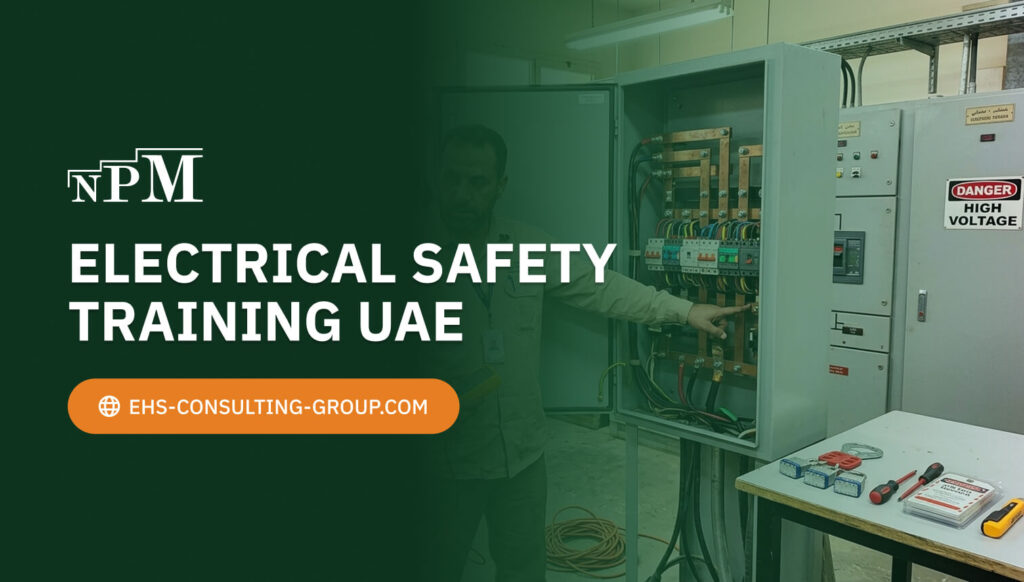
Safe Testing Procedures underpin the confidence industrial teams place in newly built, modified, or repaired equipment before it is put into service. In the UAE’s high-risk sectors — oil and gas, petrochemicals, construction, manufacturing, logistics, and power generation — testing is where theory meets reality. It is also the point where hazards can be amplified: pressure energy, live electrical work, temporary bypasses, and invasive inspections converge under tight schedules. This article unpacks how to plan and execute testing activities safely and effectively, building compliance with UAE regulatory expectations while maintaining operational momentum and quality outcomes.
Who Does This Affect?

Because testing touches technical integrity, operational readiness, and legal compliance, many roles across an industrial organization are directly impacted. The considerations in this article apply to:
- HSE managers and process safety specialists coordinating risk assessments, permit-to-work, and SIMOPS controls during testing windows.
- Plant managers, commissioning leads, and construction managers balancing schedule pressures with safe work requirements.
- Operations supervisors and maintenance teams responsible for isolations, line-walks, and boundary verification.
- Electrical engineers and technicians conducting MV/HV switchgear checks, insulation resistance tests, relay testing, and energization steps.
- Instrumentation and control engineers managing loop checks, functional safety proof tests for SIFs per IEC 61511, and emergency shutdown validations.
- Mechanical engineers and QA/QC personnel planning hydrostatic/pneumatic tests, leak testing per ASME B31.3, and non-destructive examination (NDT).
- Project QA leads and client representatives who must witness hold points and sign off on completion dossiers and handover packages.
- Contractors, EPCs, and specialist vendors who provide calibrated test equipment and certified technicians.
These responsibilities cut across facility types: refineries, gas processing plants, offshore platforms, downstream terminals, power stations, high-rise construction sites, and large manufacturing complexes. Each has unique hazards, but the underlying safety logic is consistent: identify energy sources, define test boundaries, verify controls, and execute to a controlled plan.
Why This Topic Matters

Testing transforms engineered risk into operational assurance — if conducted correctly. When done poorly, it introduces new risk vectors just as safeguards are being proven. Historical incidents have involved pipe ruptures during pneumatic testing, arc flash during energization, and unintended equipment starts after temporary bypasses were left in place. The stakes include life safety, asset damage, environmental release, schedule slippage, and regulatory non-compliance.
In the UAE context, expectations are clear: OSHAD (Abu Dhabi), Dubai Municipality, Civil Defence authorities, and MOHRE expect employers to implement safe systems of work for hazardous activities, including testing, commissioning, and energization. Industry operators such as ADNOC apply stringent HSE frameworks and assurance gates. International standards — ISO 45001, IEC 61511, IEC 60364, API/ASME codes, and recognized practices like API RP 14C and 750 — inform the deeper technical choices behind test methods and acceptance criteria.
This topic also matters economically. Adopting a robust, repeatable approach to safe testing reduces rework, accelerates handover, and stabilizes start-up curves. It helps teams defend technical decisions under audit, and it preserves the integrity of compliance documentation for future modifications or insurance queries.
Key Points to Understand

Safe testing is not a single step. It is a lifecycle of planning, control, and verification that blends engineering judgment with procedural discipline. The following elements provide a practical scaffold:
1) Hazard identification and test planning
Begin with the test objective and the failure modes associated with the method. A HAZID or task-based risk assessment should address line-of-fire, stored energy, electrical fault risk, pressure vessel integrity, release of hazardous substances, dropped objects, and ergonomic exposures. Consider SIMOPS: what else is happening nearby? Integrate with the permit-to-work system and define hold points and witnesses. Equally critical is test boundary definition — the physical and functional limits of what is and is not included. Sketches, P&IDs, single-line diagrams, and isometrics must be current and verified.
2) Energy isolation and boundary verification
Establish and verify isolations using lockout/tagout (LOTO) and positive isolation methods consistent with risk level (e.g., double block and bleed, blinds/spades, cable disconnection). For electrical testing, confirm the absence of voltage with an approved method and verify earthing/grounding. For rotating equipment, secure mechanical energy and verify zero movement. Conduct line-walks to physically confirm valves, vents, drains, and caps conform to the plan. Independent verification (second checker) reduces boundary errors.
3) Choosing the right test medium and parameters
Hydrostatic testing is often safer than pneumatic because water stores far less energy than compressed gas. If pneumatic testing is justified (e.g., for systems sensitive to water), implement additional barricading, distance controls, and pressure ramping protocols. Define the test pressure, temperature, and hold times per code (e.g., ASME B31.3) and material specifications. For electrical systems, select test voltages and durations per IEC 60364, OEM instructions, and arc flash studies (e.g., using IEEE 1584 methods) to set boundaries on energized work.
4) Instrumentation, test equipment, and calibration
Test kits, gauges, recorders, pressure relief devices, and electrical meters must be certified, intrinsically safe where required, and within calibration. Rating mismatches (e.g., using a low-rated test hose) are a common failure mode. Tag equipment with calibration validity, and keep certificates in the test pack. Digital traceability and controlled repositories (for example, engineering document control platforms such as CABINET NPM) help maintain auditable records of revisions and approvals without proliferating uncontrolled copies.
5) Controls for functional and proof testing
For safety instrumented systems (SIS), align proof test scope and intervals with the safety requirements specification (SRS) and IEC 61511. Document any overrides, bypassed interlocks, or alarm inhibitions and apply management of change (MoC). Ensure a clear handover back to the normal operating state; remove all temporary changes and verify with testing and sign-off. For machine safeguarding or emergency shutdown systems, function-test both the final elements and sensing elements, capturing real proof-test coverage rather than a superficial check.
6) Communication, competence, and supervision
Brief the team with a pre-job meeting that walks through the test sequence, hazards, emergency response, roles and responsibilities, and stop-work authority. Verify that those performing the test hold the right authorizations (e.g., electrical switching permits, confined space entry supervisor, rigging certifications). Maintain communications on radios with agreed channels and call signs, especially when working across large facilities or offshore assets.
7) Documentation and acceptance criteria
Define acceptance criteria up front: allowable pressure drops, leakage rates, insulation resistance thresholds, relay trip margins, valve stroke times, and tolerances per OEMs or standards. The completion dossier (test pack) should contain the approved plan, drawings, risk assessment, PTW, LOTO records, calibration certificates, step-by-step results, deviations, and close-out declarations. A disciplined dossier prevents later disputes and accelerates client or authority acceptance.
| Test Type | Primary Hazards | Typical UAE/Industry Triggers | Key Controls | Core Documentation |
|---|---|---|---|---|
| Hydrostatic Pressure Test | Stored energy, line-of-fire, hose failure, structural overload | Process piping per ASME B31.3; tank integrity; pre-commissioning | Boundary walk-down, rated hoses, barricades, venting, gradual ramp-up | Test plan, calibrated gauges, pressure chart, acceptance sheet |
| Pneumatic Leak Test | High energy release, projectile risk, noise, fragmentation | Systems sensitive to water; instrument air; control panels | Exclusion zones, blast shields, remote pressurization, strict pressure steps | Risk assessment, PTW, pressure logs, sign-offs |
| Electrical IR/Hi-Pot | Shock, arc flash, induced voltage, equipment damage | Switchgear, motors, cables before energization | LOTO, verified absence of voltage, PPE per arc study, controlled energization | Single-line diagrams, test results, relay settings, energization record |
| Functional Safety Proof Test | Unintended trips, bypasses left in service, process upset | SIFs per IEC 61511; ESD/PSD systems, fire and gas | Bypass management, MoC, independent witness, full loop testing | SRS excerpts, proof test procedures, coverage calculations |
| Confined Space Gas Testing | Atmospheric hazards, oxygen deficiency, toxic flammables | Vessel entry; tank cleaning; shutdowns | Multi-gas continuous monitoring, ventilation, standby, rescue plan | Gas logs, PTW, entry permits, rescue readiness checklist |
How This Works in Practice

Translating principles into field execution requires adapting to constraints — existing plant conditions, external interfaces, and schedule realities. Consider a refinery turnaround: piping spools have been replaced, valves serviced, and instrumentation recalibrated. Before startup, hydrotesting restores confidence in mechanical integrity, while SIS proof tests confirm safety loops meet their intended performance. Across the fence, an electrical substation is undergoing MV switchgear testing — insulation resistance checks, protection relay settings, and primary injection on breakers. Each activity has its own hazards, but they must also coexist. SIMOPS planning aligns test windows so that pneumatic testing with high stored energy is not conducted adjacent to energized electrical work or hot work operations, and access routes for emergency response remain clear.
An effective pathway from plan to execution typically includes:
- Preparation: finalize drawings, test packs, and risk assessments; pre-stage calibrated equipment; brief the team.
- Boundary establishment: implement LOTO, install blinds or disconnects, and verify with independent checks.
- Test setup: install gauges, reliefs, vents, and drains; confirm communication and emergency plans.
- Controlled execution: ramp pressures or voltages in stages; monitor parameters and environment; stop at any deviation.
- Result capture: record readings, photos, and anomalies; document any nonconformances and corrective actions.
- Return to normal: depressurize, de-energize, remove temporary changes, and close LOTO; sign off completion.
Field realities can challenge discipline. In desert heat, material properties and gauge readings shift; personnel fatigue elevates error risk. Dust ingress can compromise electrical enclosures. Night work may be necessary to meet outage windows, increasing the importance of lighting and supervision. On offshore platforms, space constraints complicate barricading and remote pressurization. Multi-contractor interfaces add translation and communication hurdles; standardized test sheets and pictograms help align diverse crews. Whatever the context, a robust system of checks and a culture that values stop-work authority remain the constant safeguards.
Benefits and Practical Use Cases

When safe testing is executed methodically, benefits appear at multiple horizons — immediate safety performance, schedule reliability, and lifecycle compliance. Teams that adopt a structured approach usually see fewer near misses related to boundary breaches and energy control, fewer re-tests, and smoother interactions with authorities and third-party inspectors.
Concrete examples from common UAE industrial scenarios include:
- Pipeline commissioning near populated areas: replacing pneumatic tests with hydrotests where feasible; where air testing is necessary, using higher-spec barricading and remote pressure rigs reduces public risk and accelerates approvals.
- Switchgear energization in a power plant: implementing arc-rated PPE selections derived from a current arc flash study and using remote racking tools lowers the probability and severity of injury during first energization.
- Offshore fire and gas verification: executing end-to-end functional tests (detector to ESD valve) catches wiring swaps or configuration gaps early, preventing costly start-up trips.
- Confined space entries for tank refurbishment: continuous multi-gas monitoring coupled with forced ventilation and a trained standby rescuer shortens entry times by reducing stop-start cycles tied to uncertain atmospheric conditions.
- Turnaround dossier quality: a clear test pack structure streamlines client sign-off and makes future debottlenecking projects faster by providing a trustworthy data trail for integrity and safety analyses.
In all cases, disciplined test planning and execution harmonize safety and schedule, avoiding the false trade-off that one must be sacrificed for the other.
Best Practices and Points of Caution

Experience shows that many testing incidents share a handful of root causes: unclear boundaries, undocumented temporary changes, poorly maintained test equipment, and rushed sign-offs. The following practices help avoid these pitfalls:
- Define unambiguous test boundaries on controlled, current drawings. Physically tag boundary valves, spades, cables, and breakers.
- Treat temporary changes (bypasses, jumpers, instrument inhibits) as formal MoC items, each with a removal plan and sign-off.
- Use pressure-rated, certified test hoses and relief devices; replace suspect gear outright rather than “making do.”
- Prefer hydrostatic tests to pneumatic where code allows; if air is essential, enforce extended exclusion zones and remote controls.
- For electrical first energization, adopt a staged approach: insulation and continuity checks, no-load verification, then progressive functional loads.
- Calibrate measuring equipment within valid intervals; include certificates in the test pack and mark instruments with expiry dates.
- Confirm arc flash boundaries and required PPE before any live testing; ensure tested and properly grounded test leads are used.
- Schedule pre-job briefs and post-job debriefs; capture and share learnings to improve the next test iteration.
- Coordinate SIMOPS via a daily planning meeting; never assume adjacent areas are idle.
- Account for environmental factors — heat, dust, humidity — in test parameters and PPE selection.
Points of caution worth repeating: pneumatic testing stores significantly more energy than hydrostatic testing at the same pressure; manage accordingly. Never rely solely on control system indications for boundary verification — always physically verify. For confined spaces, gas test at multiple elevations and continuously monitor, not just at entry. After any testing, confirm that all temporary changes are removed; residual bypasses are a common cause of subsequent incidents.
Frequently Asked Questions About Safe Testing Procedures
What is the key difference in risk between hydrostatic and pneumatic pressure tests?
Hydrostatic tests use water, which is largely incompressible, so the stored energy is relatively low for a given pressure. Pneumatic tests use gas, which stores much higher energy and can produce violent releases if containment fails. If a pneumatic test is required, elevate controls: larger exclusion zones, remote pressurization, blast shields or barriers, and stricter stepwise pressure increments.
How do we decide acceptable leakage or pressure drop during a test?
Acceptance criteria come from governing codes and standards, design specifications, and OEM guidance. For piping, ASME B31.3 defines test pressures and methodologies. For valves and tanks, manufacturer data or API standards may specify leakage classes. Always set and document acceptance criteria before testing begins and record measured values with calibrated instruments.
Who should authorize the start of a high-risk test?
Authorization typically requires multiple roles: the area owner (operations), the testing lead (engineering or QA/QC), and HSE/permit controllers. For electrical testing or switching, an authorized electrical person must issue permits and supervise. For confined space or high-energy tests, require an independent verifier and, for critical steps, a client or third-party witness.
How are temporary overrides and bypasses managed safely during functional testing?
Treat each override as a controlled change: log it, assign a responsible person, set a validity period, visibly tag the device or HMI point, and incorporate it in the test plan. Maintain a live list of active overrides and require formal sign-off for removal. Before handover, verify that all have been cleared and document evidence in the completion dossier.
What is proof testing for a Safety Instrumented Function (SIF), and how often is it done?
Proof testing is a periodic verification that a SIF meets its designed risk reduction, detecting dangerous undetected failures. The interval is defined by the Safety Requirements Specification (SRS) and SIL verification calculations under IEC 61511. Some proof tests occur during pre-commissioning; others occur in operation at defined intervals. Always capture proof-test coverage and any detected failures for lifecycle records.
Which PPE is required for electrical testing and first energization?
Required PPE is determined by an arc flash risk assessment and shock protection boundaries. This often includes arc-rated clothing at the calculated calorie/cm² rating, insulated gloves with leather protectors, face shields or hoods, hearing protection, and safety footwear. Use only rated and tested tools and test leads, and apply lockout/tagout and verified absence-of-voltage procedures.
What documents make up a complete test pack or completion dossier?
Typical contents include the approved test plan, risk assessment/HAZID, PTW and LOTO records, current drawings, calibration certificates, step-by-step procedures, data sheets and recorded results, deviations and concessions, witness signatures, and final acceptance statements. Good dossiers accelerate authority approvals and future troubleshooting.
How should we handle testing in areas with simultaneous operations (SIMOPS)?
Use a SIMOPS plan that maps activities, hazards, interfaces, and isolation dependencies. Stagger high-energy tests away from hot work, lifting operations, or first energization. Communicate daily with adjacent teams, implement shared barricading and access controls, and designate a SIMOPS coordinator to resolve conflicts.
When is pneumatic testing justified instead of hydrotesting?
When water would damage equipment, introduce corrosion or contamination, or is impractical to remove, pneumatic testing may be justified. In such cases, complete a detailed risk assessment, strengthen physical controls, and obtain approvals from the asset owner and, if required, third-party inspectors or authorities. Pressure steps should be small, with hold points and continuous monitoring.
How do UAE regulatory expectations factor into safe testing?
OSHAD, Dubai Municipality, Civil Defence, and MOHRE frameworks require employers to manage hazardous tasks under safe systems of work. Testing and commissioning must be covered by risk assessments, PTW, competent supervision, and adequate emergency arrangements. Operators like ADNOC overlay additional HSE and technical assurance requirements. Maintain traceable documentation to demonstrate compliance during audits and handovers.
Conclusion
Establishing and following Safe Testing Procedures is about engineering discipline applied at the moment of highest uncertainty — when systems transition from construction or maintenance to live operation. As discussed, success depends on unambiguous boundaries, competent people, calibrated tools, sound test methods, robust documentation, and deliberate removal of temporary changes. Whether the task is a hydrotest on a process header, a confined space gas check, a functional proof test on a safety loop, or first energization of switchgear, the same logic applies: anticipate energy pathways, control them, and verify outcomes with data you can defend.
In practice, this discipline also creates a bridge to broader safety competencies, particularly in electrical hazards where testing and energization converge. Teams that invest in clear procedures, consistent training, and rigorous documentation see fewer incidents, faster approvals, and more predictable start-ups. They are also better positioned to meet the scrutiny of audits and regulatory reviews, because the story their data tells is coherent and complete.
To go further on this topic, NPM’s broader Electrical Safety Training UAE page covers this in more depth.
Explore NPM’s References
NPM’s track record spans complex commissioning campaigns, brownfield modifications, greenfield start-ups, and turnaround projects across oil and gas, petrochemical, power generation, construction, logistics, and manufacturing assets worldwide. Our references illustrate how disciplined planning and practical control of high-energy testing activities reduce risk while preserving project velocity. They also show how documentation rigor — from calibrated instrument traceability to proof-test coverage and completion dossiers — pays dividends during client acceptance, third-party inspections, and future expansions.
When exploring NPM’s references, you will see how consistent principles scale across contexts: a gas plant in need of careful SIMOPS management during SIS proof testing; an offshore platform where space constraints demand remote pressurization and enhanced barricading; a power station where arc flash boundaries and staged energization safeguard first power; and construction programs where temporary systems require daily verification and clear test boundaries. Beyond the technical snapshots, our references highlight the human side: competent supervisors, clear communications, and a learning culture that treats every test as both a validation and an opportunity to improve the next one. This mix of engineering depth and operational practicality is what enables safe, timely transitions from “as built” to “in service.”
For more information about our references, visit Our References.
Speak With NPM
If you are considering how to refine test planning, documentation, or SIMOPS controls for upcoming commissioning or maintenance windows, NPM is available to discuss practical approaches. We are happy to answer technical questions or share lessons learned that can help your teams navigate high-energy testing confidently. For any further questions or to speak with our team, Contact Us.