

Management Of Change for LNG Facilities delivered by NPM helps LNG operators control risk when hardware, software, procedures, and organizational structures evolve at pace—without disrupting throughput, compromising cryogenic integrity, or breaching regulatory approvals. This industry-specific offering is part of our broader Management Of Change Services UAE portfolio supporting complex, high-hazard operations across the country.
From large-scale full-containment tanks and regasification skids to jetty loading arms, BOG compressors, vaporizers, ESD/SIS logic, and terminal utilities, Management Of Change for LNG Facilities ensures every proposed modification is screened, risk-assessed, approved, implemented, and verified against LNG-specific hazards such as cryogenic exposure, brittle fracture, rapid phase transition, vapor cloud formation, and jetty SIMOPS. NPM aligns governance, workflows, and technical reviews, giving your teams a clear, auditable pathway from initiation to closeout—so that no change, however small, compromises safety, compliance, or operability.
Who Needs Management Of Change for LNG Facilities?

LNG terminals and associated assets are uniquely sensitive to change due to cryogenic temperatures, specialized materials, high-consequence containment, and marine transfer interfaces; therefore, Management Of Change for LNG Facilities is essential for operators of liquefaction trains, import/regasification terminals, FSRUs, bunkering assets, peak-shaving plants, and satellite storage/distribution depots. HSE managers, plant managers, terminal superintendents, engineering and maintenance heads, project/turnaround leaders, control system owners, and marine/jetty coordinators all benefit when changes are systematically screened and controlled. In practice, this means integrating Management Of Change for LNG Facilities with existing engineering practices and digital workflows (DCS/SIS updates, instrument setpoints, cause-and-effect matrices), site permits to work, and contractor interfaces for brownfield tie-ins or jetty operations. NPM facilitates robust stakeholder engagement—operations, process safety, engineering, maintenance, marine, HSSE, and contractors—ensuring LNG-specific hazards are explicitly evaluated: cryogenic spills and vapor dispersion, RPT events, BLEVEs in adjacent fuels, brittle fracture of carbon steel, thermal/structural response during cooldown, and blast/overpressure near jetties or loading arms. Whether you are standardizing MOC across a multi-asset LNG portfolio or needing facilitation for a single high-risk modification (e.g., tank penetrations, new vaporizer modules, or SIS logic changes), Management Of Change for LNG Facilities provides traceable governance, risk-based decision-making, and pre-startup verification that aligns with NFPA 59A, IEC 61511, API guidance, and port authority/Civil Defence expectations in the UAE.
Objectives of Our Management Of Change for LNG Facilities
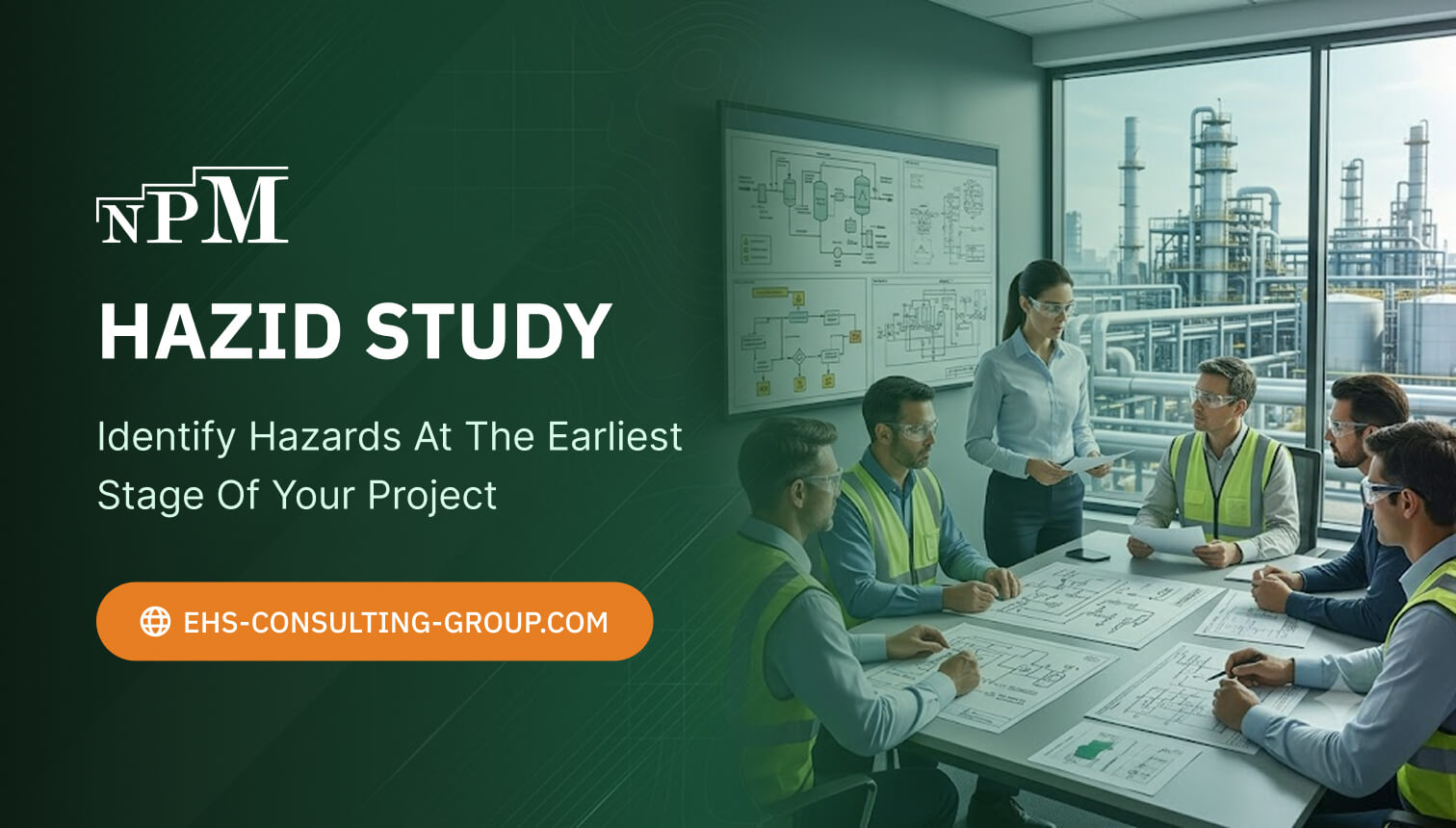
NPM’s objectives for Management Of Change for LNG Facilities focus on preventing loss of containment, avoiding unsafe overrides or orphaned bypasses, and ensuring every modification is fully compatible with cryogenic and marine transfer constraints. We design the engagement to deliver a fit-for-purpose, LNG-centric workflow that classifies changes, screens them for risk, assigns accountable approvers, verifies compatibility with Safety Instrumented Functions, and documents final “as-built” status. By embedding LNG hazard intelligence—NFPA 59A requirements for siting and design, IEC 61511 for functional safety lifecycle, API and ISO references for pressure-relief, piping materials, and integrity—we help clients achieve compliance while maintaining turnaround and cargo schedules. Management Of Change for LNG Facilities also aims to create a single source of truth: an auditable evidence chain from initiation through PSSR and closeout that integrates with your CMMS/EDMS, captures affected drawings (P&IDs, C&Es, 3D models), and preserves Safety Critical Elements performance standards. Another core objective is to strengthen organizational readiness: clarifying roles for engineering authorities, marine operations, and HSSE; aligning SIMOPS risk evaluation for jetty activities; and ensuring training/readiness for control room and field technicians before new logic, setpoints, or interlocks go live. Ultimately, Management Of Change for LNG Facilities is about sustainable, demonstrable risk reduction that keeps facilities compliant, operable, and resilient—without slowing essential operational tempo.
Scope of Work & Methodology

NPM structures the scope of work to combine governance design, facilitation, and technical verification—grounded in LNG-specific hazards and UAE regulatory expectations. We begin with a targeted diagnostic of your current procedures, forms, and tools to evaluate how Management Of Change for LNG Facilities presently flows across engineering, operations, marine/jetty, and HSSE interfaces. We then configure a practical workflow that classifies changes (temporary vs. permanent, software vs. hardware, process vs. organizational), sets risk screening gates, and defines approver matrices linked to LNG-critical disciplines such as cryogenic materials, structural/civil for tanks and foundations, marine transfer, functional safety, and fire protection. Where required, NPM facilitates risk reviews—targeted HAZOP nodes, LOPA checks for SIF impacts, cryogenic dispersion and thermal radiation considerations, or SIMOPS assessments for jetty activities—and ensures outputs tie into PSSR readiness criteria. Management Of Change for LNG Facilities is integrated with your digital environment: registers in your EDMS, CMMS work orders, SIS safety lifecycle tools, and drawing control processes, with clear requirements for redlining and “as-builts.” Finally, we establish closeout and validation controls—field verification, interlock testing where applicable, training completion logs, and KPI dashboards—so leaders can see status, aging items, and bottlenecks in real time.
- Discovery and gap analysis against LNG good practice (NFPA 59A, IEC 61511, API/ISO) and UAE regulators (Civil Defence, port authorities, OSHAD/Abu Dhabi EHS Centre).
- Workflow design for Management Of Change for LNG Facilities, including change classification, risk screening tools, approval matrices, and documentation standards.
- Facilitated technical reviews: targeted HAZOP/LOPA refresh for SIF impacts, cryogenic/materials compatibility checks, jetty SIMOPS evaluation, emergency response interface updates.
- Integration with EDMS/CMMS and control systems lifecycle: redlines, cause-and-effect updates, bypass removal tracking, PSSR preparation.
- Verification and closeout: field walkdowns, training and competency capture, interlock/functional tests as applicable, performance KPIs and audit readiness.
Duration and Format of Management Of Change for LNG Facilities

Engagement length and delivery format are tailored to facility scale, change volume, and stakeholder availability. For a single high-impact modification—such as a new vaporizer module, BOG compression upgrade, or ESD logic rationalization—Management Of Change for LNG Facilities typically spans two to eight weeks depending on design maturity, analysis needs, and turnaround windows. For governance redesign and enterprise rollout across multiple LNG assets or terminals, programs may extend over several months, sequenced to avoid cargo peaks, seasonal demand, or planned outages. NPM uses a hybrid model that blends on-site walkdowns and stakeholder workshops with remote document reviews and working sessions, minimizing disruption to control room and marine operations. We structure workshops around LNG shift patterns and berth schedules, ensuring coverage across day/night teams and marine/terminal coordination. Management Of Change for LNG Facilities can also be supported as a retained advisory, where NPM facilitates recurring reviews, audits aging items, and mentors site focal points—helping your organization maintain momentum and compliance without adding fixed headcount.
| Engagement Type | Typical Duration | Client Inputs | NPM Activities | Key Deliverables |
|---|---|---|---|---|
| Governance Diagnostic & Quick Wins | 2–4 weeks | MOC procedures, sample records, org chart | Gap analysis, LNG-specific enhancements | Diagnostic report, prioritized action list, revised forms |
| Change Facilitation for a Major Modification | 4–8 weeks | Design pack, P&IDs/C&Es, schedule/turnaround dates | Risk reviews, stakeholder workshops, PSSR prep | MOC dossier, risk register, PSSR checklist, training brief |
| Enterprise Rollout & Mentoring | 8–16 weeks | Portfolio plan, digital tools access | Process standardization, KPI dashboard, coaching | Playbook, KPI suite, onboarding plan, audit plan |
| Annual Audit & KPI Refresh | 1–3 weeks | MOC register, incident learnings | Sample testing, performance analysis, improvements | Audit report, action tracker, lessons learned brief |
Benefits and Practical / Operational Use Cases
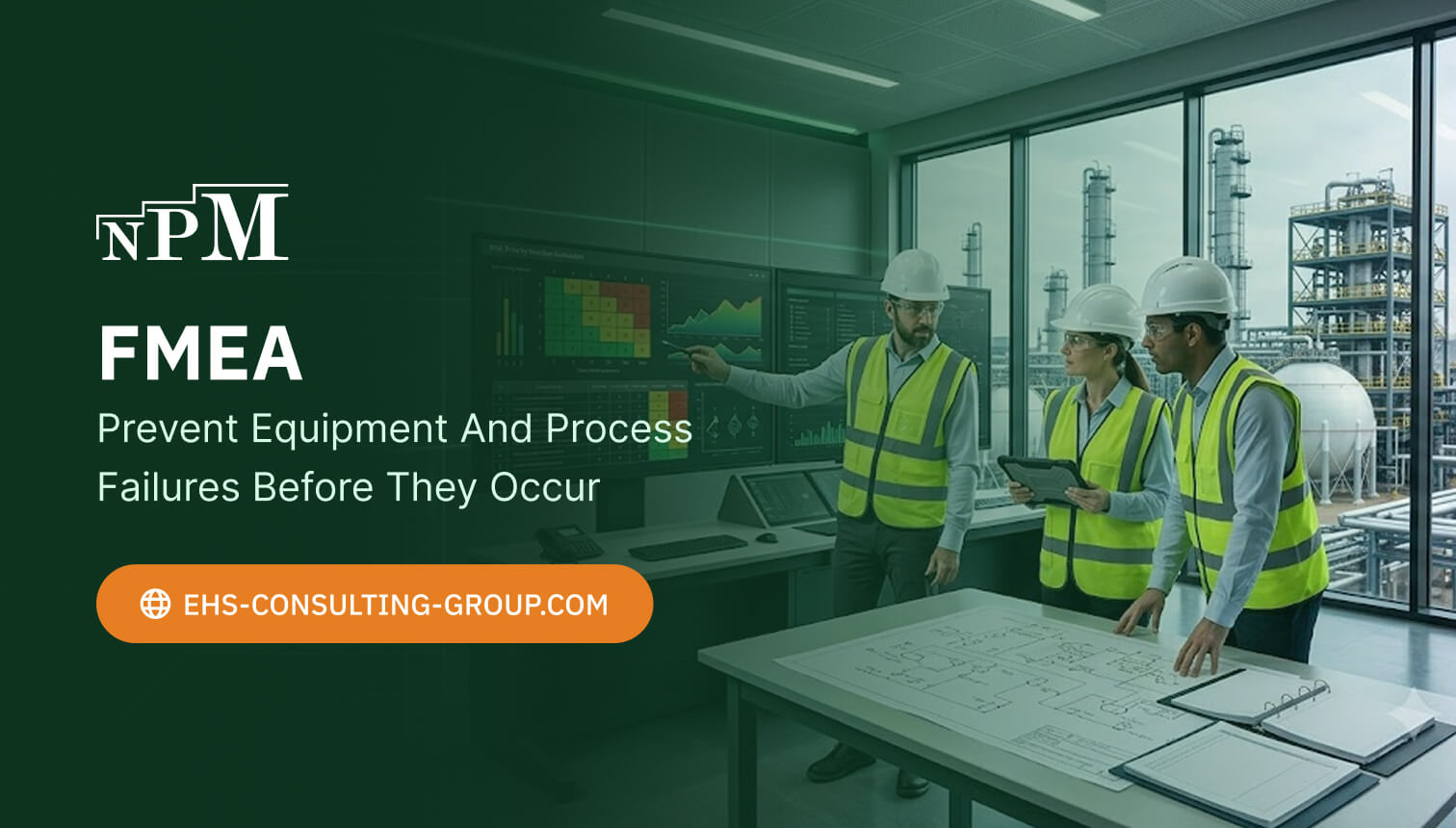
With Management Of Change for LNG Facilities, operators gain a controlled, measurable pathway to implement modifications without increasing risk or eroding compliance. LNG terminals have unique event pathways—from cryogenic releases and brittle fracture to vapor dispersion at the jetty—and even seemingly minor updates (e.g., valve Cv changes, analyzer ranges, setpoint tuning, or revised ESD voting) can shift risk if not assessed holistically. NPM designs Management Of Change for LNG Facilities to capture these interactions early, consult the right technical authorities, and maintain a single, auditable evidence trail—reducing rework, avoiding schedule slips during turnarounds, and preventing costly re-approvals with authorities. The framework links engineering and marine operations so changes in berth procedures, loading arms, ESD causes/effects, or tug assistance are treated with the same rigor as plant-side modifications. It also secures interface points—contractors, vendors, class/flag for FSRU cases—so downstream impacts are explicitly closed before reintroducing inventory or resuming cargo movements.
- Tank penetrations or roof equipment additions: Management Of Change for LNG Facilities coordinates materials compatibility, cooldown procedures, structural checks, and emergency response updates.
- Vaporizer module upgrades (ORV/SRV): integrates thermal-hydraulic impacts, ESD logic updates, and vendor commissioning into a single approval flow.
- ESD/SIS cause-and-effect rationalization: links trip settings to LOPA targets and verifies bypass removal and final “as-left” documentation.
- Jetty modifications and SIMOPS: evaluates loading arm envelopes, berth safety distances, hot work controls, and vapor dispersion considerations.
- FSRU connection changes: aligns terminal and vessel procedures, communications, and emergency integration under an approved MOC dossier.
Why Choose Us

NPM brings LNG-domain depth, process safety rigor, and UAE regulatory fluency together in one engagement model. Our specialists understand the LNG lifecycle—from metallurgy for cryogenic service and structural demands of full-containment tanks to SIS lifecycle management per IEC 61511, marine/jetty interfaces, and emergency engineering. We build Management Of Change for LNG Facilities that aligns with NFPA 59A and local authorities (Civil Defence, port authorities, and Emirate-level regulators such as Dubai Municipality and OSHAD/Abu Dhabi EHS Centre), while providing a pragmatic, schedule-sensitive path for turnarounds and cargo operations. NPM’s facilitation approach is transparent and collaborative: we coach change owners, bring the right discipline leads into the room, and keep a relentless focus on LNG-specific hazards, documentation accuracy, and PSSR readiness. Our international affiliation and technical bench strength—reinforced through our network at CABINET NPM—enable rapid access to niche expertise when your project needs specialized cryogenic, structural, or functional safety insight. The result is a Management Of Change for LNG Facilities workflow that is robust enough to satisfy regulators and insurers yet lean enough to keep your operations moving.
Detailed Service Offerings for Related MOC Engagements

Beyond LNG, NPM supports adjacent sectors where similar governance, risk, and lifecycle controls are required. Explore related Management of Change engagements tailored to other industries.
Management Of Change for Oil & Gas Facilities

For upstream, midstream, and downstream assets, this engagement addresses high-energy operations such as refineries, pipelines, and offshore platforms. While this page focuses on Management Of Change for LNG Facilities, many principles carry over—clear change classification, process safety integration, and verification against Safety Critical Elements—ensuring safe execution and regulatory compliance during brownfield works and turnarounds.
Click on the following link for more details: Management Of Change for Oil & Gas Facilities.
Management Of Change for Petrochemical Plants
Petrochemical complexes introduce complex inter-unit dependencies, high reactivity feedstocks, and intricate utility networks. Adapting lessons from Management Of Change for LNG Facilities, we emphasize cross-unit risk evaluation, functional safety impacts, and utility interface control to prevent upsets cascading across crackers, reformers, and polymerization units.
Click on the following link for more details: Management Of Change for Petrochemical Plants.
Management Of Change for Chemical Manufacturing
Batch and continuous chemical operations require agile yet controlled change processes due to frequent recipe, equipment, and campaign shifts. Drawing on methods proven in Management Of Change for LNG Facilities, we tailor workflows to manage recipe alterations, reaction hazards, and containment integrity while maintaining batch records, validation states, and compliance.
Click on the following link for more details: Management Of Change for Chemical Manufacturing.
Regulatory Landscape & Operational Risks in the LNG Sector
In the UAE, LNG operators must align with a mosaic of federal and Emirate-level requirements alongside international LNG codes. Civil Defence approvals drive fire protection, emergency response provisions, and hazardous area classifications; Emirate authorities such as Dubai Municipality enforce construction and operational permits; and in Abu Dhabi, OSHAD requirements (now under the Abu Dhabi EHS Centre) set out occupational safety standards and management system expectations. Against this backdrop, Management Of Change for LNG Facilities must also evidence conformity to NFPA 59A for LNG production, storage, and handling; IEC 61511 across the functional safety lifecycle; and relevant API/ISO references governing pressure relief, tankage, and piping integrity. LNG-specific operational risks—cryogenic liquid transfer, tank cooldown/warmup cycles, rapid phase transition in water, cold embrittlement of carbon steel, boil-off gas handling, and jetty SIMOPS—demand explicit evaluation during change reviews. Port authorities and terminal regulations further shape marine interface controls, tug/berthing practices, and allowable hot work near berths. Accordingly, Management Of Change for LNG Facilities must integrate marine operations, terminal HSSE, and process engineering into a unified approval path with documented PSSR, interlock/logic testing where applicable, and updated emergency interfaces. NPM’s approach maps each change to applicable standards and regulators, creating a defensible, auditable record that withstands authority review while maintaining berth and cargo schedules.
Our MOC Expertise Across Adjacent Industries
NPM applies LNG-honed governance and risk methods to adjacent high-hazard sectors across the UAE—adapting workflows to the facility types, codes, and regulators that shape each industry. If your organization spans multiple verticals, a consistent core MOC model with industry-specific adapters can simplify compliance and accelerate approvals without sacrificing technical rigor.
Deliverables and Validation
NPM provides a complete Management Of Change for LNG Facilities evidence set that stands up to internal audits, insurers, and authorities. Core deliverables include a tailored MOC governance procedure, change classification and risk screening tools, approver matrices with LNG-critical disciplines, and standardized forms/checklists configured for your EDMS/CMMS. For facilitated changes, we develop the MOC dossier capturing basis of change, affected documents (P&IDs, C&Es, layouts, cause/effect), risk assessments (targeted HAZOP/LOPA excerpts, cryogenic/materials checks, jetty SIMOPS considerations), training and communication plans, and PSSR readiness criteria. Validation occurs through structured workshops, stakeholder interviews, field walkdowns, and pre-startup verifications—scheduled around LNG shift patterns and berth occupancy to ensure both day and night crews are covered. Management Of Change for LNG Facilities culminates in a closeout package documenting “as-built” status, tested interlocks where applicable, removed bypasses, updated drawings, and captured competencies. We deliver a findings register and KPI dashboard for ongoing monitoring (aging MOCs, overdue actions, recurring failure modes), enabling continuous improvement and audit readiness. The client organization always owns implementation and final sign-off; NPM verifies via evidence-based checks and joint reviews. Pre-engagement options include a virtual kick-off, preliminary document review, and a scoping site visit to prioritize high-risk interfaces (tanks, jetty, vaporizers, BOG systems) and set a realistic delivery plan that respects turnaround windows and authority approval lead times.
Frequently Asked Questions About LNG MoC Consulting
How often should an LNG facility repeat this assessment, and what triggers a re-assessment?
As a baseline, conduct a governance audit of Management Of Change for LNG Facilities annually, with more frequent reviews for high-change environments or after major turnarounds. Re-assessments are triggered by significant incidents or near-misses, authority findings, SIS revalidation cycles per IEC 61511, major equipment retrofits (e.g., vaporizers, BOG compression), or process control changes that alter trips, setpoints, or cause/effect matrices.
What is the difference between an initial MOC system setup and a periodic review?
The initial setup designs and deploys your end-to-end Management Of Change for LNG Facilities framework—governance, forms, approval matrices, and integration with EDMS/CMMS—often paired with facilitation of a few pilot changes. Periodic reviews test the system’s effectiveness, sample change packages for completeness and PSSR quality, analyze KPIs and recurring gaps, and implement targeted improvements without overhauling what already works.
Who is responsible for implementing recommendations—the consultant or the client?
NPM facilitates, advises, and validates, but your organization owns implementation. For Management Of Change for LNG Facilities, we prepare the tools, run risk workshops, and verify readiness; the client’s engineering, operations, marine, and HSSE teams execute field changes, update drawings, complete training, and sign off PSSR. This division preserves accountability while ensuring technical rigor.
What delivery format works best for large or multi-site LNG operators—on-site or hybrid?
Hybrid delivery is typically optimal. Critical workshops, field walkdowns, and PSSR checks for Management Of Change for LNG Facilities occur on-site to capture real conditions, while document reviews, design iterations, and working sessions can be remote to reduce schedule impact. For multi-site portfolios, we standardize the core model and tailor site adapters via targeted on-site sprints.
What team size and stakeholders are recommended for workshops or interviews?
For LNG change facilitation, aim for 6–12 core participants: operations (field and control room), process safety, engineering (mechanical, instrumentation/controls), maintenance, HSSE, and marine/jetty as relevant. Management Of Change for LNG Facilities benefits from discipline diversity to uncover cryogenic, structural, and marine transfer interactions while keeping sessions efficient and decision-focused.
What documentation or site access is needed before the engagement begins?
At minimum, provide current MOC procedures and forms, P&IDs, cause-and-effect charts, alarm rationalizations, area classifications, plot plans, jetty procedures, SIS/LOPA summaries, and recent audit or incident learnings. For Management Of Change for LNG Facilities, early access to these plus EDMS/CMMS records and representative MOC packages allows rapid gap analysis and a precise, risk-prioritized plan.
Can NPM interface with vendors and contractors during MOC?
Yes. For Management Of Change for LNG Facilities, NPM routinely coordinates with vendors and EPC/M contractors to align datasheets, commissioning plans, and test records with the approved MOC scope, ensuring documentation, training, and PSSR evidence meet your acceptance criteria before closeout.
Know More About Our Work
NPM has delivered high-hazard governance and process safety engagements worldwide, helping operators embed Management Of Change that is practical, auditable, and technically sound. Our track record spans complex brownfield upgrades, functional safety lifecycle integration, and regulator-ready documentation that stands up to scrutiny. Explore how our approach scales from single-site interventions to enterprise rollouts.
For more information about our references, visit Our References.
Speak With NPM About Your LNG MOC
Strengthen control of modifications without slowing operations. NPM will scope a Management Of Change for LNG Facilities engagement around your schedules, change portfolio, and regulatory commitments—delivering a pathway from risk screening to PSSR and closeout that your teams can sustain. Start a conversation to discuss requirements or request a proposal.